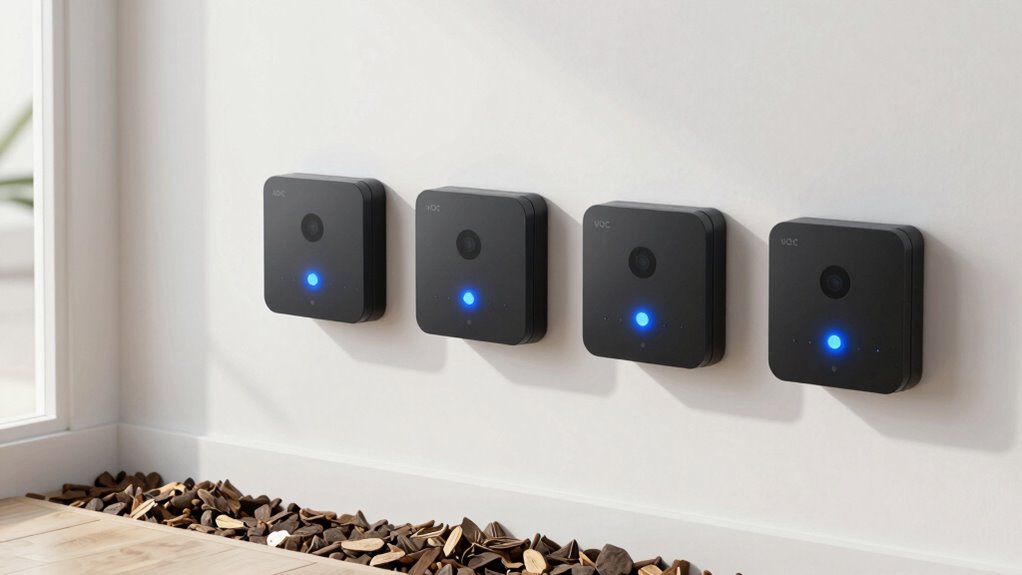
A smart air quality monitor with a VOC sensor can help you track changes near a litter area, but VOC readings do not identify a specific odor or prove that air is safe. My best overall pick is the Airthings Wave Enhance for its broad sensor set, while the Amazon Smart Air Quality Monitor stands out for a simpler connected-home setup and the Lecoolife AK22B for a wide range of displayed measurements. The main tradeoffs are app and smart-home features versus at-a-glance displays, and a broad sensor list versus the clarity of the readings you will actually use. Placement matters too: a monitor too close to the box may capture short-lived spikes rather than represent the room. Continue reading for the full comparison, selection criteria, and practical guidance for choosing a monitor for your litter area.

Get pet supplies delivered free with Prime
- Fast, free delivery on millions of items
- Prime Video, Amazon Music and more included
- Member-only deals all year
Complete the kit



Key Takeaways
- Airthings Wave Enhance leads for a sensor-rich setup: it tracks VOCs alongside CO₂, humidity, temperature, pressure, noise, and light, making it the broadest room-monitoring option in this group.
- Amazon’s monitor prioritizes connected-home simplicity: it is a more focused choice than the large-screen amazon.com/dp/B0H415NYXK?tag=aplaceforanimals-20&ascsubtag=dc-892938″ target=”_blank” rel=”nofollow sponsored noopener”>Lecoolife and Sainlogic models if app-led monitoring matters more than seeing many readings on the device.
- The Lecoolife AK22B and METRINARY emphasize measurement breadth: their multi-in-one formats suit buyers who want several readings in one place, but a longer sensor list does not automatically mean more useful VOC information.
- Display-first models serve a different routine: the Sainlogic 7.2-inch display and Lecoolife AK22B 7-inch display make at-a-glance checks easier than relying on a phone.
- VOC readings are signals, not litter-box diagnoses: all picks need sensible placement and interpretation; none should be treated as a direct measurement of litter cleanliness, ammonia exposure, or health risk unless the manufacturer specifically states that capability.
| AirKnight AT1000 Indoor Air Quality Monitor |  | Best Portable Pollutant Range | Model: AT1000 | Measurements: CO2, PM2.5, PM10, TVOCs, formaldehyde, temperature, and humidity | Battery: 3000 mAh rechargeable lithium-polymer | VIEW ON AMAZON | See Our Full Breakdown |
| Lecoolife AK27 10-in-1 Indoor Air Quality Monitor |  | Best for Simple Visual Readings | Model: AK27 | Measurements: PM1.0, PM2.5, PM10, HCHO, TVOC, temperature, humidity, AQI, and time | Display: Large color display | VIEW ON AMAZON | See Our Full Breakdown |
| Sainlogic Indoor Air Quality Monitor with 7.2-Inch Display |  | Best for Custom Local Alerts | Monitored parameters: CO2, PM2.5, PM10, PM1.0, AQI, HCHO, TVOC, temperature, and humidity | Display: 7.2-inch screen with three brightness levels | Alerts: Seven user-defined thresholds; tri-color LED and visual notifications | VIEW ON AMAZON | See Our Full Breakdown |
| Amazon Smart Air Quality Monitor |  | Best for Alexa Automation | Sensors: Temperature, humidity, carbon monoxide, PM2.5, and VOCs | Connectivity: 2.4 GHz Wi-Fi and Bluetooth LE 4.2 | Compatibility: Echo devices and Alexa app version 2021.16 or later | VIEW ON AMAZON | See Our Full Breakdown |
| AprilAire ZAWTHCPV Smart Wi-Fi Indoor Air Quality Monitor |  | Best for AprilAire Home-Air Systems | Model: ZAWTHCPV | Measurements: PM2.5, VOCs, CO2, humidity, and temperature | Connectivity: Wi-Fi | VIEW ON AMAZON | See Our Full Breakdown |
| METRINARY 9-in-1 Indoor Air Quality Monitor with App |  | Best Plug-In Value | Measurements: AQI, PM2.5, PM10, PM1.0, CO₂, TVOC, NOP, temperature, humidity | App data history: Up to 30 days | Display: High-definition color screen | VIEW ON AMAZON | See Our Full Breakdown |
| Lecoolife AK22B 16-in-1 Indoor Air Quality Monitor with 7-Inch Display |  | Best for At-a-Glance Readings | Model: AK22B | Measurements: CO₂, PM1.0, PM2.5, PM10, HCHO, TVOC, temperature, humidity, AQI, and more | Display: 7-inch screen with adjustable brightness | VIEW ON AMAZON | See Our Full Breakdown |
| Airthings Wave Enhance Indoor Air Quality Monitor – CO₂, VOC, Humidity, Temperature, Pressure, Noise & Light Sensors for Bedroom and Home Office |  | Best for Flexible, App-Based Placement | Sensors: CO₂, VOC, humidity, temperature, pressure, noise, light | Power source: Two AA batteries, included | Connectivity: Bluetooth | VIEW ON AMAZON | See Our Full Breakdown |
| smart air quality monitor with voc sensor for litter area | Measurements | Dimensions | Display | Model |
|---|---|---|---|---|
| AirKnight AT1000 Indoor Air Qu | CO2, PM2.5, PM10, TVOCs, formaldehyde, temperature, and humidity | 7.55 × 2.09 × 3.16 inches | LCD | AT1000 |
| Lecoolife AK27 10-in-1 Indoor | PM1.0, PM2.5, PM10, HCHO, TVOC, temperature, humidity, AQI, and time | 4.17 × 3.54 × 1.96 inches | Large color display | AK27 |
| Sainlogic Indoor Air Quality M | — | 6.5 × 2.1 × 4.3 inches | 7.2-inch screen with three brightness levels | — |
| Amazon Smart Air Quality Monit | — | 65 × 65 × 45 mm | — | — |
| AprilAire ZAWTHCPV Smart Wi-Fi | PM2.5, VOCs, CO2, humidity, and temperature | — | — | ZAWTHCPV |
| METRINARY 9-in-1 Indoor Air Qu | AQI, PM2.5, PM10, PM1.0, CO₂, TVOC, NOP, temperature, humidity | 2.24 x 0.93 x 2.07 inches | High-definition color screen | — |
| Lecoolife AK22B 16-in-1 Indoor | CO₂, PM1.0, PM2.5, PM10, HCHO, TVOC, temperature, humidity, AQI, and more | — | 7-inch screen with adjustable brightness | AK22B |
| Airthings Wave Enhance Indoor | — | — | — | — |
More Details on Our Top Picks
AirKnight AT1000 Indoor Air Quality Monitor
For checking several air-quality readings near a litter area, the AirKnight AT1000 covers more than just particles: it measures TVOCs and formaldehyde alongside CO2, PM2.5, and PM10. Its LCD presents the readings directly, while the rechargeable battery lets me move it between a litter space and other rooms without keeping it plugged in. Compared with the Amazon Smart Air Quality Monitor, the AT1000 also reports formaldehyde and multiple particle sizes, but it lacks that model’s Alexa alerts and routines. This is a portable monitor, not a connected alert system: the supplied information lists no Wi-Fi, app, or accuracy details. Battery runtime is also unspecified, so I would treat it as a device for periodic checks rather than assume continuous cordless monitoring.
Pros:- Measures TVOCs and formaldehyde as well as CO2 and PM1-sized particle categories listed in its product data
- LCD makes readings available at the device without an app
- Rechargeable battery supports moving the monitor between rooms
- Includes an instructional video and user manual
Cons:- No app, Wi-Fi, or smart-home alert features are listed
- Accuracy details and calibration information are not provided
- Battery runtime is unspecified
Best for: Cat owners who want a portable, screen-based check of TVOCs, formaldehyde, and particle readings in different rooms.
Not ideal for: Buyers who need phone alerts, smart-home automation, or stated sensor accuracy and battery runtime.
- Model:AT1000
- Measurements:CO2, PM2.5, PM10, TVOCs, formaldehyde, temperature, and humidity
- Battery:3000 mAh rechargeable lithium-polymer
- Dimensions:7.55 × 2.09 × 3.16 inches
- Weight:12 ounces
- Display:LCD
Our verdict“Choose the AT1000 if you want portable, on-device readings that include TVOCs and formaldehyde, and skip it if connected alerts matter more.”
Lecoolife AK27 10-in-1 Indoor Air Quality Monitor
The Lecoolife AK27 suits buyers who want a quick visual readout near a litter area rather than a connected monitoring setup. Its large color display combines TVOC and HCHO readings with PM1.0, PM2.5, PM10, temperature, humidity, and AQI; color-coded indicators and an audible alarm make changes easier to notice at a glance. Unlike the AirKnight AT1000, the AK27 lists PM1.0 and AQI, but its product details do not list CO2 or a rechargeable battery. It is battery powered, yet runtime is not specified, and no accuracy or calibration information is supplied. The result is a straightforward display-first option for a household that values visible cues, not a clear choice for anyone seeking dependable remote alerts or documented measurement performance.
Pros:- Tracks TVOC and HCHO alongside PM1.0, PM2.5, and PM10
- Large color display presents readings and color-coded AQI indicators
- Audible alarm can draw attention without checking a phone
- Also shows temperature, humidity, and time
Cons:- Battery runtime is not provided
- Accuracy and calibration details are not listed
- No app or Wi-Fi connectivity is specified
Best for: Cat owners who want a color-coded display and audible AQI alerts in the same room as the litter area.
Not ideal for: Buyers who need CO2 readings, known battery runtime, app notifications, or published accuracy and calibration details.
- Model:AK27
- Measurements:PM1.0, PM2.5, PM10, HCHO, TVOC, temperature, humidity, AQI, and time
- Display:Large color display
- Power source:Battery powered
- Alarm:Audible
- Dimensions:4.17 × 3.54 × 1.96 inches
Our verdict“Pick the AK27 for at-a-glance TVOC and particle readings with audible cues, but not for connected monitoring or documented sensor precision.”
Sainlogic Indoor Air Quality Monitor with 7.2-Inch Display
The Sainlogic monitor is the strongest fit here for someone who wants to set their own response thresholds near a litter area. It tracks TVOC, HCHO, PM1.0, PM2.5, and PM10, among other readings, and offers seven user-defined thresholds with visual notifications. Its large, brightness-adjustable screen is easier to read across a room than the compact Amazon Smart Air Quality Monitor, while USB-C charging and up to eight hours of wireless use make short-term repositioning practical. The tradeoff is that Sainlogic has no app or Wi-Fi, so alerts stay on the device rather than reaching a phone or triggering equipment. Its battery life also limits cordless monitoring; I would choose it for customizable local feedback, not unattended, always-on coverage.
Pros:- Tracks TVOC, HCHO, CO2, and three particle size categories
- Seven user-defined thresholds support tailored on-device alerts
- Large display has three brightness levels
- USB-C rechargeable battery supports up to eight hours of wireless use
Cons:- Wireless runtime is limited to up to eight hours per charge
- No app or Wi-Fi connectivity for remote notifications
- At 1.5 pounds, it is heavier than compact options such as the Amazon monitor
Best for: Cat owners who want customizable on-device thresholds and a large display without relying on an app or Wi-Fi.
Not ideal for: Buyers who need all-day cordless operation, phone alerts, or smart-home automation.
- Monitored parameters:CO2, PM2.5, PM10, PM1.0, AQI, HCHO, TVOC, temperature, and humidity
- Display:7.2-inch screen with three brightness levels
- Alerts:Seven user-defined thresholds; tri-color LED and visual notifications
- Sampling interval:1.5 seconds
- Battery:2500 mAh rechargeable; up to eight hours of wireless use
- Charging:USB-C
- Dimensions:6.5 × 2.1 × 4.3 inches
- Weight:1.5 pounds
Our verdict“Choose Sainlogic if customizable local alerts and a large screen matter more than remote access or extended cordless runtime.”
Amazon Smart Air Quality Monitor
Among these five, the Amazon Smart Air Quality Monitor is the clearest pick for turning air readings into connected home actions. It measures VOCs and PM2.5 and can send alerts through the Alexa app or Echo devices; compatible routines can trigger a purifier, fan, or dehumidifier. That automation is more useful than the stand-alone screens on the Lecoolife AK27 or AirKnight AT1000 if I want a response without checking a monitor. It does have a narrower measurement set: it does not list formaldehyde or multiple particle sizes, and it needs Alexa and 2.4 GHz Wi-Fi for smart features. This compact, plug-in model also depends on a nearby outlet, so it is better for a fixed indoor monitoring spot than for carrying between litter areas.
Pros:- Tracks VOCs and PM2.5 alongside temperature, humidity, and carbon monoxide
- Sends notifications through the Alexa app and announcements through Echo devices
- Can trigger routines for compatible air-quality devices
- Compact plug-in design with included power adapter
Cons:- Smart features require Alexa and 2.4 GHz Wi-Fi
- Does not list formaldehyde or multiple particle size readings
- Needs an outlet and is less suited to moving between rooms
Best for: Alexa households that want VOC and PM2.5 alerts to trigger compatible air purifiers, fans, or dehumidifiers.
Not ideal for: Buyers without Alexa or 2.4 GHz Wi-Fi, or those who want portable readings and dedicated formaldehyde measurements.
- Sensors:Temperature, humidity, carbon monoxide, PM2.5, and VOCs
- Connectivity:2.4 GHz Wi-Fi and Bluetooth LE 4.2
- Compatibility:Echo devices and Alexa app version 2021.16 or later
- Power:5 W; 100–240 V AC input, 5.0 V 1 A output
- Dimensions:65 × 65 × 45 mm
- Weight:120 g without cable or adapter
- Operating conditions:Indoor use; 0–40 °C and 0–80% humidity
- Warranty:One-year limited manufacturer’s device warranty
Our verdict“Choose this monitor for Alexa alerts and routines in a fixed litter-area setup, but choose a portable display model if you need room-to-room checks.”
AprilAire ZAWTHCPV Smart Wi-Fi Indoor Air Quality Monitor
The AprilAire ZAWTHCPV makes the most sense when a litter-area monitor is part of a broader indoor-air setup, not a stand-alone screen purchase. It tracks VOCs, PM2.5, and CO2, then presents readings, trends, tips, and alerts in the AprilAire Healthy Air app. Compared with the Amazon Smart Air Quality Monitor, it includes CO2 and can integrate with compatible AprilAire filtration and ventilation systems, but it does not offer the listed Alexa routines. Its three-year warranty is longer than Amazon’s stated device warranty, though Healthy Air Mode requires a compatible AprilAire Wi-Fi thermostat sold separately. The app is required, and the supplied information does not identify the monitor’s display or battery; buyers wanting an independent, portable readout may find the Sainlogic or AirKnight more suitable.
Pros:- Measures VOCs, PM2.5, CO2, humidity, and temperature
- App provides readings, trends, tips, and alerts
- Can integrate with compatible AprilAire filtration and ventilation systems
- Three-year warranty
Cons:- Requires the AprilAire Healthy Air app to function
- Healthy Air Mode requires a compatible thermostat sold separately
- No on-device display or battery operation is specified
Best for: Owners of compatible AprilAire equipment who want app-based trends and alerts alongside VOC and particle readings.
Not ideal for: Buyers seeking a stand-alone screen, portable battery operation, or Healthy Air Mode without a compatible AprilAire thermostat.
- Model:ZAWTHCPV
- Measurements:PM2.5, VOCs, CO2, humidity, and temperature
- Connectivity:Wi-Fi
- App:AprilAire Healthy Air
- Thermostat compatibility:AprilAire S86WMUPR or 8920W for Healthy Air Mode
- Warranty:Three years
- Included:Healthy Air Monitor and power supply
Our verdict“Choose the AprilAire monitor if you already use compatible AprilAire equipment and want app-based trends, not if you need a self-contained portable monitor.”
METRINARY 9-in-1 Indoor Air Quality Monitor with App
The METRINARY suits litter areas where I want TVOC readings alongside particulate, CO₂, temperature, and humidity data without giving up a whole counter. Its rotating plug can help position the color screen in view, while flashing alerts and sound notifications draw attention when readings rise. The paired app adds remote access and up to 30 days of history, making it easier to compare changes after cleaning or litter replacement. Compared with the Airthings Wave Enhance, it adds a built-in screen and audible alerts, but it must sit at a wall outlet and its data-history features depend on the app. It is a practical choice for a fixed monitoring spot, not a portable sensor to move between rooms.
Pros:- Measures TVOC alongside AQI, PM1.0, PM2.5, PM10, CO₂, temperature, and humidity.
- Color screen plus flashing and audible alerts makes rising readings easier to notice.
- Paired app stores up to 30 days of data for reviewing patterns.
- Rotating plug offers flexibility when outlet orientation limits screen visibility.
Cons:- Must be installed at a wall socket, restricting placement near some litter boxes.
- App pairing is needed for remote access and data-history features.
- The compact plug-in format has no stated calibration support.
Best for: Cat owners who want a wall-outlet monitor near the litter area, with on-device alerts and app history for tracking TVOC changes.
Not ideal for: Buyers who need a battery-powered monitor they can place on a shelf away from outlets, or who do not want to use a paired app for history.
- Measurements:AQI, PM2.5, PM10, PM1.0, CO₂, TVOC, NOP, temperature, humidity
- App data history:Up to 30 days
- Display:High-definition color screen
- Alerts:Yellow and red flashing indicators; sound notification
- Temperature units:°F or °C
- Plug rotation:0°, 90°, or 180°
- Dimensions:2.24 x 0.93 x 2.07 inches
- Weight:6.7 ounces
Our verdict“Choose the METRINARY if you want a compact, outlet-powered monitor with TVOC alerts and app history at a fixed litter-area location.”
Lecoolife AK22B 16-in-1 Indoor Air Quality Monitor with 7-Inch Display
The AK22B is the clearest pick here when I want to check a litter-area reading from across the room: its 7-inch display presents a broad set of measurements, including TVOC, particulate matter, CO₂, and formaldehyde. Adjustable brightness and a mute option let it fit a shared room without forcing a bright screen or constant alert sound. Unlike the METRINARY 9-in-1, it is not a small plug-in unit with specified app history; its appeal is the large, readable local display and calibration support. That size also takes more space, and the product notes that strong odors or touching the sensors can affect accuracy. I would place it where it can be viewed easily but not directly beside concentrated litter odors.
Pros:- Large 7-inch screen makes readings easier to see from a distance.
- Measures TVOC, HCHO, CO₂, PM1.0, PM2.5, PM10, temperature, humidity, and AQI.
- Adjustable brightness and muteable audible alerts support quieter shared spaces.
- Calibration support provides an adjustment option.
Cons:- Its 1.5-pound, 7-inch-display format needs more placement space than the METRINARY plug-in monitor.
- Strong odors or touching the sensors may affect accuracy, a concern when positioning near litter.
- The supplied product details do not specify app connectivity or data history.
Best for: Cat owners who want a large, always-visible display for checking TVOC, particles, and other readings in a shared room.
Not ideal for: People with limited shelf or counter space, or buyers seeking a compact, app-connected monitor with documented data history.
- Model:AK22B
- Measurements:CO₂, PM1.0, PM2.5, PM10, HCHO, TVOC, temperature, humidity, AQI, and more
- Display:7-inch screen with adjustable brightness
- Alerts:Audible alerts with mute function
- Calibration:Calibration support
- Temperature units:°F or °C
- Time format:12-hour or 24-hour
- Item weight:1.5 pounds
Our verdict“Pick the AK22B if a large local display matters more than compact placement or documented app-based tracking.”
Airthings Wave Enhance Indoor Air Quality Monitor – CO₂, VOC, Humidity, Temperature, Pressure, Noise & Light Sensors for Bedroom and Home Office
The Wave Enhance makes sense when a litter box sits away from outlets and I want to monitor VOC alongside CO₂ and room conditions without adding a cable. Battery power gives it more placement freedom than the wall-bound METRINARY, and its sensors also track humidity, temperature, pressure, noise, and light. Readings and trends appear in the Airthings app over Bluetooth, while a color-coded touch indicator offers a quick status check on the device. The compromise is that detailed readings require a phone; there is no built-in display or audible alert listed. Compared with the Lecoolife AK22B, it takes less space and is easier to place, but it provides less at-a-glance numerical information without opening the app.
Pros:- Battery-powered design allows placement without a nearby outlet.
- Tracks VOC, CO₂, humidity, temperature, pressure, noise, and light.
- Bluetooth app provides real-time readings, trends, and alerts.
- Color-coded touch indicator gives a quick status cue on the device.
Cons:- Detailed readings are accessed through the app rather than a built-in display.
- Two AA batteries need periodic replacement.
- Bluetooth connectivity is less suited to remote access when the phone is away from the monitor.
Best for: Cat owners who need cable-free placement near a litter area and are comfortable checking VOC trends and alerts in a smartphone app.
Not ideal for: People who want a large on-device screen, audible alerts, or detailed readings without using a phone.
- Sensors:CO₂, VOC, humidity, temperature, pressure, noise, light
- Power source:Two AA batteries, included
- Connectivity:Bluetooth
- App compatibility:Airthings app for iOS and Android
- On-device indicator:Color-coded touch sensor
- Model number:322
- Warranty:Optional free 5-year extended warranty
Our verdict“Choose the Wave Enhance if flexible, battery-powered placement and app-based VOC trends matter more than a full on-device display.”

How We Picked
I ranked these monitors by how well their stated features fit the particular job of observing air around a litter area: VOC sensing and useful companion measurements, clear ways to read changes, and practical app or smart-home support. I also weighed form factor and day-to-day usability. A large display can make quick checks easier, while app access can help track trends without standing beside the unit; neither is a substitute for clear sensor definitions or dependable guidance from the manufacturer.
The order reflects fit for this use case, not the number of sensors alone. The Airthings Wave Enhance ranks first for its broad room-monitoring picture; Amazon’s monitor earns a place for a simpler connected approach, while Lecoolife and Sainlogic models suit buyers who favor visible readings or a wide set of measurements. The AprilAire ZAWTHCPV, AirKnight AT1000, and Lecoolife AK27 remain alternatives for shoppers comparing connected monitoring and multi-measurement formats. Product names and listed feature sets do not establish that a unit measures litter-specific gases, so I treat that as a limit rather than assume it does.
| smart air quality monitor with voc sensor for litter area | Model | Measurements |
|---|---|---|
| AirKnight AT1000 Indoor Air Qu | AT1000 | CO2, PM2.5, PM10, TVOCs, formaldehyde, temperature, and humidity |
| Lecoolife AK27 10-in-1 Indoor | AK27 | PM1.0, PM2.5, PM10, HCHO, TVOC, temperature, humidity, AQI, and time |
| Sainlogic Indoor Air Quality M | — | — |
| Amazon Smart Air Quality Monit | — | — |
| AprilAire ZAWTHCPV Smart Wi-Fi | ZAWTHCPV | PM2.5, VOCs, CO2, humidity, and temperature |
| METRINARY 9-in-1 Indoor Air Qu | — | AQI, PM2.5, PM10, PM1.0, CO₂, TVOC, NOP, temperature, humidity |
| Lecoolife AK22B 16-in-1 Indoor | AK22B | CO₂, PM1.0, PM2.5, PM10, HCHO, TVOC, temperature, humidity, AQI, and more |
| Airthings Wave Enhance Indoor | — | — |
Factors to Consider When Choosing Smart Air Quality Monitor With Voc Sensor For Litter Areas
Before choosing a monitor, decide what you want it to tell you: whether room conditions shift after litter-box use, whether ventilation changes appear in the readings, or simply whether you want a visible snapshot of indoor air. A VOC sensor can support trend tracking, but its reading is not a specific odor label. These factors help prevent paying for measurements or smart features that do not suit your routine.
Check What the VOC Reading Actually Represents
VOC is a broad category, and consumer monitors may report a combined index rather than identify individual compounds. Before buying, check the product documentation for the sensor type, units, refresh behavior, and whether the app explains changes. A rising reading can reflect multiple household sources, such as cleaning products, cooking, or fragrances, not only a litter box. Avoid treating a general VOC value as an ammonia reading unless the manufacturer specifically lists ammonia detection. For litter-area monitoring, trend context is often more useful than expecting a single number to name the source.
Choose Placement for the Question You Want to Answer
A monitor beside the litter may capture brief, concentrated changes that do not represent the air where people or pets spend most of their time. A unit farther away can provide a better sense of room conditions, though it may show smaller or slower changes. Follow the maker’s guidance on distance from walls, vents, windows, and direct sources. Keep the device where curious pets cannot knock it down, chew a cable, or block an inlet. If you want to compare before-and-after patterns, keep placement consistent rather than moving the monitor between readings.
Decide Whether Trends or a Readable Display Matter More
A large onboard screen is useful for quick checks without opening an app, while app-based monitoring can be better for reviewing changes over time or checking remotely. Neither format is automatically more accurate; the useful choice depends on how you will act on the information. Think about who in the household needs to see readings and whether notifications, history, or smart-home connections are part of the stated feature set. Do not assume that “smart” means the monitor can automatically control ventilation or alert you to every concerning condition. Confirm each connection and alert feature in the product specifications.
Treat Sensor Count as a Starting Point, Not a Score
Multi-sensor devices may add context through humidity, temperature, CO₂, or particulate readings, but those measurements answer different questions. CO₂ can help indicate ventilation patterns in occupied rooms, while humidity and temperature describe comfort conditions; neither directly measures litter-box odor. A long list of sensors can make a device harder to interpret if the app gives little explanation. Match each measurement to a decision you expect to make, such as opening a window or checking a room’s ventilation. If you only need VOC trend awareness, a simpler interface may be easier to use consistently.
Plan for Calibration, Power, and Ongoing Use
Read the manufacturer’s instructions for sensor warm-up, calibration, cleaning, power, and any required app account before choosing a model. VOC sensors can respond to changing background conditions, so a stable baseline and consistent placement help make comparisons more meaningful. Check whether the unit needs a nearby outlet, batteries, Wi-Fi, or a phone connection for its key features. Dust or blocked air inlets can interfere with monitoring, especially in a room where litter dust is present, so follow the maker’s cleaning guidance rather than opening the device. A monitor that is easy to keep powered and accessible is more useful than one with features you rarely check.
Set Expectations About What a Monitor Can and Cannot Do
An indoor air monitor can show readings and patterns, but it does not remove odor, replace litter maintenance, or diagnose a pet or household health issue. VOC values may move for reasons unrelated to the litter area, so interpret them alongside room activity, cleaning, and ventilation. If odor persists, check litter type, box cleanliness, airflow, and the product’s care instructions rather than relying on a sensor number alone. For a suspected gas exposure or health concern, use appropriate professional guidance instead of a consumer monitor as a safety instrument. This distinction helps prevent both unnecessary alarm and false reassurance.
Frequently Asked Questions
Can a VOC monitor tell me whether my litter area is producing ammonia?
Not unless the product specifically lists ammonia sensing. A general VOC sensor usually reports a broad response or index and does not identify the gas responsible for a change. The reading may also react to cleaning products, cooking, fragrances, or other sources in the home. Check the manufacturer’s sensor specifications before treating any value as evidence of ammonia. For this roundup, I would use VOC readings as room-trend clues, not as litter-specific gas measurements.
Where should I place an air quality monitor near a litter box?
Start with the maker’s placement instructions, then choose a stable spot that is not directly beside the litter, a vent, an open window, or a cleaning-product shelf. Very close placement can overemphasize brief local changes, while a position elsewhere in the room may better represent the air people and pets share. Keep the unit clear of litter dust and out of reach of pets. If you are comparing changes over time, leave it in the same place and note relevant events such as cleaning or ventilation changes.
Should I choose a large display or an app-connected monitor?
Choose a display-first model if you want to check readings with a glance and do not want to rely on a phone. An app-connected model makes more sense if its stated features include history, remote checks, or smart-home integration that you will use. The Sainlogic and Lecoolife AK22B stand out here for larger displays, while Amazon’s monitor is a more connected, app-led option. Verify the exact app and connection functions before purchase, since a smart label alone does not promise alerts or automation.
Do more sensors make a monitor better for a litter area?
Not by themselves. Extra readings such as humidity, temperature, or CO₂ can add room context, but they do not necessarily make the VOC measurement more specific or detect litter-related gases. The Airthings Wave Enhance offers a broad set of measurements, while the Lecoolife AK22B and METRINARY also emphasize multi-measurement formats. I would prioritize clear sensor definitions, a readable interface, and useful trend access over the largest sensor count. Buy extra measurements only when you have a reason to use them.
Can I rely on an air monitor to tell me when to clean the litter box?
No. A monitor can show changes in its measured readings, but it cannot replace regular scooping, litter changes, or the product’s cleaning guidance. A VOC trend may be affected by unrelated household sources and may not track litter condition directly. Use the monitor as one source of room information alongside routine care and your own observation. If a smell persists despite normal cleaning and ventilation, investigate the source rather than waiting for a particular monitor reading.
Conclusion
For the strongest all-around room picture, I recommend the Airthings Wave Enhance as best overall, especially if its broader sensor set matches how you plan to monitor the room. The Amazon Smart Air Quality Monitor is my best fit for beginners who prefer a simpler connected approach, while the Lecoolife AK27 is a value-minded option for shoppers comparing multi-measurement formats without needing the large screens of the AK22B or Sainlogic. For a premium, sensor-rich setup, the Airthings is again the clearest fit in this lineup; for at-a-glance readings, consider the Lecoolife AK22B or Sainlogic display model. Choose the AprilAire ZAWTHCPV, AirKnight AT1000, or METRINARY when their particular app, connected-monitoring, or multi-sensor format better matches your routine, after confirming the details you need in the manufacturer’s specifications. Whatever you select, treat VOC readings as broad trend information—not a litter-box diagnosis or a substitute for routine cleaning and ventilation.
Halloween Picks
halloween
As an affiliate, we earn on qualifying purchases.