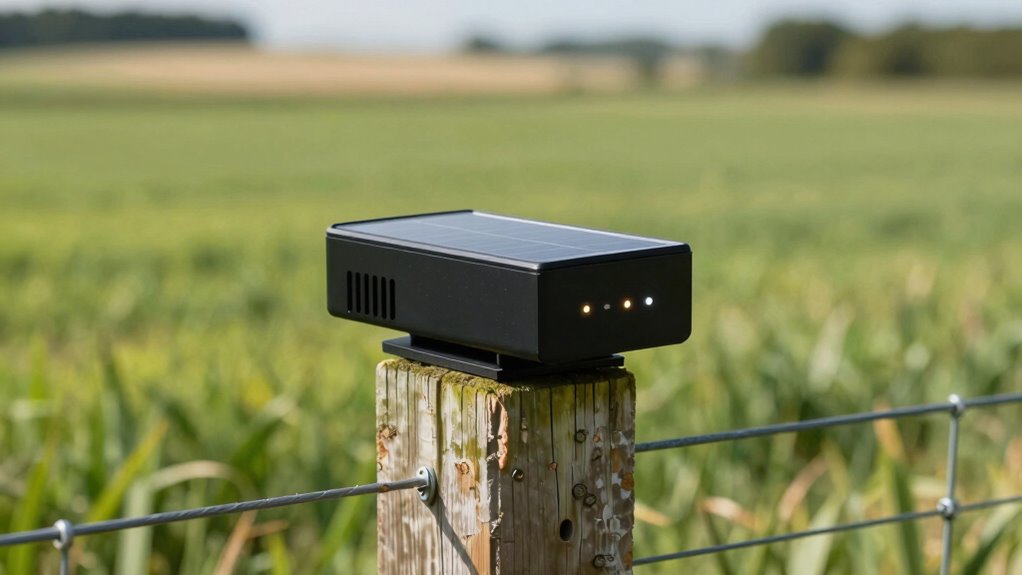

For a small farm, the 20-Mile Solar-Powered Electric Fence Charger, 0.33 J is my best overall pick on paper because its higher listed output and range offer more headroom than the compact low-joule models. The Gallagher S12 is a more conservative choice for short, simple fences, while the Gorhope charger with a short-circuit alarm adds a useful fault-alert feature. The main tradeoff is between output and headroom for longer or more demanding fences versus portability and a simpler setup for small, clean runs. Advertised mileage alone cannot predict performance: vegetation, grounding, fence condition, and animal type all affect results. Read on for the full breakdown and guidance on matching a charger to your fence.

Get pet supplies delivered free with Prime
- Fast, free delivery on millions of items
- Prime Video, Amazon Music and more included
- Member-only deals all year
Complete the kit



Key Takeaways
- The 0.33-joule, 20-mile model leads on stated capacity: it offers more output than every other listed charger, making it the strongest candidate here for buyers who want extra headroom, though real performance depends on fence conditions.
- The Gallagher S12 is the low-output, short-run option: its 0.12-joule rating and 4-mile claim suit a simpler perimeter better than a long or vegetation-prone fence.
- Some mileage claims do not match output alone: the EVIORTER and Hovikoki list 0.11 joule with 10-mile coverage, so buyers should treat range figures as estimates rather than direct comparisons of usable power.
- Monitoring and portability distinguish the feature-led picks: Gorhope adds a short-circuit alarm, while the portable 0.18-joule model prioritizes moving or temporary setups over the highest listed output.
- The two ANDMON MINI250 listings need careful comparison: both state 0.25 joule, but one also advertises a 15-mile range; confirm the exact model and included equipment before choosing between them.
| ANDMON MINI250 Solar Electric Fence Charger, 0.25 Joule |  | Best for Quick, Portable Setup | Output: 0.25 joule | Power source: Solar | Fence coverage: Up to 12 miles | VIEW ON AMAZON | See Our Full Breakdown |
| ANDMON MINI250 Solar Electric Fence Charger, 0.25 Joule, 15-Mile Range |  | Best for Longer Stated Reach | Output: 0.25 joule | Maximum fence length: Up to 15 miles | Battery: 12V, 4.5Ah sealed lead-acid | VIEW ON AMAZON | See Our Full Breakdown |
| Gallagher S12 0.12 J Solar Electric Fence Charger, 4-Mile Range |  | Best for Small Enclosures | Energizer output: 0.12 J | Maximum range: Up to 4 miles on single-wire fencing in ideal conditions | Range with multiple wires or some vegetation: 0.6 miles | VIEW ON AMAZON | See Our Full Breakdown |
| 20-Mile Solar-Powered Electric Fence Charger, 0.33 J |  | Best for Adjustable Output and Alerts | Range: 20 miles | Output energy: 0.33 J | Voltage settings: 8,000 V, 9,000 V, and 10,200 V | VIEW ON AMAZON | See Our Full Breakdown |
| Gorhope Solar Electric Fence Charger with Short-Circuit Alarm | 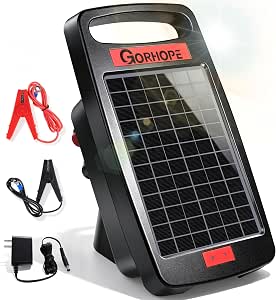 | Best for Basic Fault Alerts | Output energy: 0.11 joules | Output voltage: 5,700–10,200 volts | Battery runtime: Up to 14 days without sunlight when fully charged | VIEW ON AMAZON | See Our Full Breakdown |
| Portable Solar Electric Fence Charger, 0.18 J |  | Best for Temporary Fencing | Energy output: 0.18 J | Voltage output: 5,700–10,200 V | Claimed coverage: Up to 10 miles in the description; title also claims 110 miles | VIEW ON AMAZON | See Our Full Breakdown |
| Epoify Solar Electric Fence Charger, 0.18 J, 10-Mile Coverage |  | Best for Flexible Charging | Energy: 0.18 J | Pulse voltage: 5,700–10,200 V | Maximum voltage: 10,200 V | VIEW ON AMAZON | See Our Full Breakdown |
| Zareba ESP5M-Z Solar Electric Fence Charger, 5-Mile Range |  | Best for Established Small Paddocks | Model: ESP5M-Z | Fence range: Up to 5 miles in ideal conditions; 2.5 miles with light vegetation | Output energy: 0.15 J | VIEW ON AMAZON | See Our Full Breakdown |
| EVIORTER Solar Electric Fence Charger, 0.11 J, 10 Miles, 8,100 V, Black |  | Best for Extended Cloudy Stretches | Energy: 0.11 J | Maximum output voltage: 8,100 V | Stated range: 10 miles | VIEW ON AMAZON | See Our Full Breakdown |
| Hovikoki 10-Mile Solar Electric Fence Charger, 0.11 J |  | Best for T-Post Installation | Maximum fence range: 10 miles | Output energy: 0.11 J | Maximum voltage: 8,100 V | VIEW ON AMAZON | See Our Full Breakdown |
| solar electric fence charger for small farm | Battery |
|---|---|
| ANDMON MINI250 Solar Electric | Internal GEL battery |
| ANDMON MINI250 Solar Electric | 12V, 4.5Ah sealed lead-acid |
| Gallagher S12 0.12 J Solar Ele | Long-life lithium |
| 20-Mile Solar-Powered Electric | 1 lithium-ion battery, included |
| Gorhope Solar Electric Fence C | — |
| Portable Solar Electric Fence | — |
| Epoify Solar Electric Fence Ch | — |
| Zareba ESP5M-Z Solar Electric | — |
| EVIORTER Solar Electric Fence | — |
| Hovikoki 10-Mile Solar Electri | 12 V, 5 Ah sealed GEL |
More Details on Our Top Picks
ANDMON MINI250 Solar Electric Fence Charger, 0.25 Joule
The ANDMON MINI250 suits small farms that need a solar charger they can move as grazing areas change. Its built-in panel and internal GEL battery keep the setup compact, while 360-degree T-post rotation lets you angle the unit toward the sun without changing the fence layout. The listed capacity reaches up to 12 miles, but that figure is a maximum, not a promise for every multi-strand or brushy fence. Compared with the Gallagher S12, this unit offers higher output and a longer stated reach, while the Gallagher is the more modest choice for very small enclosures. The MINI250’s tradeoff is its 0.25-joule output and a setup step: you must connect the battery terminals before use. It makes most sense for portable strip grazing, not a demanding, heavily vegetated perimeter.
Pros:- Built-in solar panel and internal GEL battery make it a self-contained portable unit.
- Rotates 360 degrees on a T-post to face available sunlight.
- Rated for up to 12 miles of fencing.
- Listed for 24-hour operation for up to 21 days.
Cons:- Battery terminals need to be connected manually before use.
- The 0.25-joule output may be limiting for demanding or vegetation-heavy fence lines.
- The 12-mile figure may not reflect real-world reach with multiple strands or poor fence conditions.
Best for: Small-farm owners moving a charger between temporary paddocks or strip-grazing areas on T-post fencing.
Not ideal for: Farmers running long, multi-strand fences through dense vegetation who need dependable performance beyond the stated maximum range.
- Output:0.25 joule
- Power source:Solar
- Fence coverage:Up to 12 miles
- Battery:Internal GEL battery
- Listed operating duration:24 hours / 21 days
- Mounting:360-degree rotation on a T-post
- Dimensions:8.66 × 11.02 × 6.69 inches
- Weight:2.7 kg
Our verdict“Choose the MINI250 if you value a movable, self-contained charger for temporary farm paddocks and can work within its modest output.”
ANDMON MINI250 Solar Electric Fence Charger, 0.25 Joule, 15-Mile Range
Among these small-farm options, the 15-mile-rated ANDMON MINI250 has the longest stated reach in this batch, paired with 0.25 joule of output. That makes it a stronger fit than the Gallagher S12 for a farm with more fence to cover, though neither mileage figure should be treated as guaranteed on a complex, multi-wire line. Its 12V, 4.5Ah sealed lead-acid battery is listed to run for up to 21 days without sunshine, which can help during cloudy stretches or when a paddock is far from mains power. The unit is also rated for a broad operating temperature range. The tradeoffs are its relatively modest energy output for the claimed reach and the need to connect the battery terminals before use. Actual coverage depends on wire type and strand count.
Pros:- Listed fence reach of up to 15 miles, the longest stated coverage among these five products.
- 12V, 4.5Ah sealed lead-acid battery is rated for up to 21 days without sunshine.
- Designed for harsh weather and an operating range of -20 to 80°C.
- Solar power supports use at remote pasture locations.
Cons:- Battery terminals must be connected before the charger is used.
- The 15-mile maximum varies with wire type and number of strands.
- Its 0.25-joule output may be a constraint on demanding fence layouts.
Best for: Small farms with relatively long, well-maintained fence runs that want solar power and a stated backup period for sunless weather.
Not ideal for: Owners who need a simple out-of-box setup or who expect the full 15-mile reach across many strands, heavy vegetation, or poor grounding.
- Output:0.25 joule
- Maximum fence length:Up to 15 miles
- Battery:12V, 4.5Ah sealed lead-acid
- Operation without sunshine:Up to 21 days
- Operating temperature:-20 to 80°C
- Power source:Solar
- Item weight:8.05 pounds
- Package dimensions:10.94 × 9.8 × 7.36 inches
Our verdict“Pick this MINI250 for a longer, straightforward fence run where its stated reach and backup duration matter more than higher output or plug-and-play setup.”
Gallagher S12 0.12 J Solar Electric Fence Charger, 4-Mile Range
The Gallagher S12 is the restrained pick for a small pasture, poultry area, or garden where compact size matters more than long-distance coverage. Its 0.12-joule output and long-life lithium battery suit lighter-duty fencing better than the two ANDMON MINI250 units, which offer 0.25 joule and much longer stated ranges. Gallagher’s own figures show why fence conditions matter: up to 4 miles on a single wire in ideal conditions, but only 0.6 miles with multiple wires or some vegetation. That makes this a more realistic fit for short, simple layouts than for a sprawling farm boundary. The three-year warranty is a useful differentiator, but the grounding rod is not included, and the unit needs two to three days in direct sunlight before first use for best performance.
Pros:- Compact 2.4-pound unit for small pasture and garden applications.
- Long-life lithium battery and solar-powered operation.
- Three-year manufacturer warranty.
- Range guidance distinguishes ideal single-wire use from shorter multi-wire or vegetated setups.
Cons:- Coverage is listed as only 0.6 miles with multiple wires or some vegetation.
- Grounding rod is not included.
- Needs two to three days in direct sunlight before first use for best performance.
Best for: Smallholders fencing poultry, a garden, or a short single-wire pasture who want a compact charger with a stated long-life battery.
Not ideal for: Farmers with long, multi-strand, or vegetation-heavy fences, or anyone who needs a charger ready to use immediately without arranging a grounding rod and sun exposure.
- Energizer output:0.12 J
- Maximum range:Up to 4 miles on single-wire fencing in ideal conditions
- Range with multiple wires or some vegetation:0.6 miles
- Battery:Long-life lithium
- Recommended grounding rod depth:At least 18 inches
- Mounting:Unpainted grounding rod up to 0.5-inch diameter
- Dimensions:5.7 × 5 × 6.7 inches
- Weight:2.4 pounds
- Warranty:3 years
Our verdict“Choose the S12 for a small, simple enclosure where its compact build and warranty outweigh its limited reach on demanding fences.”
20-Mile Solar-Powered Electric Fence Charger, 0.33 J
This charger is the feature-heavy choice for a small farm where status checks and fault alerts matter as much as solar operation. Its 0.33-joule output is the highest listed in this group, and three voltage settings—8,000, 9,000, and 10,200 volts—give buyers more control than the fixed-output ANDMON MINI250. LED indicators report charging, operating status, and battery level, while a detachable 110 dB siren can alert you to a short circuit or installation problem. The claimed 20-mile reach is substantial on paper, but fence condition and layout still determine practical coverage. Its battery is listed for up to 14 days in darkness, less than the MINI250’s stated 21 days without sunshine. The siren may be excessive near a home, and the backup claim depends on conditions and battery state.
Pros:- 0.33-joule output is the highest listed among these five chargers.
- Three selectable voltage settings: 8,000, 9,000, and 10,200 volts.
- LEDs indicate charging, operating status, and battery level.
- Detachable 110 dB siren alerts to short circuits or installation issues.
Cons:- The claimed 14-day backup in darkness depends on conditions and battery state.
- A 110 dB siren may be disruptive near homes or neighboring properties.
- The 20-mile range is a stated maximum, not a guarantee for every fence layout.
Best for: Small-farm owners who want adjustable voltage and visible status indicators for a fence that is difficult to check frequently.
Not ideal for: Residential users sensitive to a loud alarm, or buyers who prioritize a longer stated backup period over monitoring features.
- Range:20 miles
- Output energy:0.33 J
- Voltage settings:8,000 V, 9,000 V, and 10,200 V
- Battery backup:Up to 14 days in darkness
- Alarm:Detachable, 110 dB
- Battery:1 lithium-ion battery, included
- Item weight:3.34 pounds
- Package dimensions:10.47 × 8.66 × 7.09 inches
Our verdict“Choose this model if adjustable output and fault alerts are more useful to your farm than the ANDMON MINI250’s longer stated backup period.”
Gorhope Solar Electric Fence Charger with Short-Circuit Alarm
The Gorhope solar charger is a compact, lower-output option for small farms that value fault alerts over long fence reach. Its 0.11-joule output is close to the Gallagher S12’s 0.12 joule, but Gorhope adds alarms for short circuits and ground connection errors—helpful signals when a fence problem might otherwise go unnoticed. It also lists up to 14 days of operation without sunlight when fully charged, though that runtime depends on the battery starting full and getting enough sun to recharge. The voltage range reaches 10,200 volts, but voltage alone does not make this a high-capacity charger; its low energy output points toward lighter-duty fencing. Tempered glass and described waterproof and dustproof protection suit outdoor placement, while the one-year warranty is shorter than Gallagher’s three years.
Pros:- Alarms identify short circuits and ground connection errors.
- Listed for up to 14 days of operation without sunlight when fully charged.
- Voltage range of 5,700–10,200 volts.
- Tempered-glass surface and described waterproof and dustproof protection.
Cons:- 0.11-joule output is limited for demanding or extensive fencing.
- Performance relies on adequate sunlight for battery recharging.
- One-year warranty is shorter than the Gallagher S12’s stated three-year warranty.
Best for: Smallholders with short, lighter-duty fence runs who want alarms for short circuits and grounding errors.
Not ideal for: Farmers powering long or vegetation-heavy fences, or buyers who want a longer warranty and a clearly stated fence-range figure.
- Output energy:0.11 joules
- Output voltage:5,700–10,200 volts
- Battery runtime:Up to 14 days without sunlight when fully charged
- Alarms:Short-circuit and ground connection error
- Surface material:Tempered glass
- Power source:Solar powered
- Connector type:USB Type-A
- Warranty:1 year
Our verdict“Pick Gorhope for a modest fence where basic fault alerts are useful, but choose a higher-output charger for longer or tougher runs.”
Portable Solar Electric Fence Charger, 0.18 J
For rotating grazing areas or short-term garden and poultry enclosures, I’d favor this unit’s portable, all-in-one design over the more post-oriented Zareba ESP5M-Z. Its listed 0.18 J output is higher than the Zareba’s 0.15 J, though joules alone do not establish how well either charger will handle a particular fence. The internal battery is claimed to run for up to 10 days without sunlight, which can help through cloudy spells, but the listing does not spell out test conditions. I’d be cautious about using its distance claim for planning: the title says 110 miles while the description says up to 10 miles. That conflict, along with condition-dependent runtime, makes it a less reassuring choice for a fixed perimeter.
Pros:- Portable design suits temporary and remote fence lines
- Listed 0.18 J output exceeds the Zareba ESP5M-Z’s 0.15 J
- Internal battery is claimed to provide up to 10 days without sunlight
- Listing describes waterproof and snow-resistant construction
Cons:- Conflicting coverage claims of 110 miles in the title and up to 10 miles in the description make sizing difficult
- Battery runtime and coverage claims depend on conditions and are not independently specified
- AC dual power is mentioned, but the supplied description does not clarify the adapter or charging details
Best for: Small-farm owners who move temporary livestock, poultry, or garden fencing and can verify the charger’s coverage before installation
Not ideal for: Buyers setting a permanent perimeter who need a consistent, clearly documented range or dependable runtime expectations
- Energy output:0.18 J
- Voltage output:5,700–10,200 V
- Claimed coverage:Up to 10 miles in the description; title also claims 110 miles
- Battery runtime without sunlight:Up to 10 days when fully charged
- Power source:Solar; listing also mentions AC dual power
- Weather resistance:Waterproof and snow-resistant
- Weight:3.12 lb
Our verdict“Choose it for movable small-farm fencing if portability matters more than having a consistent, clearly stated coverage claim.”
Epoify Solar Electric Fence Charger, 0.18 J, 10-Mile Coverage
The Epoify stands out among the two 0.18 J portable options here because it gives buyers two charging routes: solar for remote fences and an AC adapter for initial charging or periods with limited sun. Its stated up-to-10-mile range is easier to interpret than the conflicting distance claims on the Portable Solar Electric Fence Charger, though it remains a maximum affected by grounding, vegetation, and sunlight. The 24-hour AC initial charge offers a practical alternative to waiting three days of direct sunlight before use. Compared with the Zareba ESP5M-Z, Epoify claims more range, while Zareba provides a clearer light-vegetation range and a longer stated backup period. I’d choose Epoify for flexible setup, not for a heavily vegetated or poorly grounded fence where maximum coverage is unlikely.
Pros:- Solar panel and AC adapter provide flexible charging options
- Listed 0.18 J output is higher than the Zareba ESP5M-Z’s 0.15 J
- Portable form suits remote farm fence lines
- Initial charging can be done in 24 hours by AC rather than three days of direct sun
Cons:- Up-to-10-mile coverage depends on sunlight, grounding, and vegetation
- Careful grounding and installation are required for reliable operation
- The supplied specs do not state a battery runtime without sunlight
Best for: Small-farm owners who need a portable charger for a remote fence but want AC charging available when sunlight is limited
Not ideal for: Buyers who need a documented range under vegetation or do not want to manage careful grounding and installation
- Energy:0.18 J
- Pulse voltage:5,700–10,200 V
- Maximum voltage:10,200 V
- Coverage:Up to 10 miles
- Power sources:Solar panel and AC adapter
- Initial charging:24 hours by AC adapter or 3 days of direct sunlight
- Dimensions and weight:6.6 × 4.3 × 8.2 in; 1.44 kg
Our verdict“Pick Epoify if AC backup charging is useful for your remote setup and you can install and ground the fence carefully.”
Zareba ESP5M-Z Solar Electric Fence Charger, 5-Mile Range
I’d put the Zareba ESP5M-Z ahead of the broader-range claims when a small farm needs a well-defined 5-mile maximum rather than a nominal 10-mile figure. It specifies up to 2.5 miles with light vegetation, giving a more useful planning reference than Epoify’s maximum range, which is conditional on fence and site factors but has no vegetation-specific figure. Its up-to-two-week battery operation is also the longest stated sun-free period in this group. The tradeoff is lower listed output at 0.15 J and a three-day full-sun charge before first use. The rotating bracket fits several post types, which can make panel positioning easier, but I’d reserve this model for modest paddocks rather than long or demanding fence runs.
Pros:- Gives both ideal-condition and light-vegetation range figures
- Battery is claimed to operate for up to two weeks without sunlight
- Rotating bracket fits T-posts, Y-posts, and round-wood posts
- Lower listed maximum range can make sizing a modest paddock more straightforward than a 10-mile claim
Cons:- Five-mile range applies only in ideal conditions and falls to 2.5 miles with light vegetation
- Listed 0.15 J output is lower than the 0.18 J Epoify and portable 0.18 J models
- Requires three days of full-sun charging before initial use
Best for: Small-farm owners with cattle, horses, pigs, or goats in a modest paddock who want a stated light-vegetation range and flexible post mounting
Not ideal for: Buyers needing a longer fence run, higher listed energy output, or immediate setup without several days of full-sun charging
- Model:ESP5M-Z
- Fence range:Up to 5 miles in ideal conditions; 2.5 miles with light vegetation
- Output energy:0.15 J
- Battery operation without sunlight:Up to 2 weeks
- Input voltage:6 V
- Wattage:5 W
- Mounting:T-post, Y-post, and round-wood post compatible; 360-degree rotation
Our verdict“Choose the Zareba for a modest, clearly bounded paddock where mounting flexibility and its stated two-week battery reserve matter more than maximum range.”
EVIORTER Solar Electric Fence Charger, 0.11 J, 10 Miles, 8,100 V, Black
The EVIORTER’s main distinction is its stated up-to-30-day backup, a longer reserve than the Zareba ESP5M-Z’s up-to-two-week claim. That could suit a small farm where the charger is remote and sunny weather is intermittent, but the reserve comes with a notable catch: the listing says recharging takes six sunny days. Its 0.11 J output is also below the 0.15 J Zareba and both 0.18 J options, so I would not treat its 10-mile claim as equivalent to those products’ ranges. The 5 W monocrystalline panel and tool-free setup support independent placement, yet the 8.03 lb listed weight makes “portable” less convincing than the lighter Epoify. This makes most sense for a low-demand fence where backup duration matters more than fast recovery or higher output.
Pros:- Claims up to 30 days of backup after a full charge
- 5 W monocrystalline panel provides solar charging without a wired supply
- Tool-free setup is described for portable use
- Outdoor construction is described as waterproof and suitable for low temperatures
Cons:- Listed 0.11 J output is lower than the Zareba ESP5M-Z and the 0.18 J options
- Recharge time is stated as six sunny days
- The 10-mile range is a maximum claim, with performance dependent on conditions
Best for: Owners of a remote, relatively low-demand small-farm fence who prioritize a long stated battery reserve over quick recharging
Not ideal for: Buyers with demanding livestock containment needs, long vegetation-prone fences, or limited access to several sunny days for recharging
- Energy:0.11 J
- Maximum output voltage:8,100 V
- Stated range:10 miles
- Solar panel power:5 W
- Charging time:6 sunny days
- Backup duration:Up to 30 days
- Weight:8.03 lb
Our verdict“Consider the EVIORTER for a low-demand remote fence where its long stated backup period outweighs lower output and slow recharging.”
Hovikoki 10-Mile Solar Electric Fence Charger, 0.11 J
Hovikoki is the clearest fit here for a buyer who wants a T-post-mounted charger with its battery included as a specified component. Like the EVIORTER, it lists 0.11 J output, an 8,100 V maximum, a 5 W panel, and up to 30 days of battery operation; neither listing makes that long reserve a guarantee across weather or fence conditions. Hovikoki adds an IPX4 rating, an AC charger, and a sealed 12 V, 5 Ah GEL battery, while EVIORTER’s supplied details describe a monocrystalline panel and tool-free setup. The six-day charging time is a real planning constraint, and the battery ships disconnected, so setup is not entirely ready-to-run. I’d choose it over EVIORTER when the mounting and battery details matter more than minimizing weight.
Pros:- Specified 12 V, 5 Ah sealed GEL battery and included AC charger
- Designed to mount on a T-post without tools
- IPX4 water-resistance rating and weather-oriented housing
- Claims up to 30 days of battery operation when fully charged
Cons:- Requires about six days to charge fully
- Battery ships disconnected and needs setup
- Listed 0.11 J output is lower than the Zareba ESP5M-Z and the 0.18 J models
Best for: Small-farm owners with a T-post fence who want a specified sealed GEL battery, an included AC charger, and a stated long backup period
Not ideal for: Buyers who need a charger ready immediately, faster solar recovery, or higher listed output for a demanding fence
- Maximum fence range:10 miles
- Output energy:0.11 J
- Maximum voltage:8,100 V
- Solar panel:5 W
- Battery:12 V, 5 Ah sealed GEL
- Battery runtime without sunlight:Up to 30 days when fully charged
- Water resistance and weight:IPX4; 5.9 lb
Our verdict“Choose Hovikoki for a T-post installation where its specified GEL battery and included AC charger suit your setup, and allow time for charging and connection.”
How We Picked
I compared the 10 listed chargers by the information available for small-farm use: stated joule output, advertised range, practical fit for short or longer fences, portability, and features that may help with fault detection. I gave more weight to output and useful differentiators than to mileage claims alone, since fence length figures are not directly comparable across brands and can change with weeds, wire condition, grounding, and load.
The ranking favors a balanced fit rather than the largest advertised number. The 0.33-joule model leads for its stronger stated output; the Gorhope earns attention for its short-circuit alarm; and the Gallagher S12 has a clearer role on modest, uncomplicated runs. Models with similar output or limited listed details rank lower when their main distinction is an unverified mileage claim. I do not treat range claims as guarantees, and buyers should confirm battery, panel, mounting, warranty, and compatibility details with the seller before purchase.
Factors to Consider When Choosing Solar Electric Fence Charger For Small Farms
A charger that suits a small farm is not automatically the one with the longest range printed on its listing. I would match the unit to the fence’s real electrical load, the animals being contained, and how often the fence can be checked. These broader checks help avoid buying either too little output for a demanding setup or more capacity than a simple paddock needs.
Match Joules to Fence Load, Not Just Perimeter Length
Joule output helps describe the energy delivered, but a fence’s load also depends on wire length, the number of strands, insulators, vegetation, and leakage points. A clean, short fence can work with less output than a similar-length run where grass touches the wire or several branches connect. Buyers often choose by the advertised mileage alone and miss the effect of these conditions. Start by listing the fence’s total wire length and likely vegetation burden, then leave room for seasonal growth and future extensions. A higher-output charger can provide more headroom, but it will not repair poor connections or persistent shorts. For a small, well-maintained paddock, a modest unit may be a sensible fit; a complex perimeter calls for more capacity and regular maintenance.
Treat Advertised Range as a Rough Comparison
Manufacturers may calculate mileage under different test conditions, so a 10-mile claim from one brand does not necessarily equal a 10-mile claim from another. Range can fall sharply when the fence is wet, overgrown, poorly grounded, or built from multiple loaded strands. A common mistake is to buy a charger whose stated range only just matches the fence, leaving no allowance for those losses. Use range to narrow choices, then compare output, installation guidance, and the seller’s stated assumptions. If your layout is near a listed limit, plan to reduce leakage and verify voltage along the fence rather than relying on the label. A margin is more useful than a precise-looking mileage figure.
Choose for the Animal and the Job of the Fence
Containment needs differ: a temporary poultry rotation, a garden deterrent, and a permanent livestock boundary do not place the same demands on a charger. Coat thickness, animal behavior, fence training, and the consequence of a break all affect how much margin a buyer may want. A low-output unit may suit a simple, short setup, but it may be a poor match for a demanding animal or a fence with substantial leakage. Do not assume a charger can compensate for inadequate fencing or incorrect installation. Check local rules and product instructions for the intended animals, and use a suitable fence tester to confirm the system is operating as required. When escape risk is high, prioritize dependable installation and monitoring over a headline range.
Check Solar and Battery Details Before Buying
“Solar” does not tell you how much reserve power is stored or how the charger behaves through cloudy weather. Look for clear information about the battery type, whether it is included, charging time, replaceability, and any low-battery indication. A small panel may keep up in bright conditions but leave less recovery margin after several overcast days or repeated fence faults. Buyers sometimes focus on panel size while overlooking battery service life and access to replacement parts. Match the charging setup to local sun exposure and the consequences of temporary loss of power. If the listing leaves these details unclear, ask the seller rather than assuming the unit is ready to install out of the box.
Plan Grounding, Fault Checks, and Maintenance
Grounding is part of the electrical circuit, not an optional installation detail. Soil type and seasonal dryness can affect the ground system, while weeds, damaged insulators, and loose joins can drain power along the fence. An alarm such as the one listed on the Gorhope can help flag a short, but it does not replace inspection or a fence-voltage tester. Before buying, check the manual for grounding requirements and recommended maintenance intervals. Keep a routine for clearing vegetation, checking connections, and testing voltage at more than one point. This work often improves real-world performance more than choosing a charger based on a larger mileage claim.
Pay More for Useful Headroom or Features, Not a Bigger Number Alone
Extra output can be worth paying for when the fence may expand, carries several strands, or faces regular vegetation pressure. A fault alarm can be more useful than a range upgrade if the farm has long stretches that are difficult to inspect. By contrast, a simple compact unit may be a better fit when the fence is short, temporary, and easy to check. Compare what is included, how the unit mounts, whether the battery can be serviced, and the warranty terms before treating two chargers as equivalent. Avoid paying for a headline range that rests on unclear assumptions. The best value is the least complicated setup that reliably handles your actual fence load with some room for seasonal changes.
Frequently Asked Questions
Is the 20-mile, 0.33-joule charger automatically the right choice for a small farm?
No. Its higher listed output makes it the strongest candidate in this group for buyers who want headroom, but a small, clean paddock may not need that capacity. Fence length, wire count, vegetation, grounding, and animal type all affect the required setup. A larger rating cannot fix shorts or poor connections. Choose it when your fence load justifies the extra output, not simply because its range claim is the largest listed.
How should I compare chargers that list 10 or 15 miles but have different joule ratings?
Use both figures as clues, not as a direct measure of equivalent performance. Advertised mileage may rely on different conditions, and the EVIORTER and Hovikoki, for example, list 0.11 joule alongside 10-mile claims. Compare joules, installation requirements, fence load, and the seller’s explanation of the range claim. If your fence approaches the stated limit, allow extra margin for vegetation and leakage. A fence tester can help confirm actual performance after installation.
Can a solar charger keep working through several cloudy days?
That depends on the panel, battery capacity, charging conditions, and the charger’s power draw; the word “solar” alone does not answer it. Check whether a battery is included, whether it is replaceable, and what the manufacturer says about reserve time. Shade, winter sun, and repeated fence faults can reduce the available charge. Place the panel where it receives suitable sun and keep it clear of dirt or obstructions. If uninterrupted containment matters, ask the seller about backup or battery options before buying.
Should I choose the Gorhope alarm model instead of a higher-output charger?
Choose based on the problem you need to solve. A short-circuit alarm may help when a long or hard-to-inspect fence makes faults difficult to spot, but it does not provide the extra output of the 0.33-joule model. If your fence is demanding or prone to leakage, capacity and sound installation may matter more than an alert. If the fence is adequately powered but faults are easy to miss, the alarm can add practical value. Confirm what the alarm detects and how it signals a fault before relying on it.
Are the two ANDMON MINI250 listings different enough to justify choosing the 15-mile version?
Both listings state 0.25 joule, while one also advertises a 15-mile range, so the available details do not establish a difference in output. Check the exact model number, included solar or battery components, warranty, and installation instructions before deciding. A larger range claim may reflect different stated conditions rather than a meaningful change in power. If those details are identical, choose based on verified features and seller support rather than mileage alone. Ask for clarification if the listings do not make the distinction clear.
Conclusion
For most small-farm buyers who want more stated output and room for a demanding fence, I would start with the 20-Mile Solar-Powered Electric Fence Charger, 0.33 J as the best overall pick, while treating its range as a claim to verify against your setup. The best value for a short, simple fence is the Gallagher S12 when its lower output matches the job and the listing’s included equipment meets your needs. For beginners, I would favor a straightforward, easy-to-check installation over chasing the longest mileage claim; the portable 0.18-joule option may suit a modest temporary fence, provided its details fit your needs. For a premium-style feature priority, the Gorhope is the standout for its short-circuit alarm, while the 0.33-joule model is the choice for buyers prioritizing output. If portability matters most, compare the portable 0.18-joule unit; if you are considering a 10- or 15-mile claim, verify the model details and build in headroom. Match the charger to fence load, animal, and maintenance capacity before making the final call.
Halloween Picks
halloween
As an affiliate, we earn on qualifying purchases.