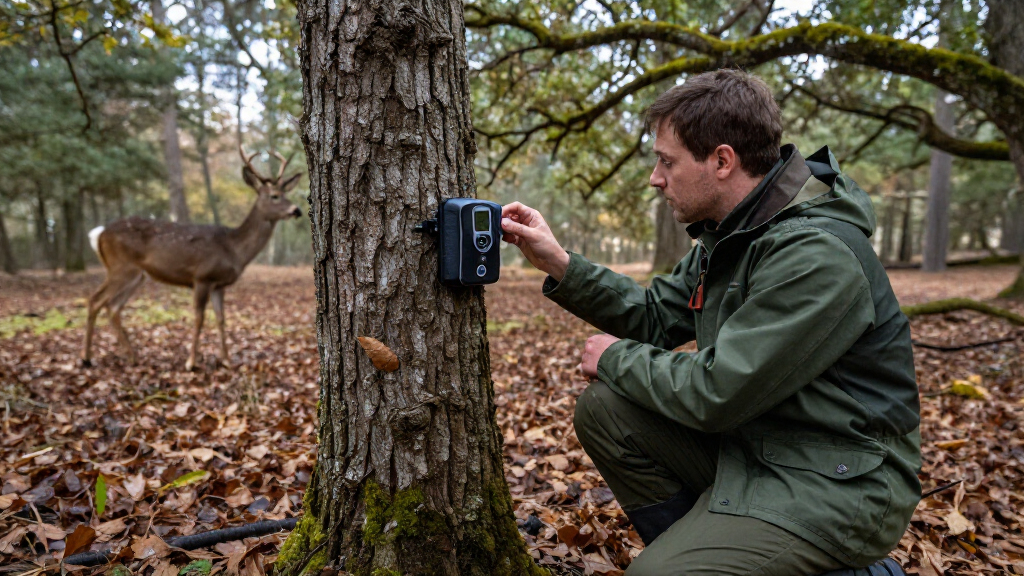
For wildlife cameras for deer observation, my best overall pick is the GardePro A3S 2-Pack, which pairs no-glow night vision with two non-cellular cameras for monitoring more than one trail. The GardePro E5S is a straightforward single-camera alternative, while the Loatos Cellular Trail Camera suits buyers who want remote alerts and AI animal detection. The main tradeoffs are how quickly you need access to images, how much ground you want to cover, and whether you can maintain batteries or solar power at the site. Cellular and connected models add convenience but bring more setup and service-plan questions than local-storage cameras. Read on for the full comparison and a guide to choosing a camera for your deer routes.

Get pet supplies delivered free with Prime
- Fast, free delivery on millions of items
- Prime Video, Amazon Music and more included
- Member-only deals all year
Complete the kit


Key Takeaways
- The GardePro A3S 2-Pack stands out for coverage: two no-Wi-Fi, non-cellular cameras let you monitor separate trails without depending on a signal or remote connection.
- The GardePro E5S is the simpler single-camera choice: it keeps the setup focused on local recording, though it covers fewer locations than a two-camera bundle.
- Cellular picks solve a different problem: Loatos, Moultrie EDGE 3, TKENPRO, and SEHMUA are aimed at remote access, not just recording deer activity at a fixed site.
- Solar and multi-camera bundles can reduce routine trips: MAXDONE, TKENPRO, and SEHMUA offer solar-oriented designs, while the WOSODA and Moultrie bundles provide multiple cameras; placement and sunlight still affect upkeep.
- Headline resolution is not the whole decision: trigger response, night illumination, camera placement, storage, and connection method can matter more to useful deer observations than a large megapixel or video number.
| WOSPORTS Trail Camera 64MP 4K 0.2s Trigger Motion Activated Game Camera with No-Glow Night Vision 2.0″ LCD 120° Wide Angle |  | Best for Fast, Discreet Deer Capture | Photo resolution: 64MP, adjustable | Video resolution: 4K HD | Trigger speed: 0.2 seconds | VIEW ON AMAZON | See Our Full Breakdown |
| MAXDONE Solar Trail Camera, 2-Pack, 4K WiFi and Bluetooth |  | Best Two-Camera Solar Setup | Quantity: 2 cameras | Photo resolution: 64MP | Video resolution: 4K at 30 fps | VIEW ON AMAZON | See Our Full Breakdown |
| WOSODA 2 Pack Trail Cameras with Night Vision, 48MP Hunting Game Camera, 1080P HD Waterproof Wildlife Monitoring |  | Best Simple Two-Camera Pick | Number of cameras: 2 | Photo resolution: 48MP | Video resolution: 1080P HD | VIEW ON AMAZON | See Our Full Breakdown |
| WOSODA Mini Trail Camera 4-Pack, 30MP 1080p HD, Night Vision, Motion Activated, Waterproof |  | Best for Covering Several Deer Trails | Pack size: 4 cameras | Photo resolution: 30MP | Video resolution: 1080p | VIEW ON AMAZON | See Our Full Breakdown |
| Loatos Cellular Trail Camera with AI Animal Detection, 2K Live View, Night Vision, Waterproof IP66, Built-in SIM Card with Unlimited Data Plan |  | Best for Remote Deer Monitoring | Video resolution: 2K live video | Trigger speed: 0.2 seconds | Connectivity: 4G LTE; Verizon, T-Mobile, and AT&T listed | VIEW ON AMAZON | See Our Full Breakdown |
| GardePro E5S Non-Cellular Trail Camera, 1296P HD Video with Sound |  | Best for Detailed Local Capture | Photo resolution: 64MP | Video resolution: 1296P HD with sound | Trigger speed: 0.1 seconds | VIEW ON AMAZON | See Our Full Breakdown |
| Moultrie EDGE 3 Cellular Trail Camera, 2-Pack, 40MP, 0.5-Second Trigger |  | Best for Monitoring Two Deer Trails Remotely | Pack size: 2 cameras | Photo resolution: 40MP | Video resolution: 1080p HD | VIEW ON AMAZON | See Our Full Breakdown |
| TKENPRO 4G LTE Cellular Trail Camera with Solar Power, 2K Video, Night Vision, Waterproof |  | Best for Solar-Powered Remote Viewing | Video resolution: 2K | Night vision: 940nm low-glow | Power source: Solar panel and rechargeable battery | VIEW ON AMAZON | See Our Full Breakdown |
| SEHMUA Trail Camera with 4G LTE, AI Animal Detection, Live Streaming, Solar Power, IP66 Waterproof |  | Best for Broad-Area Live Deer Observation | Video resolution: 2K HD | Cellular network: 4G LTE; Verizon, T-Mobile, and AT&T | SIM: Built-in, non-detachable; U.S. only | VIEW ON AMAZON | See Our Full Breakdown |
| Solar-Powered Trail Camera with Wi-Fi, Bluetooth, 5K Video and 60MP Photos |  | Best for High-Resolution Offline Observation | Image resolution: 60MP | Video resolution: 5K UHD with audio | Battery capacity: 5200mAh | VIEW ON AMAZON | See Our Full Breakdown |
| GardePro A3S 2-Pack Trail Camera (Non-Cellular, Non-WiFi), 64MP Photo & 1296P HD Video, Low-Light Performance, No-Glow Night Vision |  | Best Two-Camera Kit for Discreet Deer Monitoring | Photo resolution: 64MP | Video resolution: 1296P HD with sound | Trigger speed: 0.1 seconds | VIEW ON AMAZON | See Our Full Breakdown |
| GardePro E5S Non-Cellular Trail Camera, 64MP Photo & 1296P HD Video |  | Best Straightforward Single-Camera Pick | Photo resolution: 64MP | Video resolution: 1296P HD | Trigger speed: 0.1 seconds | VIEW ON AMAZON | See Our Full Breakdown |
| WOSPORTS Mini Trail Camera, 30MP 1080P HD |  | Best Compact Camera for Tight Mounting Spots | Photo resolution: 30MP | Video resolution: 1080P HD | Night vision: 850nm infrared LEDs | VIEW ON AMAZON | See Our Full Breakdown |
| MAXDONE Solar Trail Camera with 4K Video, 64MP Photos, Wi-Fi, Bluetooth, and Night Vision |  | Best Solar-Ready Camera for Nearby Phone Downloads | Photo resolution: 64MP | Video resolution: 4K | Night vision range: Up to 65 feet | VIEW ON AMAZON | See Our Full Breakdown |
| Meidase P70 Trail Camera, 64MP 1296p, No-Glow IR Night Vision, Motion Activated, Waterproof |  | Best for Long-Range, No-Glow Night Observation | Photo resolution: 64MP | Video resolution: 1296p HD | Night vision range: Up to 100 feet | VIEW ON AMAZON | See Our Full Breakdown |
| wildlife cameras for deer observation | Video resolution | Trigger speed | Photo resolution | Night vision |
|---|---|---|---|---|
| WOSPORTS Trail Camera 64MP 4K | 4K HD | 0.2 seconds | 64MP, adjustable | 32 × 940nm no-glow IR LEDs; up to 80 ft |
| MAXDONE Solar Trail Camera | 4K at 30 fps | — | 64MP | — |
| WOSODA 2 Pack Trail Cameras wi | 1080P HD | 0.3 seconds | 48MP | 850nm low-glow infrared |
| WOSODA Mini Trail Camera 4-Pac | 1080p | 0.3 seconds | 30MP | — |
| Loatos Cellular Trail Camera w | 2K live video | 0.2 seconds | — | 940nm infrared |
| GardePro E5S Non-Cellular Trai | 1296P HD with sound | 0.1 seconds | 64MP | — |
| Moultrie EDGE 3 Cellular Trail | 1080p HD | 0.5 seconds | 40MP | Low-glow infrared |
| TKENPRO 4G LTE Cellular Trail | 2K | 0.2 seconds | — | 940nm low-glow |
| SEHMUA Trail Camera with 4G LT | 2K HD | 0.2 seconds | — | Low-glow infrared; 82-foot range |
| Solar-Powered Trail Camera wit | 5K UHD with audio | — | — | 940nm infrared; 65-foot range |
| GardePro A3S 2-Pack Trail Came | 1296P HD with sound | 0.1 seconds | 64MP | — |
| GardePro E5S Non-Cellular Trai | 1296P HD | 0.1 seconds | 64MP | — |
| WOSPORTS Mini Trail Camera | 1080P HD | — | 30MP | 850nm infrared LEDs |
| MAXDONE Solar Trail Camera wit | 4K | 0.1 seconds | 64MP | — |
| Meidase P70 Trail Camera | 1296p HD | 0.1 seconds | 64MP | — |
More Details on Our Top Picks
WOSPORTS Trail Camera 64MP 4K 0.2s Trigger Motion Activated Game Camera with No-Glow Night Vision 2.0″ LCD 120° Wide Angle
For deer that cross a trail quickly, the 0.2-second trigger is the clearest reason to choose this WOSPORTS over the WOSODA 2 Pack, which has a 0.3-second trigger. Its 120° field of view covers a broader approach, while 940nm no-glow infrared helps keep nighttime observation discreet. The 64MP photo and 4K video options offer plenty of detail for reviewing antler shape and movement, though headline resolution alone does not guarantee better low-light footage. A small on-camera color LCD lets you check framing at the site, and AA, rechargeable-battery, or compatible solar power gives more setup flexibility than a battery-only plan. The tradeoff is that batteries are not included, and this model provides no stated phone or cellular access; expect to retrieve files from its SD card.
Pros:- 0.2-second trigger helps capture deer moving quickly through the detection area.
- 120° field of view covers a wider approach than the 100° MAXDONE two-camera set.
- 940nm no-glow IR supports discreet nighttime monitoring.
- AA, rechargeable battery, and compatible solar power options suit different site setups.
Cons:- Batteries are not included, so the camera needs extra setup before deployment.
- No wireless or cellular access is specified, so checking footage requires visiting the camera.
- The rechargeable battery and solar panel are sold separately.
Best for: Deer observers placing one camera on a narrow trail who value quick triggers, broad coverage, and discreet night capture.
Not ideal for: People who need remote alerts or want a ready-to-mount kit with batteries and storage included.
- Photo resolution:64MP, adjustable
- Video resolution:4K HD
- Trigger speed:0.2 seconds
- Field of view:120°
- Night vision:32 × 940nm no-glow IR LEDs; up to 80 ft
- Display:2-inch color LCD
- Power:8 AA batteries, rechargeable lithium battery sold separately, or compatible solar panel
- Memory support:16GB–256GB SD card
Our verdict“Choose this WOSPORTS when fast-triggered, wide-angle deer coverage matters more than remote file access or included power accessories.”
MAXDONE Solar Trail Camera, 2-Pack, 4K WiFi and Bluetooth
For observing more than one deer route, this two-camera solar bundle is more useful than buying a single unit such as the WOSPORTS 64MP 4K camera. Each camera records 64MP stills and 4K video, and the included rechargeable batteries, adjustable solar panels, and 32GB cards reduce the amount of separate gear needed to get started. Its local WiFi and Bluetooth app connection makes reviewing clips easier when you are near the camera, but the roughly 55-foot range is not remote monitoring: there is no home WiFi connection or cellular access. The 100° view is narrower than the WOSPORTS camera’s 120° lens, which may matter on open trails. Low-glow night vision is less discreet than the no-glow approach on that WOSPORTS, but the two-camera coverage and IP66 protection suit a broader observation setup.
Pros:- Two cameras let observers cover separate trails, crossings, or feeding areas.
- Rechargeable batteries, adjustable solar panels, and 32GB SD cards are included for each camera.
- Local app access avoids removing the card for nearby file checks.
- IP66-rated weather protection and low-glow night vision support outdoor use.
Cons:- App access is limited to about 55 feet in open areas and does not provide remote monitoring.
- The 100° lens is narrower than the 120° WOSPORTS camera’s field of view.
- Low-glow IR is not as discreet as a no-glow camera for wary deer.
Best for: Deer watchers who want to monitor two trails and check files by phone while standing near each camera.
Not ideal for: Buyers seeking live remote access from home, a no-glow night camera, or the widest possible viewing angle.
- Quantity:2 cameras
- Photo resolution:64MP
- Video resolution:4K at 30 fps
- Field of view:100°
- Night vision range:Up to 65 ft, low-glow
- Wireless connectivity:WiFi 6 and Bluetooth; local app connection up to about 55 ft
- Power:Rechargeable battery, adjustable solar panel, or power bank
- Included storage:32GB SD card
- Weather protection:IP66
Our verdict“Pick the MAXDONE set to cover two deer locations with solar-supported power and nearby phone access, not for off-site monitoring.”
WOSODA 2 Pack Trail Cameras with Night Vision, 48MP Hunting Game Camera, 1080P HD Waterproof Wildlife Monitoring
The WOSODA pair suits deer observers who want straightforward coverage at two locations without paying for app or cellular features they may not use. Its 0.3-second trigger is close to the WOSPORTS 64MP camera’s 0.2 seconds, though the faster WOSPORTS has an advantage when deer move briskly across the frame. WOSODA records 48MP photos and 1080P video, a less ambitious video specification than the 4K MAXDONE pair, but adequate for reviewing ordinary movement and site visits. The 60-foot trigger distance gives a defined working range for placing it along a trail. Low-glow 850nm infrared is a tradeoff for observers prioritizing discretion around cautious deer; the WOSPORTS uses no-glow 940nm IR. There is no WiFi or cellular access, and an SD card is required, so checking footage means going back to the camera.
Pros:- Two cameras provide coverage at separate deer trails or crossings.
- 0.3-second trigger is relatively quick for capturing passing movement.
- 48MP still photos provide detail for reviewing recorded activity.
- Waterproof construction and infrared night vision support outdoor placement.
Cons:- 850nm low-glow IR is more visible than the 940nm no-glow LEDs on the WOSPORTS camera.
- 1080P video falls below the 4K recording offered by the MAXDONE two-camera set.
- No wireless access is specified, and SD cards are required for storage.
Best for: Landowners who need two basic, waterproof cameras for nearby deer trails and prefer local SD-card recording.
Not ideal for: Observers who need remote access, 4K video, or especially discreet night monitoring for wary deer.
- Number of cameras:2
- Photo resolution:48MP
- Video resolution:1080P HD
- Trigger speed:0.3 seconds
- Trigger distance:60 ft
- Night vision:850nm low-glow infrared
- Weather protection:Waterproof
- Storage:SD card required
Our verdict“Choose the WOSODA pair for uncomplicated, two-location deer monitoring if local file retrieval and low-glow night vision fit your setup.”
WOSODA Mini Trail Camera 4-Pack, 30MP 1080p HD, Night Vision, Motion Activated, Waterproof
When the goal is to learn which of several trails deer use, this four-camera kit offers broader placement options than either two-camera bundle in this lineup. Its 0.3-second trigger and 65-foot night vision range give each compact unit a clear basic role, while the included 16GB SD cards and 16 AA batteries make initial deployment simpler than with the single WOSPORTS camera, which ships without batteries. The compromise is lower capture detail: 30MP photos and 1080p video are below the WOSODA 48MP pair and the 4K models. These cameras also have no phone connection, so footage requires removing cards; checking four sites can mean more trips and file handling. Their IP65-rated housing and camouflage finish suit outdoor placements, but the AA-powered design calls for battery changes at each camera.
Pros:- Four cameras allow simultaneous observation at multiple deer routes.
- Includes four 16GB SD cards and 16 AA batteries for initial deployment.
- 0.3-second trigger and up to 65-foot night vision support trail monitoring.
- IP65-rated camouflage housings are designed for outdoor placement.
Cons:- 30MP photos and 1080p video provide less detail than the WOSODA 48MP pair or 4K options.
- No phone connection; recordings must be retrieved by removing each SD card.
- Each camera needs four AA batteries, adding maintenance across a four-camera setup.
Best for: Deer observers mapping activity across several trails or crossings who value multiple locations over higher resolution or phone access.
Not ideal for: Buyers who need crisp 4K footage, remote or app-based file checks, or minimal maintenance across widely spaced cameras.
- Pack size:4 cameras
- Photo resolution:30MP
- Video resolution:1080p
- Trigger speed:0.3 seconds
- Night vision range:Up to 65 ft
- Housing:Camouflage ABS; IP65-rated
- Power:4 AA batteries per camera; 16 included
- Included storage:Four 16GB SD cards
- Maximum supported storage:32GB
Our verdict“Choose this four-pack to map several deer routes affordably in one deployment, provided SD-card retrieval and battery upkeep are acceptable.”
Loatos Cellular Trail Camera with AI Animal Detection, 2K Live View, Night Vision, Waterproof IP66, Built-in SIM Card with Unlimited Data Plan
For a camera site you cannot visit often, the Loatos offers a different kind of convenience from the non-cellular WOSPORTS and WOSODA models: 4G LTE live access can bring deer activity to a phone rather than requiring an SD-card pickup. Its AI animal detection is intended to help distinguish wildlife activity, while the 0.2-second trigger and 2K live video support timely checks. A 7800mAh rechargeable battery paired with a 4W solar panel is suited to longer outdoor deployments, and IP66 protection adds weather resistance. The tradeoff is dependence on compatible cellular coverage; a remote property without service loses the main advantage. Its 2K resolution is also below the 4K video offered by the MAXDONE solar pair, which trades remote access for local app use. A memory card is not included, and cloud storage is listed as a 30-day trial.
Pros:- 4G LTE connectivity enables remote monitoring where compatible service is available.
- AI animal detection can help focus attention on wildlife clips.
- 7800mAh rechargeable battery and included 4W solar panel support extended deployment.
- 0.2-second trigger and 2K live video suit timely checks of deer activity.
Cons:- Remote access depends on cellular coverage from a supported network.
- A memory card is not included, and cloud storage is listed as a 30-day trial.
- 2K video has lower resolution than the 4K MAXDONE solar cameras.
Best for: Deer watchers with cellular coverage at a remote property who want live checks and fewer trips to retrieve footage.
Not ideal for: People monitoring areas without reliable 4G LTE service or those who prefer a simple, non-connected camera for occasional visits.
- Video resolution:2K live video
- Trigger speed:0.2 seconds
- Connectivity:4G LTE; Verizon, T-Mobile, and AT&T listed
- Animal detection:AI animal detection
- Night vision:940nm infrared
- Power:7800mAh rechargeable battery and 4W solar panel
- Storage:Memory card up to 128GB; 30-day cloud storage trial
- Weather protection:IP66
Our verdict“Choose the Loatos for remote deer checks at a cellular-covered site, but favor a non-cellular camera if coverage or ongoing connectivity is a concern.”
GardePro E5S Non-Cellular Trail Camera, 1296P HD Video with Sound
For deer observation where you can check the camera in person, the GardePro E5S puts its emphasis on detailed stills and quick capture rather than remote access. Its 64MP photos, 1296P video with sound, and 0.1-second trigger can help record a deer moving through a narrow trail before it passes the sensor. Compared with the Moultrie EDGE 3, it avoids cellular service and data plans, but you must visit the site to retrieve footage. Its three PIR sensors support motion detection, while room for a card up to 512GB suits longer stretches between checks. The tradeoff is a setup that needs separate AA batteries and a memory card; optional solar power also means an extra purchase. I’d choose it over the solar Wi-Fi 5K camera when trigger speed and high-resolution stills matter more than remote viewing.
Pros:- 0.1-second trigger speed helps capture deer crossing quickly
- 64MP stills and 1296P video with sound provide detailed local records
- Supports SD cards up to 512GB for extended recording capacity
- Weather-resistant design suits outdoor placement
Cons:- No cellular or Wi-Fi connection, so footage requires an on-site visit
- Eight AA batteries and an SD card are not included
- Solar power requires a separately purchased panel
Best for: Deer watchers who can visit their camera site and want fast-trigger, high-resolution local captures without a cellular plan
Not ideal for: People managing remote properties who need phone alerts or live access, since this model has no cellular or Wi-Fi connectivity
- Photo resolution:64MP
- Video resolution:1296P HD with sound
- Trigger speed:0.1 seconds
- PIR sensors:3
- Battery type:8 AA batteries
- Maximum SD card support:512GB
- Connectivity:Non-cellular; no Wi-Fi
Our verdict“Choose the E5S for fast, detailed deer captures at a site you can check in person, not for remote monitoring.”
Moultrie EDGE 3 Cellular Trail Camera, 2-Pack, 40MP, 0.5-Second Trigger
The two-camera pack is the main advantage here: I can place one unit on a travel corridor and another near a feeding area, then monitor both through the Moultrie app. Automatic connection across four major U.S. networks and real-time alerts with AI buck detection make this a stronger fit for remote observation than the non-cellular GardePro E5S. Its 40MP photos and 1080p video are ample for tracking activity, though the E5S offers higher stated still resolution and a faster trigger. The EDGE 3’s 0.5-second trigger and 100-foot detection range are useful, but a fast-moving deer may be harder to catch than with cameras rated at 0.2 seconds or less. An active data plan is required, and the plastic, water-resistant build is not the same as an unconditional promise of ruggedness.
Pros:- Two cameras let buyers cover separate deer routes or habitat zones
- AI buck detection and real-time alerts reduce the need for site visits
- Automatic connection across four major U.S. cellular networks
- Built-in GPS and Live Aim add remote setup and location tools
Cons:- An active Moultrie data plan is required and sold separately
- The 0.5-second trigger is slower than the GardePro E5S and the 0.2-second cellular models here
- Remote feeder controls require a compatible Moultrie feeder
Best for: Deer observers who want app alerts from two locations and can maintain a cellular data plan
Not ideal for: Buyers who want a one-time, offline setup or need the quickest listed trigger, since data service is required and the trigger is 0.5 seconds
- Pack size:2 cameras
- Photo resolution:40MP
- Video resolution:1080p HD
- Trigger speed:0.5 seconds
- Detection range:100 feet
- Cellular connectivity:Automatic connection across four major U.S. networks
- Night vision:Low-glow infrared
- Data plan:Active Moultrie plan required; sold separately
Our verdict“Pick this two-pack if remote alerts and coverage of two deer sites matter more than avoiding recurring service or maximizing trigger speed.”
TKENPRO 4G LTE Cellular Trail Camera with Solar Power, 2K Video, Night Vision, Waterproof
The TKENPRO suits deer watchers who want to check activity from a phone without making frequent trips to the camera. It pairs 2K video and live remote access with a solar panel and rechargeable battery, a practical combination for a camera placed far from convenient power. Its 0.2-second trigger is quicker than the Moultrie EDGE 3’s 0.5-second rating, making it the more responsive cellular choice in this group. Low-glow night vision helps limit visible light around nocturnal wildlife. The tradeoff is ongoing connectivity: cellular access needs a separate plan, and the listed free trial is limited to 300MB for seven days. Compared with the SEHMUA, it shares solar power, 2K streaming, and a 0.2-second trigger, so plan terms and the particular setup matter more than a clear performance gap in the supplied specifications.
Pros:- 2K video and live remote access support off-site deer monitoring
- Solar panel and rechargeable battery reduce reliance on routine battery changes
- 0.2-second trigger is faster than the Moultrie EDGE 3’s stated trigger
- 940nm low-glow night vision supports discreet nighttime observation
Cons:- A separate cellular data plan is required for continued remote access
- The free trial provides only 300MB for seven days
- Each camera requires its own data plan
Best for: Deer observers who need remote 2K video from a site without convenient power and are prepared to pay for cellular service
Not ideal for: Buyers avoiding recurring costs or wanting a fully offline camera, because remote viewing depends on a separate data plan
- Video resolution:2K
- Night vision:940nm low-glow
- Power source:Solar panel and rechargeable battery
- Trigger speed:0.2 seconds
- Connectivity:4G LTE with built-in SIM
- Carrier compatibility:Verizon, T-Mobile, and AT&T
- Data plan:Separate plan required; unlimited plan available
Our verdict“Choose the TKENPRO for solar-assisted 2K remote observation if recurring cellular service fits your setup.”
SEHMUA Trail Camera with 4G LTE, AI Animal Detection, Live Streaming, Solar Power, IP66 Waterproof
The SEHMUA combines cellular live streaming with a stated 120-degree field of view, which can suit an open clearing or broad approach where deer may enter from several directions. Its 2K live video, AI recognition, and 0.2-second trigger give it a more observation-focused feature set than the Moultrie EDGE 3, whose listed video is 1080p and trigger is 0.5 seconds. Solar power and an IP66 rating are useful for an exposed outdoor location, while the listed 82-foot low-glow night-vision range helps set expectations for nighttime coverage. The limits are meaningful: the built-in SIM is non-detachable and US-only, continued cellular use needs a plan, and cloud storage can add another subscription. Compared with the TKENPRO, the SEHMUA specifies its field of view and memory-card ceiling, but that doesn’t make its service costs disappear.
Pros:- 120-degree field of view covers a broad area around a clearing or trail junction
- 2K live streaming and AI recognition support remote activity checks
- 0.2-second trigger and 82-foot low-glow night vision suit day-and-night monitoring
- IP66 rating and a 4W solar panel support outdoor placement
Cons:- Non-detachable built-in SIM is limited to U.S. use
- A separate data plan is needed after the included cloud trial
- Cloud storage may require an additional subscription, and card support stops at 128GB
Best for: U.S.-based deer observers covering a wide clearing who want solar-powered live viewing and AI recognition
Not ideal for: Buyers outside the U.S., those who need a removable SIM, or anyone unwilling to pay for cellular and possible cloud storage
- Video resolution:2K HD
- Cellular network:4G LTE; Verizon, T-Mobile, and AT&T
- SIM:Built-in, non-detachable; U.S. only
- Solar panel:4W
- Trigger speed:0.2 seconds
- Night vision:Low-glow infrared; 82-foot range
- Field of view:120 degrees
- Memory card support:Up to 128GB; card not included
Our verdict“Choose the SEHMUA for wide-area, solar-assisted live monitoring in the U.S. if its fixed SIM and ongoing service costs work for you.”
Solar-Powered Trail Camera with Wi-Fi, Bluetooth, 5K Video and 60MP Photos
For a deer camera placed within reach, this model offers a substantial local-capture package: 60MP stills, 5K video with audio, and a 64GB microSD card included. Its solar panel and 5200mAh rechargeable battery can reduce battery servicing, while optional Wi-Fi and Bluetooth provide a phone-based connection without a cellular plan. That makes it a different proposition from the Moultrie EDGE 3: the Moultrie sends remote alerts over cellular, while this camera’s listed connectivity is Wi-Fi and Bluetooth rather than cellular service. A 120-degree view can cover a broad trail junction, though the stated 65-foot night-vision range is shorter than the SEHMUA’s listed 82 feet. Its trigger speed is not provided, so I wouldn’t rank it ahead of the GardePro E5S for catching a fast crossing.
Pros:- 5K video with audio and 60MP photos provide high-resolution local records
- Solar panel and 5200mAh rechargeable battery support extended outdoor operation
- Included 64GB microSD card and mounting accessories simplify initial setup
- IP66 housing and 940nm infrared night vision suit outdoor monitoring
Cons:- Wi-Fi and Bluetooth do not provide the cellular remote access offered by the Moultrie EDGE 3
- Night-vision range is listed at 65 feet, shorter than the SEHMUA’s 82 feet
- Trigger speed is not specified, limiting comparison for fast-moving deer
Best for: Deer watchers who can retrieve footage locally and want high-resolution video, included storage, and solar-assisted power
Not ideal for: People needing remote alerts from a cellular network or prioritizing a verified fast trigger and long night-vision reach
- Image resolution:60MP
- Video resolution:5K UHD with audio
- Battery capacity:5200mAh
- Power sources:Solar panel, rechargeable battery, or optional 8 AA batteries
- Weather resistance:IP66
- Viewing angle:120 degrees
- Night vision:940nm infrared; 65-foot range
- Included storage:64GB microSD card
- Connectivity:Wi-Fi and Bluetooth
Our verdict“Pick this camera for high-resolution, solar-assisted local footage, but choose a cellular model if you need dependable off-site alerts.”
GardePro A3S 2-Pack Trail Camera (Non-Cellular, Non-WiFi), 64MP Photo & 1296P HD Video, Low-Light Performance, No-Glow Night Vision
The A3S two-pack suits deer observers who want to cover separate trails or compare activity at a crossing and a feeding area without relying on a network connection. Its 0.1-second trigger is useful when deer pass quickly through the frame, while the 100-foot no-glow night vision supports discreet overnight monitoring. The listed 120° detection angle gives it a broad sensing area, though careful placement matters so passing movement does not fill the card with unwanted clips. Compared with the single-camera GardePro E5S, this bundle provides more coverage in one purchase; the E5S has a simpler single-unit setup. The tradeoff is that the A3S is still a check-the-card camera: it has no Wi-Fi or cellular access, and batteries and SD cards are separate purchases. Solar support can help with longer deployments, but requires an external panel.
Pros:- Two cameras make it easier to observe separate deer routes at once.
- 0.1-second trigger helps capture fast-moving animals.
- No-glow night vision reaches up to 100 feet for discreet nighttime observation.
- Supports SD cards up to 512GB and optional solar power.
Cons:- No Wi-Fi or cellular connection for remote viewing or alerts.
- Batteries and SD cards are not included.
- Long-term operation may require a separately sourced external power option.
Best for: Deer watchers who want to monitor two locations on the same property and are comfortable retrieving SD cards.
Not ideal for: Buyers who need remote access, phone alerts, or a ready-to-install kit with batteries and storage included.
- Photo resolution:64MP
- Video resolution:1296P HD with sound
- Trigger speed:0.1 seconds
- Detection angle:120°
- Night vision range:Up to 100 feet
- Sensor:Sony Starvis
- Power:8 AA batteries per camera; not included
- SD card support:Up to 512GB
Our verdict“Choose the A3S two-pack if broad, discreet coverage of two deer locations matters more than remote access.”
GardePro E5S Non-Cellular Trail Camera, 64MP Photo & 1296P HD Video
The E5S is a practical choice for a deer observer who wants a capable camera at one trail crossing without paying for app connectivity they will not use. It records 64MP photos and 1296P HD video, and its 0.1-second trigger with three PIR sensors is designed to catch an animal entering the detection area promptly. The IP66 rating adds reassurance for exposed outdoor placement, while optional solar compatibility can reduce battery-change trips. Compared with the GardePro A3S two-pack, the E5S is the more focused single-camera option; the A3S is better when two locations need coverage at once and lists a 100-foot no-glow range. The E5S data does not specify a night-vision range, so I would not choose it on that measure alone. It also lacks wireless access, and batteries and the optional solar panel are separate.
Pros:- 64MP photos and 1296P HD video record detailed activity.
- 0.1-second trigger and three PIR sensors support responsive motion detection.
- IP66 weather resistance suits outdoor placement.
- Optional solar-panel compatibility can extend deployments.
Cons:- No cellular or Wi-Fi connectivity for remote viewing or notifications.
- 8 AA batteries are not included.
- Solar panel is a separate purchase, and a night-vision range is not specified in the provided data.
Best for: Deer watchers setting up one fixed observation point who prefer local SD-card recording and a weather-resistant camera.
Not ideal for: Buyers who want to monitor multiple sites immediately, receive phone alerts, or compare night-vision range before buying.
- Photo resolution:64MP
- Video resolution:1296P HD
- Trigger speed:0.1 seconds
- PIR sensors:3
- Weather resistance:IP66
- Power:8 AA batteries; not included
- Mounting thread:1/4″-20
Our verdict“Pick the E5S for one weather-exposed deer location if local recording and quick motion response are your priorities.”
WOSPORTS Mini Trail Camera, 30MP 1080P HD
When a camera needs to fit a narrow tree trunk, fence post, or tucked-away observation point, this WOSPORTS mini model has a clear size advantage: it measures 4.25 × 4.21 × 3.43 inches and weighs 0.73 lb. Its 30MP photos and 1080P video are a step down from the 64MP and 1296P formats on the GardePro E5S and A3S, but can be a sensible trade for a smaller, simpler setup focused on detecting deer presence rather than fine image detail. The 850nm infrared night vision supports after-dark recording, and the included adjustable strap gives flexible mounting options. Its limits are substantial for longer deployments: storage tops out at 32GB, and neither the SD card nor four AA batteries is included. The provided data also gives no trigger-speed figure or night-vision distance.
Pros:- Compact dimensions and 0.73 lb weight suit tight or discreet mounting spots.
- 30MP photos and 1080P video record daytime and nighttime activity.
- 850nm infrared LEDs support night monitoring.
- Adjustable strap allows mounting on trees, posts, or fences.
Cons:- Maximum supported SD card capacity is 32GB.
- Batteries and SD card are not included.
- Resolution is lower than the GardePro E5S and A3S, and trigger speed is not specified.
Best for: Deer observers who need a lightweight camera for a discreet, space-constrained mounting point and modest local recording.
Not ideal for: Buyers who want high-resolution footage, large storage capacity, or specified trigger and night-vision performance for a busy deer trail.
- Photo resolution:30MP
- Video resolution:1080P HD
- Night vision:850nm infrared LEDs
- Dimensions:4.25 × 4.21 × 3.43 inches
- Weight:0.73 lb (332 g)
- Power:4 AA batteries; not included
- Storage:SD card up to 32GB; card not included
- Mounting:Tree or wall mount; adjustable strap included
Our verdict“Choose this WOSPORTS mini camera when compact placement matters more than high-resolution footage or extended storage.”
MAXDONE Solar Trail Camera with 4K Video, 64MP Photos, Wi-Fi, Bluetooth, and Night Vision
The MAXDONE stands apart from the non-connected GardePro E5S and A3S by letting you connect a phone directly to the camera for setup and file downloads. That is convenient when you are close to the camera, but its short-range hotspot is not remote monitoring: it does not join home Wi-Fi or cellular networks and sends no real-time alerts. For deer observation, 4K video and 64MP photos provide strong recording detail, while the 0.1-second trigger helps catch quick crossings. Its adjustable solar panel, rechargeable 6000mAh battery, and included 32GB card make it more deployment-ready than models that require separately sourced storage. Night vision reaches up to 65 feet, shorter than the 100-foot figures listed for the A3S and Meidase P70. I would favor this model for convenient nearby downloads, not for viewing deer activity from home.
Pros:- 4K video and 64MP photos capture detailed deer activity.
- Adjustable solar panel and 6000mAh rechargeable battery support outdoor use.
- Includes a 32GB SD card and supports storage up to 256GB.
- Short-range Wi-Fi and Bluetooth allow nearby phone setup and downloads.
Cons:- Does not connect to home Wi-Fi or cellular networks and sends no real-time alerts.
- Phone connection is limited to a short-range camera hotspot.
- Night vision is specified up to 65 feet, shorter than the 100-foot ranges listed for the GardePro A3S and Meidase P70.
Best for: Deer watchers who can visit their camera periodically and want solar charging, included storage, and phone-based downloads at close range.
Not ideal for: Buyers who expect cellular alerts, live remote access, or longer specified night-vision reach than the 65-foot range.
- Photo resolution:64MP
- Video resolution:4K
- Night vision range:Up to 65 feet
- Trigger speed:0.1 seconds
- Battery capacity:6000mAh rechargeable battery
- Charging:Solar, Type-C, or rechargeable battery
- Included storage:32GB SD card; supports up to 256GB
- Connectivity:Wi-Fi and Bluetooth; camera hotspot range up to 33–50 feet in open areas, maximum 55 feet
Our verdict“Choose the MAXDONE if solar-assisted operation and nearby phone downloads matter more than remote access or maximum night range.”
Meidase P70 Trail Camera, 64MP 1296p, No-Glow IR Night Vision, Motion Activated, Waterproof
The P70 is a strong fit for deer watchers who value discreet nighttime coverage and do not need a phone connection. Its no-glow infrared night vision reaches up to 100 feet, matching the listed range of the GardePro A3S and exceeding the MAXDONE’s 65-foot specification. It also records 64MP photos and 1296p HD video, with a 0.1-second trigger intended to capture animals moving through the frame. A 2.4-inch color screen gives you a way to review settings or footage at the camera, which the provided MAXDONE specifications do not list. The tradeoff is that power and connectivity are hands-on: the camera can run on batteries or a separately purchased solar option, and it has no wireless access. Its setup and controls may also take more attention than a simple fixed-and-check routine.
Pros:- No-glow night vision is specified up to 100 feet for discreet nighttime monitoring.
- 64MP photos and 1296p HD video record detailed activity.
- 0.1-second trigger supports capture of fast-moving deer.
- Waterproof design and solar readiness suit outdoor deployment.
Cons:- Batteries or a solar panel are required and sold separately.
- No wireless connectivity for remote viewing or alerts.
- Some buyers may find its setup or controls complex.
Best for: Deer observers monitoring a remote or dark trail who prioritize no-glow night coverage and can retrieve footage in person.
Not ideal for: Buyers who want included solar power, wireless downloads, or a particularly simple setup process.
- Photo resolution:64MP
- Video resolution:1296p HD
- Night vision range:Up to 100 feet
- IR LEDs:36
- Trigger speed:0.1 seconds
- Power:Battery or solar; solar panel sold separately
- Storage capacity:Up to 512GB
- Display:2.4-inch color screen
Our verdict“Pick the P70 for discreet, long-range night observation if you are willing to manage power and retrieve footage locally.”
How We Picked
I ranked these cameras around the needs of deer observation: dependable motion capture along trails, useful day and night footage, practical setup, and a reasonable fit for the number of locations a buyer wants to monitor. I also weighed whether each camera records locally, connects over Wi-Fi or Bluetooth, or sends images through cellular service. These distinctions affect how often a camera needs attention and whether it can work at a remote site; listed specifications alone do not establish real-world image quality or battery life.
The top position goes to the GardePro A3S 2-Pack because it offers two cameras and no-glow night vision without requiring a network connection. The GardePro E5S ranks as a simpler single-camera option, while cellular and solar models earn their place for buyers who value remote access or reduced battery visits. Compact and lower-resolution models can suit discreet, multi-point coverage, but they give up some detail or features compared with higher-spec alternatives. I distinguish similar listings and bundles by their stated features and intended use, rather than treating similar product names as proof of identical hardware.
Factors to Consider When Choosing Wildlife Cameras For Deer Observation
Choosing a camera for deer is less about chasing the largest specification and more about matching the camera to the location, observation goal, and amount of maintenance you can manage. These broader decisions can help prevent missed activity, unnecessary complexity, and footage that is difficult to use.
Decide How You Will Retrieve Footage
A local-storage camera records to a card, so you must visit the site to review images and manage files. That approach avoids dependence on cellular coverage or a companion app and can work well for a property you visit regularly. Wi-Fi and Bluetooth usually serve close-range setup or file transfer, not long-distance monitoring from home. Cellular models can send images remotely, but check coverage at the exact mounting point and read the service-plan terms before buying. A camera advertised with a built-in SIM or data plan may still have conditions that affect ongoing use. Choose remote access only if the time saved on site visits is worth the added connection and account setup.
Match Triggering and Detection to Deer Movement
Deer often cross a camera view quickly, particularly on narrow trails, so trigger speed and recovery time can affect whether a passing animal is fully captured. A wide field of view can cover more of a clearing, but it may make deer appear smaller and leave less detail for identification. Place the camera where the animal’s route crosses the frame rather than pointing it down a long trail. Detection zones and AI animal filtering can reduce irrelevant alerts, but they do not replace careful framing. Before mounting permanently, test the angle with movement through the scene and confirm the camera is not aimed into sunrise or sunset glare. A well-placed modest camera can yield more useful observations than a high-spec unit pointed poorly.
Think About Night Images, Not Just No-Glow Claims
No-glow infrared is useful when you want less visible illumination at night, but the label alone does not tell you how much detail the camera will record. Image clarity also depends on distance, subject movement, ambient conditions, and the camera’s infrared reach. Deer photographed near the camera may look different from animals crossing at the far edge of a clearing. If antler detail or individual identification matters, keep the camera-to-trail distance modest and choose a clear crossing point. Avoid placing reflective branches or tall grass near the lens, since they can trigger capture and distract from the subject. Review sample footage from the exact model when possible rather than assuming a high megapixel figure guarantees sharp nighttime images.
Plan Power and Maintenance Around the Site
Battery demands depend on how often the camera triggers, how much video it records, and whether it sends images over a network. Solar power may reduce battery changes, but it needs a suitable position and cannot be treated as maintenance-free. Heavy shade under a forest canopy can limit the benefit of a solar panel, while a panel placed for sunlight may be more exposed or visible. If you choose a bundle, calculate the upkeep for every camera rather than assuming more units mean less work. Check that the camera’s power setup suits the season and the length of time between visits. For remote locations, a simpler local-recording model can be more dependable if cellular service or sunlight is uncertain.
Choose Coverage Before Chasing Resolution
One camera can document a known crossing, but several cameras can reveal how deer use different parts of a property. A two- or four-camera bundle may offer more useful coverage than a single camera with a larger stated photo count. Compact cameras can be easier to conceal at multiple points, though their specifications and controls may be more basic. Think through the number of trails, water sources, or feeding areas you want to observe before choosing a bundle. Also check whether cards, mounting straps, and batteries are included or need separate planning. More cameras create more files to review, so prioritize locations that answer a specific observation question.
Keep Observation Goals Separate From Hunting Assumptions
For general wildlife observation, a camera should collect useful evidence of when and where deer pass without requiring constant disturbance at the site. Avoid moving cameras frequently, since changing positions makes observations harder to compare over time. If you want to identify individuals, use consistent framing and distances across visits rather than relying on resolution alone. AI detection and live streaming can make monitoring more immediate, but frequent alerts may not add value if you only need seasonal activity patterns. Check local rules and land access permissions before placing equipment, especially near property boundaries or shared areas. Pick the simplest feature set that answers your observation goal.
Frequently Asked Questions
Is a cellular camera worth it if I only check deer activity every few weeks?
It may not be worth the added connectivity if you are comfortable retrieving a memory card during regular visits. Cellular access is most useful when the site is far away, access is difficult, or you need timely alerts rather than a record to review later. Check network coverage where the camera will sit, not just in the nearest town. Also confirm the data plan details and whether image delivery or live view uses different services. If remote access is unreliable or unnecessary, a local-recording camera can keep the setup simpler.
Should I buy a two-camera bundle or one camera with higher stated resolution?
Choose a bundle when your main question is where deer travel across multiple trails or parts of a property. A second viewpoint can reveal movement that a single camera misses, while a higher resolution setting cannot help if the animal never enters the frame. One camera may be preferable when you have a single well-defined crossing or want to keep file review and upkeep manageable. Compare the cameras’ night features and triggering details as well as their headline photo numbers. The best choice depends on whether coverage or close detail is the current gap in your observations.
Can a solar trail camera keep working under a thick forest canopy?
Solar charging depends on the panel receiving enough light, so a shaded position may not provide the benefit a buyer expects. Check whether the panel is built in or separate and whether its placement can receive more sun than the camera’s mounting point. Even with solar power, plan for periods of poor light and changing seasonal conditions. Frequent video recording or cellular transmissions can also increase power demand. If the site is consistently shaded, a battery-focused setup may be more predictable.
Do I need no-glow night vision to observe deer?
No-glow infrared can be a good fit when minimizing visible illumination is a priority, but it is not a guarantee of better footage or undisturbed deer. Camera placement, distance, and nighttime image clarity still shape what you can identify. If your goal is simply to record activity on a private trail, compare the overall night-vision performance and power needs rather than choosing by the no-glow label alone. Keep the camera steady and avoid pointing it at reflective vegetation. For individual identification, a closer, consistent crossing point often matters more than the illumination label.
What should I check before relying on AI animal detection or live view?
Confirm whether AI detection works on the camera itself or relies on an app or cloud service, since that can affect connectivity and ongoing use. Ask which animals or event types it recognizes and whether alerts require a cellular plan. Live view can be useful for checking a site remotely, but it may consume more power and data than scheduled image transmission. Test the app and connection before placing the camera in a hard-to-reach location. If reliable recording matters more than instant access, choose a model that can save footage locally even when a signal is unavailable.
Conclusion
For most buyers seeking broad, dependable deer coverage without network dependence, my best overall choice is the GardePro A3S 2-Pack. The best value for a single location is the GardePro E5S, which keeps the setup focused on local recording; buyers wanting two simple cameras can also compare the WOSODA 2 Pack. For a best premium, connected approach, consider the Loatos Cellular Trail Camera for remote access and AI detection, while the Moultrie EDGE 3, TKENPRO, and SEHMUA serve buyers comparing cellular or solar-oriented setups. The best choice for beginners is a non-cellular camera such as the GardePro E5S, since it avoids cellular-plan and app dependencies. For discreet multi-point coverage, look at the compact WOSPORTS Mini or WOSODA Mini 4-Pack; for solar-supported remote monitoring, compare the TKENPRO, SEHMUA, and MAXDONE options against the shade and signal at your site. Choose based on where deer travel and how often you can visit, not just the largest number printed on the box.