Anti-poaching strategies combine the efforts of dedicated park rangers with cutting-edge drone technology to monitor large areas and prevent wildlife crime. By creating wildlife corridors and involving local communities in conservation, these approaches enhance habitat connectivity and empower residents to support anti-poaching initiatives. Additionally, using tech tools helps track animal movements and detect poaching activities in real-time. Discover how these multifaceted strategies work together for the future of wildlife conservation.
Key Takeaways
- Employ trained rangers for on-ground monitoring and enforcement against poaching activities, ensuring wildlife protection in vulnerable areas.
- Utilize drones for aerial surveillance to cover vast landscapes, detecting poaching incidents in real-time and optimizing response efforts.
- Establish wildlife corridors to enhance habitat connectivity, reducing animal vulnerability to poaching while supporting biodiversity.
- Involve local communities in conservation efforts, fostering awareness and encouraging alternative livelihoods to diminish reliance on poaching.
- Integrate technological solutions with community engagement to create comprehensive anti-poaching strategies that empower both conservation and local economies.
As wildlife populations continue to dwindle, effective anti-poaching strategies have become essential for conservation efforts. One of the most promising approaches involves creating wildlife corridors that connect fragmented habitats. These corridors allow animals to move freely between areas, reducing the risks of inbreeding and enhancing their chances of survival. When you support the establishment of these corridors, you’re not just helping wildlife; you’re also fostering biodiversity, which benefits entire ecosystems.
Community engagement plays a key role in the success of anti-poaching initiatives. Local communities often live in close proximity to wildlife and can greatly impact conservation efforts. By involving communities in the decision-making process, you empower them to take ownership of their natural surroundings. This might mean developing programs that educate locals about the importance of wildlife preservation and the threats posed by poaching. When community members understand the value of conserving their environment, they’re more likely to collaborate on anti-poaching strategies.
Community engagement is vital; empowering locals fosters ownership and collaboration in wildlife conservation efforts against poaching.
Encouraging alternative livelihoods for these communities can also diminish reliance on poaching as a source of income. You might consider supporting eco-tourism initiatives that provide economic benefits while promoting conservation. When local people see tangible benefits from protecting wildlife, they’re likely to become advocates for anti-poaching efforts, creating a win-win situation.
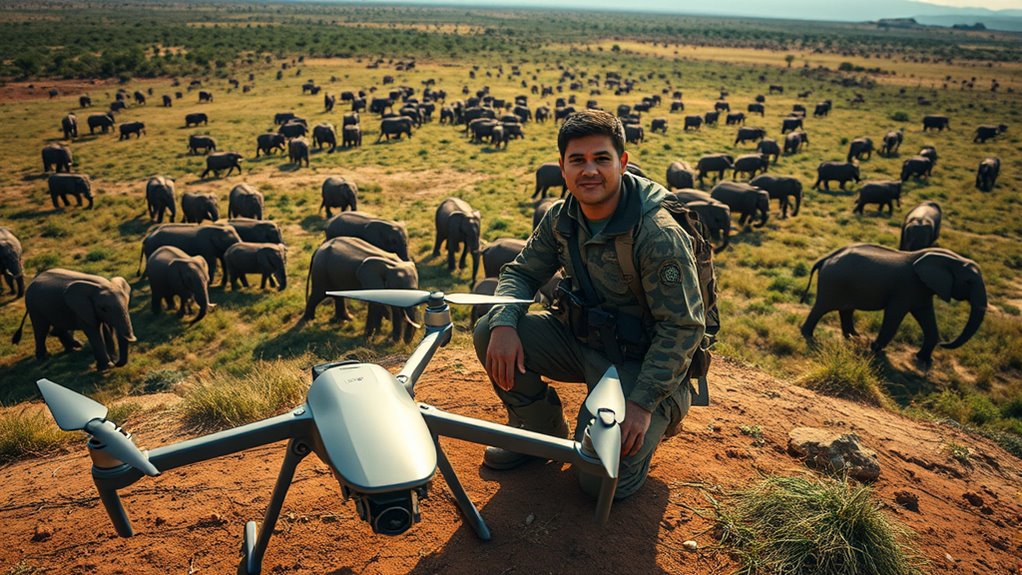
In addition to community engagement, technology plays a prominent role in modern anti-poaching strategies. Drones are increasingly being deployed to monitor vast areas of land, providing real-time data on wildlife movements and potential poaching activities. If you’re involved in conservation, you might find yourself collaborating with tech experts to analyze this data and respond proactively to threats. This combination of community and technological efforts can create a strong defense against poaching. Additionally, financing options for conservation projects may help secure funding for these vital initiatives.
Ultimately, the fight against poaching requires a multifaceted approach. By supporting wildlife corridors, engaging local communities, and leveraging technology, you can contribute to a more effective anti-poaching strategy. Every small effort counts, whether it’s educating your community about wildlife conservation or advocating for the creation of safe passages for animals. Together, these strategies can help safeguard our planet’s precious wildlife for generations to come. So, take action, get involved, and be part of the solution in this critical conservation battle.
Frequently Asked Questions
What Are the Main Causes of Poaching Worldwide?
The main causes of poaching worldwide are wildlife trafficking and habitat destruction. You’ll notice that demand for animal products drives illegal hunting. As populations grow, habitat destruction further pushes animals into closer contact with humans, making them more vulnerable. You can see how poverty and lack of education also play a role, as people turn to poaching for survival. Addressing these root causes is essential for reducing poaching and protecting wildlife.
How Can Individuals Help in Anti-Poaching Efforts?
You can be a beacon of hope in the fight against poaching. Engage in community involvement by supporting local conservation initiatives and volunteering your time. Participate in educational outreach programs to raise awareness about the plight of endangered species. By spreading knowledge, you inspire others to join the cause. Every small effort contributes to a larger wave of change, creating a united front against poaching and protecting our planet’s precious wildlife.
What Legal Measures Exist Against Poaching?
You’ll find that legal measures against poaching include strict wildlife legislation and robust legal enforcement. Many countries have laws that protect endangered species, imposing heavy penalties for poachers. Additionally, international agreements like CITES regulate trade in endangered wildlife, ensuring that nations cooperate. By advocating for stronger laws and supporting enforcement efforts, you help deter poaching and protect biodiversity. Your awareness and involvement can make a significant difference in wildlife conservation.
How Do Local Communities Benefit From Anti-Poaching Strategies?
Community empowerment creates a compelling connection between conservation and local lives. By engaging in anti-poaching strategies, you help foster sustainable livelihoods for your neighbors. These initiatives often provide jobs, promote eco-tourism, and enhance education, ensuring that people benefit directly from preserving wildlife. When communities thrive, they become more invested in protecting their natural resources, leading to a healthier environment and stronger local economies. Your involvement can make a significant, sustainable difference.
What Technologies Are Emerging in the Fight Against Poaching?
Emerging technologies in the fight against poaching include wildlife surveillance systems and drone technology. You’ll find that drones enhance monitoring efforts, providing real-time aerial views of vast areas, making it easier to spot poachers. Wildlife surveillance systems use camera traps and sensors to track animal movements and poaching activities. Together, these innovations improve response times and increase the effectiveness of anti-poaching strategies, helping protect endangered species more efficiently than ever before.
Conclusion
In the battle against poaching, every strategy counts, from dedicated rangers to cutting-edge drones. By embracing a blend of traditional and technological approaches, you can help protect our wildlife and preserve the planet’s natural treasures. Remember, if every person took action, we could create a world where poaching becomes as rare as a unicorn sighting! Together, let’s continue to innovate and collaborate, ensuring that future generations can experience the beauty of our wildlife.