
Solar-powered bee drones offer an innovative way to help pollinate crops amid declining natural bee populations. They use renewable energy, are designed to minimize environmental impact, and can reach flowers inaccessible to real insects. However, their safety depends on careful regulation and thorough testing, as they could disrupt existing ecosystems, affect native pollinators, or accidentally spread pesticides. To understand the potential benefits and ecological concerns better, explore the details ahead.
Key Takeaways
- Solar-powered bee drones reduce environmental impact by relying on renewable energy and operate during daylight hours.
- They may disrupt native pollination dynamics and influence local insect behavior.
- Potential risks include spreading pesticides or contacting contaminated surfaces, raising safety concerns.
- Long-term ecological effects are uncertain, requiring thorough testing and regulation before widespread use.
- They are intended to supplement natural pollinators temporarily, not replace them, to support sustainable agriculture.
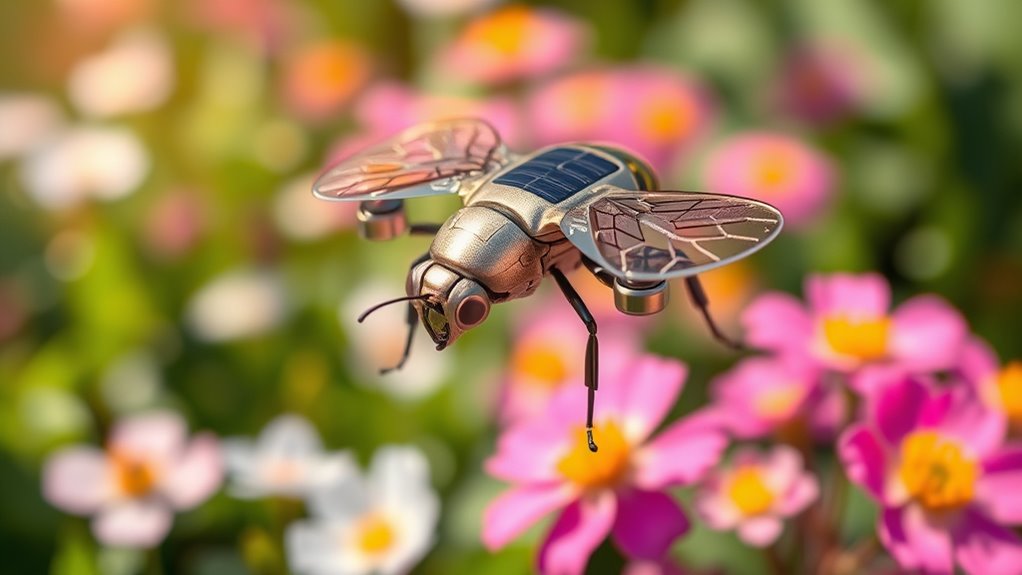
As concerns about declining bee populations grow, scientists have developed innovative solutions like solar-powered bee drones to assist in pollination efforts. The honeybee decline has been alarming, driven largely by factors such as habitat loss, climate change, and, notably, pesticide impact. These tiny pollinators play a vital role in sustaining ecosystems and agriculture, but their numbers have plummeted in recent years. This decline threatens food security and biodiversity, prompting researchers to explore alternative methods to bridge the pollination gap. Solar-powered bee drones emerge as a promising technology designed to mimic natural bees, manually pollinating crops and flowers where honeybees are scarce or absent.
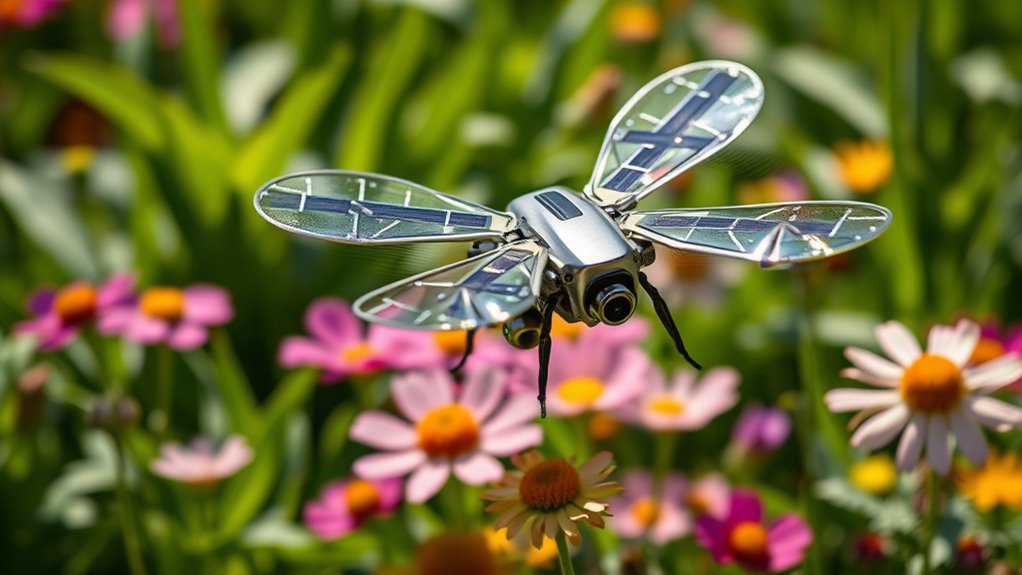
These drones are equipped with solar panels that harness sunlight, allowing them to operate sustainably without relying on batteries or external power sources. Their small size and agility enable them to navigate complex plant environments, reaching flowers that are difficult for larger machinery or even other insects to access. As they move from flower to flower, they release pollen, facilitating fertilization much like natural bees do. The use of renewable energy not only reduces environmental impact but also guarantees continuous operation during daylight hours, making them efficient tools in busy agricultural settings. Additionally, advances in decentralized data management can help improve the coordination and monitoring of drone activities, ensuring better efficiency and safety.
Solar-powered bee drones operate sustainably, navigating complex environments to pollinate crops efficiently during daylight hours.
However, the deployment of solar-powered bee drones raises questions about safety and ecological impact. For starters, you might wonder if these machines could disrupt existing pollination dynamics or harm native species. While designed to supplement, not replace, natural bees, there’s concern about how they might influence insect behavior or interfere with the delicate balance of pollinator populations. Additionally, the impact of widespread use on pesticide impact is still under study. Some pesticides are highly toxic to bees, and it’s unclear how drone activity might influence pesticide exposure or effectiveness. Could drones inadvertently spread pesticides or come into contact with contaminated surfaces? These are questions researchers are actively investigating.
Moreover, you should consider the long-term ecological implications. While solar-powered bee drones aim to reduce reliance on honeybees, especially as their decline worsens, they might also alter natural ecosystems in unforeseen ways. For now, they serve as a temporary solution, helping maintain crop yields and plant diversity during critical periods. Still, their safety depends on rigorous testing and regulation to guarantee they don’t cause unintended harm. As they evolve, ongoing assessment will be key to understanding whether these drones can truly complement natural pollinators without disrupting ecological harmony.
PawPaw's Dog Treadmill for Large Dogs, Medium Dogs with Brake. Dog Slatmill for Healthy & Fit Dog Life, Dog Treadmill for Indoor & Outdoor (Upgraded Medium(Brake and Plastic Track))
🐕【Bad Weather Worry Free & Safety】Whether it's rainy🌧, snowy❄, or too sunny☀, or road too hot for the...
As an affiliate, we earn on qualifying purchases.
Frequently Asked Questions
How Do Solar-Powered Bee Drones Compare to Natural Bees in Pollination Efficiency?
You might wonder how solar-powered bee drones compare to natural bees in pollination efficiency. While drones can assist with pollination and support honey production, they don’t replicate the complex behaviors of natural bees. Drones can help improve crop yields temporarily, but they don’t contribute to colony health or sustain natural pollination processes. Natural bees remain essential for maintaining healthy ecosystems and ensuring long-term honey production.
What Are the Potential Environmental Impacts of Deploying Bee Drones Extensively?
You should consider that deploying bee drones extensively could reduce honeybee decline caused by pesticide exposure, but it might also disrupt natural ecosystems. Drones could unintentionally harm native pollinators or introduce new environmental risks. While they help address pollination needs, overreliance might lead to unforeseen consequences, like altering plant reproduction or affecting biodiversity. Carefully evaluating these impacts ensures you balance technological benefits with ecological safety.
How Do Bee Drones Affect Native Bee Populations and Local Ecosystems?
You might think bee drones are harmless, but they can shake up native bee populations and local ecosystems. They could disrupt habitat and reduce genetic diversity by competing with native bees for resources. This “rock and a hard place” situation means while they help pollinate, they might also cause habitat disruption, and threaten the balance of local ecosystems, making it essential to carefully monitor their impact before widespread use.
What Safety Measures Are in Place to Prevent Drone Malfunctions or Accidents?
You should know that safety measures are in place to prevent drone malfunctions or accidents. Battery safety protocols guarantee drones don’t overheat or catch fire, while software safeguards monitor drone operations in real-time. These systems automatically land or shut down drones if issues arise. Regular maintenance and testing further reduce risks. With these precautions, the drones operate safely, protecting both the environment and nearby people.
Are There Any Regulations Governing the Use of Solar-Powered Pollination Drones?
Think of regulations for solar-powered pollination drones like traffic laws guiding a busy intersection. You should know that legal frameworks set the rules for deployment, ensuring safety and effectiveness. Certification standards verify drones meet safety criteria before use. Currently, some countries are developing these regulations, but widespread legal guidelines are still evolving. Staying informed helps you understand how these innovative tools are integrated responsibly into agriculture.

Dog Treadmill, Pet Dog Running Machine for Small & Medium Dogs, 220LBS, Durable Pet Treadmill for Health and Training, Remote Control, with 12 Preset Programs
5-Star Rated Bestseller: Trusted by Thousands of Happy Pet Owners! Say goodbye to skipped walks! This bestselling dog...
As an affiliate, we earn on qualifying purchases.
Conclusion
Just as Icarus soared toward the sun, we must tread carefully with solar-powered bee drones. They promise to help pollinate our world, but we can’t ignore potential risks. By embracing innovation wisely, we guarantee these modern marvels serve us without flying too close to danger. Like the myth, our future with these drones depends on balance—so let’s harness their power responsibly, safeguarding both nature and technology for generations to come.

Large Dog Treadmill - Dog Pacer Slatmill for Medium & Large Dogs, Indoor/Outdoor Pet Exercise Machine, Ideal for Training Up to 176lbs
Keep Your Dog Healthy: This Dog Treadmill provides an excellent way to exercise your pet, promoting better endurance...
As an affiliate, we earn on qualifying purchases.

Dog Treadmill with Speedometer & 18" Paw-Safe PE Slatmill - Adjustable Resistance, Disc Brake & 500LBS Capacity for Large/Medium/Small Dogs, Indoor Outdoor Use (Medium)
📏【18-Inch Extra-Wide PE Slatmill - Total Paw Protection】 18-inch seamless treadbelt eliminates pinching risks while oral-grade PE material...
As an affiliate, we earn on qualifying purchases.