Community science helps improve bird migration data by allowing you to contribute observations from anywhere, filling gaps in remote areas and tracking seasonal changes. Your participation broadens the scope beyond experts, helping identify rare species and unusual behaviors. Using tools like apps and GPS, you can guarantee your data is accurate. Following best practices, you enhance the quality of information used in research and conservation efforts. Keep exploring to discover how your involvement makes a real difference.

Get pet supplies delivered free with Prime
- Fast, free delivery on millions of items
- Prime Video, Amazon Music and more included
- Member-only deals all year
Key Takeaways
- Community science broadens data collection scope, covering remote and less-studied migration areas.
- It enables detection of rare species and unusual behaviors through widespread observations.
- Training and validation processes ensure data accuracy and reliability for scientific use.
- Incorporating technology like apps and GPS improves the precision of migration timing and location data.
- Increased public participation enhances data quantity, supporting better understanding of migration patterns and environmental impacts.
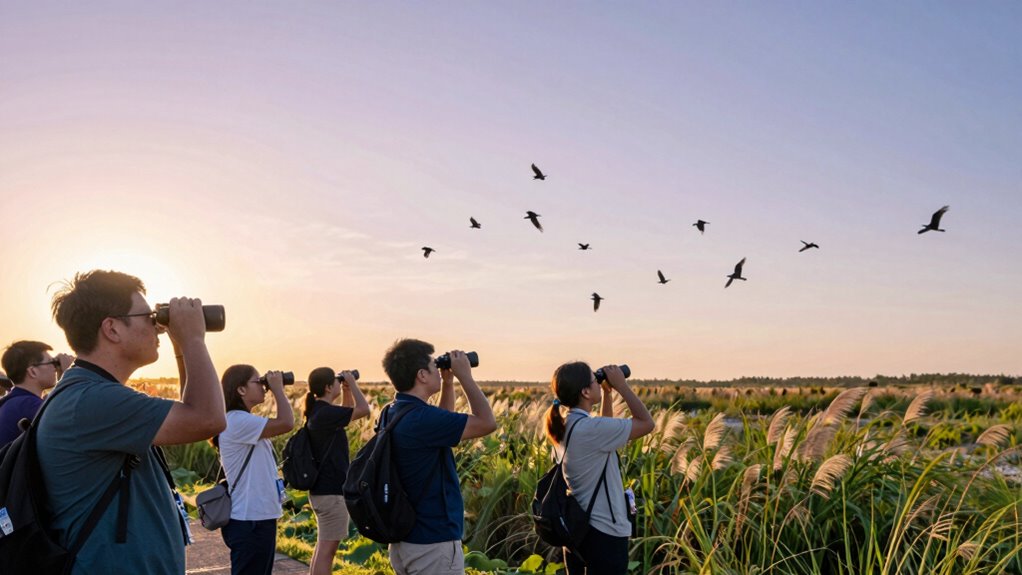
Community science has become a powerful tool for tracking bird migration, allowing everyday people to contribute valuable data. When you participate in citizen observation projects, you become an essential part of a larger effort to understand how birds move across regions and seasons. Your observations, when combined with others, create a rich dataset that can reveal migration patterns, timing, and changes over time. This collective approach helps fill in gaps that traditional research methods might miss, especially in remote or less-studied areas.
One of the key advantages of community science is that it broadens the scope of data collection. Instead of relying solely on specialized researchers or limited resources, anyone with interest and a keen eye can contribute. You might spot a rare species, record a consistent shift in migration timing, or note unusual behaviors. These citizen observations, when verified and aggregated, add depth and diversity to bird migration data, providing a more complete picture of avian movement. Additionally, the use of technology tools such as apps and GPS devices enhances the accuracy and ease of data collection for volunteers. Furthermore, the integration of public participation into scientific research allows for more comprehensive and timely data collection.
However, the reliance on community science raises questions about data accuracy. You need to be precise and careful in your observations, ensuring that the species identification, location, and date are recorded accurately. Many citizen science platforms provide training, guides, and tools to help you improve your identification skills and minimize mistakes. When your data is submitted, it often undergoes validation processes—either through automated checks or expert review—to ensure quality and reliability. This emphasis on data accuracy is crucial because trustworthy data directly influences conservation efforts and scientific understanding. Engaging in training programs can further improve your skills and confidence in making accurate observations.
Your role doesn’t end at simply recording sightings. By participating actively and following best practices, you help enhance data quality. For example, taking clear photos, noting specific locations, and recording details about weather or behavioral cues can make your observations more valuable. Additionally, engaging with community science projects can also provide access to resources and tips that improve observation skills and data collection methods. The more accurate and detailed your data is, the more it can be used by researchers to identify trends, model migration routes, and forecast future changes. Your efforts contribute to a collective database that benefits scientists, conservationists, and policymakers working to protect bird species and their habitats. Moreover, understanding the importance of data validation ensures that your contributions meet the standards necessary for scientific use.
In essence, community science empowers you to make a real impact on bird migration research. Your citizen observation complements professional studies, and by paying attention to accuracy and detail, you ensure that the data collected is meaningful. As more people get involved, the overall quality and quantity of migration data improve, enabling a better understanding of how climate change and human activities influence bird movements. Your participation not only supports scientific discovery but also helps foster a deeper appreciation for the natural world around you.
As an affiliate, we earn on qualifying purchases.
Frequently Asked Questions
How Can Community Science Data Be Verified for Accuracy?
You can verify community science data by implementing data validation processes, such as cross-checking observations with expert reviews and automated algorithms. To guarantee accuracy, apply bias correction techniques that account for factors like observer experience and location. Encouraging detailed documentation and training helps reduce errors. Combining these methods, you ensure the data’s reliability, making it a valuable resource for studying bird migration patterns.
What Technology Tools Do Community Scientists Use for Bird Tracking?
You use incredible tools like bird banding and GPS tagging to track bird migrations. Bird banding involves attaching tiny, uniquely numbered bands to birds’ legs, almost like giving them a secret ID card. GPS tagging is even more advanced, fitting birds with tiny GPS devices that relay their journeys in real-time. These technologies make your community science efforts feel like you’re wielding futuristic gadgets, revealing secrets of bird travel stories worldwide!
How Do Community Scientists Collaborate With Professional Researchers?
You collaborate with professional researchers through citizen engagement, sharing your bird observation data via online platforms and databases. This teamwork helps scientists analyze migration patterns more effectively. Your contributions provide real-time, diverse data that enhances research accuracy. By actively participating and sharing insights, you support larger scientific projects, fostering a community effort that improves understanding of bird migration. Your involvement makes a meaningful difference in advancing ecological knowledge.
What Are the Challenges of Collecting Migration Data in Urban Areas?
Urban noise and light pollution make collecting migration data challenging because they disturb bird patterns and hinder observations. You might find it hard to detect subtle migration cues amid loud sounds and bright lights, which can disorient birds and skew data. These factors obscure the natural signals scientists rely on, creating a suspenseful gap in understanding bird movements. Overcoming these barriers requires innovative methods and persistent effort to guarantee accurate, meaningful migration insights.
How Is Community Science Funding Typically Secured and Allocated?
You can secure community science funding through diverse sources like government grants, private foundations, and individual donations. Once you obtain funding, allocation strategies become essential; you should prioritize equipment, training, and outreach efforts to maximize impact. Effective allocation ensures resources support data collection, volunteer engagement, and project growth. By diversifying funding sources and carefully planning the distribution, you can sustain your community science initiatives and improve bird migration data quality.
Conclusion
By participating in community science, you become a crucial part of a web that captures the intricate dance of bird migration. Your observations act as threads, weaving together a richer, more detailed picture of these journeys. Together, we can reveal secrets hidden in the skies, turning individual efforts into a powerful force for conservation. Just as a single drop creates ripples, your contribution can spark meaningful change for migratory birds worldwide.
Halloween Picks
halloween
As an affiliate, we earn on qualifying purchases.