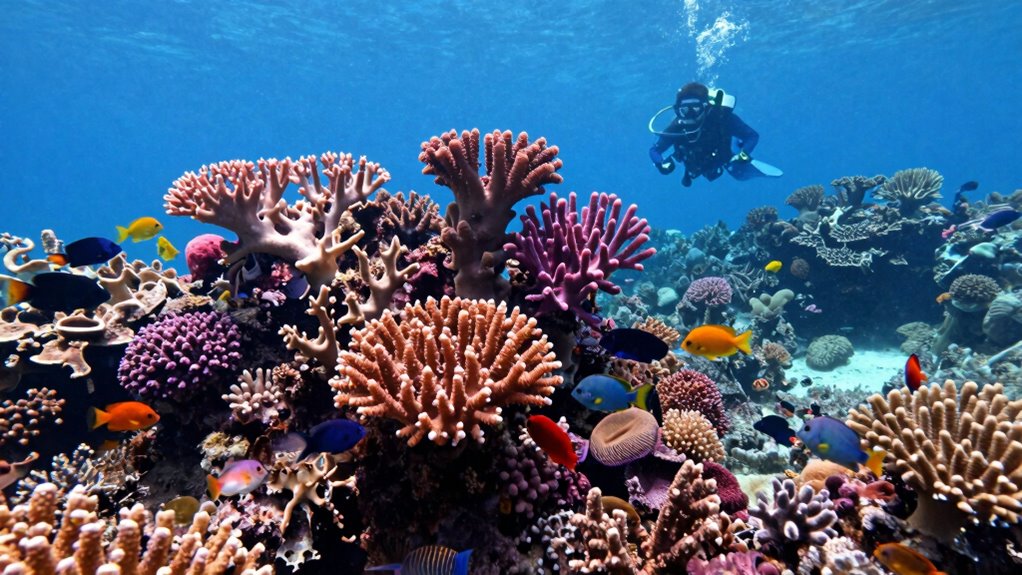
To protect coral reefs, you need both local actions and global efforts. Local measures like establishing marine protected areas, regulating fishing, and reducing pollution directly help preserve reef health. But, since climate change and ocean acidification threaten reefs worldwide, international collaboration and policy changes are essential. Your efforts at the local level contribute to broader solutions, and understanding how these pieces fit together will show you why both are necessary for long-term reef preservation.

Get pet supplies delivered free with Prime
- Fast, free delivery on millions of items
- Prime Video, Amazon Music and more included
- Member-only deals all year
Key Takeaways
- Local protection measures help maintain reef biodiversity and habitat integrity against immediate human threats like overfishing and pollution.
- Community-driven efforts foster sustainable practices and increase awareness, boosting reef conservation success.
- Global actions address overarching issues like climate change and ocean acidification that threaten reef survival worldwide.
- Coordinated local and global efforts ensure comprehensive protection, balancing ecological health with economic and social needs.
- Combining local and global strategies enhances reef resilience against both immediate and long-term environmental challenges.
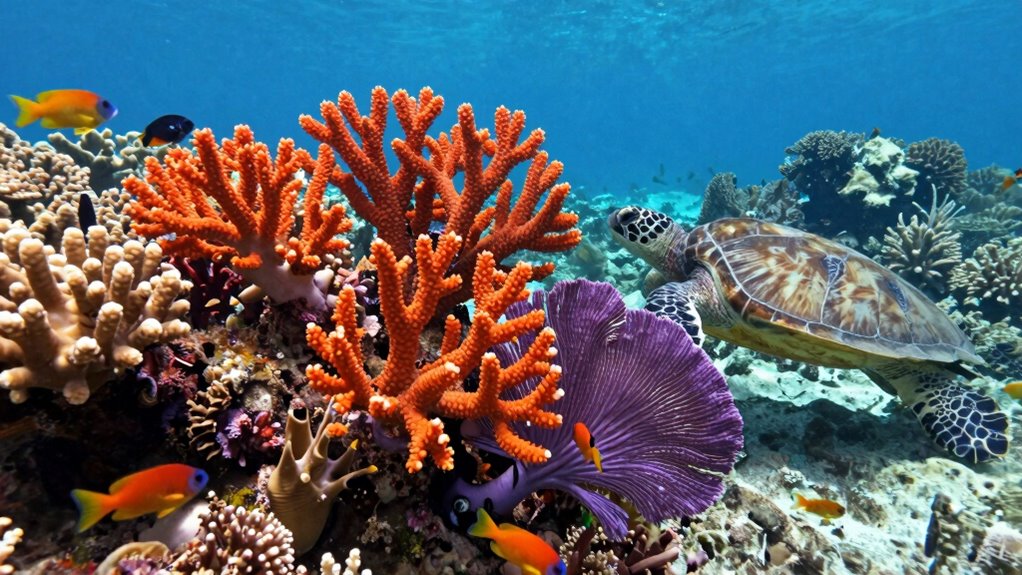
Have you ever wondered why coral reefs are often called the rainforests of the sea? It’s because these vibrant ecosystems support an incredible amount of marine biodiversity. Thousands of species thrive in and around coral reefs, from tiny plankton to large fish and majestic sea turtles. This diversity makes reefs indispensable to the health of the ocean and the planet as a whole. But beyond their ecological importance, reefs also serve as a major attraction for coastal tourism. Visitors flock to see their colorful corals, swim among tropical fish, and experience the underwater wonderland. This influx of tourists provides essential income for local communities, supporting livelihoods and fostering economic development.
However, these benefits come with a responsibility. Local protection of coral reefs is fundamental to preserving their health and the benefits they offer. When local communities and authorities take steps to safeguard reefs—like establishing marine protected areas, regulating fishing, and preventing pollution—they help maintain the delicate balance that sustains marine biodiversity. Without local efforts, reefs become vulnerable to overfishing, sedimentation, and habitat destruction. These threats reduce the richness of marine life, which in turn diminishes the appeal for coastal tourism and harms the local economies that depend on it. You can see how local actions directly impact the resilience of these ecosystems, ensuring that future generations can enjoy their wonder and benefits. Investing in marine conservation initiatives is crucial for long-term reef health. Additionally, raising awareness about the importance of biodiversity can mobilize communities to take proactive steps in reef preservation.
But protecting reefs isn’t a task that can be achieved by local efforts alone. Global action is equally necessary to combat overarching issues like climate change and ocean acidification. Rising sea temperatures cause coral bleaching, which kills corals and destroys habitats for countless marine species. Acidification weakens coral skeletons, making them more susceptible to damage. These global threats threaten the very foundation of coral reefs, and no local initiative can fully counteract them. That’s why international cooperation, policy changes, and reduction of greenhouse gases are essential. When global efforts align with local conservation, the chances of saving coral reefs increase profoundly.
In essence, protecting coral reefs requires a dual approach. You need local communities and governments to actively manage and preserve their reefs, while also pushing for global action to address climate change. Both are indispensable to maintaining marine biodiversity and supporting coastal tourism, which benefits local economies and ecosystems alike. Without this combined effort, coral reefs risk further decline, losing their vibrant diversity and the countless benefits they provide. Your role, whether as an individual or part of a community, can help push for sustainable practices that protect these essential ecosystems now and into the future.
As an affiliate, we earn on qualifying purchases.
Frequently Asked Questions
How Do Local and Global Efforts Coordinate Effectively for Reef Protection?
You can coordinate local and global efforts by fostering strong communication and collaboration between communities, scientists, and policymakers. Support local initiatives that protect marine biodiversity and implement sustainable practices, while also advocating for global climate resilience strategies to reduce ocean warming and acidification. By aligning these efforts, you help guarantee Coral reefs are safeguarded, maintaining their essential ecological functions and resilience against climate change impacts.
What Are the Specific Roles of Local Communities in Reef Conservation?
You play a crucial role in reef conservation through community-based efforts that protect these ecosystems. By actively participating in local initiatives, you help sustain the health of coral reefs, which often hold deep cultural significance for your community. Your involvement in sustainable practices, education, and advocacy guarantees reefs thrive for future generations, balancing environmental needs with cultural values. Your commitment directly impacts the success of reef preservation efforts.
How Can Tourists Contribute to Local Reef Preservation?
You can help protect reefs by practicing reef-friendly behaviors and spreading awareness. Did you know that one careless snorkeler can damage up to 16 square feet of coral? By educating yourself before visiting, you guarantee your actions are responsible. Stick to designated paths, avoid touching marine life, and use reef-safe sunscreens. Your conscious choices as a tourist directly support local conservation efforts and help preserve these vibrant ecosystems for future generations.
What Policies Support Both Local and International Reef Protection?
You can support policies like marine legislation that enforce sustainable fishing and tourism practices, ensuring reef protection. Conservation funding is essential, so advocate for increased investment in local reef conservation projects. International agreements, such as the Coral Triangle Initiative, also play a role. By backing these policies, you help create a combined effort that safeguards reefs both locally and globally, promoting long-term health and resilience for these critical ecosystems.
How Do Local Threats Differ From Global Threats to Reefs?
Local threats to reefs, like overfishing impacts and pollution, directly harm the coral’s health and disrupt ecosystems, leading to issues like coral bleaching. Global threats, such as climate change, cause widespread coral bleaching and ocean acidification. While local actions can reduce immediate stressors, tackling global threats requires international cooperation. Your efforts in local conservation help build resilience, but addressing global issues is essential for long-term reef survival.
Conclusion
To truly save coral reefs, you need to realize they’re like delicate glass sculptures—beautiful but fragile. While global efforts are essential, don’t forget that your local actions can be the chisel that preserves these vibrant underwater worlds. By protecting nearby reefs, reducing pollution, and advocating for sustainable practices, you become a crucial part of the reef’s survival story. Together, your small ripple can create waves of change—saving these treasures for generations to come.
Halloween Picks
halloween
As an affiliate, we earn on qualifying purchases.