
You can’t truly make your garden deer-proof because they’re clever, adaptable, and driven by instinct. Deer learn to bypass fences, test plants, and ignore deterrents over time. Using deer-resistant plants, strong scents, natural barriers, and sturdy fencing helps reduce their visits, but no method guarantees complete protection. Combining these strategies creates a layered defense, making your garden less appealing. Stay tuned, as understanding these tricks can help you build a more effective, long-lasting plan.
Key Takeaways
- No garden plant is completely deer-proof; hungry deer will browse on less preferred options.
- Combining natural deterrents, deer-resistant plants, and physical barriers creates a layered defense.
- Deer quickly learn to bypass fences and barriers over time, reducing their long-term effectiveness.
- Using aromatic herbs and dense, thorny plants can help repel deer naturally.
- Proper maintenance and strategic plant selection improve deer resistance but cannot guarantee full exclusion.
Why No Garden Is Truly Deer-Proof: Understanding Their Cleverness
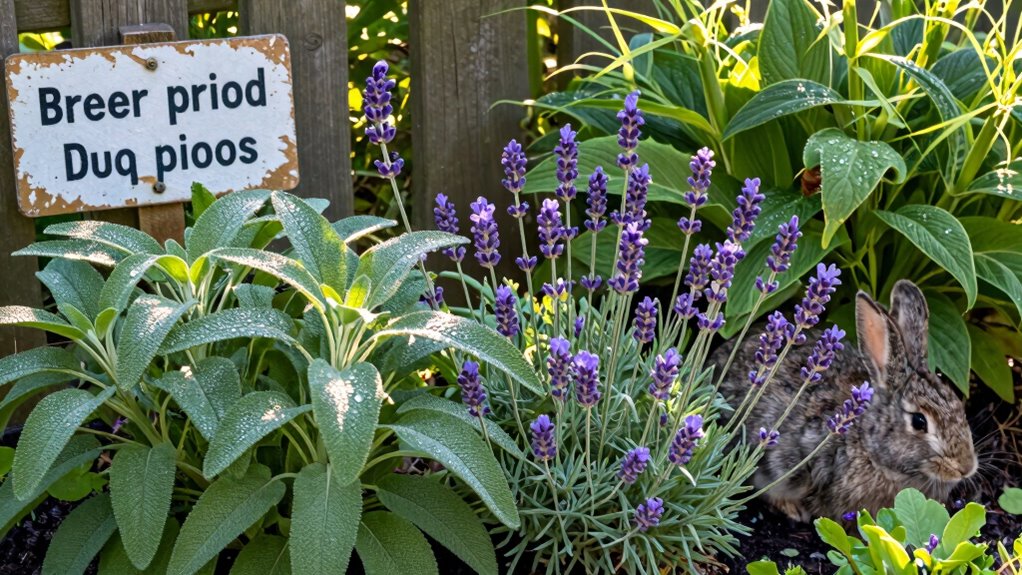
While many gardeners hope to create a deer-proof landscape, it’s important to recognize that no garden is entirely safe. Deer behavior is driven by their natural instincts, making them clever and adaptable. They can quickly learn to navigate barriers, taste-test plants, and even avoid certain deterrents. Their sharp senses help them detect threats and find food sources efficiently. Deer are highly opportunistic, and their curiosity often leads them into gardens, despite your best efforts. Understanding that their natural instincts motivate their actions helps you realize why they can outsmart many barriers. Deer adaptability is a key factor in their ability to bypass even well-designed defenses. No matter how secure you think your garden is, deer may still find a way to browse if they’re hungry or curious enough. Recognizing their cleverness is key to developing more effective, long-term strategies. Additionally, integrating diverse plantings can make it more difficult for deer to identify specific targets and help protect your garden. Employing behavioral deterrents can also reduce their interest in certain areas, but they are not foolproof against persistent deer.
The Limitations of Barriers and Fences in Deer Prevention
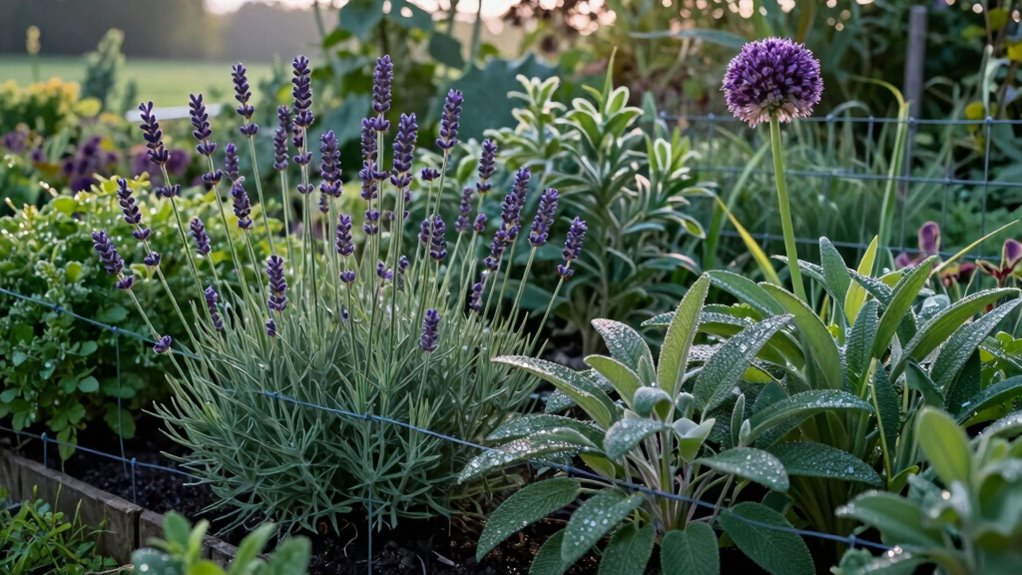
While fences and barriers can help keep deer out, they aren’t foolproof. Deer are quick learners and find ways to adapt to or bypass these obstacles over time. Plus, maintaining these barriers can be a constant challenge, making them less reliable in the long run. Additionally, some homeowners consider deer-resistant plants as an alternative approach to reduce deer attraction and minimize damage. However, the effectiveness of projector technology in deterring deer is limited, as they do not respond to visual cues like humans do.
Deer Adaptation Strategies
Barriers and fences often seem like effective solutions to keep deer out of your garden, but in reality, deer quickly learn to adapt to these obstacles. Their keen deer sensory perception allows them to detect weaknesses, such as small gaps or low fences, and they remember these vulnerabilities. Over time, they develop adaptive foraging strategies, using their heightened senses to locate alternative food sources or find ways around barriers. Deer are persistent and intelligent, often testing fences repeatedly until they discover a way through or around them. This adaptability means that relying solely on barriers and fences rarely provides a long-term solution. Instead, understanding deer behavior and their ability to learn from their environment helps you develop more effective, layered prevention strategies.
Fence Effectiveness Limits
Despite their popularity, fences and barriers often fall short as foolproof deer deterrents because deer quickly learn to identify and exploit their weaknesses. They may leap over, go under, or side-step barriers, especially if the fence isn’t tall enough or properly installed. This limits their effectiveness in maintaining wildlife coexistence and supporting healthy garden ecology. To improve success, understand these common vulnerabilities:
| Weakness | Explanation |
|---|---|
| Insufficient height | Deer can jump over fences less than 8 feet tall. |
| Gaps or low fencing | Deer can go under or squeeze through small openings. |
| Lack of reinforcement | Fences not buried or reinforced at the base are easily bypassed. |
| Poor maintenance | Overgrown or damaged fences quickly lose their deterrent power. |
Fences alone won’t guarantee deer exclusion, but they can be part of an integrated approach. Properly designed barriers should also consider wildlife behavior and how deer adapt to obstacles, such as their ability to learn and develop new escape tactics. Incorporating behavioral deterrents that leverage their intelligence can further reduce their chances of breaching barriers.
Barrier Maintenance Challenges
Maintaining fences and barriers to keep deer out can be more challenging than it initially seems, as these structures require ongoing attention to stay effective. Over time, the garden perimeter may suffer from wear and tear, reducing barrier durability. Deer can find weak spots or become accustomed to certain deterrents, especially if the barrier isn’t consistently maintained. Wind, weather, and wildlife can damage fencing materials, making repairs necessary to preserve effectiveness. Additionally, low fence height or loose installation can invite deer to jump or push through. Regular inspections and repairs are essential, but they demand time and effort. Furthermore, understanding herbal remedies and incorporating natural deterrents can enhance deer management strategies. It’s also beneficial to consider barrier materials that are more resistant to environmental factors and animal attempts to breach them. Using high-quality fencing can significantly improve the longevity and effectiveness of your deer deterrent system. Finally, considering deer behavior and their adaptability can help in designing more effective, long-term solutions to protect your garden. Ultimately, barriers need to be durable, well-maintained, and part of a broader deer management strategy to protect your garden effectively.
Essential Deer-Resistant Garden Supplies and Plants That Help
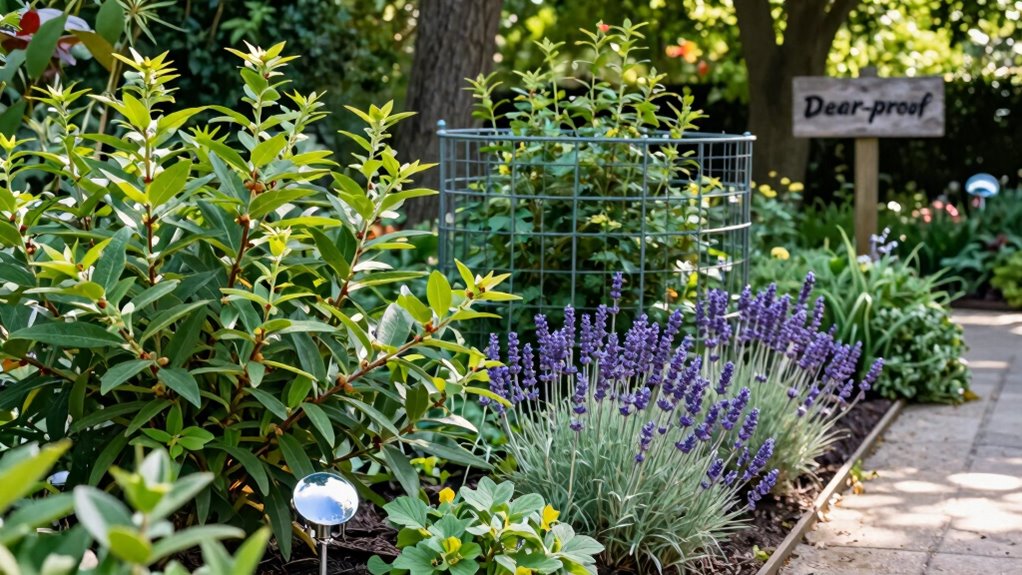
To effectively deter deer from your garden, it’s essential to have the right supplies and plants that they tend to avoid. Understanding deer behavior and plant toxicity helps guide your choices. Deer usually steer clear of plants with strong odors or toxic qualities, which can cause them discomfort or harm. Incorporating these into your garden for better protection can be highly effective, especially when combined with other deterrent strategies. Deer behavior and plant toxicity are key factors in selecting suitable plants and supplies. These plants and supplies work together to make your garden less appealing, leveraging deer behavior and plant toxicity to keep them at bay naturally. Additionally, selecting deer-resistant plants can significantly improve your garden’s defense.
How Repellents and Smelly Barriers Can Deter Deer Effectively
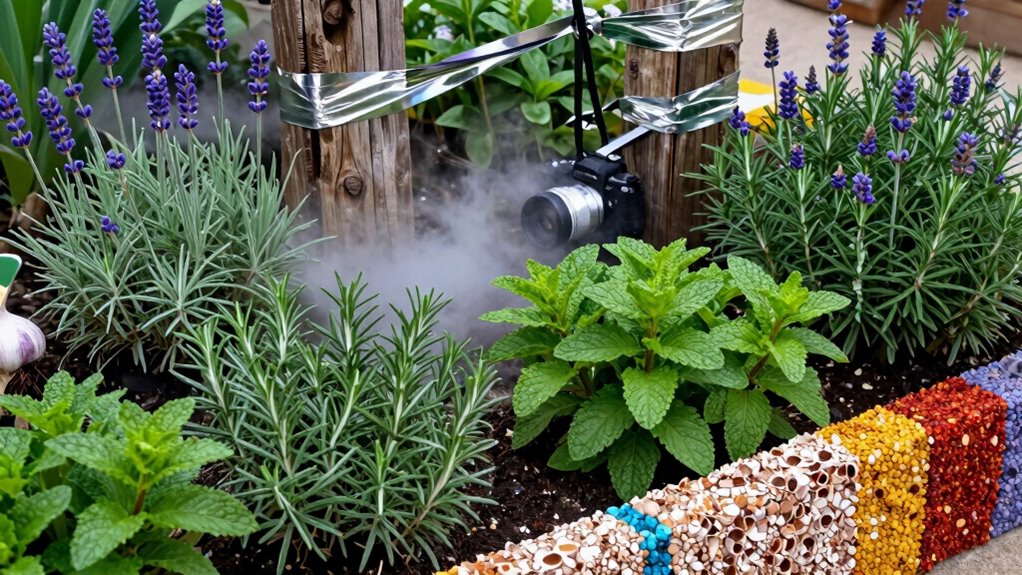
Repellents and smelly barriers are among the most effective tools to keep deer away from your garden. Chemical repellents work by emitting odors or tastes that deer find unappealing, prompting them to avoid your plants. Regularly applying these repellents, especially after rain, maintains their effectiveness. Scent barriers, such as human hair, garlic, or rotten eggs, create strong odors that deer dislike. You can also hang strips of soap or use commercial scent deterrents around your garden perimeter. Combining these methods enhances protection. Remember, deer can become accustomed to certain smells over time, so rotating repellents and updating scent barriers keeps them guessing. Using chemical repellents alongside natural scent barriers provides a versatile, effective approach to discourage deer from feasting on your garden.
Creating Less Attractive Gardens With Strategic Plant Choices
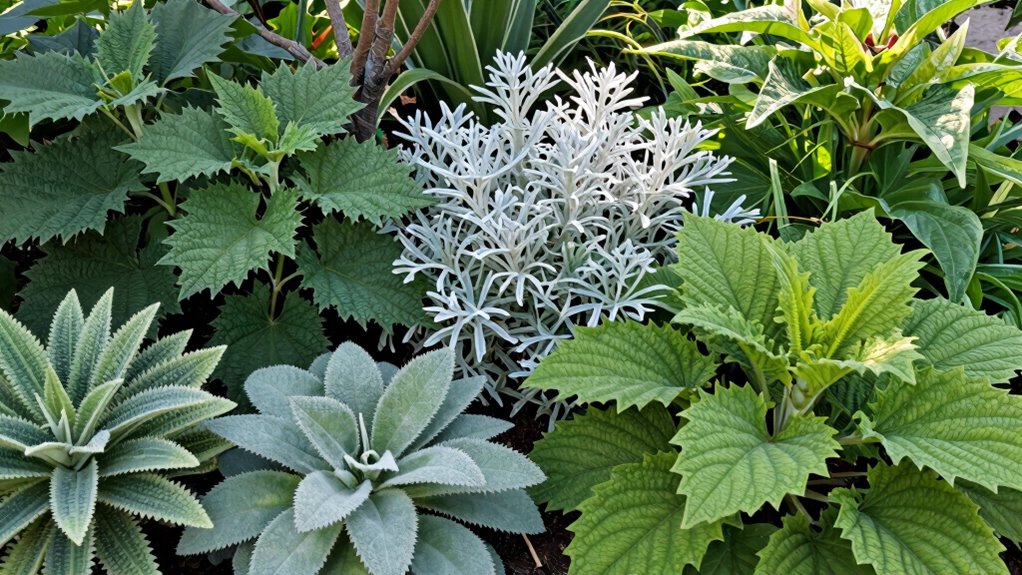
You can make your garden less appealing to deer by choosing plants they tend to avoid. Incorporate dense foliage and natural barriers to create physical obstacles that discourage their visits. Selecting deer-resistant plants and adding strategic barriers can considerably reduce unwanted deer attention. Additionally, understanding deer behavior and their preferred food sources can help you tailor your plant choices more effectively deer behavior patterns. Recognizing deer food sources can inform your planting strategy to further minimize visits. Implementing deterrent techniques such as motion-activated sprinklers or repellents can further discourage deer from entering your garden. Being aware of herbivore feeding habits can help you select plants less likely to attract deer and keep your garden intact. Incorporating plants with electric fences can also serve as an effective physical deterrent to deer incursion.
Select Deer-Resistant Plants
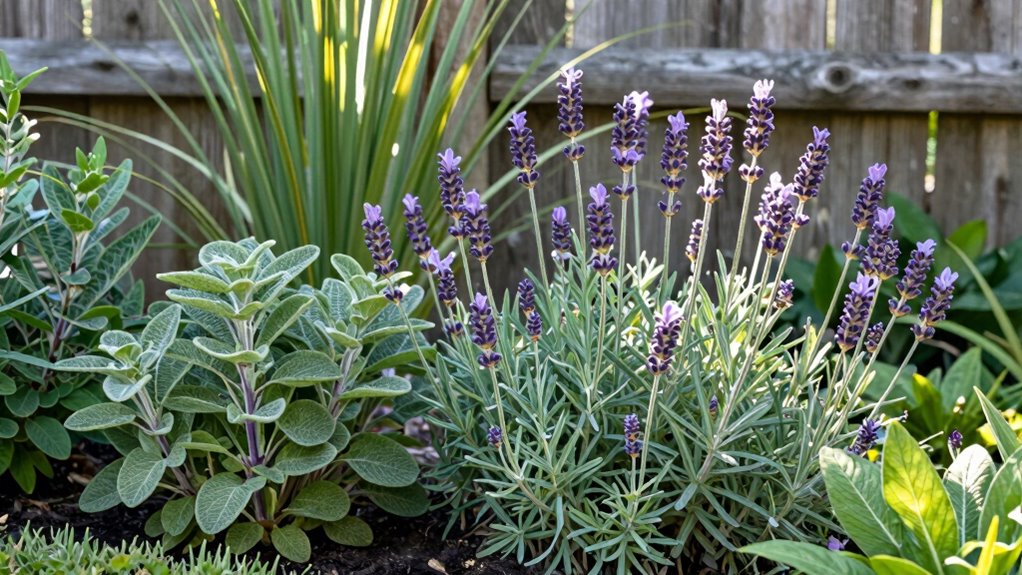
Choosing the right plants can considerably reduce deer visits in your garden. Opt for deer-resistant species like lavender, yarrow, or foxglove, which deer tend to avoid. Incorporate companion planting to enhance your garden’s resistance, pairing plants that deer dislike with others you want to protect. Using soil amendments can also improve plant health, making them less appealing to deer. Select plants with strong scents, tough leaves, or unusual textures, as these deter deer naturally. Additionally, maintaining a healthy garden environment reduces stress on plants and makes them less attractive to foraging deer. Techniques such as soil health optimization can strengthen plants’ defenses and resilience. For example, understanding the specific deer behavior patterns in your area can help you select the most effective strategies. Here’s a quick guide:
| Deer-Resistant | Companion Plants | Soil Amendments |
|---|---|---|
| Lavender | Rosemary | Compost |
| Yarrow | Sage | Organic matter |
| Foxglove | Alliums | Well-draining soil |
Strategic choices like these help create less attractive gardens for deer.
Incorporate Dense Foliage
Incorporating dense foliage into your garden creates a natural barrier that deters deer by making it harder for them to access and browse your plants. Dense foliage adds layers of plant layering, which not only blocks deer’s view but also creates physical obstacles. Plant layering involves arranging plants at different heights and densities, making your garden look lush and confusing to deer. Choose shrubbery, ground covers, and tall grasses that fill in gaps and create thick, impenetrable sections. The more layered and dense your foliage, the less inviting your garden becomes for deer, who prefer easy-to-reach, less crowded spaces. Focus on strategic plant placement to maximize cover and create a visual and physical barrier that reduces deer visits naturally. Plant layering techniques enhance the overall effectiveness of this approach.
Use Natural Barriers
Strategic plant choices can make your garden less appealing to deer by creating natural barriers that discourage them from browsing. By selecting plants that serve as natural deterrents, you can subtly signal to deer that your garden isn’t a food source. Incorporate species that deer typically avoid, such as strong-scented herbs or thorny shrubs, to form effective barriers. Additionally, designing wildlife corridors with less attractive plants can guide deer away from prized areas. These choices help create a layered defense, reducing deer visits without fencing. Keep in mind, mixing these plants with dense foliage and using natural barriers like prickly bushes or aromatic herbs makes your garden less inviting. This approach fosters a more deer-resistant environment while maintaining natural beauty.
Combining Techniques for Better Deer Deterrence: What Works Best?
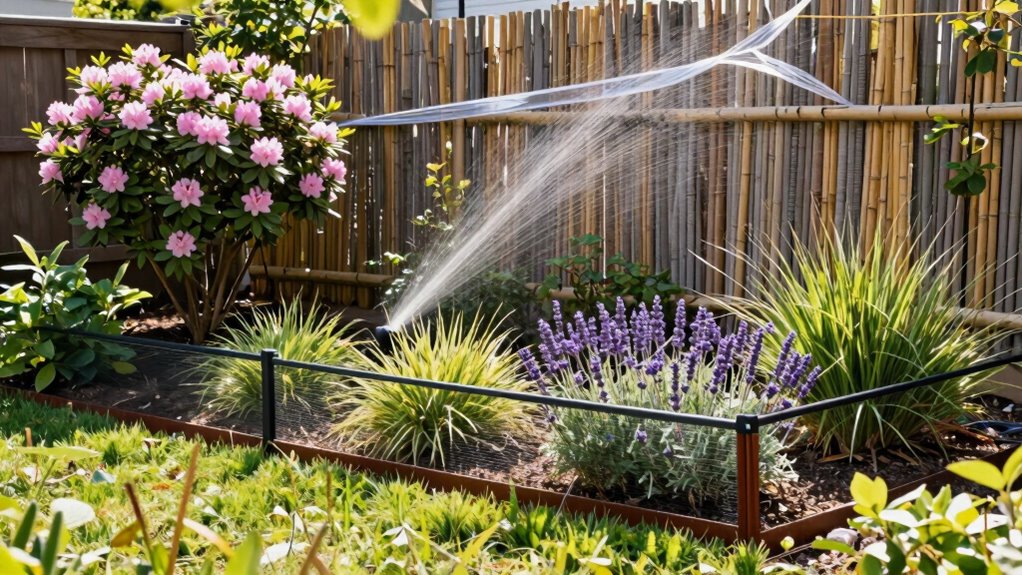
While no single deer deterrent method is foolproof, combining multiple techniques often yields the best results. Understanding deer behavior and garden ecology helps you craft an effective strategy. For example, using natural barriers like fencing alongside visual deterrents such as reflective objects confuses deer. Incorporate scent-based repellents with motion-activated devices to target different senses. By diversifying your approach, you reduce the chances of deer becoming accustomed to any one method. Adjusting techniques based on deer activity and changing seasons enhances effectiveness. Remember, deer adapt to their environment, so staying flexible and combining tactics creates a layered defense. This integrated approach leverages knowledge of deer behavior and garden ecology to protect your plants better.
Common Mistakes That Make Gardens More Appealing to Deer
Many gardeners unknowingly create conditions that attract deer, making it harder to protect their plants. Poor garden design and ignoring deer behavior often lead to increased trouble. For example, leaving dense shrubbery or tall grass provides cover, inviting deer to browse. Overplanting or planting highly attractive crops in visible areas signals a buffet, drawing deer closer. Ignoring natural deer movement patterns can also lead to frequent visits. To avoid these mistakes, consider the following:
- Planting too close to woods or deer pathways
- Using tender, deer-preferred plants in open spaces
- Creating cluttered or overgrown areas that offer hiding spots
- Neglecting to incorporate physical barriers or repellents in your garden design
Tips for Maintaining and Reinforcing Deer-Resistant Strategies Over Time
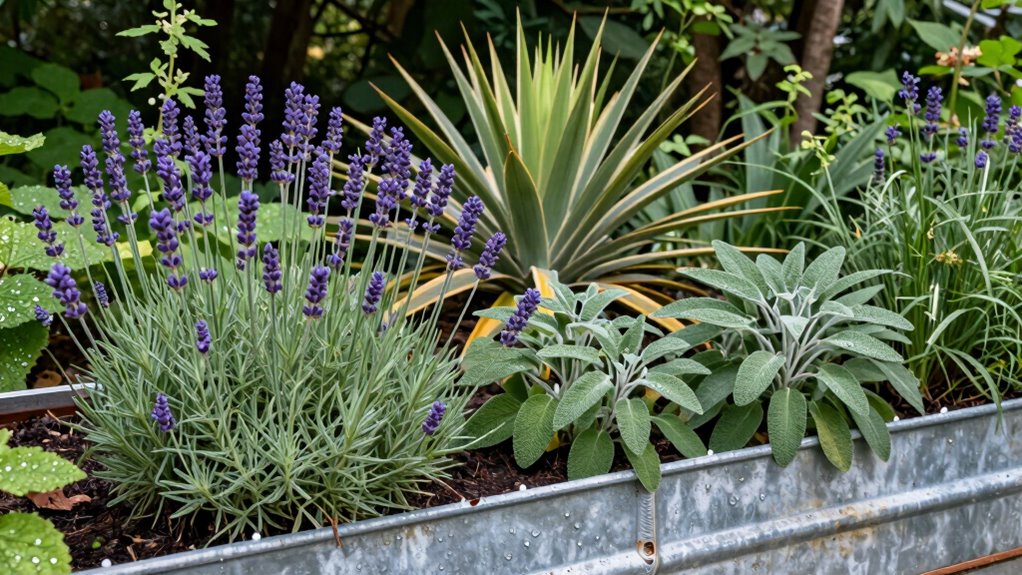
Maintaining and reinforcing deer-resistant strategies requires ongoing effort to adapt to changing conditions and deer behavior. Regularly evaluate your garden design to identify vulnerable spots where deer might gain access. Incorporate diverse plantings and natural barriers to reduce appealing wildlife interactions. Rotate deterrents and repellents to prevent deer from becoming accustomed to them. Keep fences in good repair and consider adding height or motion-activated devices for extra protection. Stay aware of local wildlife activity, adjusting your approach as needed. Building a layered defense that evolves over time helps ensure your strategies remain effective. Remember, deer are adaptable, so staying proactive and attentive is key to maintaining a garden that discourages their visits without relying on guarantees.
Setting Realistic Expectations: Protecting Your Garden Without Guarantees
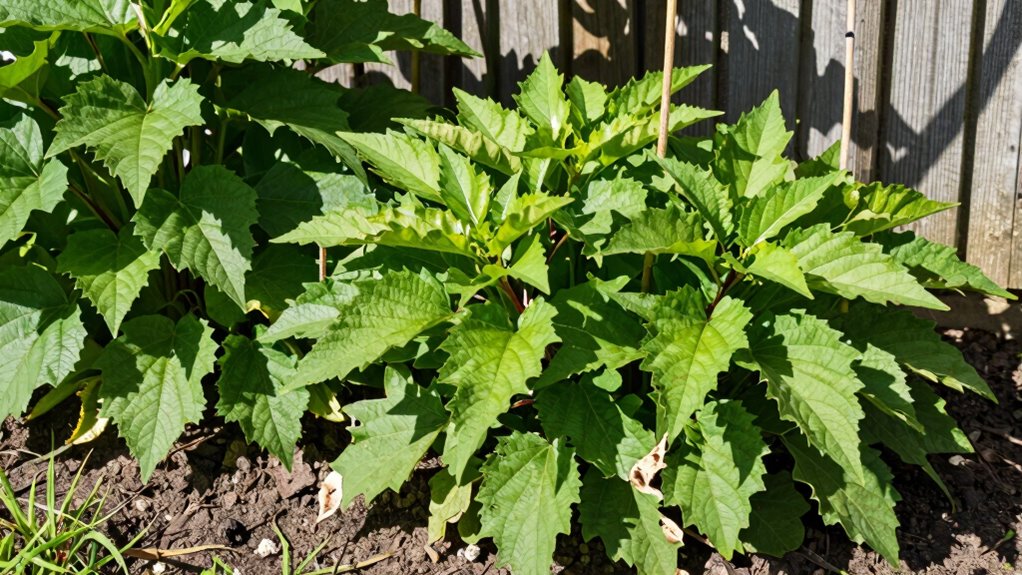
Achieving complete deer-proofing in your garden is unlikely, no matter how diligent you are. Deer are unpredictable, and wildlife interactions vary. Instead of guarantees, focus on setting realistic expectations to protect your garden effectively. Understand that some browsing may occur despite your efforts, and that’s okay. Adjust your garden design to include deer-resistant plants and barriers, but remember they’re not foolproof. Keep in mind that deer may adapt to your strategies over time, so ongoing management is necessary. Be patient and flexible, recognizing that persistence matters more than perfection. Embrace the natural dynamics of wildlife interactions, and aim for a balanced approach that minimizes damage while supporting local ecosystems.
Complete deer-proofing is unlikely; focus on realistic strategies and adaptable, wildlife-friendly garden management.
- Use diverse plantings to reduce deer interest
- Incorporate physical barriers where possible
- Rotate plant choices to avoid deer adapting
- Accept some browsing as part of wildlife interactions
Frequently Asked Questions
Can Deer Become Accustomed to Repellents Over Time?
Yes, deer can become accustomed to repellents over time. They often experience deer habituation, where they ignore repeated deterrents, reducing their effectiveness. To prevent repellents adaptation, you should rotate different types of repellents and apply them regularly. This variation keeps deer wary and helps maintain their effectiveness. If you notice deer are ignoring your repellents, switching things up can help keep your garden protected.
Are There Specific Plants That Are Completely Deer-Proof?
There aren’t plants that are completely deer-proof, but choosing native species can help. Deer tend to avoid plants that aren’t part of their natural diet, so selecting native plants makes your garden less appealing. Focus on strong-smelling or tough-textured plants, and mix in deer-resistant varieties with native species. While nothing guarantees deer won’t nibble, smart plant selection considerably reduces the chances of damage.
How Do Weather Conditions Affect Deer Deterrents’ Effectiveness?
Weather fluctuations and seasonal changes can impact how well deer deterrents work. When temperatures drop or during heavy rain, scents and physical barriers may weaken, making deer more likely to browse your plants. Hot, dry weather can also diminish certain repellents’ effectiveness. You should adjust your strategies with the seasons, reapplying repellents and using a combination of deterrents to stay ahead of deer’s adaptability to changing weather conditions.
What Are the Best Times of Year to Implement Deer Prevention Strategies?
Did you know deer can eat up to 7 pounds of food daily? The best times to implement prevention strategies are during seasonal planting and migration periods, typically early spring and late fall. During these times, deer are more active and searching for food, making barriers and deterrents more vital. Planning ahead ensures your garden stays safe when deer are most likely to browse, giving your plants a better chance to thrive.
Can Companion Planting Reduce Deer Browsing in the Garden?
Companion planting can help reduce deer browsing by creating natural barriers that deter them. Planting deer-resistant species alongside more tempting plants confuses and discourages deer, making your garden less appealing. Additionally, you can use predator decoys to scare deer away. Combining these methods offers a proactive approach, making your garden less attractive to deer and protecting your plants more effectively.
Conclusion
Remember, even the most deer-resistant garden is like a fortress with a few hidden doors—clever animals can find ways in. I once watched a deer tiptoe past a seemingly secure fence, drawn by a particularly tempting shrub. While no method guarantees perfection, combining strategic plant choices, barriers, and repellents can make your garden less appealing. Think of it as a game of chess—outsmarting nature takes patience, adaptability, and realistic expectations.