
Desert water sources are crucial for animal survival, forcing creatures to develop unique behaviors and physical adaptations. You’ll see animals like camels storing water and rodents sourcing moisture from plants, while others evolve efficient kidneys or less permeable skin. They also locate hidden underground springs and emerge only during rainfalls to take advantage of scarce pools. These strategies help them endure extreme conditions. Keep exploring to discover how these adaptations keep desert life thriving against all odds.

Get pet supplies delivered free with Prime
- Fast, free delivery on millions of items
- Prime Video, Amazon Music and more included
- Member-only deals all year
Key Takeaways
- Animals develop physical and behavioral adaptations to locate and efficiently utilize scarce water sources.
- Physical traits like concentrated urine and impermeable skin reduce water loss in desert animals.
- Behavioral strategies, such as burrowing and activity timing, help animals conserve water during droughts.
- Skill in detecting underground springs and moisture-rich plants ensures access to vital water sources.
- Water sources serve as essential hubs that support survival and ecological balance in desert environments.
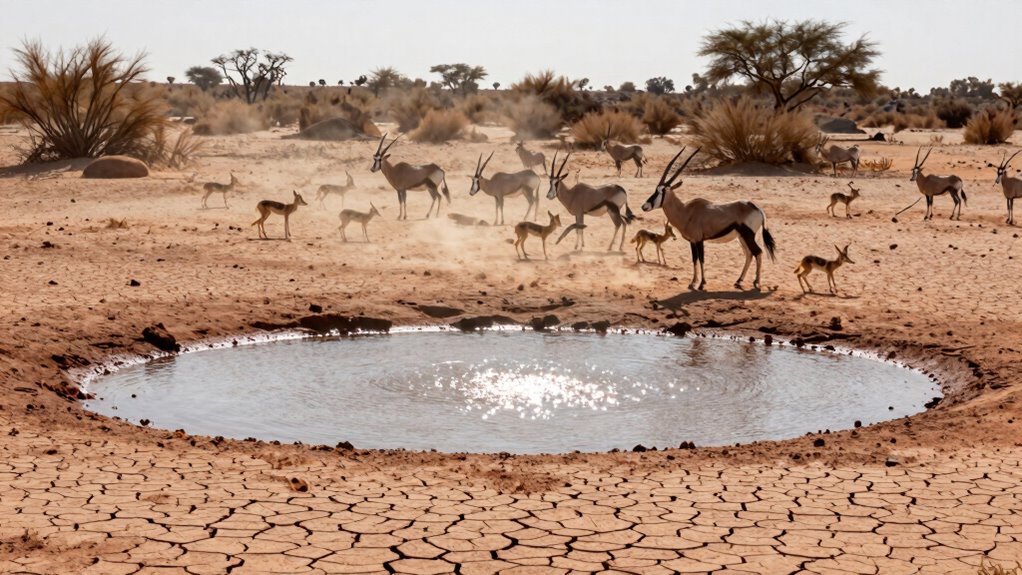
Have you ever wondered how animals survive in the harsh desert environment? It’s fascinating to see how they adapt to such extreme conditions, especially when water is scarce. The key to their survival lies in their clever adaptation strategies and remarkable water conservation techniques. In deserts, water sources are limited and unpredictable, so animals have developed ways to maximize every drop they find. Some animals, like camels, can store water in their bodies, allowing them to go long periods without drinking. Others, such as rodents, obtain most of their water from the food they eat, like seeds and plants, which are rich in moisture. These adaptation strategies guarantee they can endure the long, dry spells that are typical of desert life.
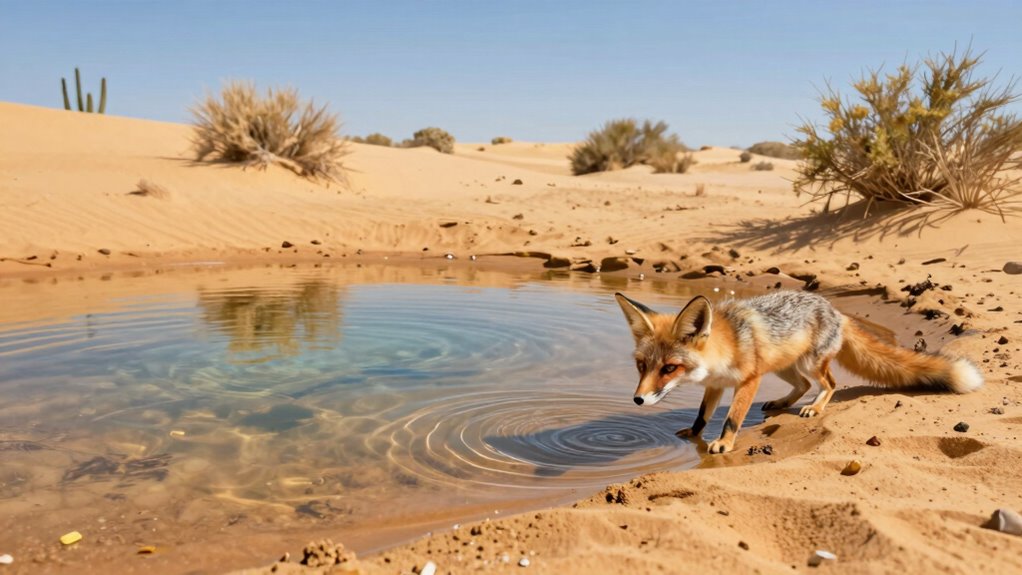
Water conservation becomes a vital part of their survival. Many desert animals have evolved to minimize water loss. For example, certain reptiles have highly efficient kidneys that produce concentrated urine, reducing fluid loss. Their skin is often less permeable, preventing moisture from evaporating. Birds like roadrunners can regulate their body temperature to avoid sweating during the hottest parts of the day, conserving water that way. Even insects have adapted—they often stay inactive during the hottest hours, reducing their need for water and energy. These strategies collectively help desert animals survive despite the scarcity of water sources. Interestingly, some animals have developed water retention abilities that allow them to thrive in environments with extremely limited water availability, ensuring their survival even during droughts. Moreover, their ability to detect underground water is crucial for finding reliable sources in the arid landscape. This skill is often honed through years of environmental adaptation, making them highly efficient in locating hidden water.
Desert animals minimize water loss through efficient kidneys, permeable skin, and behavioral adaptations like staying inactive during peak heat.
Desert water sources themselves are often hidden or hard to reach. Animals learn to locate underground springs, dew, or moisture-rich plants. Some species, such as desert frogs, emerge only during rare rainfalls when temporary pools form, taking advantage of these fleeting water sources. Others have developed behaviors to conserve water, like burrowing underground during the hottest parts of the day to stay cool and reduce evaporation. These behaviors show how animals are finely tuned to their environment, making the most of the limited water available. Their survival depends on understanding where to find water and how to reduce its loss effectively.
In essence, the way desert animals adapt to the scarcity of water shapes their entire existence. Their adaptation strategies and water conservation techniques are not just survival tactics—they are essential to thriving in an environment where water is a precious commodity. By mastering these skills, they guarantee their survival through the harshest conditions, demonstrating nature’s incredible ingenuity in the face of adversity. Additionally, water sources in deserts often serve as vital hubs for various species, supporting the entire ecosystem’s balance. These water sources are often unpredictable, so animals must develop adaptation strategies to exploit them efficiently.
Products Worth Considering

Dyson Ball Animal 3 Extra Upright Vacuum

Dyson Ball Animal Total Clean Upright Vacuum

Dyson Ball Animal 3 Upright Vacuum – Corded, 290 AW, De‑tangling Motorbar Cleaner Head, 3 Suction Modes
As an affiliate, we earn on qualifying purchases.
Frequently Asked Questions
How Do Animals Locate Hidden Water Sources Underground?
You can imagine animals locating underground water sources through subterranean water detection and underground water sensing. They often have keen senses, like specialized nose structures or sensitive vibrations, that help them detect subtle changes in soil moisture or underground water flow. Some animals, like rodents or insects, dig or follow scent trails to find hidden water, ensuring their survival in arid environments by effectively detecting these essential, concealed sources.
What Adaptations Help Animals Conserve Water in Deserts?
You can see animals conserve water through various adaptations like drought-resistant flora and water conservation behaviors. They may have specialized kidneys that concentrate urine, reducing water loss, or bury themselves to escape heat. Some animals, like camels, store fat in humps for hydration, while others rely on eating drought-resistant plants. These strategies help them survive harsh desert conditions by minimizing water needs and maximizing conservation efforts.
Are There Specific Plants That Assist Animals in Finding Water?
Yes, some desert plants, like succulents and desert shrubs, have adaptations that help animals locate water. These plants often store water and release scents or signals that attract water-sensitive animal behaviors. As you observe, animals may follow the scent trails or seek shade near these plants, increasing their chances of hydration. These plant adaptations actively support animals in finding essential water sources in harsh desert environments.
How Do Seasonal Changes Affect Desert Water Availability?
Imagine the desert as a restless storyteller, shifting its tune with seasonal changes. Rainfall patterns come and go like fleeting whispers, drastically reducing water availability during dry seasons. Conversely, when rains arrive, groundwater recharge occurs, replenishing hidden reserves beneath the surface. These seasonal fluctuations dictate animal survival, forcing creatures to adapt, migrate, or endure until the desert’s water cycle once again grants life, painting a fragile balance of hope and hardship.
Can Desert Animals Survive Without Drinking Water?
Yes, desert animals can survive without directly drinking water. They rely on water conservation techniques and adapt their behavior for animal hydration. You’ll notice that many use their environment to minimize water loss, such as being active during cooler parts of the day or extracting moisture from their food. These adaptations help them thrive in harsh desert conditions, maintaining their hydration levels even when water sources are scarce.
Conclusion
Without desert water sources, life would vanish like a whisper in a storm. You see, these essential oases are the lifeblood for animals surviving in the harshest environments. Their presence sustains entire ecosystems and fuels resilience against the relentless sun. By protecting these precious water sources, you hold the power to preserve the extraordinary creatures that depend on them. Remember, in the desert’s silence, water is the song of survival—more precious than gold.