Artificial lighting along beaches confuses sea turtle hatchlings, making it hard for them to find the ocean. Instead of following natural moonlight, they are attracted to bright, artificial lights from properties, streetlights, or boardwalks. This disorients them, causing some to stray inland or into dangerous areas, which can reduce their chances of survival. If you want to understand how your actions can protect these vulnerable creatures, there’s more to discover.

Get pet supplies delivered free — and shop member deals
- Fast, free delivery on millions of items
- Access to Prime Big Deal Days deals on October 6–7
- Prime Video, Amazon Music and more included
Key Takeaways
- Artificial lighting disorients hatchlings by overriding natural moonlight cues essential for ocean navigation.
- Bright lights from beachfront properties attract hatchlings inland, increasing their risk of hazards.
- Disrupted natural cues lead to delayed or misdirected journeys, reducing hatchling survival rates.
- Implementing turtle-friendly lighting minimizes light pollution and helps hatchlings find the ocean successfully.
- Community awareness and policy changes are vital for maintaining dark skies and protecting hatchling routes.
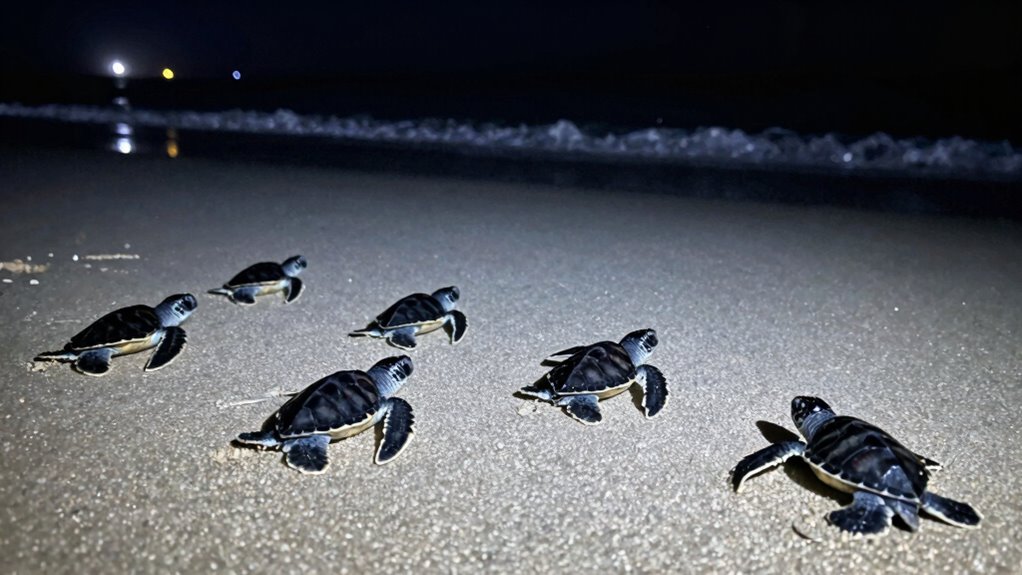
When it comes to protecting sea turtle hatchlings, beach lighting plays a vital role that often goes unnoticed. The way we illuminate the shoreline can significantly influence whether hatchlings make it safely to the ocean or become disoriented, risking predation or death. Hatchlings instinctively rely on natural cues, particularly natural moonlight, to find their way from the nest to the water. When artificial lighting is present along the beach, it interferes with these natural cues, leading hatchlings astray. Instead of heading toward the shimmering horizon illuminated by the moon, they may be attracted to bright, unnatural lights from beachfront properties, streetlights, or boardwalks. This confusion causes them to wander inland or become trapped in areas where they’re vulnerable to predators and environmental hazards.
Artificial lighting disrupts the natural balance established by the moon’s gentle glow, which historically served as the primary navigational aid for hatchlings. These young turtles have evolved to interpret the natural moonlight reflecting off the ocean surface as their cue to head seaward. When artificial lights dominate the landscape, they create misleading visual signals that override this instinct. Hatchlings might crawl toward the source of artificial light, which appears brighter and more immediate than the distant, darker ocean. This disorientation can delay their journey, expose them to predators, or cause them to crawl into dangerous areas like roads or urban environments. The impact isn’t just immediate; it can also have long-term effects on the population if hatchlings fail to reach maturity. Additionally, well-designed beach lighting modifications can significantly improve hatchling survival rates and help restore the natural balance of the coastal ecosystem. These efforts are supported by ongoing conservation programs that promote artificial light reduction along nesting beaches. Promoting awareness about light pollution and its effects is also crucial for community engagement in conservation strategies. Moreover, research shows that community-led initiatives to implement turtle-friendly lighting have yielded promising results in enhancing hatchling success.
Many conservation efforts emphasize reducing or modifying artificial lighting to mimic natural conditions. This includes implementing turtle-friendly lighting strategies, such as using low-intensity, downward-shielded lights that minimize skyglow and limit visibility from the beach. These measures help restore the natural cues hatchlings need, particularly the glow of the moon, which guides them directly to the ocean. By educating property owners and visitors about the importance of minimizing artificial lighting, communities can play a crucial role in safeguarding these vulnerable creatures. These efforts are supported by scientific research that underscores the importance of natural cues in hatchling navigation. Ultimately, maintaining dark, natural night skies along the coast fosters a safer environment for hatchlings to find their way home, ensuring the survival of sea turtles for generations to come.
Frequently Asked Questions
How Does Artificial Lighting Influence Hatchling Navigation?
Artificial lighting disrupts hatchling navigation, leading them away from the marine ecosystem’s natural pathways. When you use excessive or bright coastal development lights, hatchlings become disoriented, often moving toward land instead of the ocean. This misdirection increases their risk of dehydration, predation, or injury. By minimizing artificial lighting and using turtle-friendly lights, you help preserve the delicate balance of the coastal ecosystem and support healthy sea turtle populations.
Are Certain Light Colors More Harmful to Turtle Hatchlings?
Certain light colors are more harmful to turtle hatchlings because of their color sensitivity and the light spectrum. Hatchlings are especially vulnerable to artificial lights in the blue and green spectrum, which can disorient them and lead them away from the ocean. Red and amber lights are less disruptive because they fall outside their sensitive spectrum. Using lighting with limited blue and green wavelengths helps protect hatchlings during their critical journey to the sea.
What Are the Long-Term Effects of Light Pollution on Turtle Populations?
Artificial glow from coastal lighting causes habitat disruption, leading to long-term declines in turtle populations. When hatchlings are exposed to artificial light, they become disoriented, reducing their chances of reaching the sea. Over time, this habitat disruption can diminish nesting success and alter migration patterns. You can help by minimizing artificial glow on beaches, supporting dark-sky initiatives, and advocating for turtle-friendly lighting policies to protect these essential species.
How Do Hatchlings Distinguish Between Natural and Artificial Light Sources?
You notice hatchlings distinguish between natural cues and artificial glow by sensing the brightness and color of light. Natural cues, like moonlight and starlight, cast a soft, white glow that guides them toward the ocean. Artificial light, often brighter and more localized, confuses hatchlings, making them head inland instead of seaward. This disruption hampers their survival, emphasizing how vital it is to minimize artificial glow on nesting beaches.
Can Community Lighting Changes Improve Hatchling Survival Rates?
Yes, community lighting changes can improve hatchling survival rates. By reducing artificial lighting and following coastal regulations, you help hatchlings navigate toward the sea more easily. Urban development often increases light pollution, confusing hatchlings and leading them away from water. Implementing dark sky-friendly lighting and enforcing coastal regulations minimizes these risks, giving hatchlings a better chance to reach the ocean safely and grow into healthy sea turtles.
Conclusion
By now, you can see how essential beach lighting is for sea turtle hatchlings. Your actions, like turning off unnecessary lights, help guarantee these tiny creatures find their way to the ocean’s safety. Imagine the hatchlings darting toward the moonlit waves, guided by natural light alone—what if your flickering porch light could be the difference between life and death for a vulnerable hatchling? Every small effort counts in protecting these remarkable survivors.
Fall Picks
fall essentials
As an affiliate, we earn on qualifying purchases.