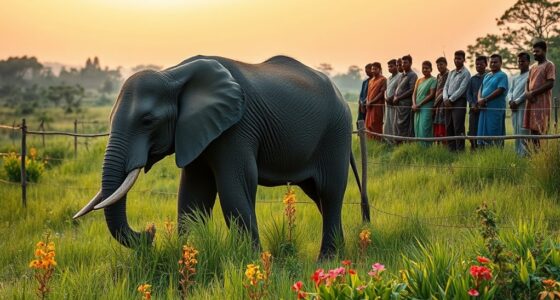
Forest elephants and savannah elephants face serious conservation challenges that need urgent attention. Protecting forest habitats is essential for forest elephants, while preserving open landscapes benefits their savannah counterparts. Habitat fragmentation limits their movement, and poaching threatens their population stability. Strengthening laws against poaching and creating wildlife corridors can make a difference. Community engagement also plays a pivotal role in conservation efforts. There’s so much more to uncover about their unique needs and the actions being taken.
Key Takeaways
- Protecting rainforest habitats is essential for the survival of forest elephants, ensuring access to food and safe movement.
- Establishing wildlife corridors can mitigate habitat fragmentation and enhance connectivity between forest elephant populations.
- Maintaining open landscapes and accessible water sources is crucial for the health of savannah elephant herds.
- Strengthening anti-poaching laws and increasing community awareness are vital to combat illegal ivory trade affecting both species.
- Engaging the public through initiatives like wildlife photography can raise awareness and support for conservation efforts.
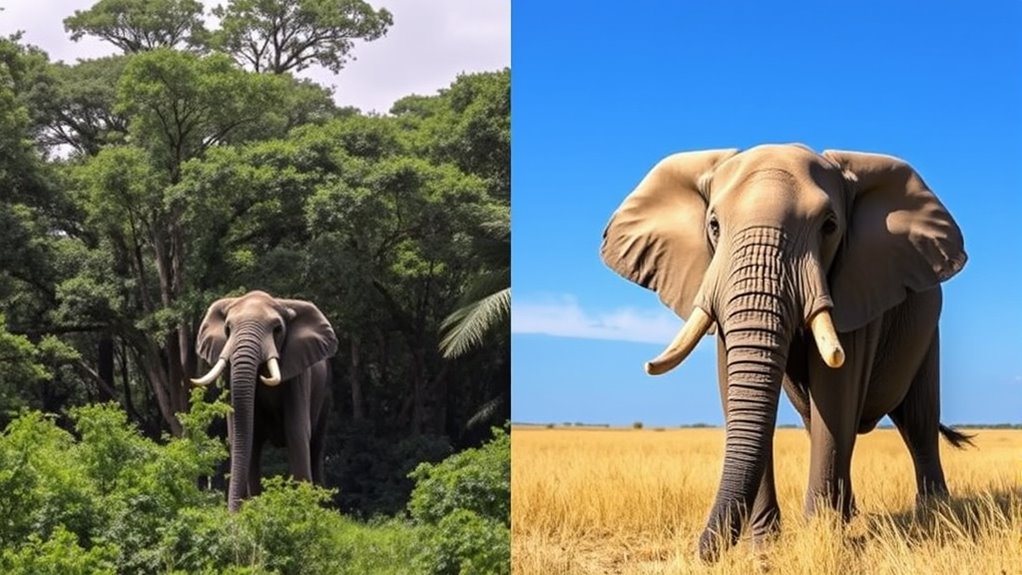
Have you ever wondered how two of the world’s largest land mammals, the forest elephant and the savannah elephant, differ? While both species share a common ancestry and some traits, their habitats, behaviors, and conservation needs diverge markedly. Understanding these differences is essential for effective conservation efforts.
Forest elephants, primarily found in the dense rainforests of Central and West Africa, have adapted to a unique environment. Their smaller size and straight tusks allow them to navigate through thick vegetation. Savannah elephants, on the other hand, roam the grasslands and savannas of Africa, developing larger bodies and curved tusks that aid in foraging for food. These distinctions highlight how each species has evolved to thrive in its respective habitat.
However, both species face serious threats that jeopardize their survival. Habitat fragmentation is a pressing issue for elephants everywhere. As human populations grow, forests are cleared for agriculture or urban development, isolating elephant populations. This fragmentation not only limits their movement but also reduces their access to food and water sources, leading to increased competition among individuals. Without adequate space to roam, both forest and savannah elephants struggle to find the resources they need to survive.
Additionally, poaching threats loom large over both species. Elephants are hunted for their ivory tusks, which are highly valued in illegal markets. Poaching is not just a random act; it’s often driven by economic desperation in certain regions. The loss of adult elephants disrupts social structures within herds, affecting younger elephants’ chances of survival. Conservationists are working tirelessly to combat these poaching threats, but the demand for ivory remains a considerable challenge.
In terms of conservation needs, both species require targeted efforts. For forest elephants, protecting their rainforest habitats from logging and agricultural expansion is essential. Creating wildlife corridors can help mitigate the effects of habitat fragmentation, allowing elephants to move freely between fragmented areas. For savannah elephants, maintaining open landscapes and water sources is vital. Strengthening anti-poaching laws and increasing community awareness about the importance of elephants can also play a notable role in protecting these magnificent creatures. Furthermore, understanding the role of color accuracy in wildlife photography can enhance public engagement in elephant conservation efforts.

DOCOON Hummingbird Feeder with Camera Solar Powered, Hummingbird Feeders for Outdoors with 2K Bird Watching Camera, Ideal Gifts for Christmas, White Elephant Gifts
【AI Bird Species Recognition】DOCOON hummingbird feeder with camera utilizes cutting-edge artificial intelligence and a comprehensive database can accurately…
As an affiliate, we earn on qualifying purchases.
As an affiliate, we earn on qualifying purchases.
Frequently Asked Questions
What Are the Main Threats to Elephant Populations Today?
Today, elephant populations face significant threats from poaching and habitat loss. You might notice poaching threats driven by illegal ivory trade, which endangers their survival. Habitat loss occurs as forests and grasslands are cleared for agriculture and urban development, leaving elephants with fewer places to roam and find food. These challenges not only reduce their numbers but also disrupt their social structures, making conservation efforts vital for their future.
How Do Elephants Contribute to Their Ecosystems?
Ever wonder what happens when giants roam? Elephants play a essential role in their ecosystems by shaping landscapes through their migration patterns and foraging habits. Their social structures foster community resilience, allowing them to maintain the balance of their habitats. As they dig for water or create trails, they help other species thrive. You’ll see that elephants aren’t just majestic; they’re critical architects of their environment, nurturing biodiversity wherever they go.
Can Elephants Adapt to Climate Change?
Yes, elephants can adapt to climate change, but their survival hinges on their ability to migrate to more suitable habitats. As you learn about their behaviors, you’ll see that elephant migration plays a vital role in maintaining climate resilience. By moving to areas with better resources, they help sustain ecosystems and support biodiversity. However, without adequate corridors and protection, these magnificent creatures face significant challenges in adapting to a rapidly changing environment.
What Is the Role of Local Communities in Elephant Conservation?
Local communities play a vital role in elephant conservation, like the roots of a mighty tree supporting its branches. By engaging in community efforts, you foster sustainable livelihoods that intertwine with wildlife protection. When locals witness the benefits of conservation—such as eco-tourism or farming practices that coexist with elephants—they’re more likely to protect these majestic creatures. Your involvement can spark change, creating a harmonious balance between human needs and wildlife preservation.
How Can Individuals Help Protect Elephants?
You can help protect elephants by supporting organizations that work on creating elephant corridors and engaging in anti-poaching efforts. Consider donating to or volunteering with wildlife conservation groups. Spread awareness about the importance of elephants and advocate for policies that protect their habitats. You can also reduce your environmental footprint by choosing sustainable products. Every action counts, and your involvement can make a difference in safeguarding these magnificent creatures for future generations.

3D LiveLife Lenticular Wall Art Prints – Elephant from Deluxebase. Unframed 3D Elephant Rabbit Poster. A perfect wall filler. Original artwork licensed from renowned artist, Collin Bogle
BRING YOUR ROOM TO LIFE – Put the beautiful 30cm x 40cm picture in a poster frame (not…
As an affiliate, we earn on qualifying purchases.
As an affiliate, we earn on qualifying purchases.
Conclusion
In the battle for survival, forest and savannah elephants both need our unwavering support. Each species faces unique challenges that threaten their existence, but together, they play a vital role in maintaining their ecosystems. By protecting their habitats and addressing poaching, we can guarantee these majestic giants thrive for generations to come. So let’s rally together—because saving these elephants is nothing short of saving the heartbeat of our planet!

Vocray Plastic Garden Fence 4×100 FT Deer Fence Netting, Temporary Mesh Fencing Animal Barrier for Deer, Chicken, Poultry, Pet, Wildlife, Garden Bird Netting for Plant Fruit Tree Vegetable Protection
The fence is rolled for easy shipping. Please unfold it to its full height before use. 【Garden Fence…
As an affiliate, we earn on qualifying purchases.
As an affiliate, we earn on qualifying purchases.
Top Collection Miniature Garden Elephant Reading Book, Gray
A thoughtful gift perfect for home, garden or terrariums
As an affiliate, we earn on qualifying purchases.
As an affiliate, we earn on qualifying purchases.