Mangrove forests provide crucial coastal protection by stabilizing shorelines and reducing erosion. Their complex root systems act as natural barriers against storm surges, safeguarding both infrastructure and lives. These unique ecosystems support biodiversity by serving as nurseries for fish and offering shelter for various marine species. Additionally, mangroves play a key role in mitigating climate change through carbon sequestration. By understanding their importance, you can appreciate how they contribute to a sustainable future for both ecosystems and communities.
Key Takeaways
- Mangrove forests stabilize shorelines and reduce erosion, acting as natural barriers against storm surges and extreme weather events.
- They serve as vital nurseries for fish and other marine species, supporting healthy fisheries and local economies.
- Mangroves play a crucial role in carbon sequestration, capturing atmospheric carbon dioxide and contributing to climate change mitigation efforts.
- These ecosystems enhance water quality and biodiversity, interconnected with coral reefs and seagrass beds to support multiple coastal habitats.
- Community involvement in restoration and conservation projects helps protect mangroves and promotes sustainable practices for ecosystem preservation.
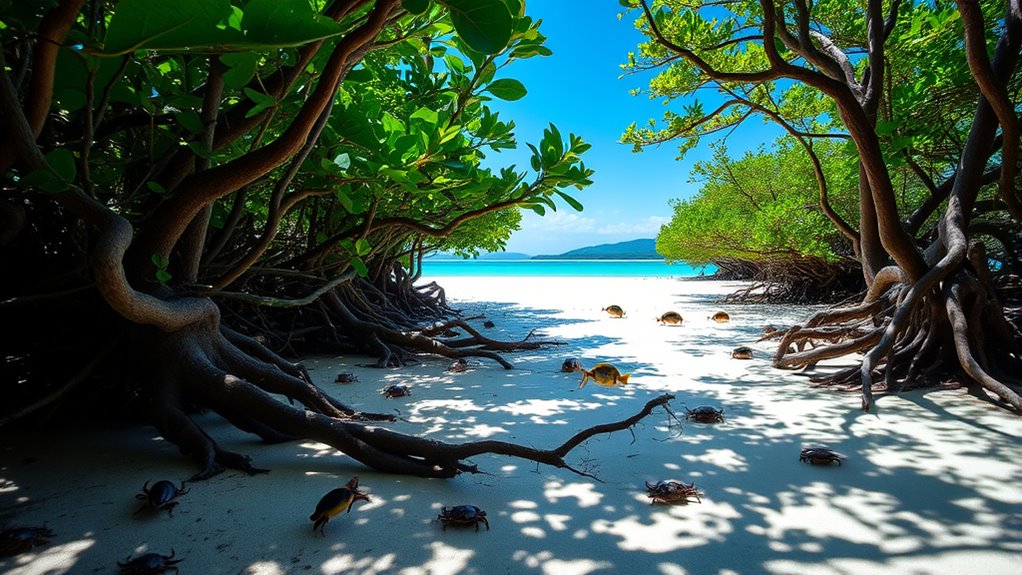
Mangrove forests, which thrive in coastal intertidal zones, play an essential role in protecting shorelines and supporting diverse ecosystems. When you think about these unique ecosystems, you might envision dense thickets of tangled roots and vibrant wildlife. But beyond their beauty, they offer crucial coastal ecosystem services that directly benefit you and your community. Their complex root systems stabilize shorelines, reducing erosion and mitigating the impact of storm surges. This means that during extreme weather events, mangroves can act as natural barriers, lessening the damage to coastal infrastructure and protecting lives.
You may not realize it, but mangrove forests also serve as vital nurseries for numerous marine species. Fish, crabs, and other aquatic creatures find shelter among the roots, which provide food and protection from predators. This aspect of mangrove conservation is essential for maintaining healthy fisheries, supporting local economies that depend on fishing. By protecting these habitats, you’re ensuring that future generations can enjoy the benefits of thriving marine life.
Mangrove forests are crucial nurseries for marine life, supporting healthy fisheries and vibrant local economies for future generations.
Moreover, mangroves play a significant role in carbon sequestration. They capture and store carbon dioxide from the atmosphere, helping to combat climate change. This natural process not only benefits the environment but also contributes to cleaner air for you to breathe. By recognizing the importance of mangrove conservation, you’re taking a step toward a sustainable future where both people and nature can thrive.
The interconnectedness of mangroves with other coastal ecosystems, such as coral reefs and seagrass beds, enhances their overall value. These ecosystems work together, providing even more services, like improving water quality and supporting biodiversity. When you protect mangroves, you’re also safeguarding these other essential habitats, ensuring a healthy environment for countless species.
Getting involved in mangrove conservation efforts can be as simple as participating in local restoration projects or advocating for policies that protect these forests. By supporting initiatives that promote sustainable practices, you can make a tangible difference in the health of your coastal environment. It’s about understanding that your actions, no matter how small, can contribute to preserving these critical ecosystems. Additionally, mindful decluttering of coastal waste can further enhance the health of mangrove habitats by reducing pollution and preserving biodiversity.
Frequently Asked Questions
How Do Mangrove Forests Benefit Local Economies?
Mangrove forests provide significant economic benefits to local economies by supporting fisheries and offering sustainable resources. You’ll find that these ecosystems create tourism opportunities, attracting visitors for eco-tours and wildlife observation. This influx of tourists can boost local businesses, from restaurants to accommodations, generating income and jobs. Additionally, mangroves help maintain coastal stability, which protects infrastructure and further supports economic activities. It’s a win-win for both the environment and the community.
What Wildlife Species Depend on Mangrove Ecosystems?
Various wildlife species depend on mangrove ecosystems, including birds and fish. You’ll find that many birds use mangroves for nesting due to their dense foliage, providing safety and shelter. Additionally, mangroves create essential fish habitats, where juvenile fish can thrive, protected from predators. This unique environment supports not just these species but also the overall health of coastal ecosystems, highlighting the importance of preserving mangrove habitats for biodiversity.
How Do Mangroves Store Carbon Effectively?
Mangroves store carbon effectively through carbon sequestration and biomass accumulation. Their dense root systems trap carbon dioxide from the atmosphere, while their abundant plant material stores carbon in their biomass. As you explore these ecosystems, you’ll notice how their unique adaptations allow them to thrive in coastal environments, making them vital for mitigating climate change. By preserving mangroves, you’re supporting their role in capturing carbon and maintaining biodiversity.
What Are the Major Threats to Mangrove Forests?
The major threats to mangrove forests include illegal logging and coastal development. You might see how illegal logging strips these essential ecosystems of their trees, disrupting habitats and increasing vulnerability to erosion. Coastal development often leads to habitat loss, as land is cleared for resorts and infrastructure. These activities not only threaten biodiversity but also undermine the protective benefits mangroves provide against storms and rising sea levels. Protecting them is indispensable for our environment.
How Can Communities Participate in Mangrove Conservation Efforts?
You can participate in mangrove conservation by engaging your community in awareness campaigns and clean-up events. Organizing workshops on sustainable practices helps educate others about the importance of mangroves. Encourage local businesses to adopt eco-friendly initiatives and support reforestation projects. By collaborating with organizations focused on conservation, you can amplify your efforts. Your active involvement not only protects mangroves but also strengthens community bonds and fosters a culture of environmental stewardship.
Conclusion
In summary, mangrove forests are nature’s sturdy guardians, standing tall against stormy seas while nurturing a vibrant tapestry of life. By protecting these coastal wonders, you’re not just preserving biodiversity; you’re investing in a shield that safeguards our shores. Every tree you help protect is a sentinel, watching over both the land and the myriad creatures that call it home. So let’s work together to guarantee these essential ecosystems thrive for generations to come.