Ocean acidification, caused by rising CO₂ levels, dramatically impacts marine life. As the ocean absorbs more CO₂, it forms carbonic acid, reducing carbonate ions essential for organisms like mollusks and corals. This weakens shells and skeletons, threatening survival and reproduction. The decline of corals affects entire ecosystems and the fish that depend on them, potentially damaging fisheries and tourism. There’s much more to uncover about its far-reaching effects and what can be done to help.
Key Takeaways
- Ocean acidification reduces carbonate ion availability, essential for marine organisms like mollusks and coral reefs to build their shells and skeletons.
- Weakened shells and skeletons make organisms more susceptible to damage and disease, threatening their survival and reproduction.
- Coral reefs experience increased bleaching, losing color and vital nutrients due to compromised calcium carbonate structures.
- Declines in corals and shellfish disrupt marine ecosystems, negatively impacting fish habitats and overall biodiversity.
- Ocean acidification can adversely affect fisheries and tourism, threatening economic stability and ocean health.
As carbon dioxide levels rise in the atmosphere, the oceans are becoming more acidic, posing a serious threat to marine ecosystems. You might not realize it, but this change in acidity can have dire consequences for marine life, especially for organisms that rely on calcium carbonate to build their shells and skeletons. The increase in carbonic acid affects the availability of carbonate ions, which are essential for processes like shell formation. This leads to shell dissolution, making it harder for creatures like mollusks and certain types of plankton to thrive.
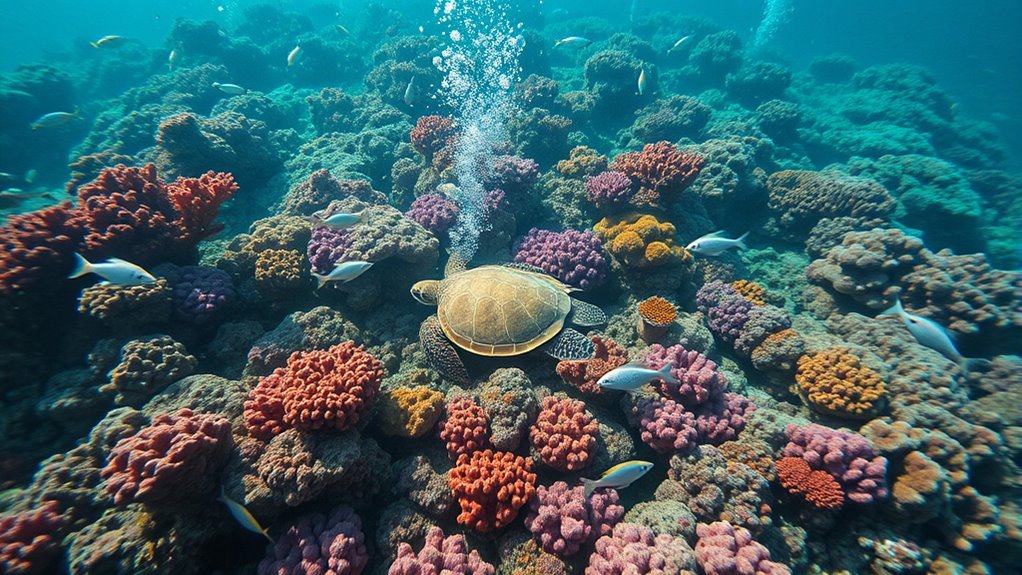
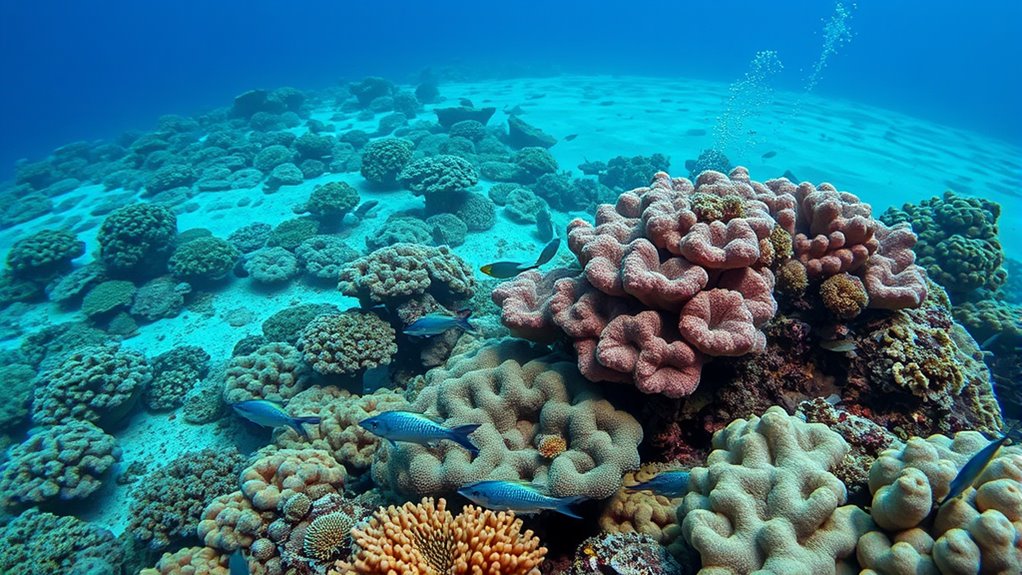
You might find it alarming that coral reefs, often referred to as the rainforests of the sea, are particularly vulnerable to ocean acidification. These ecosystems are crucial not only for marine biodiversity but also for coastal protection and fisheries. When the pH of ocean water decreases, corals struggle to absorb the carbonate ions they need to maintain their calcium carbonate structures. This can result in weakened coral skeletons, making them more susceptible to physical damage and disease. In addition to this structural threat, ocean acidification is a significant contributor to coral bleaching, a phenomenon where stressed corals expel their symbiotic algae, losing both color and essential nutrients. You might imagine vast stretches of bleached coral, devoid of the vibrant life that once flourished there.
Coral reefs, vital for marine life and coastal protection, face dire threats from ocean acidification and bleaching.
As you think about the impacts of ocean acidification, consider how these changes ripple through the food chain. When corals and shellfish suffer, the entire ecosystem feels the strain. Fish that rely on coral reefs for habitat may find themselves without shelter, which can lead to declines in fish populations. Not only does this affect marine biodiversity, but it can also impact local economies that depend on fishing and tourism.
You may wonder if there’s anything you can do to help mitigate these effects. It starts with awareness and advocating for policies aimed at reducing carbon emissions. Supporting sustainable fishing and promoting marine conservation efforts can also make a difference. By understanding the intricacies of ocean acidification and its effects on marine life, you can contribute to a collective effort to protect our oceans. Remember, every action counts, and by staying informed, you’re taking the first step toward a healthier ocean for future generations.
Frequently Asked Questions
How Does Ocean Acidification Affect Coral Reef Ecosystems?
Ocean acidification affects coral reef ecosystems by increasing the risk of coral bleaching and reef degradation. As the water becomes more acidic, corals struggle to maintain their calcium carbonate structures, leading to weaker reefs. You’ll see vibrant ecosystems decline as coral health deteriorates, affecting fish populations and biodiversity. If you want to protect these essential habitats, it’s important to address the factors contributing to ocean acidification and promote sustainable practices.
What Species Are Most Vulnerable to Ocean Acidification?
Did you know that over 30% of marine species rely on calcium carbonate for their shells? Shellfish, like oysters and clams, are particularly vulnerable to ocean acidification, facing significant declines. Additionally, plankton shifts can disrupt the entire food web, impacting everything from tiny fish to larger predators. As you consider these changes, remember that the health of these vulnerable species is vital for maintaining marine ecosystems and supporting global fisheries.
Can Ocean Acidification Be Reversed?
Ocean acidification can’t be fully reversed, but you can help mitigate its effects. You might explore carbonate buffering methods, which can stabilize ocean pH levels. Additionally, consider supporting geoengineering solutions aimed at reducing carbon dioxide in the atmosphere. While these approaches aren’t a cure-all, your actions can contribute to a healthier marine environment. Staying informed and advocating for sustainable practices can also make a difference in combating this pressing issue.
How Does Ocean Acidification Impact Human Seafood Supplies?
Ocean acidification impacts human seafood supplies by threatening fishery sustainability. As the ocean becomes more acidic, it can harm shellfish and other marine species crucial to your diet and economy. This leads to reduced catches, which can cause economic consequences for communities reliant on fishing. You might find seafood prices rising and availability decreasing, affecting your meals and local businesses. Protecting marine ecosystems is essential for ensuring a stable seafood supply for everyone.
What Actions Can Individuals Take to Mitigate Ocean Acidification?
You can reduce ocean acidification by cutting your carbon footprint, supporting sustainable practices, and spreading awareness. Start by using public transport or biking instead of driving. Choose renewable energy sources for your home and advocate for policies that protect marine ecosystems. Support local, sustainable seafood businesses that prioritize health over profit. By making conscious choices and encouraging others to do the same, you’ll contribute to a healthier ocean for future generations.
Conclusion
In conclusion, ocean acidification poses a serious threat to marine life, affecting everything from coral reefs to shellfish. Did you know that since the Industrial Revolution, the ocean’s surface pH has dropped by about 0.1 units? This seemingly small change can considerably impact marine ecosystems. As the ocean continues to absorb carbon dioxide, it’s essential for you to stay informed and support efforts to reduce emissions. Together, we can help protect our oceans and the life they support.