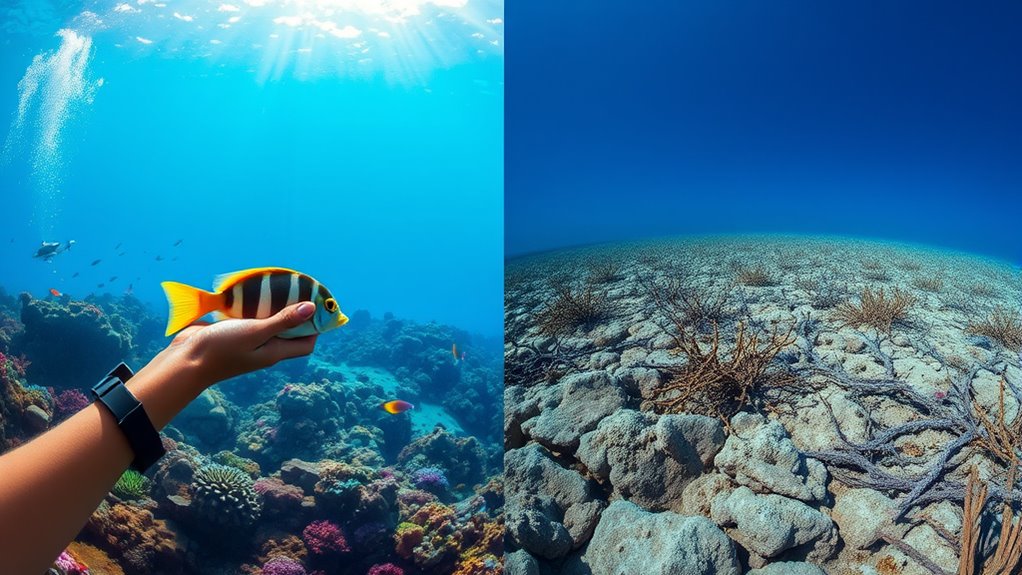

Overfishing is a serious issue, depleting fish populations and disrupting marine ecosystems. It’s essential to make sustainable seafood choices, as your decisions can impact ocean health and biodiversity. Opt for responsibly sourced seafood to support sustainable fishing practices and protect marine life. Consider local seafood options too, which often have a smaller environmental footprint and fresher quality. By prioritizing sustainability, you’re contributing to the preservation of our oceans. Discover more about making these choices effectively!
Key Takeaways
- Overfishing depletes fish populations, disrupts ecosystems, and threatens marine biodiversity, highlighting the need for sustainable seafood practices.
- Sustainable seafood comes from fisheries or aquaculture that minimize environmental impact and promote healthy ocean ecosystems.
- Consumers can support sustainable seafood by choosing certified products and prioritizing local sourcing to reduce the environmental footprint.
- Responsible seafood choices contribute to marine conservation efforts and ensure the availability of fish for future generations.
- Awareness of the true costs of seafood, including environmental impacts, is essential for making informed consumption decisions.
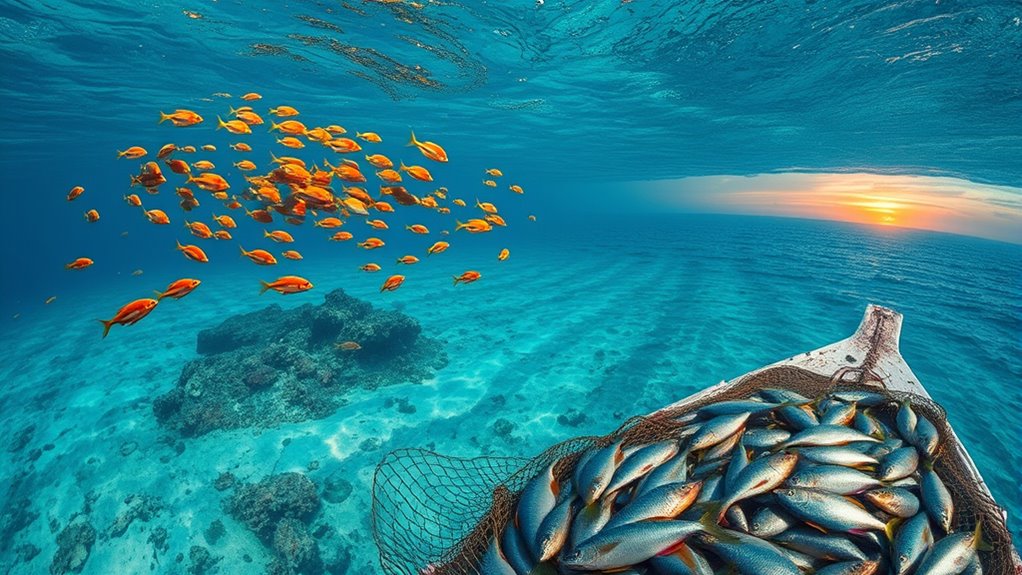
What’s the real cost of your seafood dinner? When you sit down to enjoy that plate of shrimp or salmon, you might not realize the hidden implications behind your meal. Overfishing is a pressing issue that threatens marine ecosystems worldwide, and it’s become a significant concern for those who care about sustainability. You may love seafood, but have you considered how your choices affect the oceans and their inhabitants?
The true cost of your seafood dinner extends beyond the price tag; it impacts marine ecosystems and sustainability.
Aquaculture practices have emerged as a potential solution to overfishing. By cultivating fish and shellfish in controlled environments, aquaculture aims to relieve some pressure on wild fish populations. However, not all aquaculture is created equal. Some practices can negatively impact marine conservation efforts, leading to pollution and habitat destruction. It’s essential to educate yourself on sustainable aquaculture methods, as they can help you make informed choices when purchasing seafood. Look for labels that indicate responsible farming practices, such as those certified by organizations dedicated to marine conservation.
You might wonder how your seafood choices relate to the broader context of marine conservation. The oceans are crucial for regulating climate, providing oxygen, and supporting diverse species. Overfishing disrupts these ecosystems, leading to imbalances that can take years to recover from. By opting for sustainably sourced seafood, you contribute to the health of the oceans and the overall biodiversity of marine life. When you support fisheries that prioritize sustainability, you’re not just enjoying a meal; you’re taking part in a movement that values our planet. Political power couples in environmental advocacy also play a role in promoting sustainable practices across the industry.
It’s also worth considering local seafood options. When you choose to buy from local fishermen or markets, you often get fresher products while supporting your community. Local fisheries tend to have a smaller environmental footprint and can provide insights into sustainable practices. Plus, knowing where your food comes from can deepen your appreciation for it, making each bite more meaningful.
As you ponder your next seafood dinner, remember that every choice you make sends a message. Will you support overfishing or contribute to sustainable practices? By being mindful of your seafood selections and prioritizing aquaculture practices that align with marine conservation, you can enjoy your meal while helping protect our oceans. Ultimately, the genuine cost of your seafood dinner goes beyond price; it’s about the impact you have on the world around you. Make it count.
Frequently Asked Questions
What Seafood Should I Avoid Due to Overfishing Concerns?
You should avoid seafood like Atlantic cod, bluefin tuna, and orange roughy due to overfishing concerns. These species often suffer from poor fisheries management, resulting in depleted populations. Instead, look for options that emphasize bycatch reduction practices, such as farmed shellfish or sustainably sourced salmon. Supporting responsible fisheries helps guarantee that marine ecosystems thrive and future generations can enjoy seafood without depleting essential resources. Choose wisely to make a positive impact!
How Can I Ensure My Seafood Is Sustainably Sourced?
To guarantee your seafood is sustainably sourced, look for seafood certifications like the Marine Stewardship Council (MSC) or Aquaculture Stewardship Council (ASC). These labels indicate responsible fishing and fish farm ethics. You can also ask your local fishmonger about their sourcing practices, assuring that the seafood comes from well-managed fisheries or farms. By choosing certified options, you support sustainable practices and help protect marine ecosystems for future generations.
Are Farmed Fish Better Than Wild-Caught?
You might think wild-caught fish is always better, but it depends on several factors. For example, a study showed that farmed salmon can have lower mercury levels and a more stable supply than wild-caught varieties. While aquaculture benefits include reduced pressure on wild populations, farmed fish can sometimes face issues like disease. Weighing wild vs. farmed, evaluate the sourcing methods to determine which option aligns best with your values and health needs.
What Are the Environmental Impacts of Overfishing?
Overfishing profoundly harms the environment by depleting fish populations and disrupting ocean habitats. When you fish excessively, it often leads to bycatch issues, where non-target species get caught and discarded, resulting in wasted marine life. This practice can devastate ecosystems, as the balance between species is affected. Additionally, the destruction of habitats like coral reefs and seagrass beds occurs due to heavy fishing gear, further destabilizing marine environments.
How Can I Support Sustainable Fishing Practices?
You can support sustainable fishing practices by choosing seafood certified by marine conservation organizations. Look for labels like the Marine Stewardship Council (MSC) or the Aquaculture Stewardship Council (ASC). Stay informed about fishing regulations in your area and advocate for policies that protect marine ecosystems. By reducing demand for overfished species and supporting responsible fisheries, you help guarantee healthy oceans for future generations. Every choice you make can contribute to a more sustainable future.
Conclusion
In the dance of life beneath the waves, your choices matter. By opting for sustainable seafood, you’re casting a lifeline to our oceans, helping to restore balance and protect marine ecosystems. Remember, every bite you take can ripple through the waters, supporting healthier fish populations and vibrant underwater habitats. So, let’s be mindful and make waves of change together. With each meal, you’re not just eating; you’re nurturing the future of our seas.