Shark conservation is essential for maintaining healthy marine ecosystems, but bycatch and finning pose serious threats to shark populations. Bycatch occurs when sharks are unintentionally caught in fishing gear, disrupting their numbers and the balance of the ocean food chain. Finning, the practice of removing shark fins and discarding the rest, further exacerbates their decline. Supporting sustainable fishing practices and protecting marine areas can help mitigate these threats. Stay tuned to discover more about the importance of sharks and how you can help.
Key Takeaways
- Bycatch refers to the unintentional capture of sharks and other non-target species during fishing, significantly impacting shark populations.
- Shark finning involves removing fins from sharks and discarding the bodies, leading to severe declines in shark numbers and disrupting marine ecosystems.
- Overfishing and habitat destruction contribute to the decline in shark populations, threatening biodiversity and the stability of marine food chains.
- Sustainable fishing practices can minimize bycatch and prevent shark finning, promoting healthier marine ecosystems and protecting shark species.
- Marine Protected Areas (MPAs) help safeguard shark habitats, reduce bycatch, and combat the negative impacts of fishing practices on shark populations.
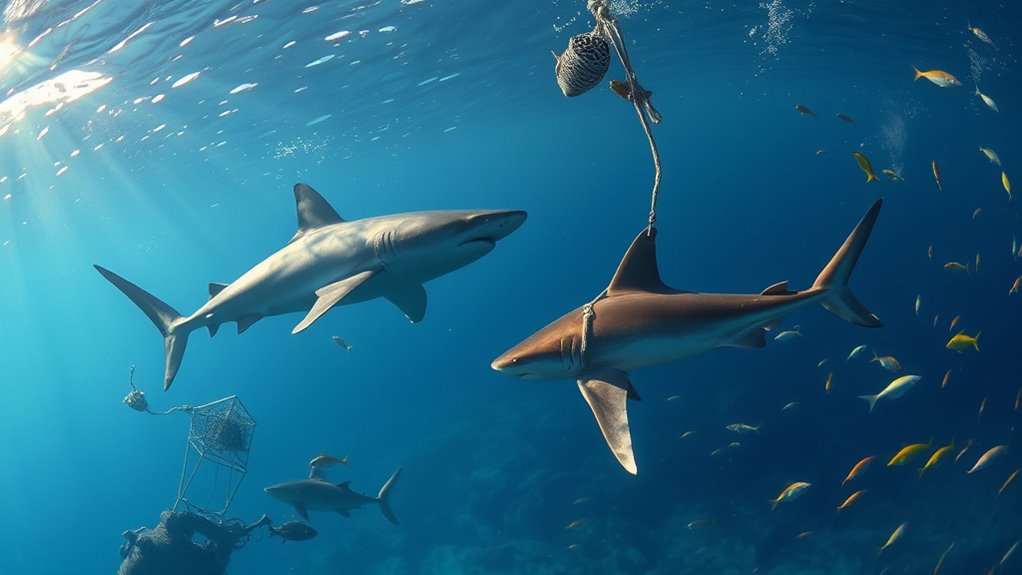
Why should we care about sharks? These majestic creatures play an essential role in maintaining the balance of marine ecosystems. They help regulate fish populations, ensuring the health of coral reefs and the entire oceanic environment. Without sharks, the marine food chain could collapse, leading to disastrous consequences for both the ocean and humanity. As you dive deeper into the world of shark conservation, you’ll realize how your actions can contribute to their survival, particularly through supporting initiatives like Marine Protected Areas and sustainable fishing practices.
Sharks are vital to ocean health, regulating fish populations and preserving marine ecosystems. Their survival depends on our actions.
Marine Protected Areas (MPAs) serve as safe havens for sharks, allowing them to thrive without the pressures of overfishing and habitat destruction. By promoting MPAs, you’re actively participating in a global effort to safeguard these critical habitats. When you advocate for more MPAs, you’re not just protecting sharks; you’re also preserving the entire ecosystem that benefits countless marine species, including those that humans rely on for food and livelihood. The more we create and enforce these protected areas, the closer we get to restoring balance in our oceans.
On the flip side, sustainable fishing is another fundamental aspect of shark conservation. You might think of fishing as a simple activity, but it has far-reaching effects on marine life. Unsustainable fishing practices often lead to bycatch, where sharks and other non-target species are accidentally caught and killed. This not only threatens the shark population but also disrupts the marine environment. By supporting sustainable fishing methods, you help ensure that fisheries can operate without depleting shark populations. Choosing seafood that’s caught sustainably means you’re making a conscious decision to protect these creatures and contribute to a healthier ocean.
Every time you make a choice about what seafood to consume, you’re casting a vote for the type of fishing practices you want to support. By opting for sustainably caught fish, you encourage fishermen to use methods that minimize bycatch and protect the delicate balance of marine life. It’s a small change on your plate, but it has a significant impact on the larger ocean ecosystem. Additionally, understanding oceanic ecosystems is crucial for appreciating the interconnectedness of marine life and the importance of preserving sharks.
Frequently Asked Questions
How Can Individuals Support Shark Conservation Efforts?
You can support shark conservation efforts by advocating for marine protected areas and promoting sustainable fishing practices. Join local initiatives that aim to establish protected zones and educate others about their importance. Participate in beach clean-ups and support businesses that prioritize sustainable seafood. By spreading awareness and making conscious choices in your daily life, you can contribute to the preservation of sharks and their habitats, ensuring a healthier ocean ecosystem for future generations.
What Are the Main Species Affected by Shark Finning?
Shark species suffer considerably from finning’s fatal fallout. Popular predators like the great white, hammerhead, and tiger sharks face drastic declines due to advanced finning technology. These majestic marine creatures navigate vast oceans during migration, yet their populations dwindle perilously. You’re essential in raising awareness and advocating for their protection. By understanding the impact on these specific species, you can contribute to conservation efforts and help guarantee a future for our ocean’s sharks.
Are There Any Legal Regulations Against Shark Finning Globally?
Yes, there are legal regulations against shark finning globally, primarily through international treaties like CITES. These agreements help protect vulnerable shark species by regulating trade and setting fishing quotas. However, enforcement varies by country, and not all nations fully comply. If you’re passionate about shark conservation, staying informed about these regulations and supporting organizations that advocate for stricter laws can make a significant impact on protecting these essential marine animals.
What Role Do Sharks Play in Ocean Ecosystems?
Imagine a healthy coral reef thriving because sharks patrol the waters, keeping populations of smaller fish in check. Sharks play a essential role in ocean ecosystems by maintaining balance. Their migration patterns influence nutrient distribution, and their presence supports diverse marine habitats. For instance, in the Bahamas, shark conservation efforts have led to increased fish populations and healthier reefs, showcasing how indispensable these apex predators are for sustaining marine biodiversity and ecosystem health.
How Does Bycatch Impact Other Marine Species?
Bycatch substantially impacts marine species by disrupting their populations and ecosystems. When non-target species are caught, it reduces marine biodiversity, affecting the balance of the ecosystem. You might not realize that this unintentional catch can lead to the decline of vulnerable species, altering food chains and habitats. Bycatch effects ripple through the ocean, threatening not only individual species but the overall health of marine environments. It’s essential to address this issue for lasting conservation.
Conclusion
In the fight for shark conservation, every effort counts, like a single drop in an ocean of change. By addressing bycatch and finning, you can help protect these essential species and maintain the balance of marine ecosystems. Your voice matters, whether it’s advocating for sustainable fishing practices or supporting conservation initiatives. Together, we can guarantee future generations experience the awe of sharks in their natural habitats, rather than as mere memories in fading photographs.