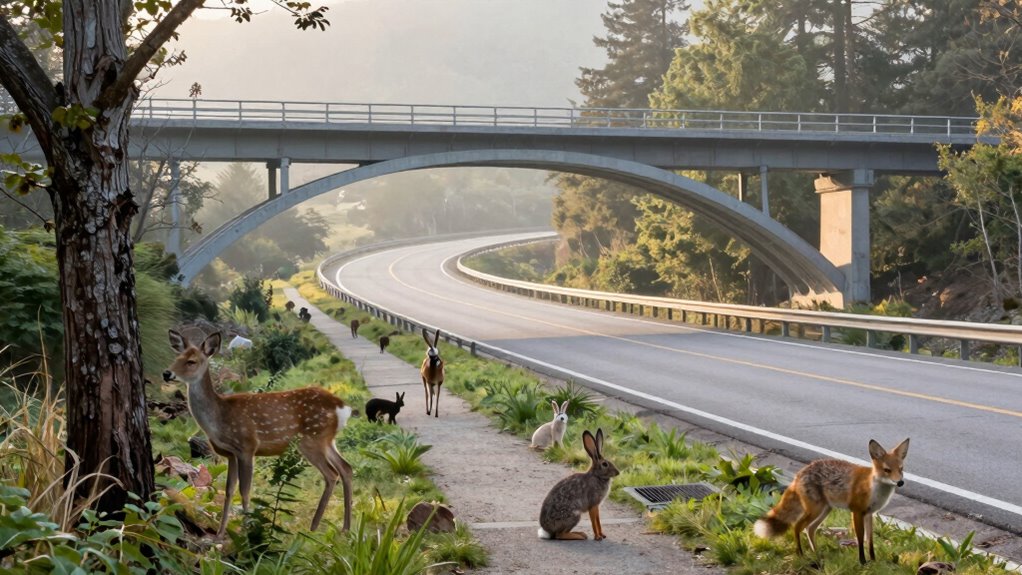

Wildlife crossings save more animals than you think by providing safe passages across busy roads, preventing deadly collisions. They help reconnect fragmented habitats, enabling animals to find food, mates, and new shelter, which boosts survival rates. These structures also support animals in adapting to climate change and changing migration patterns. The benefits extend beyond animals, improving road safety and reducing costs for communities. If you want to discover how these crossings truly make a difference, there’s more to uncover below.
Key Takeaways
- Wildlife crossings provide safe passages, significantly reducing vehicle collisions and animal mortality rates.
- They reconnect fragmented habitats, enabling animals to access essential resources and breeding areas.
- Crossings facilitate natural migration and movement, supporting species adaptation to climate change.
- They promote ecosystem health by maintaining biodiversity and ecological balance.
- Implementing crossings lowers economic costs from accidents and enhances safety for both animals and drivers.
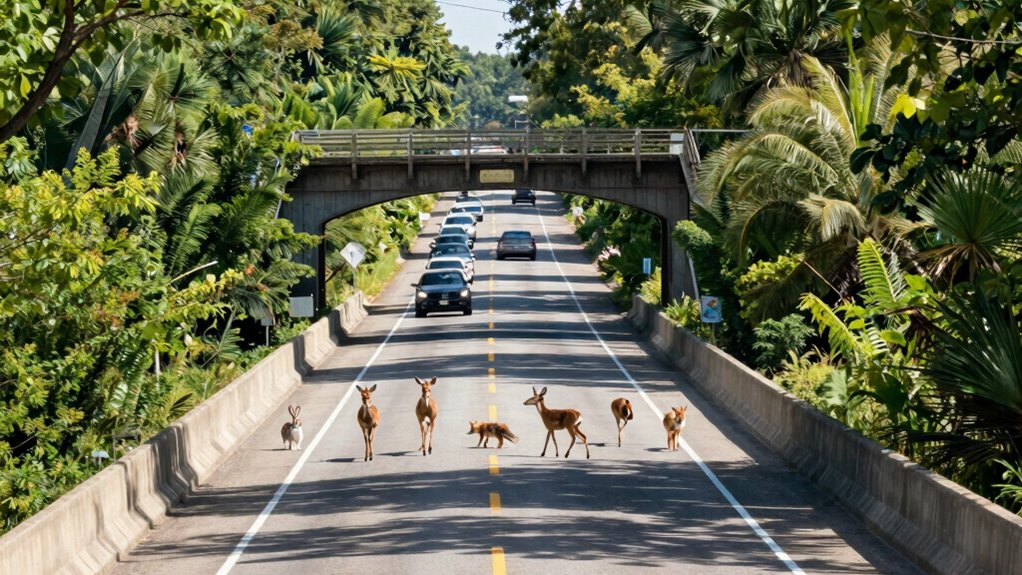
Wildlife crossings are making a real difference in protecting animals from dangerous roadways. These structures serve as safe passages, allowing animals to move freely across their habitats without risking collision with vehicles. As urban development continues to encroach on natural environments, roads cut through wildlife territories more than ever. This expansion fragments habitats, making it harder for animals to find food, mates, or migrate seasonally. Without proper crossings, many species face increased mortality rates, which threaten their survival and disturb local ecosystems.
Wildlife crossings protect animals from road accidents and help maintain healthy ecosystems amid urban expansion.
You might think that building these crossings only benefits animals, but they also play an essential role in addressing broader environmental challenges. Climate change, for example, forces many species to alter their migration patterns and seek new habitats. As temperatures rise and weather patterns shift, animals need to travel longer distances to find suitable conditions. Wildlife crossings help facilitate these movements, reducing the barriers created by roads and urban sprawl. By doing so, they support natural adaptation processes that are critical for species to survive climate change.
Furthermore, urban development often results in habitat loss and fragmentation, making it difficult for animals to access resources or migrate safely. When roads dissect ecosystems, animal populations become isolated, which can lead to inbreeding and decline. Wildlife crossings bridge these gaps, reconnecting fragmented habitats and promoting gene flow among populations. This connectivity is essential for maintaining healthy, resilient ecosystems that can withstand environmental stresses, including those caused by climate change. Additionally, they can help mitigate habitat fragmentation, which is a major threat to many species’ survival. Incorporating wildlife corridors into infrastructure planning further enhances these benefits by creating continuous pathways for movement. Recognizing these benefits, many conservation organizations advocate for integrating ecosystem connectivity into urban planning strategies.
You might also notice how these crossings contribute to road safety and reduce costs associated with vehicle collisions with animals. Fewer accidents mean less property damage and fewer injuries or fatalities for drivers and wildlife alike. This creates a safer environment for everyone while actively conserving animal populations. In many cases, implementing wildlife crossings is a cost-effective strategy that benefits local communities economically and ecologically. Additionally, they serve as crucial tools for maintaining habitat connectivity, which is vital for the long-term health of ecosystems.
In essence, wildlife crossings do more than just save animals—they help maintain ecological balance amid ongoing urban development and climate change. They enable species to adapt to changing conditions, reduce habitat fragmentation, and improve safety for drivers. When you consider these factors, it becomes clear that the impact of wildlife crossings extends far beyond individual animals. They are indispensable tools in creating sustainable, resilient landscapes where both wildlife and humans can coexist more harmoniously. Their importance continues to grow as development accelerates and climate challenges become more intense, making these structures an essential part of future conservation efforts.
wildlife crossing wildlife tunnel
As an affiliate, we earn on qualifying purchases.
As an affiliate, we earn on qualifying purchases.
Frequently Asked Questions
How Do Wildlife Crossings Impact Local Communities Economically?
Wildlife crossings boost local communities economically by attracting eco-tourists and encouraging outdoor activities, which increase spending in the area. They also enhance community safety by reducing vehicle collisions with animals, saving lives and lowering insurance costs. These crossings create a safer environment for residents and visitors, fostering a sense of environmental responsibility. Overall, they generate significant economic benefits while promoting safer, more sustainable communities.
Are Wildlife Crossings Effective for All Animal Species?
You might think wildlife crossings work for all animals, but species adaptability varies. Smaller or less mobile animals often struggle with crossing design considerations, making these structures less effective for them. Ironically, larger animals like deer benefit most because their movement patterns align better with crossing designs. So, while crossings are a great tool, they need tailored designs to truly support diverse species, not just the obvious ones.
What Materials Are Best for Constructing Wildlife Crossings?
You should use durable, eco-friendly materials like native plants, recycled wood, and permeable pavement for wildlife crossings. These materials guarantee construction durability, withstand weather, and minimize environmental impact. Using natural elements helps animals feel comfortable and encourages their use of the crossings. Plus, eco-friendly choices support sustainability and reduce pollution. Prioritizing these materials makes your wildlife crossings more effective, lasting longer, and better for the environment.
How Long Does It Take for Crossings to Show Benefits?
Back in the day, wildlife crossings start showing benefits within a few months to a few years. You’ll notice improved migration patterns and habitat connectivity as animals adapt quickly, especially in the first couple of years. The time varies based on location and species, but generally, you’ll see positive results within 2-5 years. Consistent monitoring guarantees the crossings continue aiding wildlife and maintaining healthy ecosystems.
Can Wildlife Crossings Prevent Vehicle-Wildlife Collisions Entirely?
Wildlife crossings can considerably reduce vehicle-wildlife collisions, but they can’t prevent them entirely. They improve habitat connectivity and facilitate animal migration, which helps animals cross safely and reduces risky encounters. However, some animals might still attempt to cross roads unexpectedly, especially during peak migration times or in low-visibility conditions. While crossings are highly effective, combining them with signage and driver awareness remains essential for near-total safety.
Conclusion
As you stand quietly beside a wildlife crossing, you can almost hear the gentle rustle of leaves and the soft footsteps of animals crossing safely. These crossings are more than concrete and fencing—they’re lifelines that reconnect fragmented habitats. When you support or advocate for them, you help create a world where creatures can roam freely under the open sky, reminding us that safeguarding nature’s pathways guarantees the vibrant tapestry of life continues to thrive beneath the sun’s warm glow.