Beavers play a key role in restoring wet landscapes by building dams that transform dry land into thriving wetlands. Their dam activities slow water flow, creating flood-prone areas that support diverse plants and animals. These wetlands improve water quality, reduce floods, and prevent erosion. By acting as ecosystem engineers, beavers enhance habitat diversity and boost ecosystem resilience. If you keep exploring, you’ll uncover even more ways beavers help ecosystems thrive and recover.

Get pet supplies delivered free — and shop member deals
- Fast, free delivery on millions of items
- Access to Prime Big Deal Days deals on October 6–7
- Prime Video, Amazon Music and more included
Key Takeaways
- Beavers build dams that create wetlands, transforming dry land into habitats supporting diverse species.
- Their dams slow water flow, enhancing nutrient cycling and promoting aquatic plant growth.
- Beaver activity increases habitat variety, supporting fish, amphibians, and threatened species.
- Dams regulate water levels, reducing flood risks and maintaining steady flow during dry periods.
- Beavers act as ecosystem engineers, restoring ecological health and landscape resilience.
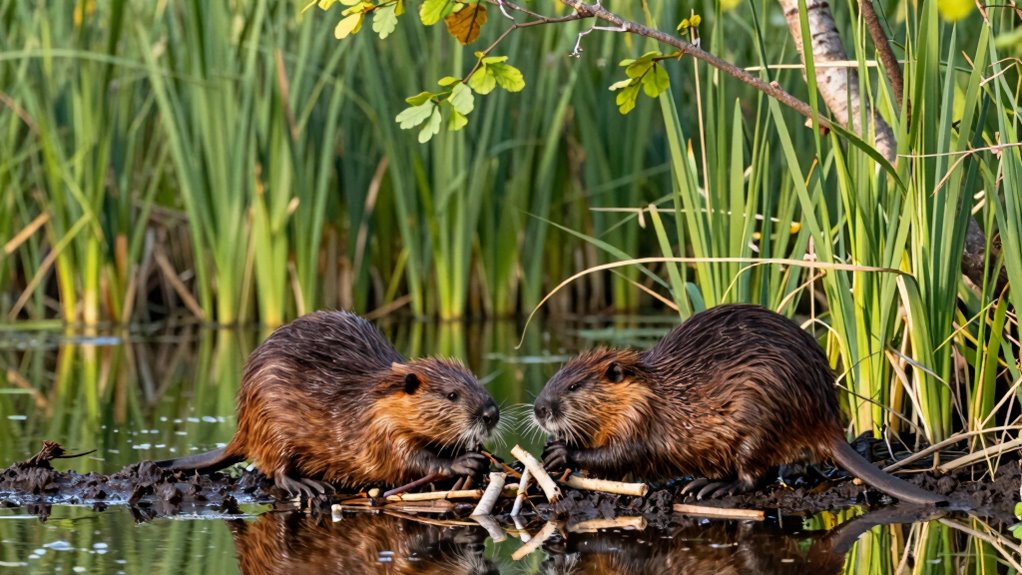
Wetlands are fundamental ecosystems that support diverse plant and animal life, but many have been drained or degraded over the years. You might not realize it, but beavers play a pivotal role in restoring these essential landscapes through their dam-building activities. When beavers create dams, they alter water flow and create ponds that flood surrounding areas. This process, known as beaver dam dynamics, transforms dry or open land into lush wetlands. These wetlands serve as breeding grounds for numerous species and help filter pollutants, improving water quality. As a result, beaver activity directly contributes to the regeneration of degraded habitats and the enhancement of biodiversity.
Beaver dams transform dry land into vital wetlands, supporting biodiversity and improving water quality.
One of the most significant ways beavers influence wetlands is through their impact on ecosystem nutrient cycling. By building dams and lodges, beavers increase water retention in the landscape, which slows down water movement and allows nutrients like nitrogen and phosphorus to settle and be processed. This natural nutrient cycling boosts plant growth, supporting a wider variety of aquatic and terrestrial species. The flooded areas created by beavers promote the development of aquatic plants, which in turn provide food and shelter to fish, amphibians, and insects. As organic matter decomposes, nutrients are released back into the water, fueling the productivity of the entire ecosystem. This cycle helps maintain a healthy, balanced environment that can recover from previous disturbances. Ecosystem resilience is strengthened through these natural processes, making wetlands more adaptable to environmental challenges. Additionally, beavers influence habitat diversity by creating a variety of aquatic and terrestrial environments that support different species.
Furthermore, beaver dams help regulate water flow, reducing the risk of floods during heavy rains and maintaining steady water levels during dry spells. This hydrological stability benefits not just the wetlands but also the surrounding communities by preventing erosion and protecting groundwater supplies. You’ll notice that beaver activity fosters a mosaic of habitats—wetlands, ponds, and meadows—that support a broad spectrum of species, many of which are threatened or endangered. Restoring these natural processes can enhance the ecological integrity of affected landscapes and promote long-term sustainability.
In essence, beavers act as ecosystem engineers, creating and maintaining conditions that promote ecological health. Their dam-building activities initiate a cascade of benefits, from nutrient cycling to habitat diversity, which are essential for wetland restoration. By allowing beavers to thrive and their dams to persist, you’re supporting a natural process that revitalizes and sustains wet landscapes. Their work is a reflection of how nature’s engineers, like beavers, can be powerful allies in conserving and restoring ecosystems that benefit both wildlife and people.
Frequently Asked Questions
How Do Beavers Choose Locations for Dam Building?
You observe that beavers choose locations for dam construction based on habitat selection, favoring areas with abundant trees and water flow. They assess the environment for stability, choosing sites with suitable water levels and enough space for building. Beavers prioritize spots that will create *best* ponds, providing safety and resources. Their instinct guides them to these *perfect* locations, ensuring their dam-building efforts support their survival and ecosystem health.
Are Beavers Native to All Wetland Areas Worldwide?
No, beavers aren’t native to all wetland areas worldwide. You’ll mainly find them in North America and parts of Europe and Asia. Their dietary habits include bark, leaves, and aquatic plants, which influence the ecosystem. Beavers’ impact on fish populations can be positive by creating diverse habitats, but they can also cause flooding that affects fish migration. Their presence is vital for ecosystem health where they naturally occur.
What Are the Potential Risks of Introducing Beavers to New Habitats?
Imagine you’re in the 19th century, and bringing beavers into new habitats could disrupt ecological balance. Introducing beavers risks turning them into invasive species, which might outcompete native flora and fauna. This imbalance threatens local ecosystems, potentially causing more harm than good. Before relocation, you must consider these risks carefully, ensuring that the ecological balance remains intact, and you avoid unintended consequences that could harm native species and habitat stability.
How Long Does It Take for Beaver Activity to Restore a Wetland?
Beaver activity can start restoring a wetland within a few years, but full wetland succession may take decades. Your understanding of beaver ecology shows that their dam-building creates ponds, encouraging plant growth and attracting diverse wildlife. As beavers work, they accelerate wetland succession, transforming dry areas into vibrant aquatic habitats. With consistent beaver activity, significant wetland restoration can occur in roughly 5 to 10 years, though complete ecological recovery might take longer.
Can Beaver Dams Affect Downstream Water Quality?
Beaver dams can considerably improve downstream water quality by enhancing water filtration and sediment retention. While they slow water flow, trapping pollutants and sediments, this can lead to clearer, healthier water downstream. However, in some cases, dams may cause localized flooding or alter flow patterns, which might temporarily impact ecosystems. Overall, their role in filtering water and capturing sediments benefits the broader landscape, supporting healthier aquatic environments downstream.
Conclusion
Now that you see how beavers transform wetlands, imagine what’s still hidden beneath the surface. Their natural engineering could hold the key to restoring ecosystems on a much larger scale—if we let them. Will we embrace this ancient solution before it’s too late? The future of these fragile landscapes might just depend on the humble beaver’s dam. The question is, are you ready to let nature take the lead?
Fall Picks
fall essentials
As an affiliate, we earn on qualifying purchases.