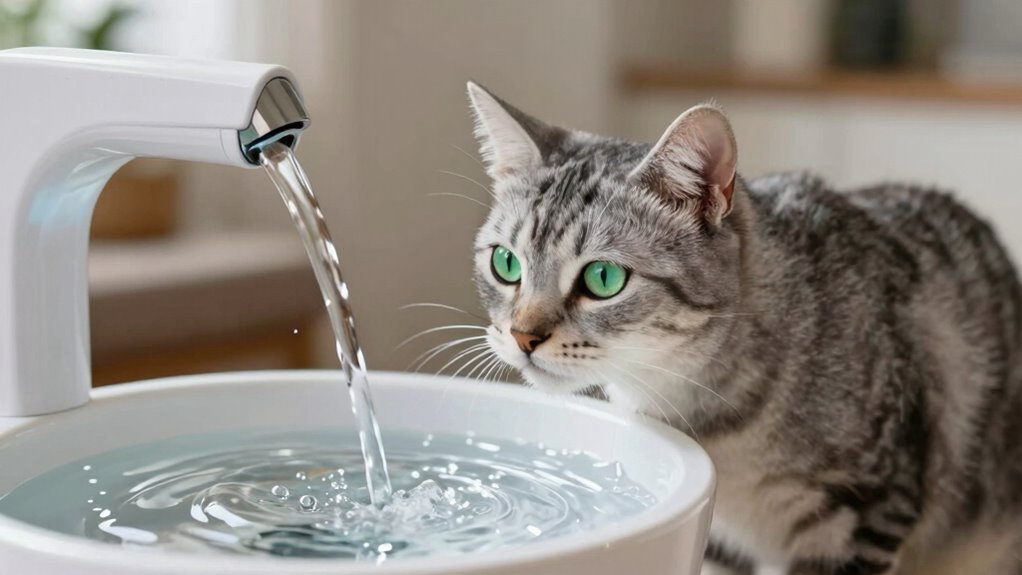
Many cats prefer moving water over still because their instincts drive them to seek fresh, clean sources, just like streams in the wild. Still water can become stagnant and develop odors, making it less appealing. Motion, sound, and the perception of freshness encourage cats to drink more from fountains that mimic natural water sources. If you want to understand how to keep your cat well-hydrated, keep exploring.

Get pet supplies delivered free with Prime
- Fast, free delivery on millions of items
- Prime Video, Amazon Music and more included
- Member-only deals all year
Key Takeaways
- Cats instinctively prefer moving water because it appears fresher, cleaner, and less contaminated than still water.
- Their natural history of relying on streams and flowing water influences their preference for running water sources.
- Still water can become stagnant, develop odors, and harbor bacteria, deterring cats from drinking it.
- Moving water’s sound and motion stimulate cats’ curiosity and drinking behavior, aligning with their natural instincts.
- Providing a fountain that mimics natural flowing water encourages cats to hydrate more effectively.
As an affiliate, we earn on qualifying purchases.
How Can I Tell If My Cat Isn’t Drinking Enough Water?
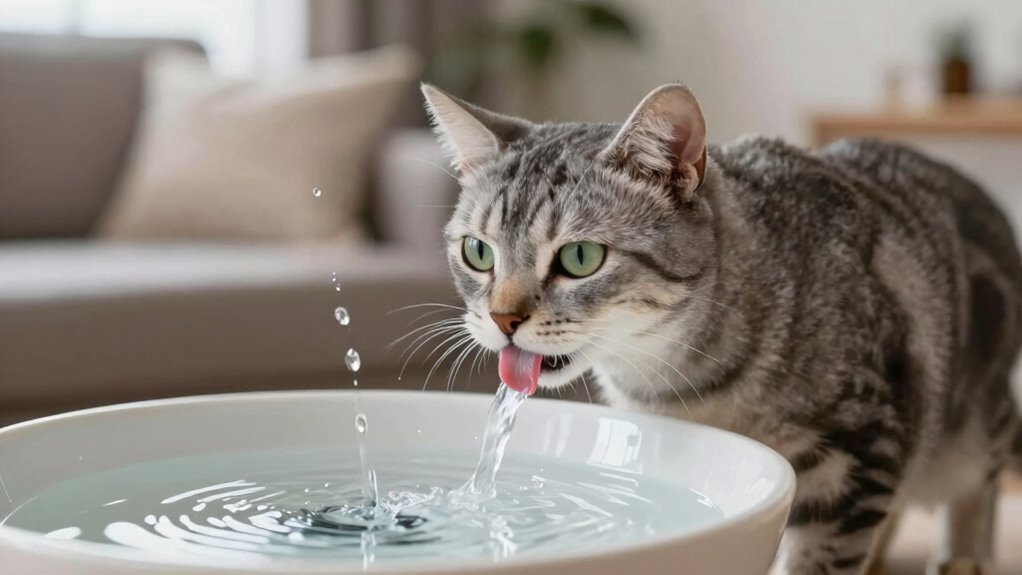
If your cat isn’t drinking enough water, you might notice signs like decreased urination, dry or sticky gums, or lethargy. These hydration signs indicate your cat isn’t getting sufficient water intake, which can lead to health issues like kidney problems or urinary tract issues. Pay attention to how often your cat visits the water bowl, and whether they seem uninterested or avoid drinking altogether. You might also notice a dull coat or sunken eyes, which are subtle clues of dehydration. Monitoring these signs helps you identify if your cat needs encouragement to drink more. Ensuring consistent water intake is essential for your cat’s health, so staying alert to hydration signs is key to maintaining their well-being.
Why Do Cats Prefer Moving Water Over Still Water?

Cats naturally prefer moving water because their ancestors in the wild relied on fresh, flowing streams and springs. This preference is rooted in their instinct to find water that’s less likely to be contaminated. Moving water signals freshness, encouraging cats to drink more for ideal hydration. Still water, like in bowls, can become stagnant and harbor bacteria, making it less appealing. Your cat’s water preferences are shaped by this evolutionary trait, leading them to seek out sources of running water. When they see a fountain, it mimics their natural environment, enticing them to hydrate properly. This behavior supports better cat hydration, which is crucial for their health. Additionally, natural instincts highlight how innate behaviors influence hydration habits, including the preference for running water. Recognizing these innate preferences can also help in designing appropriate hydration solutions, such as using cat fountains, that cater to their instincts. Providing natural water sources can significantly improve their willingness to drink and stay hydrated.
How Evolution Has Made Cats Crave Running Water

Your cat’s preference for running water stems from its wild ancestors, who drank from streams and moving sources to stay safe from contaminants. This evolutionary trait helps them seek fresher water, essential for their health. Over time, this survival instinct has made cats naturally crave moving water in your home. Water sources in the wild are dynamic, making it natural for cats to prefer flowing water over still water. Additionally, evolutionary adaptations have reinforced their preference for moving water, ensuring they stay well-hydrated and healthy.
Wild Drinking Habits
Many wild feline species have evolved to prefer running water because it’s typically fresher and less likely to be contaminated than stagnant sources. This preference influences your cat’s natural behavior, aligning with their feline physiology and instinctive need for wild hydration. In the wild, cats seek streams and moving water to ensure safety and access to clean hydration. Their bodies are adapted to process fresh water efficiently, making still water less appealing. Additionally, their natural instincts drive them toward fresh water sources that minimize the risk of ingesting contaminants. This innate preference is supported by the fact that water purification systems are vital for ensuring clean drinking water in domestic settings. Moreover, their preference for moving water is reinforced by their natural tendency to avoid stagnant water, which can harbor bacteria and parasites. The presence of moving water can also stimulate their curiosity and encourage hydration, helping prevent urinary and kidney issues. Recognizing these natural behaviors can help owners better cater to their cats’ hydration needs, especially by providing drinking fountains that mimic their wild instincts. Here’s a visual on their habits:
| Water Type | Wild Hydration Preference |
|---|---|
| Running Water | Fresher, less contaminated, preferred |
| Still Water | Risk of stagnation, avoided |
| Moving Streams | Naturally safer, instinctively sought |
Water Freshness Preference
Have you ever wondered why feline instincts drive them toward running water? It’s because cats prefer water that feels fresh and appealing. Still water in a container can become stagnant and develop an unpleasant taste or smell, discouraging them from drinking. Running water constantly moves, keeping it at a more desirable water temperature and reducing bacteria buildup. Cats are naturally sensitive to water quality, so they seek out sources that stay fresh longer. When using a water fountain, you provide a continuous flow that mimics their natural environment, encouraging hydration. A clean, moving stream of water appeals to their instincts for water freshness, making them more likely to drink. This preference for water freshness is deeply rooted in their evolution, guiding them to seek out cleaner, cooler sources. Additionally, sound vibrations from moving water can stimulate their interest and make the drinking experience more engaging for them. Moreover, the natural instincts of cats to prefer moving water help explain their reluctance to drink still water. Interestingly, natural water sources in the wild often contain moving water, further reinforcing their preference.
Evolutionary Survival Traits
Cats’ preference for fresh, moving water is deeply rooted in their evolutionary history. Over time, genetic adaptations have favored those who sought out flowing water sources, which are less likely to be contaminated. This trait helped them avoid consuming stagnant water that could harbor bacteria or parasites, reducing the risk of illness. Moving water also signals a safer environment, since predators often avoid areas with turbulent water or quick-moving streams. As a result, cats developed an instinct to prefer running water, which enhances their survival chances. This evolutionary trait remains ingrained today, explaining why many cats turn their noses up at still water. Instead, they seek out water that appears fresher and safer, like that in a fountain or running tap.
Why a Drinking Fountain Can Encourage Your Cat to Drink More
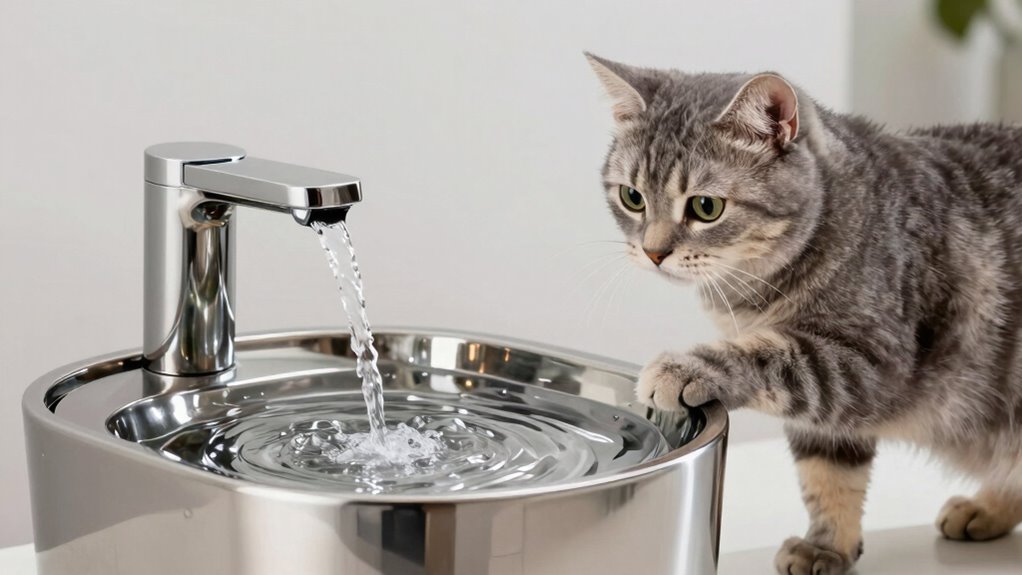
A drinking fountain can substantially boost your cat’s water intake because it provides a continuous flow that mimics natural moving water. This encourages your cat to drink more regularly, supporting better hydration monitoring. Unlike traditional water bowls, which can become stagnant or develop bacteria, fountains keep water fresh and appealing. The movement attracts your cat’s attention and stimulates their natural instincts to seek flowing water. Plus, many fountains are designed with different water bowl types, making it easier to find one that suits your cat’s preferences. As a result, your feline is more likely to drink enough water, reducing the risk of urinary issues and dehydration. Incorporating security zone info into choosing a fountain ensures you pick one that is durable and safe. Additionally, selecting a fountain made from safe, non-toxic materials helps prevent potential health issues. A fountain creates an engaging, healthy environment that promotes better hydration habits for your cat.
Simple Tips to Get Your Cat to Drink More Water

Encouraging your cat to drink more water often starts with simple changes you can make around the house. To boost water intake, focus on hydration triggers like fresh water, clean bowls, and varied locations. Here are some tips:
- Place water bowls in quiet, accessible spots
- Use shallow, wide dishes for easier drinking
- Refresh water multiple times daily
- Add a splash of tuna juice or broth for flavor
- Rotate water bowls to different areas to spark curiosity
- Consistent hydration is essential for maintaining your cat’s health and preventing dehydration. Additionally, understanding how filtration systems influence water quality can help ensure your cat always has access to clean, fresh water. Proper water circulation can also stimulate your cat’s interest in drinking. Using water filters can remove impurities and improve taste, further encouraging your feline friends to hydrate.
These small adjustments can motivate your cat to drink more naturally. Ensuring water is appealing and easily accessible helps trigger hydration cues, increasing overall water intake and supporting your cat’s health. Consistency is key—try different approaches to find what works best for your feline friend.
Choosing the Best Drinking Fountain for Your Cat

Choosing the right drinking fountain for your cat can make a significant difference in encouraging consistent hydration. When selecting a fountain, consider your cat’s preferences, such as flow type and noise level, to guarantee they feel comfortable using it. Look for models with easy-to-clean parts to simplify fountain maintenance, which helps prevent bacteria buildup and keeps the water fresh. A good fountain should have a quiet pump and a stable base to prevent tipping. Durability is also important, so opt for sturdy materials like stainless steel or BPA-free plastic. Regular cleaning and refilling are essential for maintaining ideal cat hydration. Incorporating connected equipment into your pet care routine can help monitor and promote your cat’s health more effectively. By choosing a fountain suited to your cat’s needs and maintaining it properly, you’ll promote healthier water intake and a happier feline.
Debunking Common Myths About Cats and Water

Many myths about cats and water persist, but understanding the facts can help you better care for your feline. Myth busting reveals that cats aren’t inherently averse to water; they often prefer running water and may avoid still water due to water misconceptions. Some common misconceptions include:
Many myths about cats and water are false; most cats prefer running water over still water.
- Cats dislike water entirely
- Drinking from bowls is unnatural for cats
- Cats don’t need much water
- Water causes urinary issues
- All cats dislike water toys
In reality, many cats enjoy running water, and offering a fountain can encourage hydration. They don’t dislike water per se, but they’re particular about how they access it. Addressing these myths helps you provide better hydration options and improves your cat’s health.
Frequently Asked Questions
Do Some Cats Prefer Bottled or Filtered Water Over Tap Water?
You might notice your cat prefers bottled or filtered water over tap water because of water quality concerns. Cats are often sensitive to taste and odor, which can be affected by water presentation. Bottled or filtered water usually has a fresher, cleaner flavor, encouraging your cat to drink more. Providing water in a clean, appealing bowl or fountain can make a big difference, promoting hydration and overall health.
Can Diet or Health Issues Affect a Cat’s Water Intake?
Did you know that roughly 60% of cats with medical concerns show altered hydration habits? Yes, diet or health issues can markedly impact your cat’s water intake. Medical concerns like kidney disease or dental problems make drinking uncomfortable, leading to dehydration. Monitoring their hydration habits helps catch issues early. If your cat suddenly stops drinking or shows signs of illness, consult your vet promptly to address potential health concerns.
Are There Specific Fountain Features That Attract More Cats?
You’ll find that cats are drawn to fountains with smooth, safe fountain material like ceramic or stainless steel, which are easy to clean and prevent bacteria buildup. Additionally, a fountain with gentle, adjustable water flow attracts more cats because it mimics natural streams, encouraging hydration. By choosing a fountain with these features, you can help your cat stay better hydrated and enjoy drinking more water throughout the day.
How Often Should I Clean My Cat’s Drinking Fountain?
Think of your cat’s hydration habits as a delicate garden needing regular care. You should clean the fountain at least once a week to prevent bacteria buildup and guarantee fresh water. Proper fountain maintenance keeps water appealing, encouraging your feline friend to drink more. Remember, a clean, well-maintained fountain helps your cat stay hydrated and healthy, just like tending a garden keeps it thriving.
Is There a Recommended Water Temperature for Encouraging Drinking?
You should aim for water temperature preferences around room temperature, roughly 68-72°F (20-22°C), to encourage your cat’s drinking. Cooler water can be more appealing, especially in warm weather, helping hydration optimization. Make certain the water isn’t too cold or hot, as extremes may discourage drinking. Keeping the fountain clean and fresh also promotes better hydration, making your cat more likely to drink frequently and stay healthy.
Conclusion
So, after all this, it’s funny how we spend so much time worrying about whether our cats are drinking enough, yet they’ve been wired for moving water all along. The irony? The very still water we offer might be the reason they turn away. Sometimes, giving them what their instincts crave—like a fountain—can do more than endless advice. Who knew that nature’s design would be the key to healthier, happier cats?
Halloween Picks
halloween
As an affiliate, we earn on qualifying purchases.