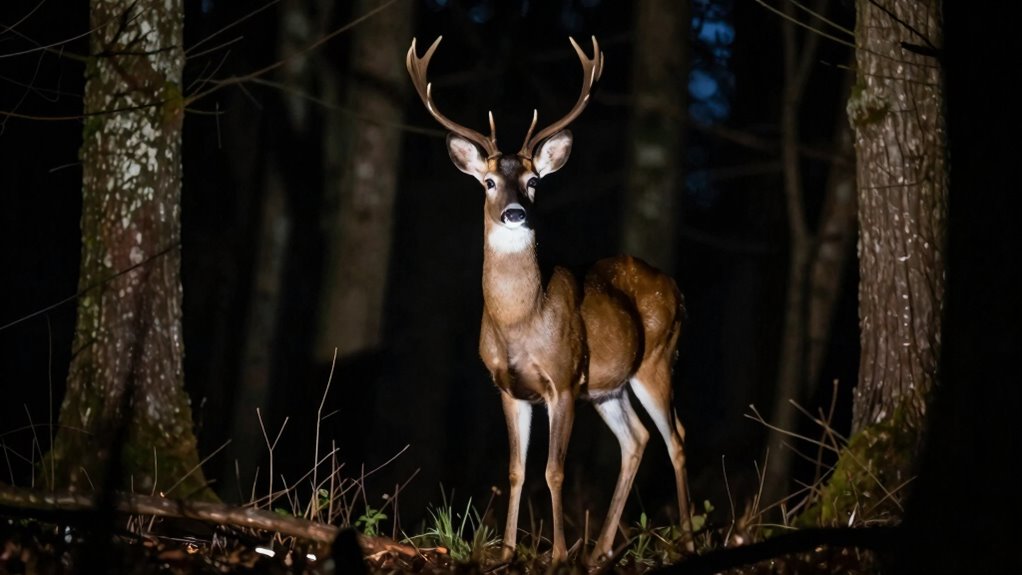
When you shine headlights on a deer, the sudden bright light overwhelms its eyes, which are adapted for low-light conditions. This overload triggers a natural survival response: freezing to avoid attracting predators. Deer interpret the headlights as a threat or predator’s eye, causing them to stay still instead of fleeing. Their wide field of view helps detect threats, but it also makes them more vulnerable to disorientation. To understand more about deer’s reactions, keep exploring.

Get pet supplies delivered free with Prime
- Fast, free delivery on millions of items
- Prime Video, Amazon Music and more included
- Member-only deals all year
Key Takeaways
- Bright headlights overwhelm deer’s visual system, causing temporary disorientation and a freeze response.
- Deer interpret intense light as a predator’s eye or threat, triggering a defensive freeze.
- Wide peripheral vision helps detect threats but reduces depth perception, increasing confusion.
- Freezing is an instinctive survival tactic to avoid attracting predator attention.
- Sudden light overload impairs their ability to judge distance and movement, leading to immobilization.
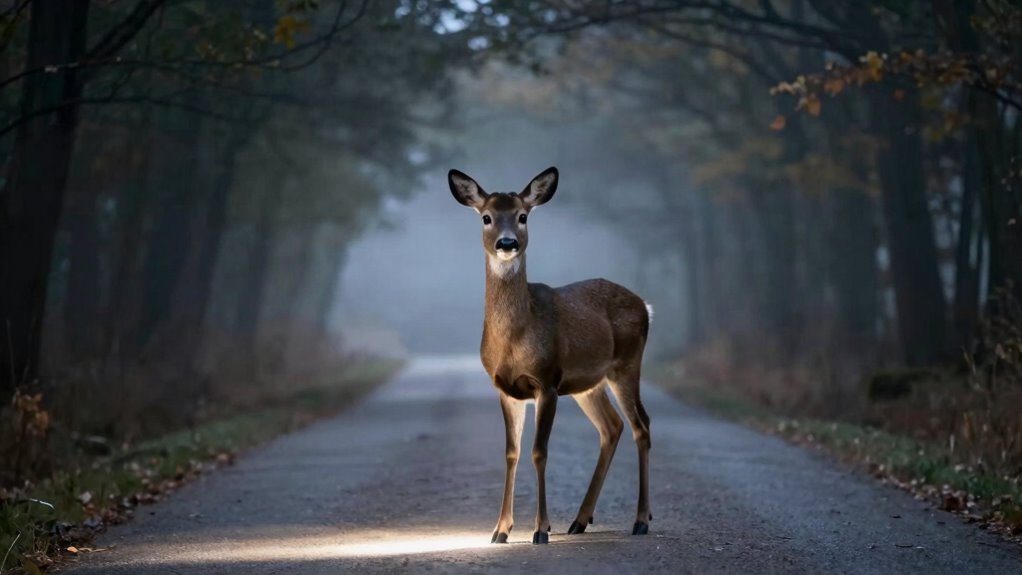
Have you ever wondered why deer often freeze in the headlights? It’s a common sight that surprises many drivers, but understanding the deer’s behavior triggers and visual perception can shed some light on this instinctive reaction. When a vehicle’s headlights shine directly at a deer, it triggers a natural response rooted in their survival instincts. Deer rely heavily on their keen senses, especially their eyesight, to detect predators and threats from a distance. When faced with sudden, intense light, their visual perception is disrupted, causing them to freeze rather than flee immediately. A deer’s visual perception is finely tuned for low-light conditions and detecting movement, which makes sudden bright lights particularly disorienting. Deer’s behavior triggers are built into their survival instincts. Their initial reaction to sudden movement or bright lights is to stay still, hoping the threat will pass without notice. This instinct is a protective mechanism; by remaining motionless, they avoid attracting attention from predators. In the wild, freezing could mean blending into their environment, making them less noticeable. When headlights suddenly illuminate them, they interpret this intense light as a predator’s eye or a potential threat, activating their freeze response. Visual perception plays a critical role in how deer respond to headlights. Their eyes are adapted for detecting movement and low-light conditions, not bright, direct light. When headlights hit them, the bright, rapid change in light intensity overwhelms their visual system. This overload causes a momentary disorientation, making it difficult for them to judge distance or movement accurately. Instead of instinctively running away, they often remain still, overwhelmed by the sudden change in their visual environment. This disorientation is not a sign of confusion but a deep-seated survival tactic that has evolved over countless generations. Additionally, deer’s eyes are positioned on the sides of their heads, giving them a wide field of view but sacrificing some depth perception. When confronted with headlights, their peripheral vision detects the light, but their central vision struggles to interpret the sudden brightness. This visual confusion reinforces their instinct to stay still, as they’re unsure whether to flee or stay put. Their hesitation, combined with their natural tendency to freeze when startled, increases the likelihood of collisions with vehicles. Recognizing that their visual system is adapted for low-light conditions helps explain their instinct to freeze rather than flee immediately, highlighting the importance of cautious driving in deer-prone areas. Understanding how their visual system is designed to prioritize movement detection and low-light sensitivity can help drivers remain vigilant and reduce accidents in areas with high deer activity. In addition, their wide field of view means that even peripheral cues can trigger their freeze response, making it all the more important for drivers to be alert to their presence.
deer collision warning reflectors
As an affiliate, we earn on qualifying purchases.
As an affiliate, we earn on qualifying purchases.
Frequently Asked Questions
Do All Deer React the Same Way to Headlights?
Not all deer react the same way to headlights. Some may freeze, while others might run or look away. Their reactions depend on factors like age, experience, and recent deer vocalizations, which can influence their behavior. During seasonal migration, deer become more alert, often freezing if startled. Your headlights can catch them off guard, so staying attentive helps prevent accidents and respects their natural responses during these vulnerable times.
How Does Age Affect a Deer’s Response to Headlights?
You might notice that age influences a deer’s response to headlights. Younger deer, with less developed senses, often freeze due to genetic predisposition and sensory impairment, making them more cautious or confused. Older deer, however, might react differently—they may either freeze longer because of diminished vision or react quickly due to experience. So, age affects how deer perceive and respond to headlights, shaped by their sensory development and genetic factors.
Can Deer Learn to Avoid Headlights Over Time?
Deer can’t truly learn to avoid headlights over time because their behavior adaptation is limited by their sensory perception. Their eyes are highly sensitive to movement and sudden changes, causing them to freeze or flee instinctively. While repeated exposure might slightly reduce initial panic, their natural response remains rooted in survival instincts rather than learned behavior. So, their reactions are mostly automatic, not shaped by experience.
What Role Does Human Activity Play in Deer Behavior?
Your human activity dramatically shapes deer behavior, turning their world upside down. Urban development replaces natural habitats, forcing deer into unfamiliar territories, heightening their fear and confusion. The constant presence of predators, sometimes human hunters, intensifies their anxiety. This relentless disturbance causes deer to freeze in headlights, instinctively trying to avoid danger. Your actions directly influence their survival strategies, making them more cautious, more frantic, and tragically, more likely to stumble into harm’s way.
Are There Environmental Factors That Influence Freezing Responses?
Environmental factors like habitat disturbance and predator pressure considerably influence a deer’s freezing response. When their habitat is disrupted, deer feel more vulnerable and may freeze as a defensive tactic, hoping to avoid detection. Increased predator pressure heightens this reaction, making deer more likely to stay still to evade predators. These environmental cues trigger a natural survival instinct, causing deer to freeze in uncertain or threatening situations, such as encountering bright headlights.
Conclusion
So, next time you spot a deer caught in your headlights, remember it’s not just about fear—it’s nature’s delicate dance of hesitation. Sometimes, they’re simply pausing at the edge of understanding, unsure if they should step forward or retreat. While it might seem like a moment of panic, it’s really a quiet pause, a gentle dance of instinct and uncertainty. Understanding this can help you respond with patience, giving both of you a safer path ahead.
Columbus Day / Indigenous Peoples' Day Picks
long weekend sales
As an affiliate, we earn on qualifying purchases.