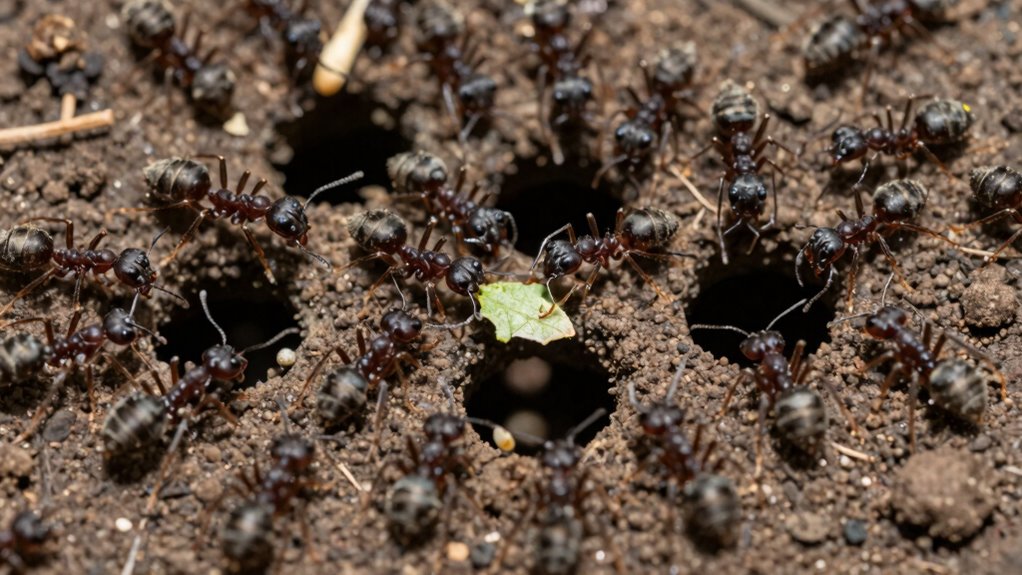

You see, ant colonies divide labor efficiently through complex communication methods like pheromones and tactile signals, which guide tasks such as foraging and defending the nest. Hierarchies prioritize roles, with queens reproducing and workers adapting based on age and needs. This flexible system allows ants to quickly reassign roles when necessary. If you keep exploring, you’ll uncover more about how their social structure keeps the colony thriving in ever-changing environments.
Open a free Amazon Business account
Business pricing, bulk buying and tax-exempt orders.
As an affiliate, we earn on qualifying purchases.
Key Takeaways
- Pheromone signaling recruits specific workers for tasks based on colony needs and environmental cues.
- Hierarchical roles assign duties like brood care, foraging, and defense, ensuring task specialization.
- Dynamic role allocation allows workers to adapt roles quickly during resource scarcity or threats.
- Multiple communication methods, including chemical and tactile cues, enhance coordination and social cohesion.
- Efficient division of labor is supported by social organization, enabling the colony to respond swiftly to changes.
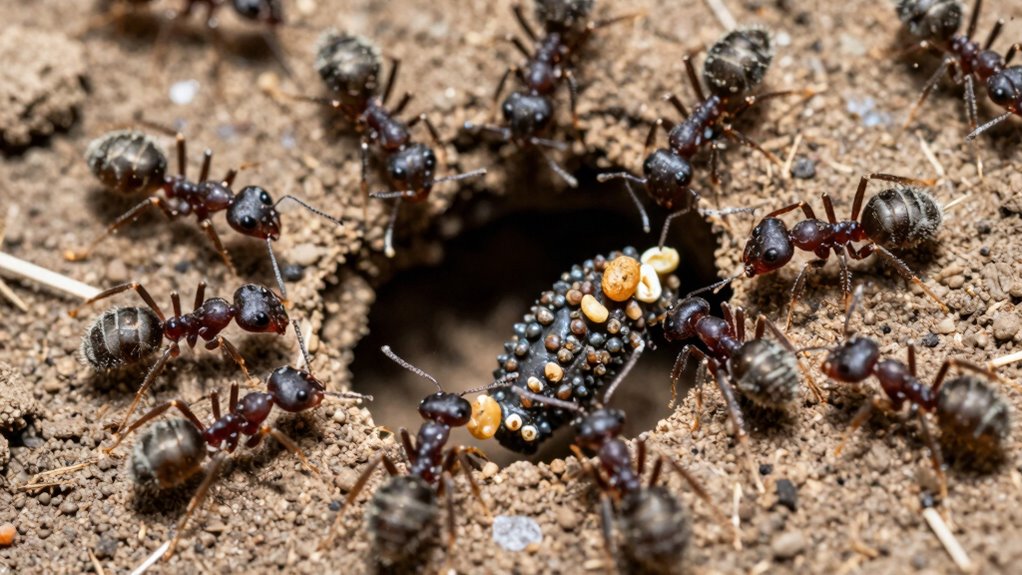
Ant colonies are remarkable examples of organized teamwork, where each ant plays a specific role to guarantee the colony’s survival. The way they divide labor is both efficient and fascinating, relying heavily on their communication methods and colony hierarchy. The communication system is so sophisticated that it allows for quick adaptation to environmental changes. Communication methods are the backbone of this coordination. Ants primarily use chemical signals called pheromones to relay messages. When an ant finds food, it releases a pheromone trail back to the nest, guiding others to the resource. If danger threatens, alarm pheromones alert nearby ants to defend or evacuate. These chemical signals are precise and adaptable, allowing the colony to respond swiftly to changing circumstances. Some ants also use tactile communication, like antennal contact, to share information directly. This combination of chemical and physical cues ensures that every ant is aware of what’s happening and what needs to be done. The colony hierarchy plays a crucial role in organizing these activities. At the top, you have the queen, whose primary role is reproduction. She’s supported by a network of worker ants, each specialized for specific tasks based on age and skill. Younger workers typically tend to brood care, while older ones handle foraging, defending the colony, or maintaining the nest. This division of labor is flexible; if a worker is lost, others can often step into new roles, maintaining the colony’s efficiency. Occasionally, soldier ants emerge with specialized mandibles for defense, further illustrating how the hierarchy adapts to different needs. This structured hierarchy and communication system mean that tasks are distributed efficiently without confusion. When foraging, worker ants follow pheromone trails, and as resources become scarce, more ants are recruited through increased pheromone signaling. During colony expansion or repair, tasks are assigned based on the immediate needs and the ants’ roles, ensuring no time or effort is wasted. The hierarchy also helps maintain order, reducing conflict and ensuring that every role, from queen to forager to defender, is fulfilled promptly. In addition, their ability to coordinate complex tasks demonstrates a level of social organization that is remarkably efficient. This coordination relies on a dynamic allocation of roles that allows the colony to adapt quickly to environmental challenges. The flexible division of labor is partly enabled by their ability to communicate effectively using multiple cues, which enhances their social cohesion. Furthermore, the integration of different communication methods enhances their social organization, making their collective behavior highly adaptable. Their sophisticated communication system is also a key factor in their ability to optimize resource allocation, ensuring survival even in challenging environments. In essence, your understanding of ant colonies‘ labor division reveals a complex but highly effective social structure. Their communication methods and colony hierarchy work hand-in-hand to create a resilient, adaptable community. This system allows them to thrive in diverse environments, constantly coordinating and adjusting in ways that seem almost intelligent.
ant farm with tunnels and chambers
As an affiliate, we earn on qualifying purchases.
As an affiliate, we earn on qualifying purchases.
Frequently Asked Questions
How Do Ants Recognize Their Colony Members?
You recognize your colony members through recognition signals and colony markers, which ants detect using their antennae. These signals include chemical cues like pheromones on their cuticle, which act as colony markers, distinguishing members from outsiders. When you come close, your antennae pick up these chemical signatures, allowing you to identify fellow ants quickly. This efficient recognition system helps maintain colony cohesion and protects against intruders.
Do Ant Roles Change Over Their Lifetime?
You might think ant roles are fixed, but they’re surprisingly flexible! Ant role flexibility means workers can switch tasks as needed, adapting to colony demands. While worker specialization tends to develop early, some ants change roles over their lifetime, from nurturing young to foraging or defending. This adaptability guarantees the colony’s survival, showing that even tiny ants are capable of impressive role shifts, making the entire system remarkably resilient.
How Do Ants Communicate Within the Colony?
You see, ants communicate primarily through ant pheromone signaling, which guides others to food or alerts them of danger. They also use tactile signals, like touching antennae. Worker recruitment strategies involve depositing pheromones to summon more ants to a task, ensuring efficient collaboration. This method helps the colony coordinate activities seamlessly, allowing ants to work together effectively without central control, maintaining the colony’s incredible efficiency.
What Triggers a Worker Ant to Become a Queen?
Imagine a world where ants suddenly decide to switch roles—this happens when environmental cues or colony needs trigger a worker ant to become a queen. In ant reproductive behavior, hormones like juvenile hormone increase, initiating queen development. The queen dominance hierarchy also influences this, as the primary queen suppresses others. When the colony requires a new queen, a worker’s physiology changes, allowing her to take on reproductive duties and lead the colony.
How Do Colonies Adapt to Environmental Changes?
You see, ant colonies adapt to environmental changes through environmental resilience and adaptive behaviors. When conditions shift, worker ants adjust their roles, such as foraging or nest building, to meet new challenges. They communicate via chemical signals, enabling swift collective responses. These adaptive behaviors guarantee the colony’s survival, making them highly resilient as they modify their strategies to cope with threats like droughts, predators, or habitat alterations.
Conclusion
Just like a well-trained orchestra, an ant colony works in perfect harmony, each ant knowing its part without a conductor. Imagine a tiny worker carrying a leaf twice its size—it’s a reminder that division of labor creates incredible efficiency. When you understand how these tiny creatures coordinate seamlessly, you see that teamwork isn’t just a human trait. By studying them, you learn that success often depends on everyone playing their role, no matter how small.
Flea & tick season Picks
flea and tick prevention
As an affiliate, we earn on qualifying purchases.