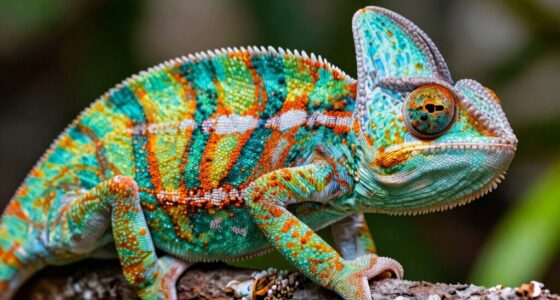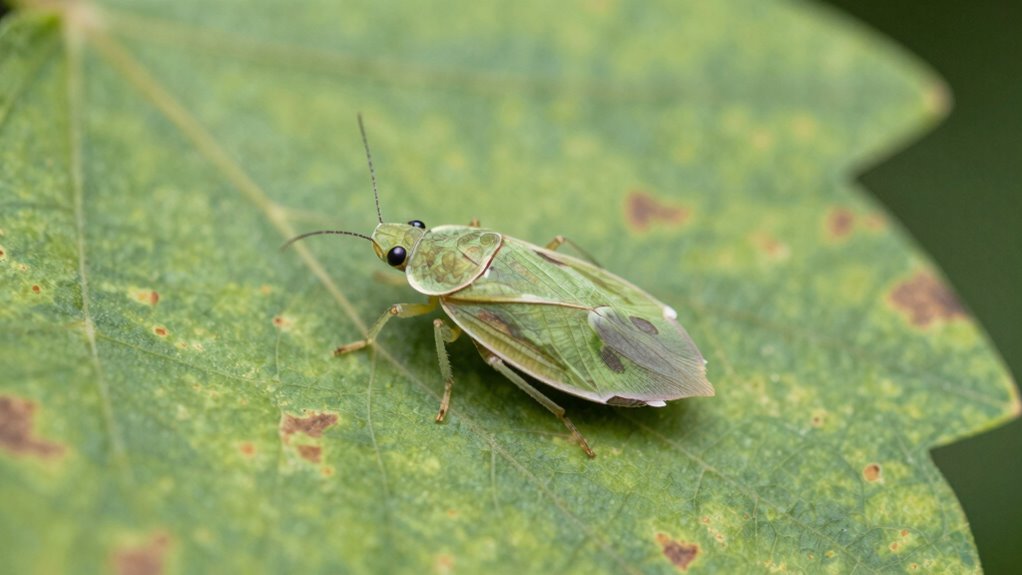

You might wonder how camouflaged insects disappear so seamlessly in plain sight. They do this by evolving colors, patterns, and shapes that closely mimic their environment, like leaves, bark, or soil. Their ability to match these elements helps them blend in and avoid predators. Some even change their appearance seasonally for better concealment. If you keep exploring, you’ll discover more about the clever ways insects stay hidden in their habitats.

Get pet supplies delivered free — and shop member deals
- Fast, free delivery on millions of items
- Access to Prime Big Deal Days deals on October 6–7
- Prime Video, Amazon Music and more included
Key Takeaways
- Camouflaged insects mimic environmental colors, shapes, and textures to blend seamlessly with their surroundings.
- They use disruptive patterns that break up their outline, making detection by predators more difficult.
- Remaining motionless minimizes movement cues that predators rely on for spotting prey.
- Some insects can change coloration seasonally or dynamically to match shifting environments.
- Their continual evolution of concealment strategies is driven by predator-prey natural selection battles.
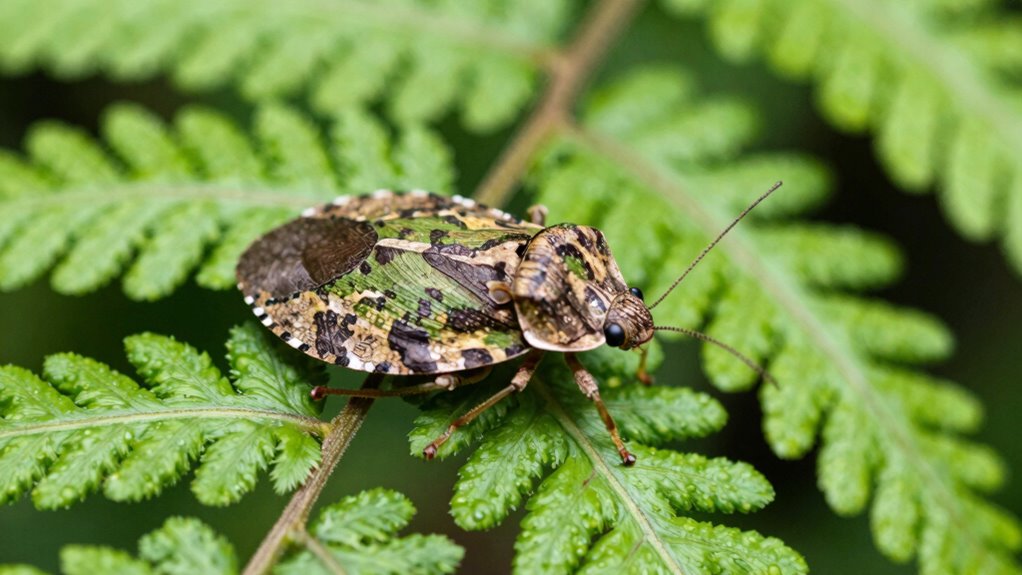
Have you ever wondered how insects vanish so seamlessly into their surroundings? It’s a fascinating dance of survival, one that hinges on the clever tricks of camouflage evolution. Insects have developed incredible ways to hide from their enemies, especially insect predators like birds, lizards, and spiders. These predators rely heavily on sight to locate their prey, so insects have evolved to blend in perfectly with their environment, making themselves nearly invisible.
When you look at a leaf-mimicking katydid or a stick insect, you might think they’re just part of the plant. But what’s happening is a sophisticated adaptation that helps them avoid detection. Camouflage evolution isn’t a random process; it’s driven by natural selection. Insects that happen to resemble their surroundings better are less likely to be eaten, so they survive longer and pass on their genes. Over generations, these traits become more pronounced, resulting in insects that are almost indistinguishable from their environment.
Camouflage evolves through natural selection, making insects nearly indistinguishable from their environment to avoid predators.
The process of disappearing into plain sight involves more than just matching colors. Insects also use shape and texture to their advantage. Some insects have bodies that mimic the roughness or smoothness of their environment, whether it’s bark, leaves, or soil. Others can change their appearance dynamically, like certain beetles that can modify their coloration to match seasonal changes. This ongoing adaptation is a prime example of how evolution shapes survival strategies. Additionally, the ability of insects to adapt through camouflage evolution demonstrates the power of natural selection over time. This continual refinement underscores the importance of adaptation mechanisms in evolutionary biology.
You might also notice that some insects use disruptive coloration—bold patterns that break up their outline. These patterns confuse predators, making it harder for them to recognize the insect as prey. For example, a moth’s mottled wings can resemble the dappled light filtering through trees, masking its silhouette from a keen-eyed bird. This combination of coloration, shape, and texture creates a complex camouflage system that keeps insects hidden from their insect predators. In some cases, insects also use behavioral strategies like remaining motionless to enhance their concealment, further strengthening their survival tactics.
Moreover, the evolution of camouflage involves a continuous process where insects and predators are locked in an evolutionary arms race, constantly adapting to outwit each other. This ongoing struggle results in insects developing increasingly sophisticated methods of concealment, illustrating the dynamic nature of natural selection. Insect predators are constantly on the lookout, and their ability to detect camouflaged prey is remarkable. Yet, insects continue to refine their methods, demonstrating an ongoing evolutionary arms race. Camouflage evolution isn’t just about hiding; it’s about outsmarting predators in a perpetual game of hide-and-seek. By mastering the art of blending in, these insects increase their chances of survival, ensuring their presence in the ecosystem remains undetected and secure. In this silent battle, their invisibility is a testament to the power of natural selection and adaptation.
camouflage insect replica models
As an affiliate, we earn on qualifying purchases.
As an affiliate, we earn on qualifying purchases.
Frequently Asked Questions
How Do Insects Develop Camouflage During Their Life Cycle?
You see insects develop camouflage through a process of color adaptation and mimicry techniques. During their life cycle, they often change colors to match their surroundings, like caterpillars turning green or brown. Some use mimicry techniques, resembling leaves, twigs, or bark, to avoid predators. These adaptations happen gradually, allowing insects to blend seamlessly into their environment at each stage, increasing their chances of survival and reproduction.
Do All Insects Use the Same Type of Camouflage?
Not all insects use the same type of camouflage; instead, they adapt uniquely to their environments. You’ll notice some rely on color adaptation, mirroring the hues of leaves or bark, while others excel at pattern matching, blending seamlessly with textured backgrounds. Think of each insect as a painter, choosing different brushes—colors or patterns—to hide effectively. This diversity guarantees each insect’s survival, turning them into living chameleons in their own right.
Can Insects Change Their Camouflage Instantly?
Yes, some insects can change their camouflage instantly thanks to insect mimicry and camouflage evolution. For example, chameleons and cuttlefish adjust their skin color rapidly, and certain insects like the peppered moth can shift their appearance over generations through evolutionary changes. This ability helps them evade predators and adapt to their environment, showcasing remarkable examples of adaptive camouflage evolution that allow them to blend in seamlessly with their surroundings in real time.
How Effective Is Insect Camouflage Against Predators?
Insect camouflage is highly effective against predators because it offers predator deception, helping insects blend seamlessly into their surroundings. This survival tactic provides significant evolutionary advantages, reducing the risk of predation. By mimicking their environment, insects stay hidden, increasing their chances of survival and reproduction. Your observation highlights how natural selection favors insects with adaptive camouflage, making them difficult for predators to detect and ensuring their continued existence in diverse habitats.
Are There Specific Environments Where Insect Camouflage Is More Common?
You’ve heard “Every place has its own story,” and it’s true for insect camouflage. Insects adapt to specific environments like lush forests, deserts, and urban areas, where seasonal camouflage helps them blend in. Urban adaptation allows them to hide among buildings and cityscapes, while seasonal changes like leaf color shifts enhance their disguise. These environments make camouflage more prevalent, helping insects avoid predators and thrive in diverse habitats.
Conclusion
Now, imagine yourself as a silent witness, blending seamlessly into the tapestry of nature. Camouflaged insects are masters of disguise, their colors and patterns weaving them into the fabric of their surroundings. Like whispers in a crowded room, they vanish before your eyes, leaving only a fleeting hint of their presence. In their quiet mastery of invisibility, they remind us that sometimes, the greatest secrets are hidden in the plain sight, waiting to be uncovered.
Fall Picks
fall essentials
As an affiliate, we earn on qualifying purchases.