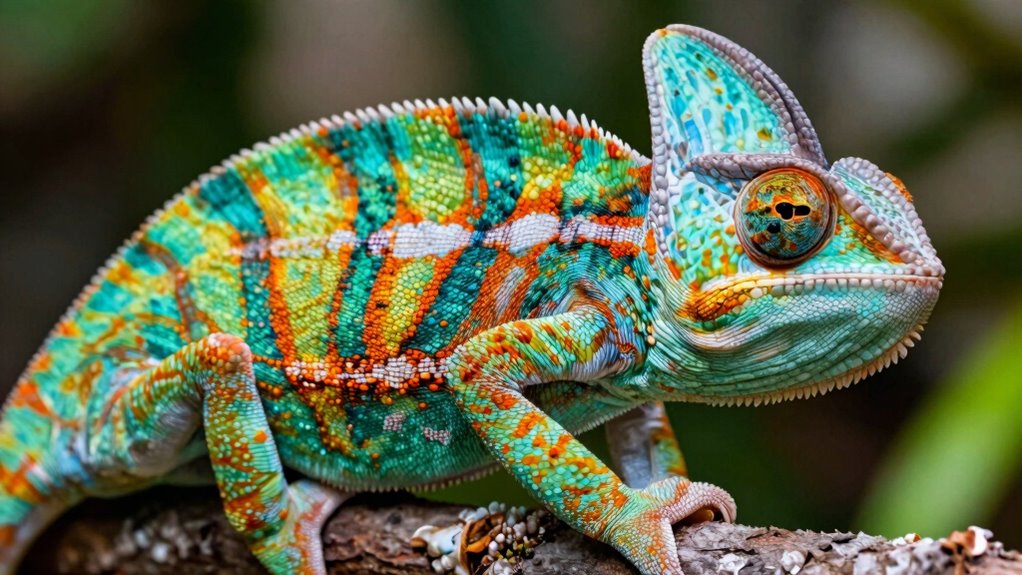

You might notice chameleons change color quickly, and it’s thanks to special skin cells called chromatophores. These cells contain different pigments, and when the chameleon’s neural signals activate them, they expand or contract, changing the skin’s appearance. External factors like temperature, light, or emotions also influence these shifts, helping the chameleon communicate or hide. Want to discover how their eyes and nerves work together in this stunning transformation? Keep exploring to learn more.

Get pet supplies delivered free with Prime
- Fast, free delivery on millions of items
- Prime Video, Amazon Music and more included
- Member-only deals all year
Key Takeaways
- Chameleons change color through the expansion and contraction of specialized skin cells called chromatophores containing different pigments.
- Neural signals coordinate the movement of chromatophores, enabling rapid redistribution of pigments for color change.
- Iridophores reflect light via nanocrystals, producing vibrant hues like blue and green.
- Environmental cues, emotional states, and social interactions trigger specific color shifts.
- The process enhances camouflage, communication, and mating signals, providing survival advantages.

Have you ever wondered how chameleons manage to change their color so effortlessly? It’s a fascinating process, one that combines biology, physics, and behavior into a seamless display of nature’s ingenuity. At the core of this ability lies their remarkable camouflage techniques, which allow them to adjust their appearance to blend into their surroundings or communicate with other chameleons. This skill is driven by their sophisticated system of color adaptation, enabling them to shift hues and patterns in real-time. When you observe a chameleon changing color, what you’re actually witnessing is a complex interplay of specialized cells in their skin responding to various internal and external cues.
Chameleons have unique skin cells called chromatophores, which contain different pigments. These cells include melanophores, which house black or brown pigments; xanthophores, responsible for yellow and orange hues; and iridophores, which contain nanocrystals that reflect light to produce blues and greens. By manipulating these cells, the chameleon can control which pigments are visible, effectively altering its color palette. When the chameleon perceives a threat, feels stressed, or wants to attract a mate, it triggers a series of neural signals that cause the chromatophores to expand or contract. As a result, the distribution of pigments changes, leading to a rapid transformation of their appearance.
Color adaptation isn’t just about concealment; it’s also a form of communication. For example, a bright display might signal aggression or readiness to mate, while darker tones could indicate submission or stress. The ability to adapt their color quickly gives chameleons a distinct advantage in the wild, allowing them to respond to environmental changes and social cues in seconds. It’s important to note that their color-changing process isn’t purely instinctive; it’s also influenced by temperature, light, and their emotional state. When you see a chameleon turn a vibrant green, it’s often a response to a comfortable, relaxed environment, whereas turning a dull brown might signal that it’s feeling threatened or trying to hide. Additionally, the diversity of their camouflage patterns helps them adapt to various habitats and predation pressures. Recent research has shown that their color-changing ability can be affected by factors like hydration levels, adding another layer to understanding their behavior.
Ultimately, the magic behind a chameleon’s color change lies in the precision and speed of their skin’s cellular adjustments. Their complex camouflage techniques and capacity for color adaptation showcase nature’s mastery in evolution. Understanding these specialized skin cells helps us appreciate how these extraordinary creatures communicate, survive, and thrive in their habitats. The intricate mechanism by which they control their colors involves not only cellular responses but also neural signals that coordinate their movements seamlessly. Additionally, recent studies have shown that their ability to change color is also affected by their emotional state, providing insights into how biological processes influence behavior. By understanding this process, you gain a deeper appreciation for how these extraordinary creatures communicate, survive, and thrive in their habitats. The next time you see a chameleon shift its hues, remember that it’s not just a visual trick — it’s a sophisticated biological masterpiece working in perfect harmony.
As an affiliate, we earn on qualifying purchases.
Frequently Asked Questions
Can Chameleons Change Color to Match Any Background?
Yes, chameleons can change color to match many backgrounds, but not every one. Their camouflage tactics rely on manipulating their skin’s color spectrum through specialized cells called chromatophores. You’ll notice they shift shades to blend with their environment, but they’re also influenced by mood, temperature, and health. While they’re masters of disguise, they don’t perfectly match every background, especially highly complex or rapidly changing scenes.
Do Chameleons’ Color Changes Affect Their Temperature?
Yes, chameleons’ color changes do affect their temperature through thermoregulation. When they darken their skin, they absorb more heat, helping them warm up. Conversely, lightening their color reflects sunlight, cooling them down. This ability also enhances camouflage effectiveness, allowing them to blend into their environment better. So, their color shifts serve both for temperature control and improved concealment, essential for survival and comfort.
Are Chameleons’ Color Changes Visible to Predators?
You might think chameleons are masters of disguise, but their color shifts aren’t always invisible to predators. Sometimes, those vibrant hues scream “lunch!” rather than hide. Their color changes can be spotted, making camouflage less effective and alerting predators to their location. So, instead of being stealthy, they sometimes broadcast their presence, turning a clever survival trick into a risky game of predator detection.
How Quickly Can a Chameleon Change Its Color?
You’ll notice that chameleons can change their color in just a few seconds to a few minutes, thanks to their sophisticated camouflage techniques. This rapid color pattern evolution helps them blend into their surroundings and communicate. Their ability to swiftly adapt color is driven by the need for concealment or signaling, making them masters of visual deception. So, their quick color shifts are essential for survival and social interactions.
Do Chameleons Use Color Change for Communication?
Yes, chameleons do use color change for communication, not just hiding from predators. Their camouflage tactics extend beyond blending in—they signal mood, health, and social signals to rivals or potential mates. When you see a chameleon turn vivid or dull, it’s nearly shouting or sulking, helping them navigate social interactions. So, next time you see a color shift, remember it’s more than just a fashion statement; it’s a language.
Conclusion
Just like a chameleon adapts to its surroundings, you too can learn to change and grow with life’s circumstances. Remember the wisdom of the ancient metaphor—water that shapes itself to its container, yet remains true to itself. By understanding how chameleons change color, you realize that transformation is natural and essential. Embrace your own shifts, for in change lies strength, and in adaptation, true resilience blooms.
Columbus Day / Indigenous Peoples' Day Picks
long weekend sales
As an affiliate, we earn on qualifying purchases.