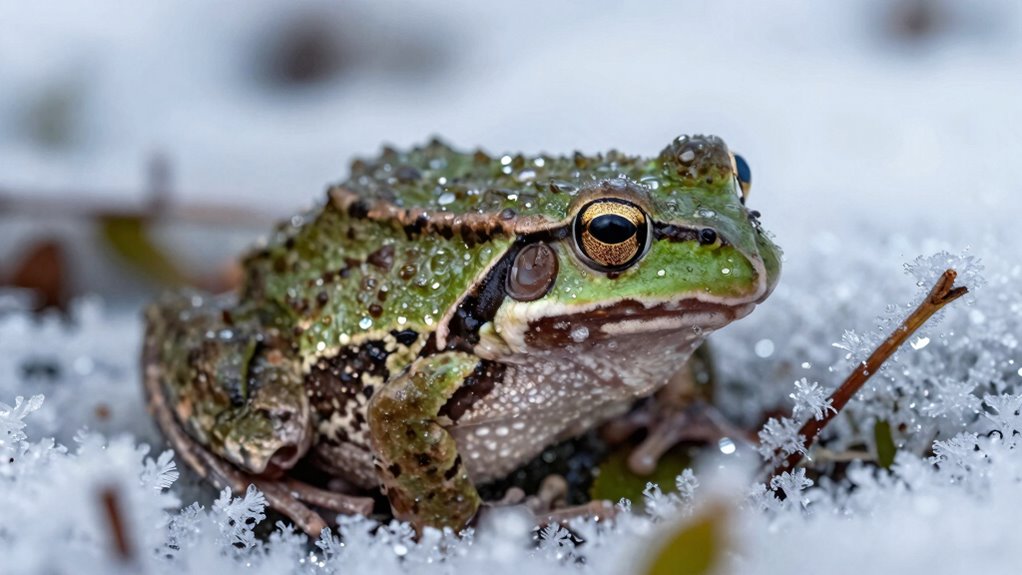

Some frogs freeze in winter to survive harsh cold temperatures. They enter a unique state where their bodies tolerate being partially frozen, thanks to natural antifreeze substances like glucose that prevent internal damage. Their metabolisms slow down dramatically, conserving energy and reducing harm from ice formation inside cells. This adaptation allows them to survive until warmer weather arrives. If you want to discover how these amazing tricks work and what makes frogs so resilient, keep exploring their fascinating survival strategies.
Key Takeaways
- Frogs produce cryoprotectants like glucose that prevent internal ice crystal damage during freezing.
- They enter a state of hibernation with reduced metabolic activity to conserve energy.
- Frogs manage ice formation by controlling where and how ice develops inside their bodies.
- Their bodies can tolerate freezing of up to 65% of body water without cellular damage.
- Hibernation in soil or leaf litter provides insulation and protection from extreme cold.
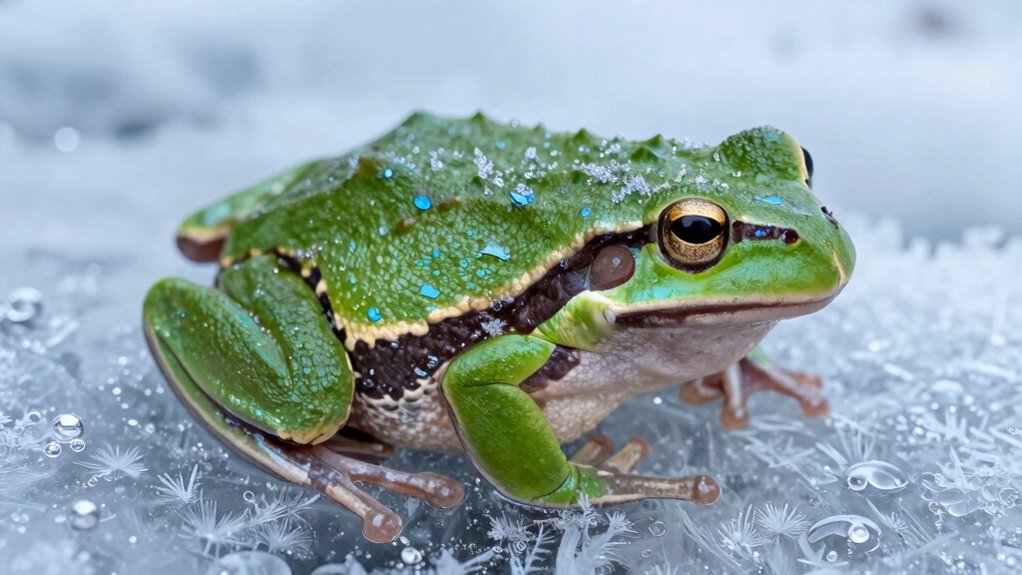
As winter temperatures plummet, many frogs face the risk of freezing solid. You might wonder how they survive such extreme cold, especially when their bodies could freeze and cause lethal damage. The answer lies in their remarkable ability to employ specific survival strategies, particularly through unique hibernation patterns and metabolic adjustments. Frogs don’t simply hibernate like bears; instead, they enter a state that cleverly adapts to their environment. During this period, their activity levels drop dramatically, and their bodily functions slow down to conserve energy. This hibernation isn’t just a passive state but a finely tuned process that allows them to endure freezing temperatures. They often burrow into the soil, under leaf litter, or hide beneath rocks, where the ground stays warmer than the air and provides insulation against the cold.
In these hibernation patterns, frogs undergo profound metabolic adjustments. As temperatures decline, their metabolic rate decreases sharply, reducing energy consumption to minimal levels. This slowdown is crucial because it minimizes the production of harmful waste products and prevents their organs from shutting down entirely. What’s fascinating is how their bodies manage to cope with the formation of ice. Frogs produce glucose and other cryoprotectants that act like natural antifreeze, preventing ice crystals from forming inside their cells. These substances help them survive the formation of ice in extracellular spaces while avoiding cellular destruction. Essentially, the frog’s body controls where and how ice forms, protecting vital tissues from damage.
You might be surprised to learn that some frogs can tolerate a substantial amount of internal ice—up to 65% of their body water can freeze without killing them. This ability is a true demonstration of their specialized metabolic adjustments and the production of cryoprotectants. These adaptations do require energy, but during hibernation, frogs rely on stored fat reserves to sustain themselves. Their bodies prioritize survival over activity, and their slowed metabolic processes buy them valuable time until warmer weather arrives. Interestingly, some frogs even produce cryoprotectants that help prevent cellular damage during freezing. When spring approaches, the surrounding temperature rises, and the frogs gradually thaw out, reversing some of these processes to resume normal activity.

Hiceeden 4 Pack Frog Habitat with Suction Cup, Cute Frogs Fish Tank Decor, Plastic Soup Dish, Tree Frog Aquarium Terrarium Accessories for Toad, Tadpole
- Size of Each Habitat: 5 x 3.2 x 3.7 inches
- Set Includes 4 Habitats: Multiple resting spots for frogs
- Durable Plastic Construction: Long-lasting and sturdy
As an affiliate, we earn on qualifying purchases.
As an affiliate, we earn on qualifying purchases.
Frequently Asked Questions
How Do Frogs Prevent Cell Damage During Freezing?
You might wonder how frogs prevent cell damage during freezing. They do this by stabilizing their cell membranes with antifreeze proteins, which protect against ice nucleation that causes damaging ice crystals. Additionally, frogs produce cryoprotectants like glucose and glycerol, which lower the freezing point and prevent excessive ice formation inside cells. These adaptations enable them to survive the winter cold without cell rupture or damage.
Can All Frog Species Survive Freezing Temperatures?
Think of frogs as winter explorers, but not all can brave the cold. Not every frog species survives freezing temperatures; it depends on their habitat and breeding behavior. Frogs in colder regions develop unique adaptations, like freezing and thawing strategies, while others stay in milder climates. Some species have evolved to survive harsh winters, but many simply retreat or hibernate in protected environments, unable to withstand extreme cold.
What Role Do Antifreeze Compounds Play in Frog Survival?
Antifreeze compounds play a vital role in frog survival by preventing ice formation inside their bodies. Through antifreeze chemistry, these frogs produce glucose or glycerol that lowers the freezing point of their bodily fluids. This helps them resist freezing mechanisms, allowing them to endure harsh winter conditions. Fundamentally, antifreeze compounds act like natural antifreeze, protecting their cells and tissues from damage during freezing temperatures.
Do Frozen Frogs Experience Pain or Suffering?
Frozen frogs likely don’t experience pain or freezing discomfort because their bodies enter a state of suspended animation. During this process, nerve activity diminishes, and they become unresponsive, preventing frog pain. Their cells are protected by antifreeze compounds, which minimize damage. So, while it might look uncomfortable, freezing in winter isn’t painful for frogs; it’s a natural survival strategy that helps them withstand harsh conditions without suffering.
How Long Can Frogs Remain Frozen Before They Die?
You might be surprised, but frogs can remain frozen for weeks without dying thanks to their cold adaptation. Their frog habitat exposes them to freezing temperatures, and they survive by producing antifreeze-like substances. These substances prevent ice from damaging cells. When temperatures rise, frogs thaw out and resume normal activity. So, in cold habitats, frogs are remarkably resilient, staying frozen for extended periods before they fully thaw and survive the winter.
Conclusion
So, next winter when you see a frog seemingly frozen in time, remember it’s not just a statue but a master of survival, like a tiny winter warrior. Frogs have evolved incredible tricks, turning into living ice cubes, to brave the cold. Their ability to freeze and thaw is like nature’s own magic trick, showing you that even in the chilliest moments, life finds a way to endure and thrive.