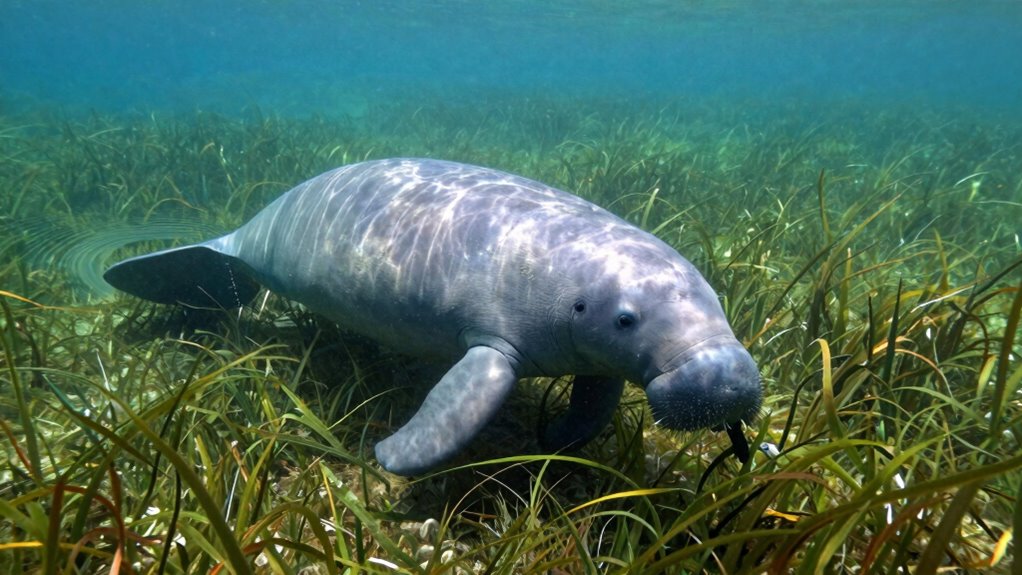

You’ll find that the dugong is a gentle marine mammal that feeds mainly on seagrass beds, helping keep these ecosystems healthy. Its body is perfectly adapted for slow, deliberate grazing, with a flexible snout and paddle-like tail. As an essential part of marine life, it supports biodiversity and indicates the health of coastal habitats. However, threats like habitat loss and boat strikes endanger it. Keep exploring to discover more about this fascinating and critical creature.

Get pet supplies delivered free — and shop member deals
- Fast, free delivery on millions of items
- Access to Prime Big Deal Days deals on October 6–7
- Prime Video, Amazon Music and more included
Key Takeaways
- Dugongs are gentle marine mammals that primarily feed on seagrass beds, shaping their environment through grazing.
- Their flat, paddle-like tail and flexible snout are adapted for slow, deliberate movement and grazing in shallow waters.
- As herbivores, dugongs help maintain healthy seagrass ecosystems, supporting marine biodiversity.
- Threatened by habitat loss, boat strikes, and hunting, their decline indicates ecosystem health issues.
- Protecting dugongs and their habitats is crucial for preserving the balance of coastal marine ecosystems.
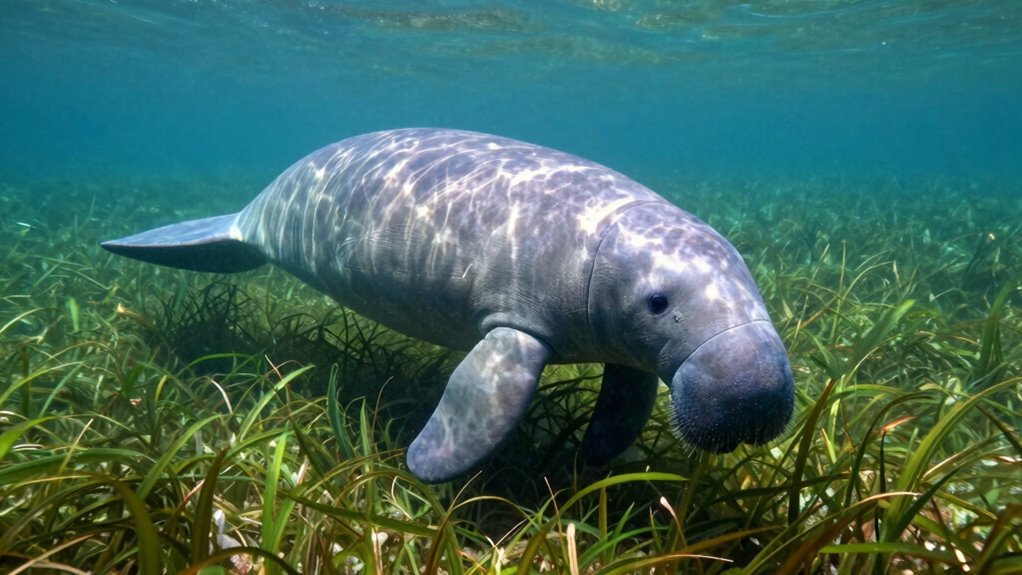
Have you ever wondered what makes the dugong a truly unique marine mammal? It’s not just its gentle appearance or peaceful demeanor, but also its distinct lifestyle and role in marine ecosystems. As a marine mammal, the dugong is part of a diverse group of aquatic mammals that rely on the ocean for survival, but it sets itself apart through its specialized diet and behavior. Unlike many of its relatives, the dugong is strictly herbivorous, spending most of its life grazing on seagrass beds. This herbivorous behavior shapes its entire existence, from its anatomy to its daily routines.
You’ll notice that the dugong’s body is perfectly adapted for its herbivorous lifestyle. Its large, flexible snout helps it to root through the sand and reach the tender seagrass below. Its flat, paddle-like tail aids in slow, deliberate swimming through shallow waters, where these seagrass meadows thrive. Its small eyes and sensitive whiskers allow it to detect the lush underwater vegetation with precision, ensuring it can find enough food to sustain itself. Because it feeds on such a specific diet, the dugong plays an essential role in maintaining healthy seagrass ecosystems, preventing overgrowth, and promoting biodiversity. The health of these ecosystems is closely linked to the overall health of coastal marine environments, making the dugong an important indicator species.
You might think that such a gentle creature would be vulnerable, and you’d be right. The dugong’s herbivorous behavior ties it closely to the health of seagrass meadows, making it a key indicator species for the state of these underwater habitats. Sadly, threats like habitat destruction, boat strikes, and hunting have pushed many populations to the brink. Despite its peaceful nature, the dugong relies on the stability of its environment, and its decline signals broader ecological issues. Protecting its habitat is crucial for the survival of this specialized species, which depends entirely on the health of its environment.
Understanding the dugong’s herbivorous behavior helps you appreciate its importance in marine communities. It’s not just a passive grazier; it actively shapes the structure of its habitat by controlling seagrass growth. Its slow movement and gentle grazing habits remind you of the delicate balance in nature—how even a single species can influence the health of entire ecosystems. The dugong’s existence underscores the interconnectedness of marine life, and conserving it means safeguarding the indispensable seagrass beds that support countless other marine species. When you look at a dugong, you’re witnessing a peaceful, herbivorous marine mammal that plays an essential role in the ocean’s intricate web of life. Additionally, its dependence on seagrass beds highlights the importance of healthy marine habitats for the survival of such specialized species.
seagrass bed underwater garden decor
As an affiliate, we earn on qualifying purchases.
As an affiliate, we earn on qualifying purchases.
Frequently Asked Questions
What Are the Main Threats to Dugong Populations?
You should know that habitat destruction and fishing gear entanglement are the main threats to dugong populations. When coastal development or pollution destroys seagrass beds, dugongs lose essential feeding grounds. Additionally, they often get entangled in fishing nets and lines, which can cause injuries or drownings. These threats threaten their survival, making it imperative to protect their habitats and reduce fishing-related hazards to guarantee their continued existence.
How Do Dugongs Communicate With Each Other?
You might find it fascinating that dugongs produce over 20 different vocalizations, helping them communicate across vast seagrass habitats. These vocalizations include bellows, whistles, and chirps, which travel through water to maintain social bonds and alert others to danger. As you observe them, you’ll notice their communication is essential for steering their underwater world, ensuring they stay connected despite the expansive seagrass meadows they call home.
What Is the Lifespan of a Dugong in the Wild?
You’ll find that a dugong’s lifespan in the wild is around 70 years, though some can live up to 73 years. Their feeding habits, mainly grazing on seagrass, influence their health and longevity. Dugongs exhibit social behavior, often forming groups, which helps protect them and supports their survival. Their gentle nature and social bonds play a vital role in their life expectancy, making their conservation essential.
Are Dugongs Related to Manatees or Elephants?
You might think dugongs are distant cousins of elephants, and you’d be right! Dugongs are more closely related to manatees, sharing the same slow, gentle behavior and seagrass dependency. Their evolutionary link is fascinating—both are sirenians, aquatic mammals that spend their days grazing peacefully. Unlike elephants, they’ve adapted to underwater life, but their calm demeanor and herbivorous habits truly connect them, making them gentle giants of the sea.
How Do Dugongs Navigate Their Migratory Routes?
You might wonder how dugongs navigate their migratory patterns. They rely on a combination of environmental cues, like water temperature, salinity, and seagrass availability, to guide their journey. Their seagrass feeding habits influence these routes, as they follow lush meadows seasonally. Dugongs also use their keen sense of smell and possibly Earth’s magnetic field to find their way, ensuring they access essential feeding grounds throughout their migration.
Conclusion
As you observe the dugong peacefully grazing, its gentle presence contrasts sharply with the vast, bustling ocean surrounding it. In a world often defined by chaos and rapid change, this calm herbivore reminds you of nature’s quiet resilience. Like a soft whisper amid the roar, the dugong’s tranquil existence underscores the delicate balance of life beneath the waves. Protecting it guarantees the harmony of this underwater sanctuary persists, a silent proof to nature’s enduring grace.
Halloween Picks
halloween
As an affiliate, we earn on qualifying purchases.