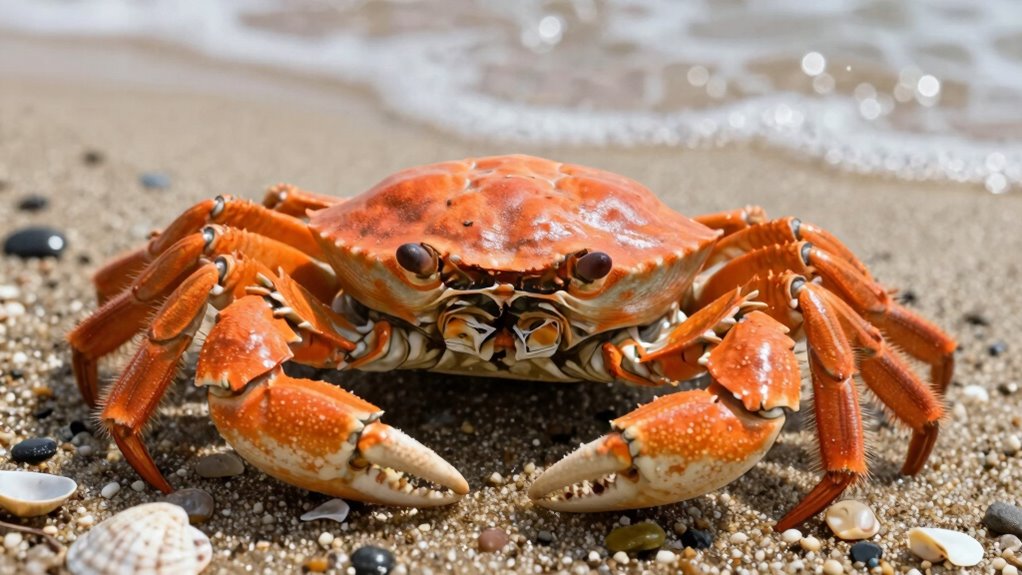

Yes, crabs can regrow their lost claws completely, often even ending up with claws that are larger or stronger than before. The process starts right after the claw is lost, forming a regenerative blastema with undifferentiated cells. Factors like age, health, and environment influence how quickly and effectively they heal. This ability highlights their resilience and adaptability. Keep exploring to discover more about how crabs undo injuries and survive tough conditions.
Key Takeaways
- Crabs can completely regrow lost claws through a process initiated immediately after injury.
- Regeneration involves forming a blastema with undifferentiated cells that develop into new tissues.
- The new claw gradually hardens and may be larger or differently shaped than the original.
- Regrowth duration varies, often taking several months, depending on age, health, and environmental conditions.
- Claw regeneration is vital for crab survival, enabling continued feeding, defense, and mating activities.
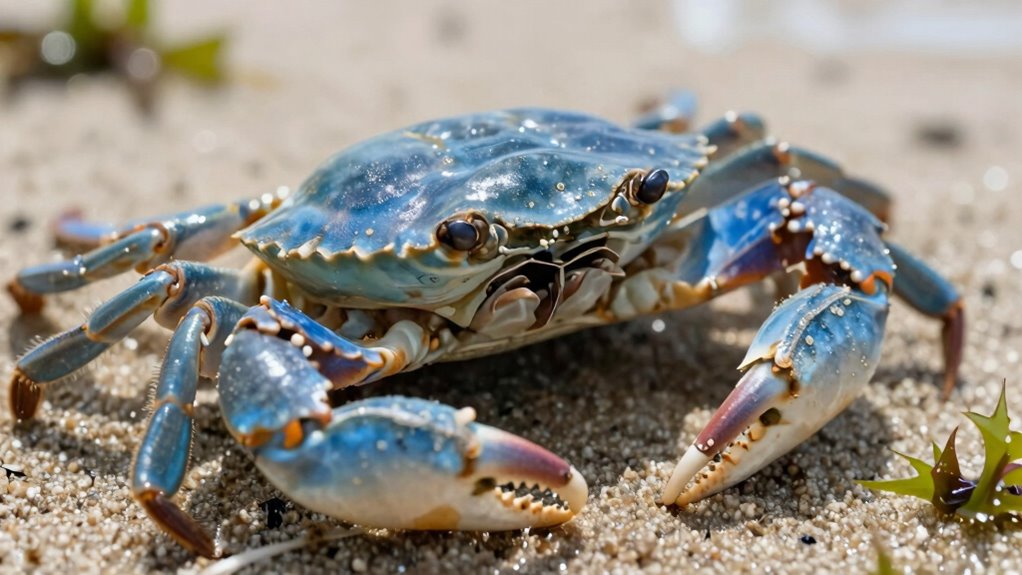
When a crab loses a claw, it doesn’t remain helpless for long; instead, it begins an incredible process of regrowth. This remarkable ability is a key part of what makes crabs resilient in their often harsh environments. When their claw is damaged or severed, their body kickstarts a specialized process known as claw regeneration. This process is a form of crustacean healing that allows the crab to replace lost limbs over time, ensuring they can continue feeding, defending, and maneuvering effectively.
Crabs regrow lost claws through a remarkable healing process, ensuring survival and continued ability to feed and defend.
The process of crustacean healing begins almost immediately after the claw is lost. The crab forms a protective, hardened layer called a regenerative blastema at the site of injury. This blastema contains undifferentiated cells that will multiply and differentiate into the various tissues needed to rebuild the claw. Over days and weeks, this area gradually enlarges as new tissues develop. During this time, the crab often reduces its activity to prioritize healing and conserve energy for limb regrowth. The speed of claw regeneration depends on several factors, including the crab’s age, health, and environmental conditions like temperature and food availability. Additionally, environmental factors such as water quality and oxygen levels can influence the efficiency of crustacean healing.
Your crab’s ability to regenerate its claw highlights the efficiency of crustacean healing mechanisms. Unlike some animals that can only repair minor injuries, crabs are equipped to completely regrow limbs, sometimes even larger or stronger than the original. This regenerative capacity is essential for their survival, especially since losing a claw can considerably impair their ability to hunt, fight off predators, or compete for mates. As the new claw develops, it gradually hardens and takes on the appearance and function of the original, completing the process of claw regeneration. Interestingly, some studies suggest that the regenerated claw might sometimes be slightly different in size or shape, but it still functions effectively for the crab.
It’s important to note that the regrowth of a claw isn’t instantaneous; it can take several months before the new limb fully matures. During this period, the crab’s energy is focused on rebuilding rather than growth or reproduction. You might notice that the new claw looks smaller or less robust initially but will strengthen and enlarge over time. This ability of crabs to regenerate limbs demonstrates a fascinating aspect of crustacean biology and showcases their impressive resilience through crustacean healing. Claw regeneration is a complex and highly efficient process that underscores the remarkable adaptability of these creatures. If you observe a crab missing a claw, remember that it’s actively working on claw regeneration, a natural process that highlights the incredible adaptability of these creatures.
As an affiliate, we earn on qualifying purchases.
Frequently Asked Questions
How Long Does It Take for a Crab to Fully Regrow a Claw?
It takes about 1 to 3 months for a crab to fully regrow a claw, depending on the species and health. During the claw regeneration process, your crab undergoes a growth timeline where the new claw gradually develops from a small nub to a fully functional appendage. You’ll notice the process progresses through different stages, with the new claw becoming stronger and larger as it matures over time.
Can a Crab Survive Without a Claw During Regrowth?
Yes, a crab can survive without a claw during claw regeneration. While losing a claw temporarily affects its survival capabilities, crabs adapt quickly. They rely on their remaining limbs and develop new claws through the process of claw regeneration. During this time, they become more vulnerable to predators and less efficient at feeding, but their overall survival capabilities remain intact, allowing them to recover fully over time.
Do All Crab Species Have the Same Claw Regeneration Process?
No, not all crab species share the same claw regeneration process. You might notice differences like claw coloration or size, which are tied to species-specific behavior. While some crabs regenerate claws quickly, others take longer or may not fully restore their original appearance. Think of it like a unique fingerprint—each crab’s regrowth is tailored to its species, environment, and needs, making each process fascinatingly distinct.
Is It Possible for a Crab to Regenerate Both Claws at Once?
Yes, a crab can regenerate both claws at once, but it’s rare. Crab behavior shows they prioritize claw functionality, often using their remaining claw more actively while healing. During this process, their ability to catch food and defend itself temporarily decreases. You’ll notice the new claws gradually grow back, with the crab adjusting to their changing appearance and maintaining essential functions despite the temporary imbalance.
Are There Any Health Risks Associated With Claw Regrowth in Crabs?
You should be aware that claw regrowth in crabs can pose health risks, especially if there’s claw toxicity from pollutants or infections. Poor water quality can reduce regrowth efficiency and lead to complications like incomplete or deformed claws. Additionally, the energy invested in regrowth may weaken the crab’s overall health. To keep your crab healthy, guarantee ideal water conditions and monitor for signs of toxicity or infection during the regrowth process.
Conclusion
So, next time you see a crab without a claw, remember it’s on its way to regrowing it. Thanks to their incredible ability to regenerate lost limbs, these creatures bounce back stronger than you might think. Isn’t it fascinating how nature equips animals with such resilience? Keep watching, and you might just witness a crab’s remarkable comeback firsthand. After all, isn’t survival the most impressive trick of all?