
Small ponds support big biodiversity because they provide essential habitats for various aquatic plants and microinvertebrates. These tiny water bodies host a wide range of species that create a complex food web, shelter, and breeding grounds. The plants help stabilize edges and produce oxygen, benefiting many creatures. Microinvertebrates help keep water clean, acting as indicators of ecosystem health. If you want to understand how these small habitats sustain such rich life, keep exploring further.

Get pet supplies delivered free — and shop member deals
- Fast, free delivery on millions of items
- Access to Prime Big Deal Days deals on October 6–7
- Prime Video, Amazon Music and more included
Key Takeaways
- Small ponds provide diverse microhabitats that support a wide range of aquatic plants and microinvertebrates.
- They serve as vital breeding and shelter sites for various species, promoting high biodiversity.
- Aquatic plants stabilize pond edges and produce oxygen, fostering a healthy ecosystem.
- Microinvertebrates help maintain water quality and indicate ecosystem health.
- The complex food web in small ponds sustains larger animals, enhancing overall biodiversity.
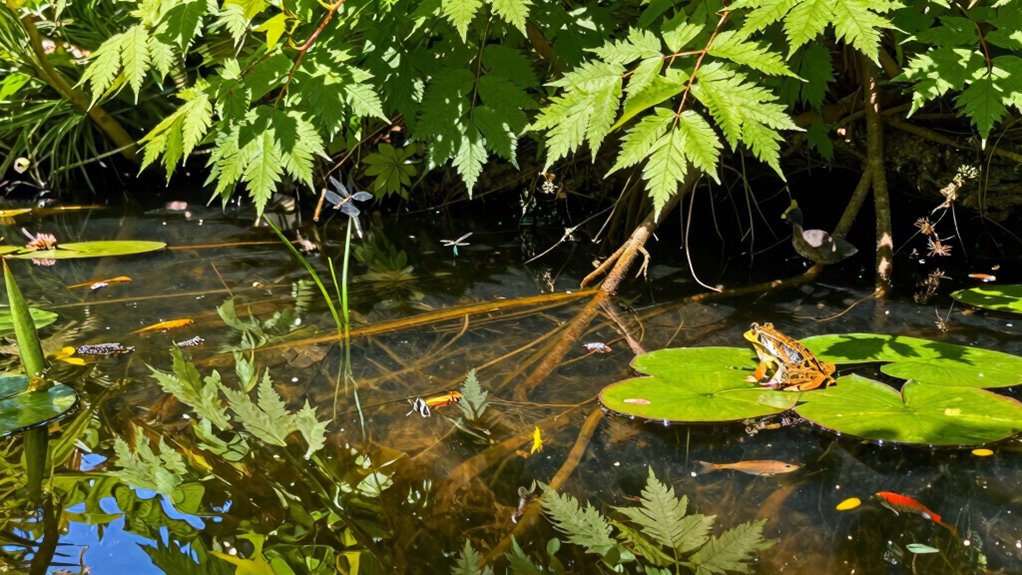
Small ponds might seem insignificant, but they play a pivotal role in supporting biodiversity. When you look closely, you’ll notice that these tiny water bodies are teeming with life, especially thanks to their rich communities of aquatic plants and microinvertebrates. These elements are essential to the health of the pond ecosystem and, by extension, to the surrounding environment.
Small ponds support vital biodiversity through rich aquatic plants and microinvertebrates essential for ecosystem health.
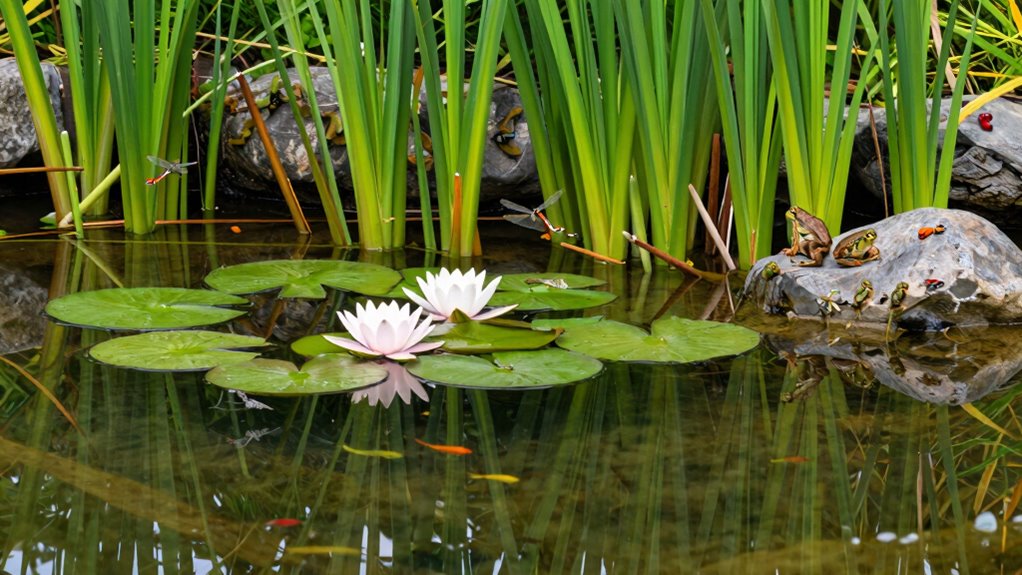
Aquatic plants are often the first inhabitants you’ll spot in a small pond. They grow along the edges and sometimes float on the surface, providing shelter and food for many creatures. These plants are indispensable because they produce oxygen through photosynthesis, which benefits the entire aquatic community. They also stabilize the pond’s edges, preventing erosion and creating a diverse habitat where various species can thrive. As you observe, you might see submerged plants, like pondweeds, which serve as hiding spots for small fish and invertebrates, or emergent plants, such as reeds and cattails, that attract insects and birds. These plants form the backbone of the pond’s biodiversity, supporting a complex food web.
Microinvertebrates are tiny creatures that live among the aquatic plants and sediment. Despite their size, they have a big impact on the pond’s ecosystem. These microinvertebrates include water mites, cyclops, fairy shrimp, and various insect larvae, all playing essential roles in maintaining ecological balance. They act as primary consumers, feeding on algae, detritus, and bacteria, helping to keep the water clean and nutrient levels balanced. As you observe the pond, you might notice these microinvertebrates swimming or crawling around, often hidden beneath the surface or among plant roots. Their presence indicates a healthy, functioning ecosystem because they are sensitive to pollution and environmental changes. Biodiversity is strengthened when these microhabitats are preserved, supporting a wide range of species. Additionally, microhabitats are crucial for providing shelter and breeding grounds for many aquatic organisms, further enhancing ecological diversity. Maintaining these habitats also promotes ecological resilience, making the pond environment more adaptable to changes.
Both aquatic plants and microinvertebrates contribute to the pond’s overall biodiversity by creating a variety of microhabitats. These tiny organisms form the base of the food chain, supporting larger species like insects, amphibians, and birds. The diversity of life in small ponds might be surprising, but it’s these tiny players that keep the ecosystem vibrant and resilient. By maintaining healthy aquatic plants and ensuring a habitat for microinvertebrates, you help sustain a rich tapestry of life, proving that small ponds are far from insignificant—they’re essential corners of biodiversity that support big ecological roles. Additionally, safeguarding these habitats helps preserve aquatic biodiversity, which is vital for ecological resilience and overall environmental health.
As an affiliate, we earn on qualifying purchases.
Frequently Asked Questions
How Do Small Ponds Form Naturally?
Small ponds form naturally through geological processes like the accumulation of rainwater, melting snow, or groundwater seeping into low-lying areas. Over time, erosion and sedimentation shape these depressions, turning them into ponds. You might also find them forming in areas where natural barriers prevent water from draining away. These processes create ideal habitats for diverse species, highlighting how natural formation shapes ecosystems in subtle yet essential ways.
What Role Do Small Ponds Play in Local Ecosystems?
Did you know that small ponds support over 80% of local aquatic species? You play a crucial role in maintaining wetland connectivity, which allows animals and plants to thrive. These ponds foster incredible aquatic plant diversity, providing essential habitats for insects, amphibians, and birds. By preserving small ponds, you help sustain a rich, interconnected ecosystem that benefits the entire landscape and supports biodiversity far beyond their size.
Can Small Ponds Recover From Pollution?
Small ponds can recover from pollution, but it depends on the severity and type of pollution. You can support their recovery by reducing runoff and preventing further contaminants. Pollution impact varies, but natural recovery mechanisms like microbial activity, plant growth, and dilution help restore water quality over time. Active intervention, like removing pollutants or adding native plants, can accelerate healing, ensuring these essential ecosystems bounce back and continue supporting biodiversity.
How Do Small Ponds Compare to Large Lakes in Biodiversity?
Small ponds pack a punch when it comes to biodiversity, rivaling large lakes in many ways. You’ll find a vibrant array of aquatic plants and incredible insect diversity, creating a bustling mini-ecosystem. Unlike lakes, their shallow waters and varied habitats foster unique species interactions. This richness makes small ponds essential for supporting diverse life, proving that size isn’t everything when it comes to thriving, complex aquatic communities.
What Are the Challenges in Conserving Small Ponds?
You face several challenges conserving small ponds. Habitat fragmentation from urban development or agriculture can isolate ponds, limiting species movement and diversity. Invasive species threaten native plants and animals, disrupting ecological balance. Additionally, pollution from runoff and human activity degrades water quality. These issues make it difficult to maintain healthy, biodiverse ponds, but targeted efforts—like habitat restoration, controlling invasives, and pollution reduction—can help protect these crucial ecosystems.
Conclusion
Think of small ponds as tiny islands in a vast ocean of life. Despite their size, they’re bustling hubs of biodiversity, offering a refuge for countless species. By protecting these little ecosystems, you’re safeguarding a vibrant mosaic of life that enriches our planet. So, next time you see a small pond, remember it’s a precious pearl—tiny but full of wonder—proving that big things often come in small, beautiful packages.
Halloween Picks
halloween
As an affiliate, we earn on qualifying purchases.