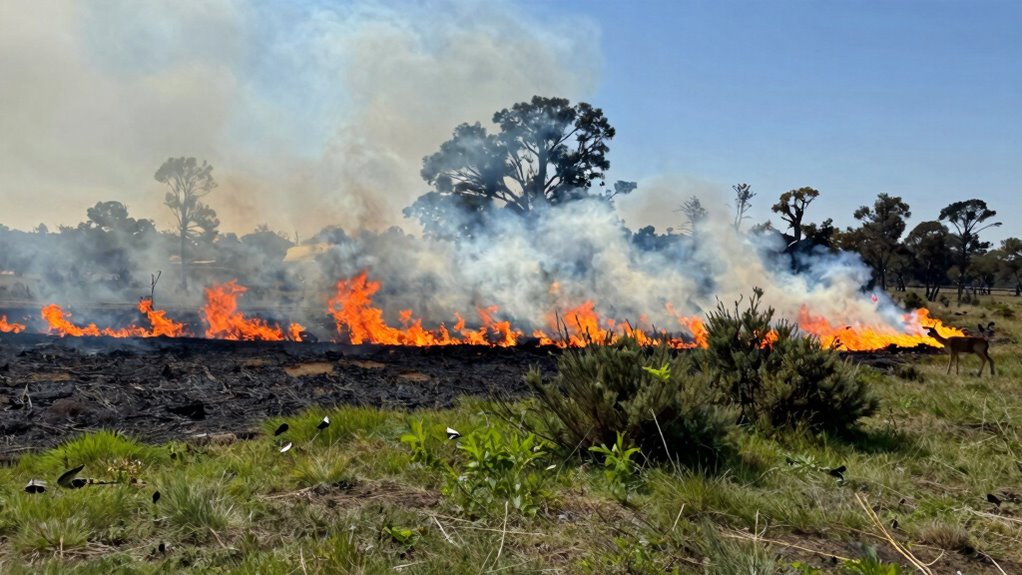
Controlled burns help you support wildlife by maintaining healthy ecosystems, which prevents larger wildfires and promotes resilience. They create diverse habitats by encouraging native plant growth, providing food, cover, and nesting sites for animals. These burns also foster nutrient recycling, boosting soil health and plant regeneration. Additionally, they support rare habitats that benefit specific species. If you keep exploring, you’ll discover even more ways controlled burns protect and enhance wildlife populations over time.

Get pet supplies delivered free — and shop member deals
- Fast, free delivery on millions of items
- Access to Prime Big Deal Days deals on October 6–7
- Prime Video, Amazon Music and more included
Key Takeaways
- Controlled burns promote habitat diversity, supporting a variety of plant and animal species.
- They create specialized habitats, such as early successional areas favored by certain wildlife.
- Fires stimulate plant regeneration, providing food and cover for wildlife populations.
- Nutrient recycling from burns enhances soil health, benefiting plant growth vital for wildlife sustenance.
- Managed burns help control invasive species, maintaining native habitats critical for wildlife conservation.
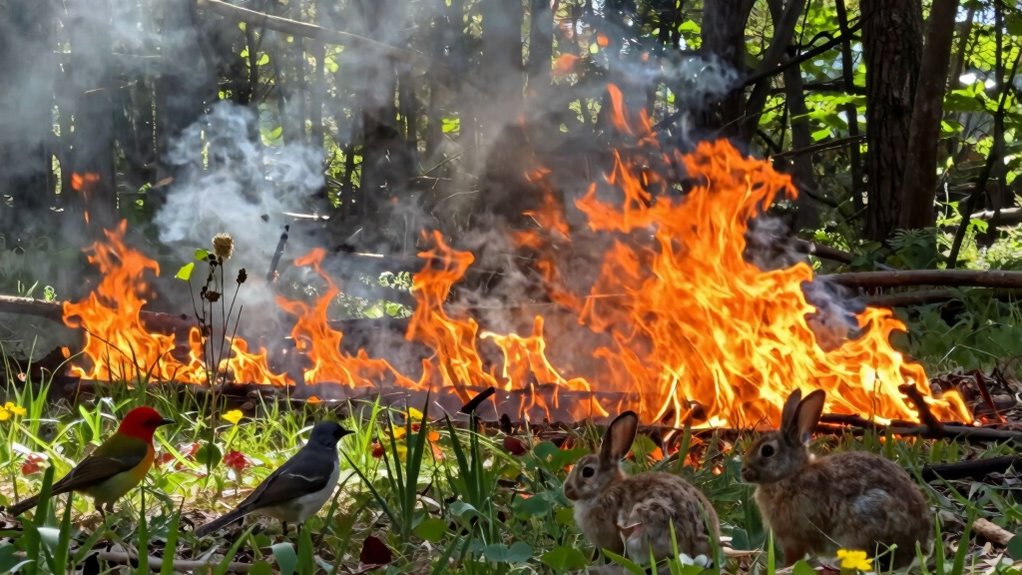
Controlled burns, when carefully planned and executed, can considerably benefit local wildlife populations. These deliberate fires help maintain healthy ecosystems by promoting ecosystem resilience, which is essential for species survival amid changing environmental conditions. By reducing accumulated dead vegetation and controlling invasive species, controlled burns create a more balanced and stable environment that supports a variety of wildlife. When the fire is managed properly, it prevents larger, uncontrolled wildfires that could devastate habitats, giving native plants and animals a better chance to thrive.
Carefully managed controlled burns support healthy ecosystems and protect wildlife from larger, destructive wildfires.
One of the key benefits of controlled burns is their ability to enhance habitat diversity. Different plant species respond uniquely to fire, and by periodically resetting the landscape, fires encourage the growth of a broad range of native flora. This diversity in plant life provides food, cover, and nesting sites for many animals, from insects to large mammals. As plants regenerate after a burn, new growth attracts pollinators and herbivores, which in turn support predators higher up the food chain. This cycle increases the overall richness of the ecosystem, ensuring that various species can coexist and flourish.
You’ll notice that controlled burns also play a role in creating specialized habitats that are essential for certain wildlife. For example, some bird species rely on early successional habitats—areas that are in the initial stages of recovery after a fire. These spaces often feature dense shrubs and young trees that offer nesting sites and protection from predators. Similarly, certain insects and small mammals depend on these post-burn environments to find food and shelter. By maintaining a mosaic of different habitat types within a landscape, controlled burns help guarantee that a wide array of species can find suitable living conditions. Additionally, these fires promote ecosystem resilience, enabling habitats to recover more quickly from disturbances. This resilience is vital for adapting to ongoing environmental changes.
Furthermore, these burns contribute to the natural cycle of nutrient recycling in the soil. When vegetation burns, nutrients are released and become available for new plant growth, supporting the productivity of the ecosystem. This process benefits herbivores and plants alike, fostering a vibrant, resilient environment. The soil health benefits from controlled burns also include the reduction of soil compaction and erosion, which helps maintain a stable foundation for plant roots. In some cases, controlled burns can also help control invasive species, preventing them from outcompeting native plants and disrupting local ecosystems. As plants grow back, they provide fresh forage for animals, and the overall health of the ecosystem improves, creating a sustainable foundation for wildlife populations. Incorporating fire management practices into conservation efforts can significantly enhance habitat quality and stability over time.
In essence, controlled burns are a critical management tool for preserving and enhancing biodiversity. When performed with precision and respect for natural processes, they bolster ecosystem resilience and habitat diversity. This proactive approach ensures ecosystems remain robust and capable of supporting diverse wildlife populations, even as environmental challenges grow more complex.
controlled burn safety equipment
As an affiliate, we earn on qualifying purchases.
As an affiliate, we earn on qualifying purchases.
Frequently Asked Questions
How Do Controlled Burns Affect Non-Target Plant Species?
Controlled burns can temporarily reduce non-target plant species, but they often promote plant recovery and biodiversity enhancement in the long run. By selectively burning areas, you create open spaces that allow native plants to thrive again, encouraging diverse plant communities. This process helps balance ecosystems, supporting a variety of wildlife. While some non-target plants might be affected initially, the overall effect fosters healthier, more resilient habitats for wildlife and plants alike.
Are Controlled Burns Safe for Nearby Communities?
Controlled burns, when properly managed, are safe for nearby communities. They prioritize community safety through careful planning, precise timing, and expert burn management. You can trust trained professionals to minimize smoke and fire spread, reducing risks. These burns lower wildfire danger, improve air quality, and restore healthy ecosystems. With responsible practices, controlled burns protect both your community and the environment, ensuring safety while fostering ecological balance.
What Training Is Required for Conducting Controlled Burns?
You need specialized training to conduct controlled burns safely. This includes understanding fire suppression techniques, which help prevent the fire from escaping control, and thorough burn planning to determine the best conditions and methods. You should complete certified courses in wildfire management and obtain necessary permits. Training emphasizes safety protocols, weather assessment, and communication skills, ensuring you can manage the burn effectively while minimizing risks to nearby communities and the environment.
How Often Should Controlled Burns Be Performed?
Like a seasoned gardener tending delicate blooms, you should plan controlled burns based on fire frequency and burn intervals. Typically, burns happen every 1 to 3 years, but this varies with local conditions. Regular intervals prevent overgrowth and maintain healthy ecosystems, much like nature’s own rhythm. By adjusting burn frequency appropriately, you help promote biodiversity and reduce wildfire risks, ensuring wildlife thrives in a balanced, resilient environment.
Can Controlled Burns Help Endangered Wildlife Species?
Yes, controlled burns can help endangered wildlife species by restoring their preferred wildlife habitat. These conservation strategies reduce invasive plants, promote native vegetation, and maintain open spaces essential for some species’ survival. By carefully managing fire, you improve biodiversity and create a healthier ecosystem, making it easier for endangered animals to find food, shelter, and breeding sites. Controlled burns are an essential tool in supporting long-term conservation efforts.
Conclusion
Think of controlled burns as the gardener tending a vast, wild orchard. With careful, deliberate fires, you clear away the old, nourish the new, and make space for diverse life to flourish. Just as a gardener’s touch encourages vibrant growth, these burns foster healthy ecosystems, inviting wildlife to thrive. When you embrace this gentle discipline, you’re helping nature’s grand tapestry weave itself stronger, more resilient, and more beautiful with each carefully timed spark.
Fall Picks
fall essentials
As an affiliate, we earn on qualifying purchases.