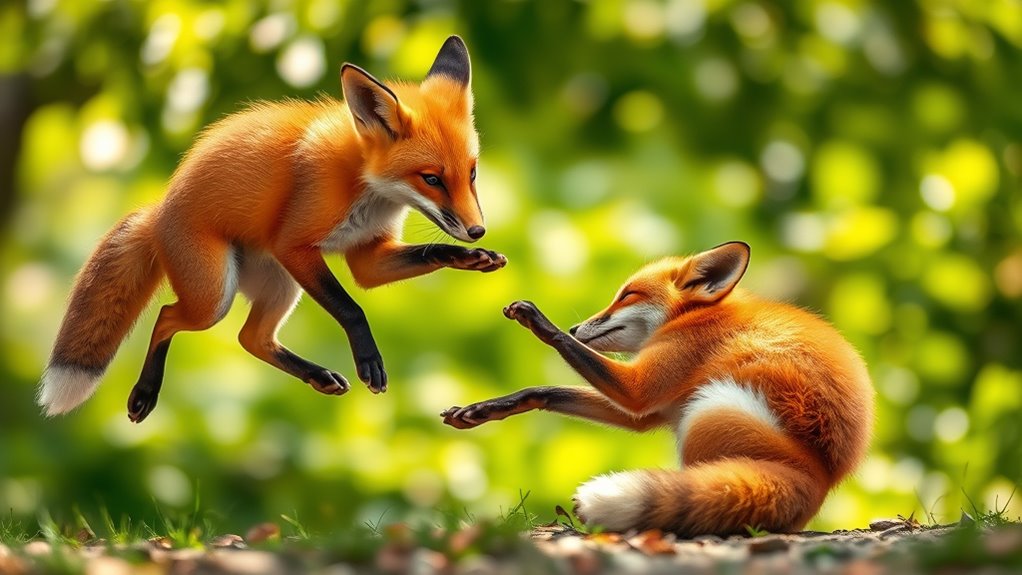

Animal play fighting is essential for young animals, helping them learn survival skills, develop social bonds, and improve physical coordination. It creates a safe environment for experimentation and practice, ensuring they recognize the difference between play and aggression. This activity boosts their enjoyment and motivation while engaging their brains and bodies. By honing reflexes and fighting techniques, animals gain a competitive edge that supports their survival. Discover the deeper implications of play fighting and its role in social dynamics.
Key Takeaways
- Play fighting helps young animals learn essential skills for adulthood and develop social bonds within their groups.
- Complex neural mechanisms differentiate play from aggression, ensuring interactions remain safe and enjoyable.
- Engaging in rough play enhances physical coordination, reflexes, and prepares animals for future survival challenges.
- Play fighting contributes to evolutionary advantages by improving agility, strength, and social skills necessary for survival and reproductive success.
- It fosters healthy social environments, reinforces cooperative relationships, and supports the cohesion of species with complex social structures.
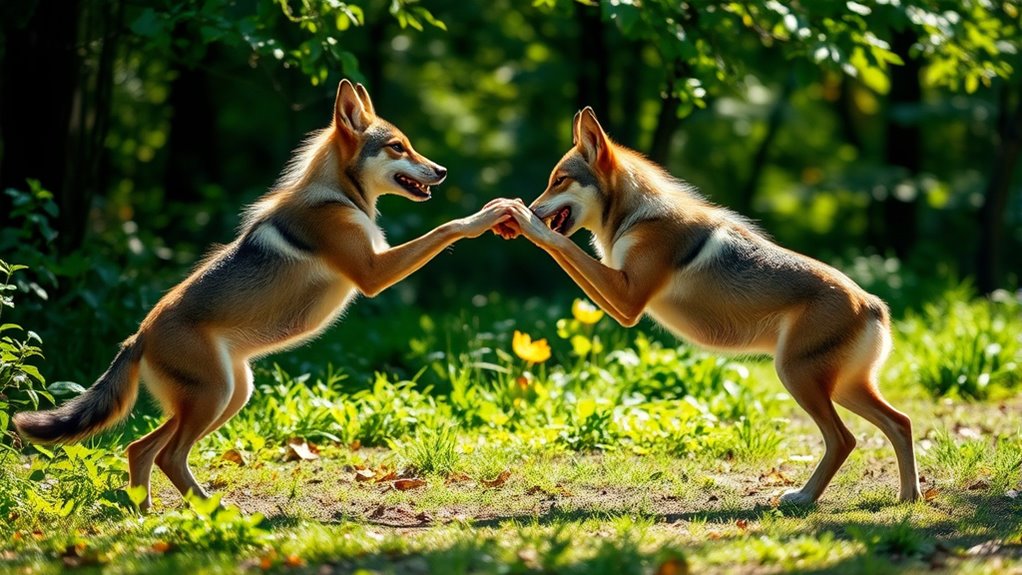
While you might think play fighting is just a way for animals to pass the time, it actually serves essential purposes in their development and social interactions. Play fighting helps young animals learn critical skills they’ll need as adults, and it’s a platform for developing social bonds. This form of interaction allows them to practice important behaviors in a low-stakes environment, where they can experiment without the risks associated with real confrontations.
At the core of play fighting are complex neural mechanisms that govern how animals interact and learn from each other. These mechanisms are finely tuned to recognize the difference between play and aggression, ensuring that the interactions remain safe and constructive. When animals engage in play, their brains release neurotransmitters that promote feelings of joy and excitement. This biochemical response not only makes the experience enjoyable but also reinforces social learning. You might notice that young mammals, like puppies or kittens, engage in rough and tumble play, honing their reflexes and physical coordination. They’re fundamentally training their bodies and minds for future survival, which brings us to the evolutionary advantages of this behavior.
The evolutionary advantages of play fighting are substantial. Animals that engage in this type of play are generally more adept at handling real-life challenges later on. For instance, by practicing fighting techniques through play, they improve their agility, strength, and social skills. These advantages can mean the difference between life and death in the wild, as being able to defend oneself or secure resources directly impacts an animal’s survival and reproductive success. Additionally, play fighting helps establish social hierarchies and bonds within groups, which is essential for creating cooperative relationships.
Moreover, play fighting can be a fundamental factor in species that rely heavily on social structures, such as wolves or primates. Observing these behaviors can provide insight into how social groups form and maintain cohesion. The playful interactions you see aren’t just random; they’re foundational for creating a healthy social environment. Furthermore, understanding the role of biodiversity hotspots can help us appreciate the various ecosystems where these social interactions occur.

Kitty City Outdoor Catio Furniture and Play Kits for Cats, Outdoor Mega Kit
FRESH AIR FUN: Fully-enclosed playset is made of a nylon mesh – let’s in fresh air and gives...
As an affiliate, we earn on qualifying purchases.
Frequently Asked Questions
Do All Animals Engage in Play Fighting?
Not all animals engage in play fighting, and it varies considerably among species. Some mammals, like dogs and primates, often partake in this behavior, which helps them develop social skills and coordination. The origins of play fighting can be traced back to evolutionary benefits, allowing young animals to practice hunting and social interactions. So, while many species enjoy this activity, others might not engage in it at all.
What Are the Benefits of Play Fighting for Young Animals?
Imagine a young knight practicing swordplay with a friend. Just like that, play fighting helps young animals develop essential skills. It fosters juvenile development, teaching them to navigate the complexities of their world. As they wrestle and tumble, they’re not just having fun; they’re forming social bonds that strengthen their future relationships. These playful encounters build confidence, improve coordination, and prepare them for the challenges of adulthood in their wild kingdom.
How Do Animals Determine When to Stop Play Fighting?
Animals determine when to stop play fighting by recognizing play signals and observing escalation cues from their partners. You’ll notice they often use specific body language, like relaxed postures or vocalizations, to indicate they’re still in a playful mode. If one animal shows signs of discomfort or starts to escalate the situation, the other usually backs off. This mutual understanding helps them maintain a balance between fun and safety during their play.
Can Play Fighting Lead to Real Aggression Among Animals?
You might think play fighting always stays harmless, but it can sometimes lead to real aggression. While most animals use play to develop social skills, roughhousing can escalate if one animal feels threatened or overstimulated. If you observe animals during play fighting, watch for signs of aggression escalation, like growling or stiff movements. These signals indicate that the playful interaction might shift from fun to a serious confrontation, requiring intervention to prevent injury.
Are There Specific Species Known for Unique Play Fighting Behaviors?
Yes, certain species exhibit unique play fighting behaviors that showcase species specific behaviors. For instance, young lions practice stalking and pouncing, while otters engage in sliding and wrestling. These playful interactions provide evolutionary advantages, helping them develop essential skills for survival. By honing their techniques during play, they prepare for real-life challenges. Observing these behaviors can give you insight into how animals learn and adapt through playful interactions in their environments.

Cat Enclosure Kitten and Tower Tent for Indoor and Outdoor,3 Tier Cage Inside,Outdoor Catio,Portable and Foldable,Two Doors Design; Play Tunnel + Cube(with Three Ways)…
UNIQUE 3-IN-1 DESIGN:Quickup 3in1 Cat Tower Tent Combo includes one Patented tower tent,one cat tunnel and one trapezoid...
As an affiliate, we earn on qualifying purchases.
Conclusion
In the fascinating world of animal play fighting, did you know that nearly 90% of mammal species engage in some form of playful combat? This statistic highlights how crucial play is for developing social skills and physical prowess. As you explore the science behind these playful antics, you’ll uncover the intricate balance between competition and cooperation that shapes interactions in the animal kingdom. So next time you see animals at play, remember, it’s more than just fun—it’s essential for their survival!

Instant 3-Tier Cat Catio Tent with 2 Interchangeable Covers (Scalloped Green + Black),X-Large Cat Enclosure for Indoor and Outdoor,3 Tier Cage,Two Doors Design can Assemble More Shapes-Black/Green
10-Second Setup & 2 Interchangeable Covers As the US-patented original, this tent pops open instantly (no tools needed)...
As an affiliate, we earn on qualifying purchases.

Cat Enclosure Kitten and Cat Tower Tent for Indoor and Outdoor,3 Tier Cat Cage Inside, X-Large Outdoor Catio,Portable and Foldable,Two Doors Design can Assemble More Shapes (Patented)-Blue Trim
WATERPROOF & MOISTURE-PROOF PE FLOOR:The bottom of cat tent is made of stronger PE material, which can keep...
As an affiliate, we earn on qualifying purchases.