To match dog puzzle toys to your dog, watch how they approach and solve different toys. Note their curiosity, persistence, and frustration signals like pawing or giving up. Observe their problem-solving style, age, breed, and experience. Adjust difficulty based on these cues to keep play engaging and safe. If you want to get better at choosing the right puzzles and ensuring fun, you’ll discover useful tips as you continue exploring.
Key Takeaways
- Evaluate your dog’s problem-solving skills by observing their approach, curiosity, and persistence with different puzzle toys.
- Match puzzle difficulty to your dog’s age, breed, and experience to ensure engaging and appropriate mental stimulation.
- Watch for signs of engagement or frustration, such as sniffing, pawing, or giving up, to adjust toy complexity accordingly.
- Consider your dog’s natural behaviors and sensory preferences when selecting puzzle toys for better motivation and success.
- Regularly inspect and rotate puzzle toys to maintain interest, safety, and optimal mental challenge for your dog.
What Factors Affect How Difficult a Dog Puzzle Toy Is?
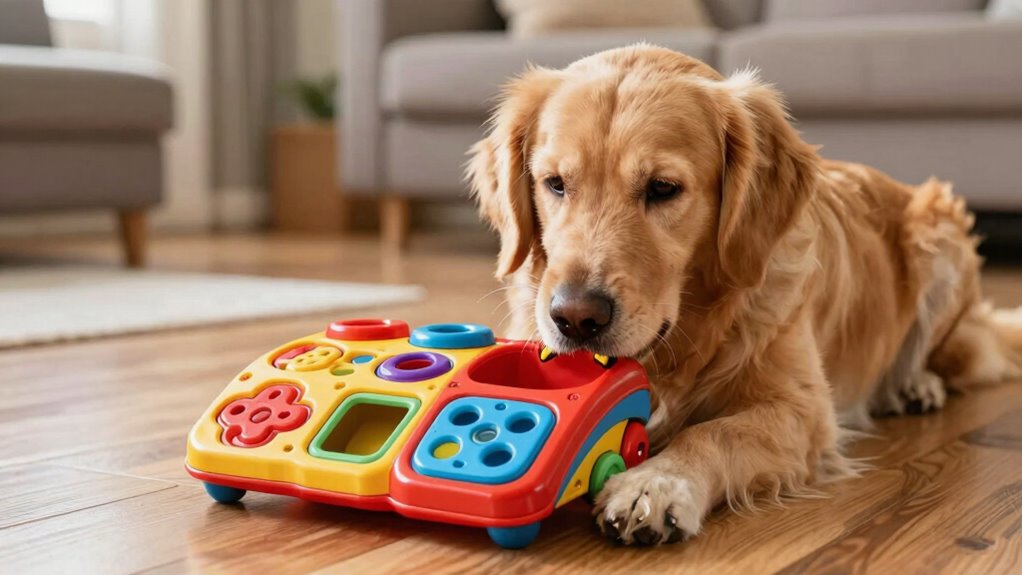
Several factors determine how challenging a dog puzzle toy will be for your pet. One key factor is your dog’s experience with chew toys and training methods. If your dog is new to puzzle toys, start with simpler designs that don’t require complex problem-solving. Dogs familiar with chew toys and positive training methods tend to pick up more difficult puzzles faster. The toy’s design also impacts difficulty—some are straightforward, while others have multiple layers or hidden compartments. Your dog’s natural problem-solving skills, age, and breed also play roles. For example, highly intelligent breeds may find puzzles easier and need more challenging options. Moreover, understanding your dog’s ability to problem-solve can help you select the most appropriate toy. Recognizing your dog’s learning speed can further tailor the difficulty, ensuring they remain engaged without becoming frustrated. Additionally, observing your dog’s response to challenges can guide adjustments to the toy’s difficulty level, keeping them motivated and engaged. To accurately gauge your dog’s capabilities, consider their previous experiences with similar toys and their overall problem-solving tendencies, which can vary widely among individual dogs. It is also beneficial to assess your dog’s attention span to ensure they stay focused during playtime. Tailoring the difficulty level guarantees your dog stays engaged and avoids frustration.
How Can You Evaluate Your Dog’s Problem-Solving Skills?

To assess your dog’s problem-solving skills effectively, observe how they approach new puzzles or challenges. Notice their curiosity, persistence, and how they manipulate different parts of the toy. A dog with well-developed cognitive skills will experiment, try different strategies, and learn quickly from mistakes. Sensory stimulation plays a role too—dogs that actively engage their senses, such as sniffing or pawing, often display better problem-solving abilities. Pay attention to whether your dog remains focused or becomes frustrated easily. Over time, these behaviors reveal their level of cognitive development. Using puzzle toys designed for different difficulty levels can help you gauge their skills more accurately. Additionally, understanding how a projector’s color accuracy impacts image quality can inform how you set up your viewing environment to better appreciate visual details. This observation provides insight into your dog’s mental agility and helps you select toys that promote healthy mental growth. Recognizing problem-solving skills early can also guide you in choosing toys that are appropriately challenging to keep your dog engaged and stimulated. Observing your dog’s responses over time can also help you identify learning patterns, which are essential for understanding their overall cognitive development. Being aware of behavioral cues can further enhance your ability to interpret their problem-solving progress. Moreover, paying close attention to their adaptability to new challenges can give you a better understanding of their learning flexibility.
How to Conduct a Quick Test for Your Dog

To quickly assess your dog’s problem-solving skills, watch how they approach a puzzle toy and whether they stay engaged. Notice if they try different methods or give up easily, as this shows their problem-solving approach. Keep an eye on their overall enthusiasm to see how motivated they are during the test. Observing their problem-solving approach can help determine the appropriate difficulty level for their puzzle toys. Additionally, paying attention to their responses can reveal insights into their cognitive traits and how they adapt to challenges. Recognizing ethical considerations in their play behavior can also provide clues about their temperament and socialization. Understanding a dog’s behavioral development can further inform the best types of puzzle toys to suit their needs. It’s also useful to consider how their sleep patterns and energy levels might influence their engagement with toys.
Observe Problem-Solving Approach
Before introducing a new puzzle toy to your dog, observing how they approach problem-solving can provide valuable insight. Watch whether they investigate eagerly or hesitate, and note if they use their paws, nose, or mouth to explore. This behavior indicates their problem-solving style, helping you select toys that match their natural tendencies. This understanding can also help identify whether your dog is more cognitive or instinctual in their approach. For example, a dog that quickly manipulates objects may benefit from puzzles that challenge their cognitive skills, enhancing their training techniques. Additionally, choosing appropriate puzzles can support their nutritional benefits by encouraging longer, more engaging play sessions that promote mental stimulation. Recognizing your dog’s innate problem-solving approach allows for better matching of toy difficulty, ensuring a positive and engaging experience. Being aware of your dog’s body jewelry measurements can also be useful if you plan to incorporate wearable puzzle accessories or related items in their enrichment routines. Understanding your dog’s learning style further refines your selection process.
Assess Engagement Level
Evaluating your dog’s engagement level is a quick and effective way to determine how they interact with puzzle toys. Start with a simple behavior appraisal by offering the toy and observing their initial response. Notice if they eagerly investigate, show curiosity, or quickly lose interest. This helps you gauge their motivation and patience. Use basic training techniques, like encouraging with praise or gentle guidance, to see if they stay focused or need more encouragement. If your dog actively explores and persists, they’re highly engaged and ready for more challenging puzzles. If they show minimal interest or become easily frustrated, consider starting with easier toys. Regularly assessing engagement helps you match puzzle difficulty to your dog’s current abilities, making playtime both fun and developmentally appropriate. Additionally, incorporating positive reinforcement during play can motivate your dog to stay engaged longer.
How to Recognize Signs of Engagement or Frustration
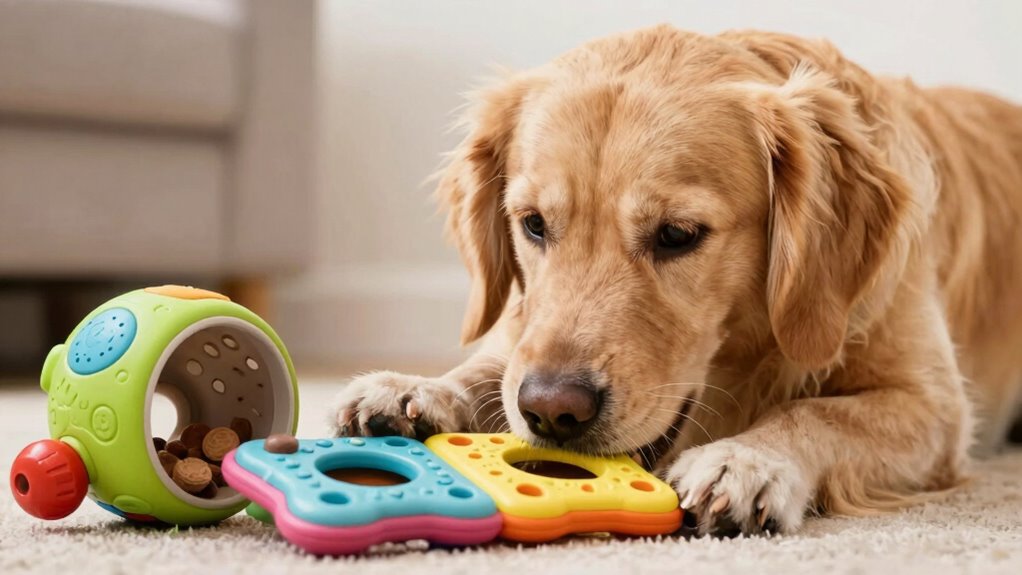
Recognizing whether your dog is engaged or frustrated while playing with puzzle toys is essential for ensuring a positive experience. If your dog shows treat motivation, actively sniffing and searching, it indicates engagement and curiosity. Look for signs of scent detection, such as nose nudging or focused attention, which show they’re interested. Frustration, on the other hand, may manifest as pawing at the toy, whining, or giving up quickly. If your dog seems overwhelmed or loses interest, it’s a sign the puzzle might be too difficult. Pay attention to their body language—relaxed posture and eager sniffing signal engagement, while tense muscles or avoidance suggest frustration. Adjust the puzzle’s difficulty accordingly to keep play rewarding and fun. Monitoring your dog’s behavioral cues can help you better understand their level of engagement and make necessary adjustments. Additionally, understanding the importance of training techniques can help your dog develop patience and problem-solving skills over time. Incorporating appropriate enrichment strategies can further support your dog’s mental stimulation and prevent boredom. Using these insights, you can tailor the challenge to match your dog’s learning pace, creating a more effective and enjoyable experience.
Matching Puzzle Toy Levels to Your Dog’s Breed and Age
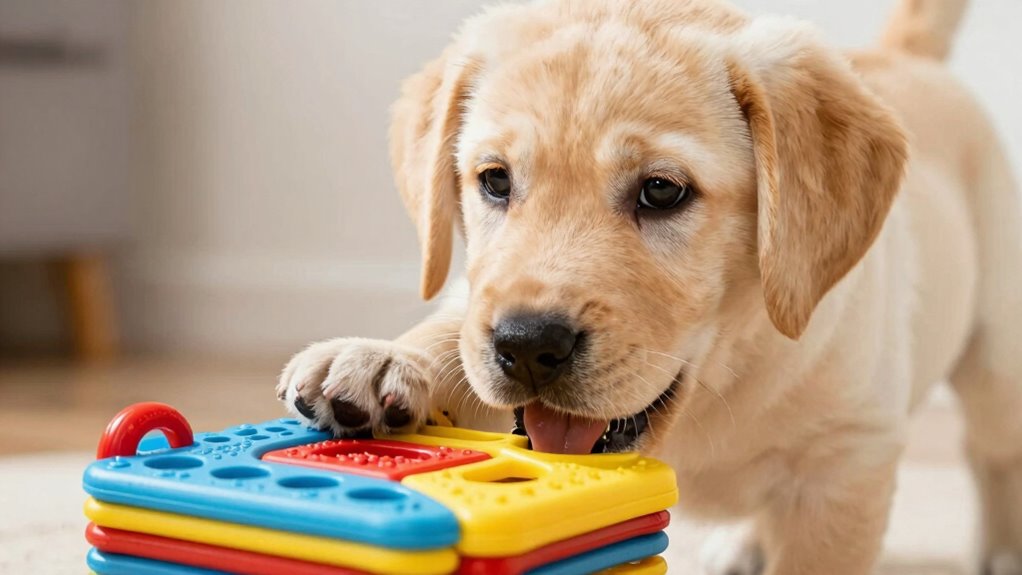
Choosing the right puzzle toy depends on your dog’s breed and age to keep them engaged without frustration. Some breeds need more complex challenges, while others do better with simpler ones, and younger dogs often require easier puzzles. Adjusting the difficulty based on your dog’s intelligence helps make sure they stay motivated and happy.
Breed-Specific Puzzle Needs
Matching puzzle toy levels to your dog’s breed and age guarantees they stay engaged and challenged without becoming frustrated. Some breeds are strong chewers, so toy durability becomes vital to prevent destruction and ensure safety. Others rely heavily on scent attraction, which keeps their interest high and stimulates their mind. For example:
| Breed Type | Puzzle Toy Focus |
|---|---|
| Power Chewers | Tough, durable toys with scent options |
| Sensitive Noses | Toys with strong scent attraction |
| Older or Smaller Dogs | Gentle, easy-to-solve puzzles |
Choosing the right combination keeps your dog mentally stimulated and reduces boredom, while matching the toy’s difficulty to their breed’s natural tendencies. Properly selected toys enhance playtime and support your dog’s overall well-being.
Age-Appropriate Challenge Levels
Selecting the right puzzle toy level for your dog depends on their age and developmental stage. Younger dogs or puppies typically prefer simpler puzzles that align with their play style and sensory preferences, helping them build confidence. As they mature, they can handle more complex challenges that engage their problem-solving skills. Consider your dog’s natural play tendencies—some dogs enjoy active, interactive toys, while others prefer slow, scent-based puzzles. Matching difficulty to their age guarantees they stay engaged without frustration or boredom. For puppies, start with basic treat-dispensing toys, then gradually increase complexity as they grow. Older dogs might thrive on puzzles that challenge their mental agility while fitting their energy levels and sensory preferences. This approach keeps their mind sharp and encourages healthy development.
Adjusting for Dog Intelligence
Since different breeds and individual dogs vary widely in their problem-solving abilities, it’s important to tailor puzzle toy levels to their specific intelligence and developmental stage. For highly intelligent breeds, like border collies or poodles, choose more challenging toys that stimulate their minds and keep them engaged. Less experienced or older dogs may need simpler puzzles to build confidence and avoid frustration. Regular dog training helps you assess your dog’s problem-solving skills and adjust difficulty accordingly. Remember, puzzle toys should complement your dog’s diet and pet nutrition by providing mental stimulation that reduces boredom and promotes overall well-being. Matching the difficulty level to your dog’s intelligence ensures they stay motivated, engaged, and happily challenged without feeling overwhelmed.
How to Adjust Puzzle Difficulty as Your Dog Improves
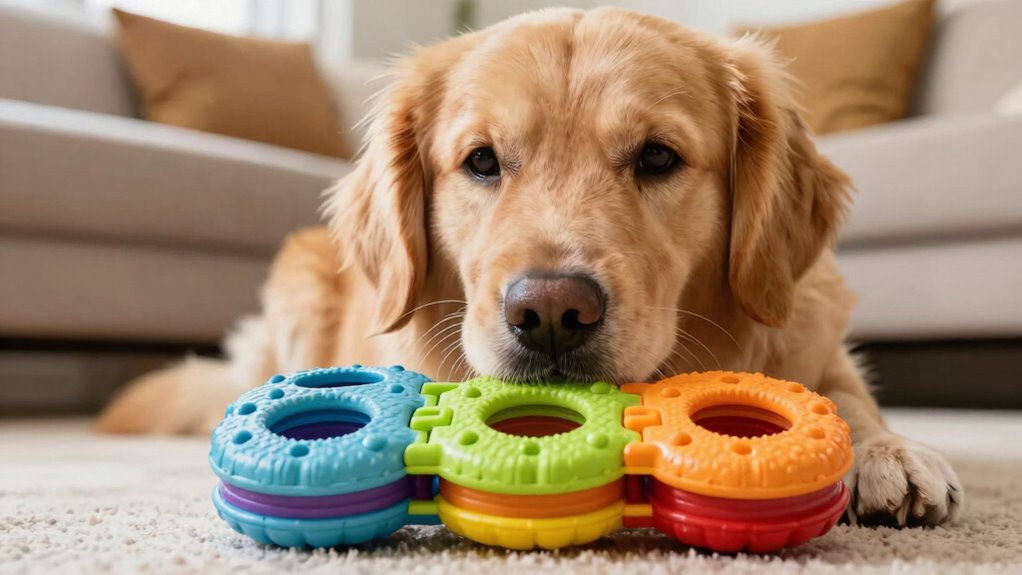
As your dog gets better at solving puzzle toys, it’s important to gradually increase the challenge to keep them engaged. Use training techniques like hiding treats in more complex compartments or adding layers to the puzzle. This not only boosts their problem-solving skills but also provides mental stimulation. As they succeed, you can also introduce puzzles that promote nutritional benefits, encouraging slower eating and better digestion. Adjust the difficulty by making the openings smaller or increasing the number of steps needed to access the treats. Regularly evaluate your dog’s progress and adapt the puzzles accordingly, ensuring they stay motivated without becoming frustrated. By fine-tuning the challenge, you help your dog develop their skills while enjoying the mental and nutritional rewards of puzzle play.
Tips for Making Puzzle Playtime Fun and Safe
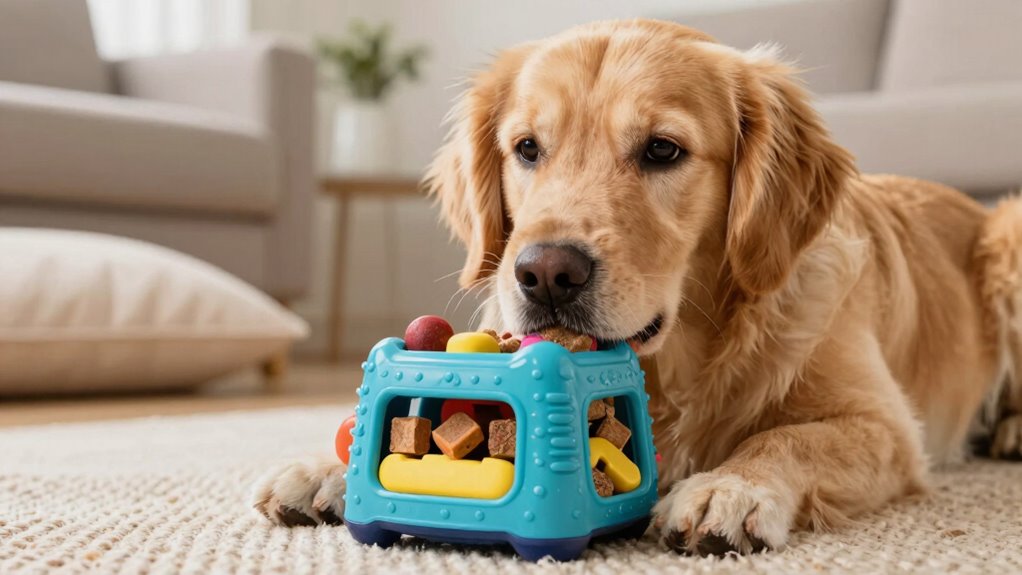
To guarantee puzzle playtime remains both enjoyable and safe for your dog, start by choosing age-appropriate and durable toys designed specifically for canine use. Make certain toy safety by regularly inspecting for damage or wear, discarding broken pieces. To keep play safe and fun, consider these tips:
- Rotate puzzle toys to prevent boredom and reduce overuse.
- Store puzzles in a designated area to avoid clutter and accidental ingestion.
- Supervise play sessions to prevent frustration or unsafe chewing.
- Clean puzzles frequently to maintain hygiene and avoid buildup of dirt or bacteria.
Following these steps helps maintain toy safety, prolongs the life of your dog’s puzzles, and ensures meaningful, fun-filled playtime without hazards. Proper puzzle storage and attentive supervision are key to a safe, engaging experience.
Frequently Asked Questions
Are Puzzle Toys Suitable for All Dog Breeds?
Puzzle toys are generally suitable for most dog breeds, but you should consider breed considerations and size appropriateness. Smaller breeds may need smaller, less complex toys, while larger breeds require more durable, challenging puzzles. Active, intelligent breeds thrive on these toys, but some less energetic or older dogs may prefer simpler options. Always choose a puzzle toy that matches your dog’s size and skill level to keep them engaged and safe.
How Often Should I Rotate Puzzle Toys?
You should rotate puzzle toys every one to two weeks to keep your dog engaged. Incorporate treat dispensing toys and hide and seek styles to challenge them and prevent boredom. Rotating toys also helps your dog stay excited about problem-solving activities. Observe their interest and enthusiasm; if they lose interest quickly, switch toys sooner. Regular rotation guarantees your dog remains mentally stimulated and enjoys the variety.
Can Puzzle Toys Help With Separation Anxiety?
Imagine your dog, eyes bright, calmly focusing on a treat dispensing puzzle toy; this shows it can help with separation anxiety. Puzzle toys provide mental stimulation, redirecting your dog’s energy and reducing stress when alone. By engaging their mind, you create a calming routine that lessens anxiety. Regular use of these toys can build confidence and comfort, making your dog feel more secure, even when you’re not around.
What Materials Are Safest for Dog Puzzle Toys?
You should choose dog puzzle toys made from non-toxic materials like food-grade silicone, BPA-free plastic, or natural rubber to guarantee safety. Durability considerations are important, so look for sturdy designs that withstand your dog’s chewing habits. Avoid toys with small parts or toxic paints, as these can be hazardous. Always check for labels indicating safe, pet-friendly materials to keep your dog happy and healthy during play.
How Do I Clean and Maintain Puzzle Toys?
Cleaning puzzle toys is like giving your dog a fresh start every day. You should regularly follow cleaning routines, using warm water and mild soap, to keep them safe and hygienic. Check materials for wear and tear, and avoid harsh chemicals that could harm your pet. Proper maintenance guarantees the toys stay safe, clean, and fun, helping your dog stay engaged and healthy during playtime.
Conclusion
By understanding your dog’s problem-solving skills and choosing the right puzzle toy, you can turn playtime into an engaging adventure. Think of it like a dance, where you lead your pup through each step, adjusting as they grow. Keep an eye on their reactions, celebrate their successes, and tweak the difficulty to keep things fun and safe. With patience and attentiveness, you’ll help your dog thrive, turning puzzle time into a rewarding experience they’ll be enthusiastic to anticipate.