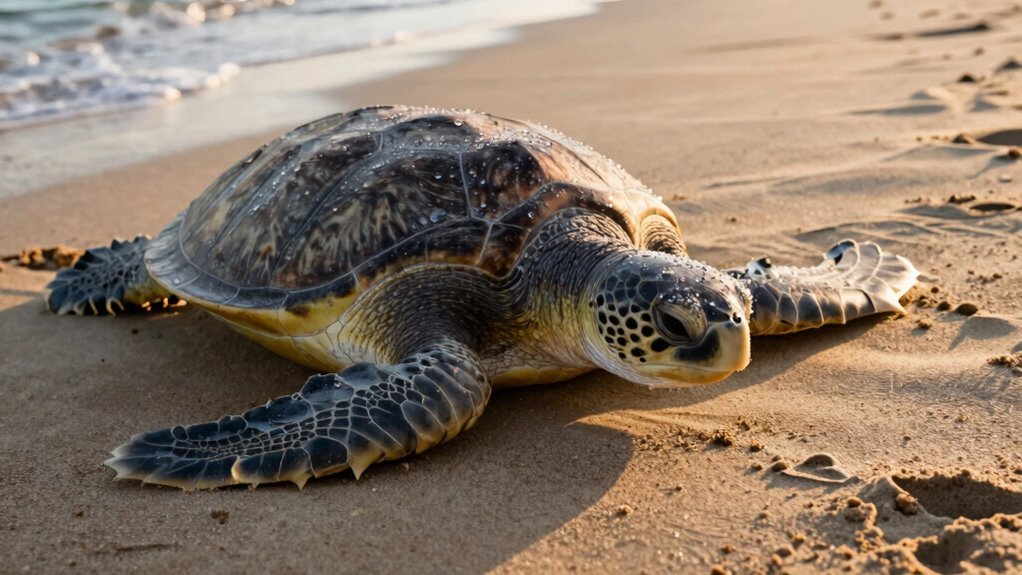

When sea turtles hatch, they memorize key features of their nesting beach, such as chemical scents, magnetic signals, and visual cues. As they grow, these impressions act like a GPS, guiding them back home after years at sea. Their ability to recognize these subtle cues guarantees they find their way to specific beaches for nesting again. If you keep exploring, you’ll discover just how remarkable their navigation skills truly are.

Get pet supplies delivered free with Prime
- Fast, free delivery on millions of items
- Prime Video, Amazon Music and more included
- Member-only deals all year
Key Takeaways
- Sea turtles imprint on chemical cues, magnetic fields, and beach features during early life to recognize their natal nesting sites.
- Imprinting occurs as hatchlings emerge, helping them remember specific environmental signals associated with their birthplace.
- Magnetic imprinting allows turtles to calibrate their internal compass for precise return to nesting beaches.
- Chemical and visual cues further reinforce the recognition of their natal beach throughout their lifespan.
- This imprinting process ensures successful long-term migration and reproduction across generations.
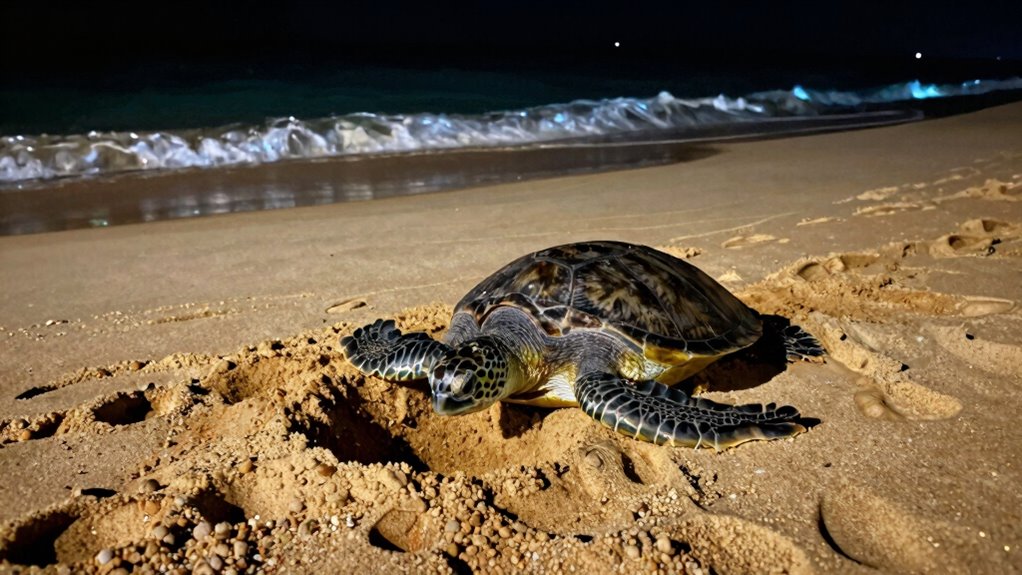
Have you ever wondered how sea turtles find their way back to the beaches where they were born? It’s a fascinating process that begins right after they hatch. When hatchlings emerge from their eggs, they instinctively head toward the brightest horizon over the water, often the moonlit sea, guided by their innate sense of marine navigation. This initial orientation is critical for their survival, as heading toward the ocean helps them escape predators and find the food sources they need to grow. During this hatchling phase, they rely heavily on natural cues, such as the slope of the beach and the reflection of moonlight on the water, to orient themselves correctly.
Once in the water, these tiny turtles begin a journey that can span thousands of miles, but their ability to return to their natal beaches later in life hinges on an impressive system of imprinting. As they mature, sea turtles develop a strong connection to the specific chemical cues, magnetic fields, and unique features of their home beaches. This is where marine navigation becomes essential. They remember these cues, which act as a sort of biological GPS, guiding them across vast ocean distances during their migrations. These cues are subtle but consistent, allowing turtles to distinguish their natal beaches from other locations, even after years spent wandering the open sea. Their capacity for environmental imprinting is a remarkable adaptation that ensures their long-term survival.
Sea turtles use chemical cues, magnetic fields, and beach features as biological GPS for migration and returning home.
When it’s time for reproduction, the turtles’ hatchling orientation comes full circle. The mature females return to the very beaches where they were born to lay their eggs. They navigate using their internal magnetic compass, which has been calibrated by their early experiences and imprinting. This magnetic sense allows them to detect subtle variations in the Earth’s magnetic field, helping them pinpoint their natal beaches with remarkable accuracy. Meanwhile, the males tend to stay in the general vicinity of their birthplaces, ensuring their own reproductive success. This magnetic imprinting process is a remarkable example of how environmental cues shape animal behavior over generations. The ability of turtles to remember and utilize these cues is a product of their imprinting process, which is fundamental for their long-term survival.
Throughout their lives, sea turtles maintain this imprinting, relying on a combination of chemical, magnetic, and visual cues to find their way. Their ability to remember and navigate back to their natal beaches is a testament to the complex and finely tuned nature of marine navigation and hatchling orientation. It’s a process born of evolution, allowing these ancient mariners to return home for nesting, ensuring the survival of their species across generations. So, the next time you see a turtle on the beach, remember that its journey was set in motion the moment it first learned to navigate the vast and mysterious ocean.
sea turtle nesting beach identification guide
As an affiliate, we earn on qualifying purchases.
As an affiliate, we earn on qualifying purchases.
Frequently Asked Questions
How Long Do Sea Turtles Remember Their Nesting Beaches?
You might be surprised to learn that sea turtles remember their nesting beaches for many years, often decades. Their strong imprint helps guide their migration patterns across vast ocean currents. When it’s time to nest again, they rely on these memories to find the same beaches. This incredible ability guarantees the survival of their species, as they return to familiar locations, charting through complex ocean currents with remarkable precision.
Can Turtles Imprint on Multiple Beaches Simultaneously?
Yes, sea turtles can imprint on multiple beaches through their imprinting behavior. When they hatch, they remember the unique cues of their natal beach, but they also recognize other suitable nesting sites nearby. This ability helps them adapt to environmental changes and find alternative nesting spots if their primary beach becomes unsuitable. Their capacity for imprinting on multiple beaches guarantees their survival and supports their complex navigation skills.
Do Environmental Changes Affect Turtle Imprinting?
Environmental changes profoundly impact turtle imprinting. Climate change can alter temperature cues vital for nesting, affecting hatchling orientation and success. Coastal development disrupts natural beaches, making it harder for turtles to imprint on specific sites. You might notice that as these changes continue, turtles struggle to recognize their natal beaches, which can reduce nesting success and threaten their populations. Protecting natural habitats is essential for maintaining proper imprinting and healthy turtle populations.
Are Younger Turtles Less Likely to Imprint Successfully?
Imagine tiny turtles, their fragile bodies dancing with ocean currents, facing juvenile navigation and imprinting challenges. You’d find that younger turtles are less likely to imprint successfully because their developing senses aren’t fully tuned to recognize the nesting beach’s unique cues. As they grow, their ability to imprint strengthens, guiding them back with remarkable precision. So, in early stages, imprinting remains a delicate, uncertain process, often requiring maturation to become reliable.
How Do Scientists Study Turtle Imprinting Behaviors?
Scientists study turtle imprinting behaviors by using tools like satellite tracking and genetic markers. You can track a turtle’s movements from nesting beaches to foraging grounds, revealing how they return to specific sites. Genetic markers help identify if turtles share common nesting origins, indicating imprinting. Together, these methods allow researchers to understand how turtles recognize and remember their nesting beaches, shedding light on their remarkable navigation skills.
Conclusion
Just like a traveler remembers their favorite hometown, you now understand how sea turtles imprint on nesting beaches. Their remarkable ability to remember and return to their birthplace is crucial for their survival, ensuring they find the perfect spot to lay their eggs. This process is as natural and essential as the sun rising each morning, guiding these gentle creatures home. By protecting these beaches, you help preserve their incredible journey for generations to come.
Halloween Picks
halloween
As an affiliate, we earn on qualifying purchases.