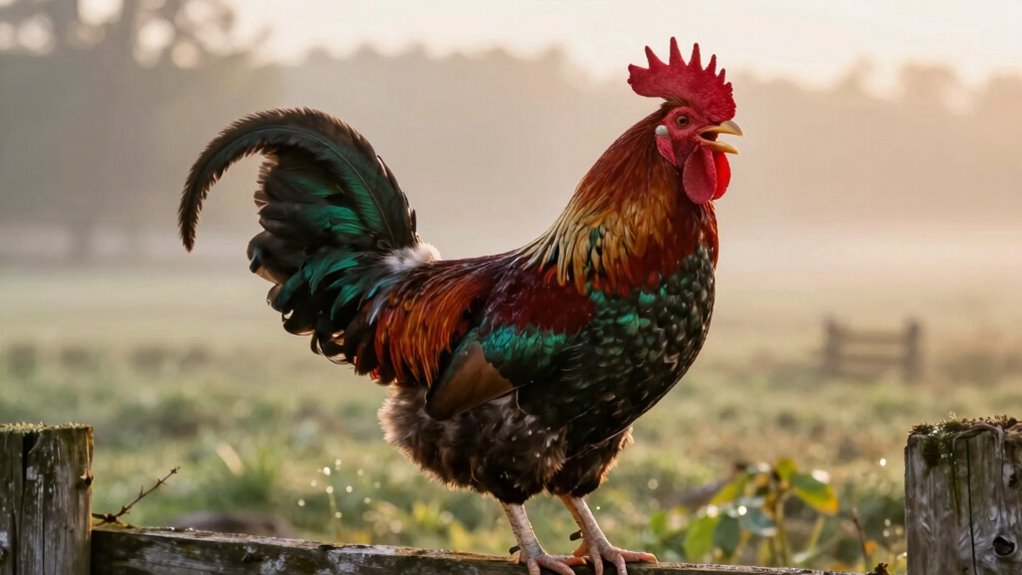

You might notice that roosters crow before sunrise to mark their territory and show social dominance. Their calls are driven by an internal biological clock that syncs with the natural light cycle, ensuring they crow just before dawn. This behavior helps them attract mates and prevent conflicts with other roosters. Environmental factors like temperature and humidity can also influence their vocal activity. Keep going, and you’ll discover even more about why they start before the sun rises.

Get pet supplies delivered free with Prime
- Fast, free delivery on millions of items
- Prime Video, Amazon Music and more included
- Member-only deals all year
Key Takeaways
- Roosters crow before sunrise to establish territory and signal dominance within the flock.
- Their crowing is driven by an internal biological clock aligned with the natural light cycle.
- Early morning crowing warns rivals and prevents conflicts over resources.
- It serves as a social signal to attract mates and demonstrate vitality.
- Environmental factors like temperature and humidity can influence the timing of crowing.
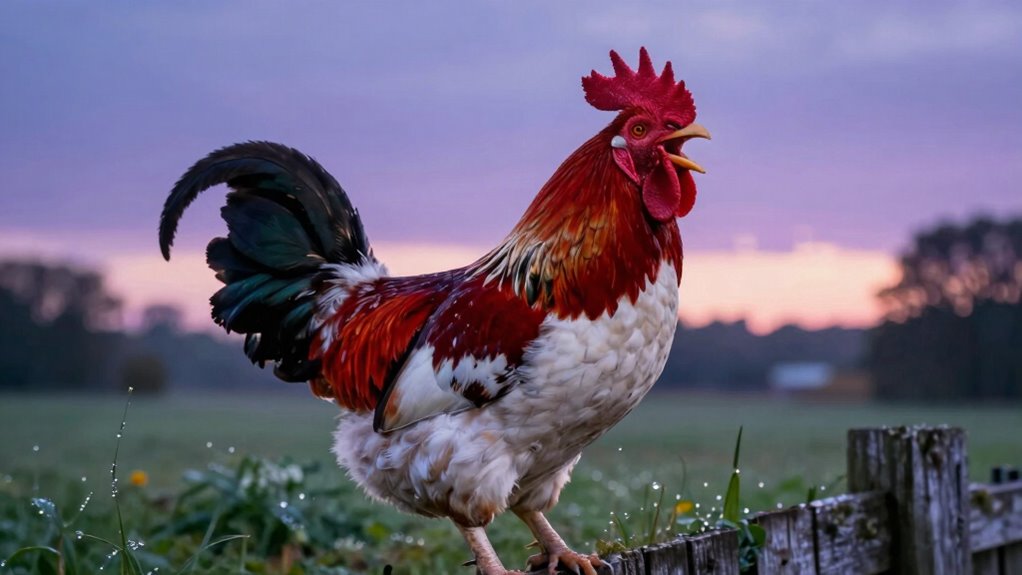
Roosters crow before sunrise primarily to establish their territory. This act, called territorial calling, signals to other roosters that a particular area is already claimed. This act, called territorial calling, signals to other roosters that a particular area is already claimed. This behavior, driven by instinct, ensures the rooster’s presence is announced before competitors can settle in nearby. By crowing at dawn, the rooster effectively marks its domain, warning rival males to stay away and preventing potential conflicts. This territorial behavior is instinctive and has evolved to maximize reproductive success and resource protection. Additionally, this behavior helps maintain social hierarchies within the flock, reinforcing the rooster’s status.
Roosters crow at dawn to mark territory, warn rivals, and protect resources through instinctive territorial calling.
The dawn chorus, which includes the rooster’s morning crow, is also synchronized with a biological clock known as the circadian rhythm. This internal timing system triggers the rooster to crow just before dawn, aligning its vocal activity with the natural light cycle. Interestingly, even on cloudy days or in enclosed spaces, roosters tend to crow around the same time, driven more by internal cues than by external light. This preemptive vocalization ensures that the rooster remains a prominent figure in the social hierarchy of the flock, asserting dominance even before the day begins. Additionally, this behavior reinforces the internal biological clock, ensuring consistency regardless of external conditions.
Your typical dawn chorus isn’t just about territoriality; it also plays a role in attracting mates. A strong, confident crow signals good health and vitality, qualities that females find attractive. By crowing early and often, the rooster demonstrates its fitness and readiness to reproduce. This behavior is deeply ingrained, so even if you don’t see other roosters around, their early morning calls serve as a reminder of their presence and strength. The timing of these calls is also influenced by biological rhythms, which help synchronize behaviors across the flock.
Furthermore, recent studies indicate that roosters’ vocalizations can also be affected by environmental factors such as temperature and humidity, which influence their vocal behavior and overall activity levels.
As an affiliate, we earn on qualifying purchases.
Frequently Asked Questions
Do All Roosters Crow Before Sunrise?
Not all roosters crow before sunrise, but many do as part of their natural behavioral patterns. Crowing often signals territory and readiness for mating rituals, which can start early in the morning. You might notice some roosters crowing at different times, influenced by their environment or individual instincts. This early crowing helps establish dominance and attract mates, making it a key part of their daily routine and social structure.
Can Environmental Factors Influence a Rooster’s Crow Timing?
Yes, environmental factors can influence a rooster’s crow timing. Think of the rooster as a vigilant guardian, sensing the moon phases and predator presence like a seasoned detective. When the moonlight shifts or predators lurk nearby, it stirs the rooster to crow earlier or later, responding to the subtle whispers of nature. These cues act as signals, guiding the rooster’s instinct to announce dawn and warn of danger.
Why Do Some Roosters Crow More Loudly Than Others?
You notice some roosters crow more loudly than others due to factors like feather coloration and beak size. Bright, vibrant feathers can indicate a healthy, dominant bird, which might crow loudly to establish territory. Additionally, a larger beak often means a stronger voice, allowing the rooster to project its crow further. These physical traits play a role in how loudly a rooster crows, signaling strength and dominance to other chickens.
Is Crowing a Sign of a Rooster’s Health?
Crowing can be a sign of a rooster’s health, signaling strength for mating and showcasing shiny feather condition. When your rooster crows confidently, it displays vigor and robustness, attracting a mate. If his crow is weak or irregular, it might suggest underlying issues like poor feather quality or health problems. A lively, loud crow reflects a healthy, happy bird, ready to bravely boast his presence and potential mates.
Do Roosters in Urban Areas Crow Earlier Than Rural Ones?
Yes, roosters in urban areas tend to crow earlier than rural ones. Urban noise and artificial lighting often influence their behavior, causing them to crow at different times. The noise can mask natural cues, prompting earlier crowing, while artificial lights can trick them into thinking dawn has arrived. This adjustment helps them assert their territory amidst the busy, noisy environment typical of city life.
Conclusion
As dawn’s first light begins to whisper its arrival, the rooster’s crow acts as a fiery trumpet blast, piercing the quiet darkness like a sunrise bursting through a clouded sky. You can almost see him standing tall, a vigilant guardian greeting the awakening world with boldness and pride. His call isn’t just noise—it’s a fiery banner waving in the wind, announcing the new day’s promise before the sun even peeks over the horizon.
Halloween Picks
halloween
As an affiliate, we earn on qualifying purchases.