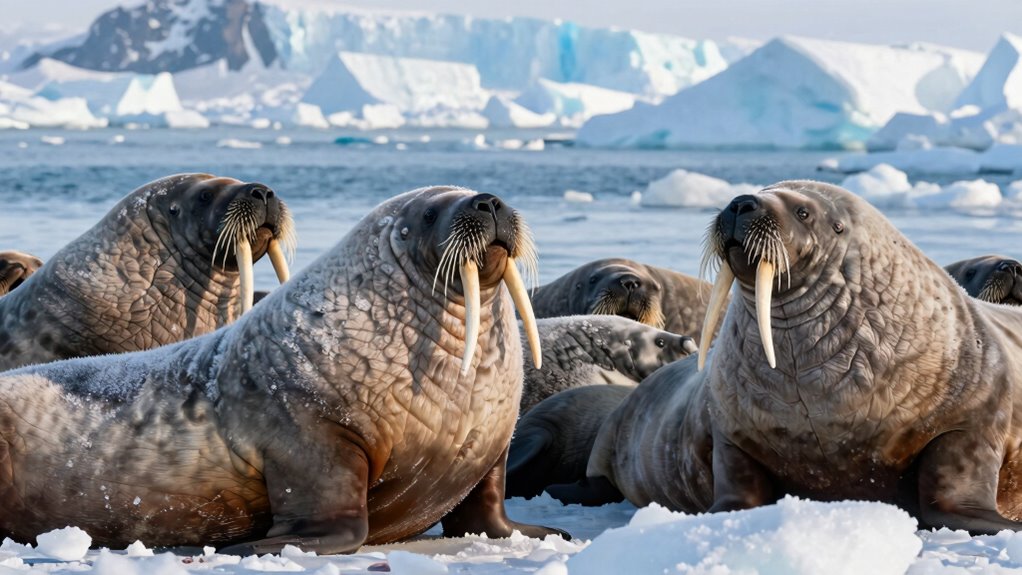

You can stay warm in Arctic water like walruses do by relying on their thick blubber, which insulates their bodies against the cold. They also have dense fur and a highly specialized circulatory system that conserves heat, especially in their extremities. Their blood flow adjusts to prevent heat loss and keep essential organs warm. Want to discover more about how these remarkable animals survive such harsh conditions? Keep exploring to learn more.

Get pet supplies delivered free with Prime
- Fast, free delivery on millions of items
- Prime Video, Amazon Music and more included
- Member-only deals all year
Key Takeaways
- Thick blubber insulates their bodies by providing a substantial thermal barrier against cold water.
- Dense, flexible skin helps retain heat while allowing mobility in icy environments.
- Thick fur adds an extra layer of insulation and protection from cold surfaces and water.
- Circulatory adaptations regulate blood flow, conserving heat in extremities during dives.
- Group huddling behavior helps share warmth and maintain overall body temperature.
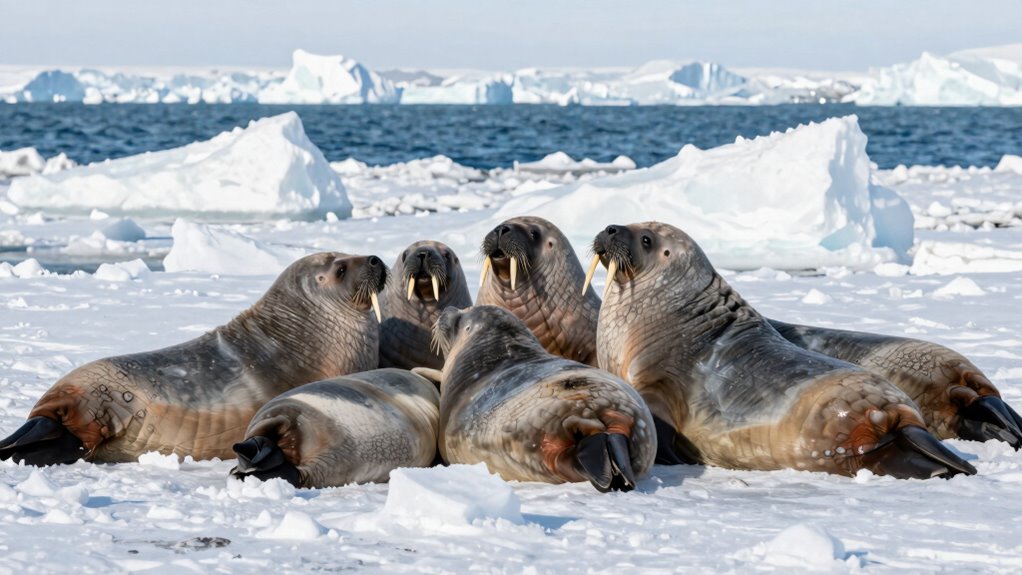
Have you ever wondered what makes walruses such fascinating creatures? Their ability to survive in freezing Arctic waters is a remarkable feat of adaptation. To understand how they stay warm, you need to look at their unique physical features and behaviors. Walruses have a thick layer of blubber beneath their skin, which acts as an insulative barrier, trapping heat and preventing it from escaping into the icy water. This blubber can be several inches thick, providing vital insulation in temperatures that often dip well below freezing. Additionally, their skin is dense but flexible, allowing them to retain warmth while maintaining mobility in the water.
You might also notice that walruses have a large head and prominent tusks, but these features are more than just impressive—they serve important functions in their survival. When submerged, walruses often huddle together in large groups, or herds, which helps conserve body heat through social thermoregulation. This behavior reduces heat loss by sharing body warmth, especially during colder months. Their migration patterns also play a role in their survival strategies. Walruses tend to migrate to areas where the water is less frozen and where food sources are abundant, typically following seasonal shifts in sea ice. During migration, they travel to feeding grounds that support their diet, which primarily consists of benthic invertebrates like clams and other mollusks found on the ocean floor. Their diet is varied but always rich in energy, helping them sustain their body heat in cold environments.
Their circulatory system is also adapted to conserve heat. Walruses have blood vessels arranged in a way that minimizes heat loss, especially in their flippers, which are highly vascularized to help regulate temperature. When they dive deep or rest in cold water, blood flow to their extremities can be restricted to keep core body heat from escaping. Their thick, dense fur, although not as prominent as their blubber, offers some additional insulation and helps shield their skin from direct contact with cold water and icy surfaces. Moreover, their circulatory adaptations enable them to efficiently manage their body temperature in the frigid environment. Scientists have studied their adaptation mechanisms to better understand how they thrive in such harsh climates. Interestingly, their thermal regulation strategies are often compared to other Arctic mammals, providing insights into evolutionary adaptations to extreme cold. These survival tactics are vital for their health and longevity in such extreme climate conditions, where maintaining body heat is essential for their well-being.
insulated wetsuit for cold water
As an affiliate, we earn on qualifying purchases.
As an affiliate, we earn on qualifying purchases.
Frequently Asked Questions
Do Walruses Use Tools to Keep Warm?
No, walruses don’t use tools to keep warm. Instead, they rely on their thick blubber and dense fur to insulate against the cold. You’ll notice their social behaviors, like huddling in groups, which help conserve warmth. Their vocalizations also play a role, allowing them to communicate and coordinate within the herd. This combination of physical traits and social interactions keeps walruses warm in frigid Arctic waters.
How Long Can Walruses Stay Underwater?
You might be surprised, but walruses can stay underwater for up to 20 minutes, depending on their activity level and Arctic ice conditions. During migration, they dive deep to forage and avoid predators. Their large blood volume and ability to slow their heart rate help conserve oxygen. This endurance allows them to navigate changing Arctic ice conditions efficiently, ensuring they find food and safe resting spots during their long migrations.
Do Walruses Hibernate During Cold Months?
No, walruses don’t hibernate during cold months. Instead, their thick layer of Walrus fat acts like natural Arctic insulation, keeping them warm without shutting down for winter. Imagine it: while bears cozy up in dens, walruses parade through icy waters, flaunting their blubber armor. This fat not only insulates but also provides energy reserves, so they stay active, making hibernation seem like a strange concept to these Arctic adventurers.
What Is the Temperature Range Walruses Tolerate?
You’ll find walruses tolerate temperatures ranging from -20°C to 10°C. Thanks to their ice adaptation, they thrive in icy waters, and their fat insulation plays a vital role in keeping them warm. When submerged, their thick blubber acts as a barrier against the cold, while their large bodies help conserve heat. This combination allows walruses to survive comfortably in frigid Arctic environments.
How Do Young Walruses Stay Warm?
You might find it fascinating that young walruses stay warm partly because of their dense, insulating blubber, which is as thick as a human forearm! Their social behavior plays a big role too—they huddle closely with other walruses, sharing body heat. Plus, their vocalizations help keep them connected and calm in chilly waters. This combination guarantees young walruses stay warm and safe as they grow in the icy Arctic environment.
Conclusion
As you imagine the icy Arctic waters, picture the walrus’s thick, wrinkled skin and the dense layer of blubber beneath, like a warm, insulating blanket wrapping around them. Their long tusks and whiskers help them navigate and find food in the freezing depths. With every ripple and splash, these incredible creatures stay cozy, their bodies built to withstand the cold. You can’t help but marvel at how nature’s design keeps them warm in the icy embrace of their ocean home.
Fall Picks
fall essentials
As an affiliate, we earn on qualifying purchases.




![Pentulive (Puppy Live) [Video]](https://aplaceforanimals.com/wp-content/uploads/2026/10/pentulive-puppy-live-video-featured-260x140.jpg)