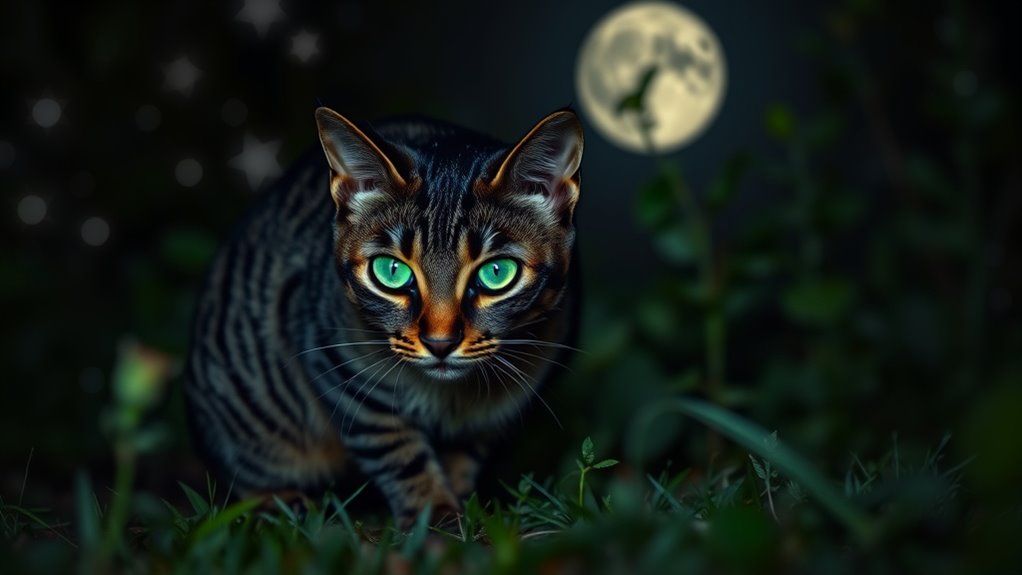

Cats’ eyes glow at night because of a special layer called the tapetum lucidum behind their retinas. This unique structure reflects light back through the retina, improving their night vision. It helps them see better in low light, making them effective hunters during dawn and dusk. The glow can vary in color, depending on the angle and your cat’s eye color. There’s much more to discover about these fascinating creatures and how they navigate the dark.
Key Takeaways
- Cats’ eyes glow at night due to the reflective properties of a tissue layer called the tapetum lucidum behind the retina.
- This layer reflects light back into the eye, enhancing their vision in low-light conditions.
- The glow can vary in color, typically appearing green, yellow, or blue based on the angle of light and the cat’s eye color.
- Cats have a high number of rod cells in their retinas, which improves their ability to see in dim lighting.
- This glowing effect aids cats in hunting and navigating their environment during twilight hours when they are most active.
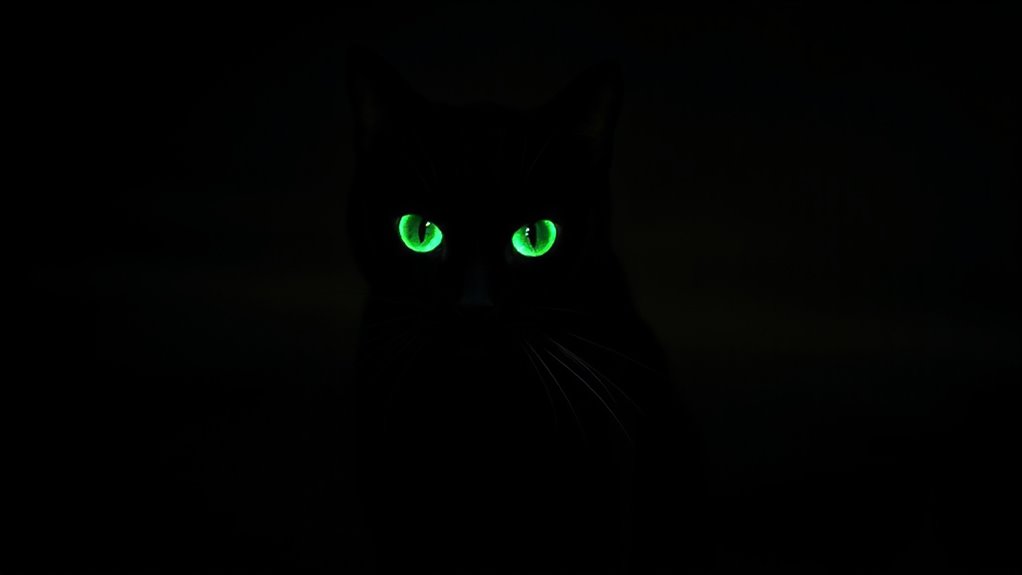
Have you ever wondered why your cat’s eyes seem to glow in the dark? This mesmerizing phenomenon is linked to their unique eye structure, specifically designed for nocturnal vision. If you’ve ever noticed those bright, reflective eyes staring at you in the dark, you’re witnessing an adaptation that helps your feline friend navigate in low-light conditions.
Curious about your cat’s glowing eyes? It’s a fascinating adaptation for navigating the dark, showcasing their nocturnal prowess.
Cats are crepuscular creatures, meaning they are most active during dawn and dusk. Their eyes have evolved to maximize the available light during these times. One of the key features of a cat’s eye is the tapetum lucidum, a layer of tissue located behind the retina. This structure acts like a mirror, reflecting light that passes through the retina back into the eye, giving it a second chance to be absorbed by the light-sensitive cells. This reflection enhances their ability to see in dim light, making them exceptional hunters during twilight hours.
When light hits a cat’s eyes, it gets intensified by the tapetum lucidum, leading to that glowing effect you see. Depending on the angle of the light and the color of the eyes, the glow can appear green, yellow, or even blue. This adaptation is vital for spotting prey and avoiding predators in their natural habitat, allowing them to thrive under conditions where other animals might struggle. Interestingly, this adaptability is similar to how remote work can enhance productivity by maximizing available resources, such as time and space.
In addition to the tapetum lucidum, cats also have a higher number of rod cells in their retinas compared to humans. Rod cells are responsible for vision in low light, while cone cells handle color and detail. The abundance of rods means that your cat can detect movement and shapes in near darkness, further enhancing their nocturnal vision. So when you see those glowing eyes in the night, it’s not just a trick of the light; it’s a powerful adaptation that showcases their hunting prowess.
Understanding why your cat’s eyes glow can deepen your appreciation for these incredible creatures. It’s a reminder of their wild ancestry and the remarkable adaptations that enable them to navigate and thrive in their environment. The next time you catch a glimpse of those luminous eyes in the dark, remember that you’re witnessing nature’s ingenuity at work, designed specifically for life as a skilled nocturnal hunter.
Frequently Asked Questions
Do All Cats Have Glowing Eyes at Night?
Not all cats have glowing eyes at night, but many do exhibit cat eye reflection. This phenomenon occurs due to their unique tapetum lucidum, a layer of cells that enhances their feline night vision. When light hits their eyes, it reflects off this layer, creating that eerie glow. However, factors like age, health, and breed can influence whether your cat’s eyes shine brightly in the dark. So, you might not always see that glow!
Can Other Animals’ Eyes Glow Like Cats’?
Yes, other animals can have glowing eyes, too! In fact, many nocturnal creatures, like raccoons and deer, possess a similar feline eye structure that enhances their night vision. This reflective layer, called the tapetum lucidum, allows them to see better in low light. It’s fascinating that around 50% of mammals have this adaptation, helping them navigate the darkness just like your cat does. So, you’re not alone in marveling at glowing eyes at night!
Is Glowing a Sign of Health in Cats?
No, glowing isn’t necessarily a sign of health in cats. That glow you see is often due to lighting effects on their tapetum lucidum, a layer behind the retina that enhances night vision. While bright, clear eyes usually indicate good eye health, a glow alone doesn’t mean your cat’s healthy. Always keep an eye on other signs, like behavior and appetite, to gauge your cat’s overall well-being.
Do Cat Eye Colors Affect Their Glow Intensity?
Absolutely, cat eye colors can affect their glow intensity. Imagine a pair of bright green eyes shimmering in the dark—aren’t they mesmerizing? Darker eye colors, like brown or black, tend to reflect less light, resulting in a dimmer glow. In contrast, lighter colors, such as blue or green, can enhance that glowing effect. So, when you see your feline friend at night, their eye color plays an essential role in how intensely they shine.
How Can I Reduce Eye Shine in My Cat?
To reduce eye shine in your cat, you can adjust their lighting conditions. Use softer, warmer lights in your home, as harsh lighting can enhance that glow. Keeping your cat’s eye health in check is also important; regular vet check-ups can help. You might want to create cozy, dim spaces for your cat to relax in. These small changes can help minimize the brightness of their eyes at night.
Conclusion
In summary, cats’ eyes glow at night due to a special layer of cells called the tapetum lucidum, which enhances their night vision. This adaptation allows them to see in light levels six times lower than what humans need. Isn’t that fascinating? With about 70% of a cat’s visual system dedicated to low-light conditions, it’s no wonder they navigate the dark so effortlessly. Next time you spot those glowing eyes, remember the incredible evolution behind your feline friend!