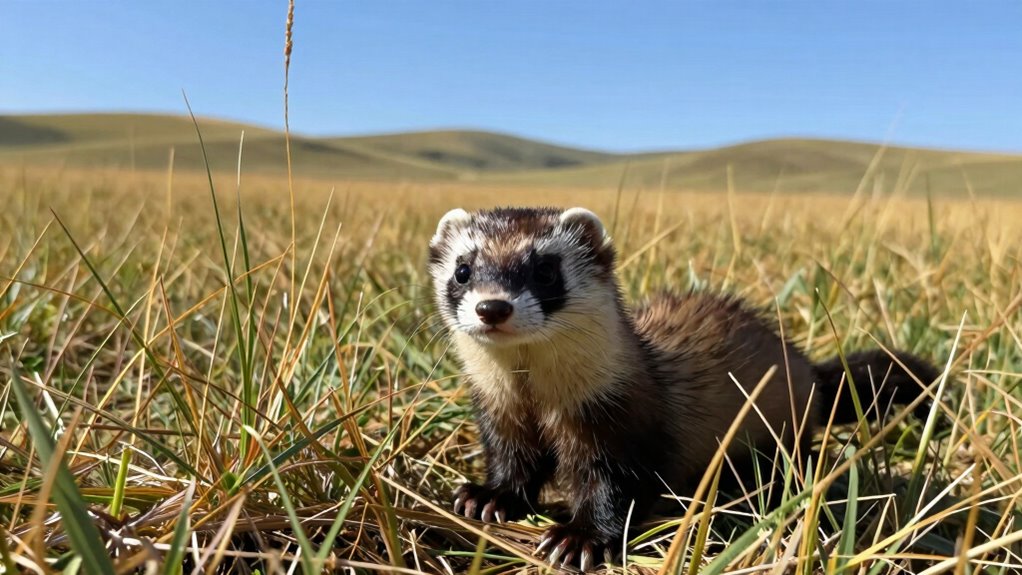

You see, the black-footed ferret was once nearly wiped out due to habitat loss from agriculture and development, but recent conservation efforts have turned the tide. Habitat restoration brought back prairie grasslands, providing safe spaces and food sources like prairie dogs. Captive breeding helped boost their numbers, and reintroductions into protected areas succeeded. This impressive comeback shows how dedicated teamwork can revive endangered species—continue to explore how these efforts are making a difference.

Get pet supplies delivered free with Prime
- Fast, free delivery on millions of items
- Prime Video, Amazon Music and more included
- Member-only deals all year
Key Takeaways
- The black-footed ferret was once critically endangered due to habitat loss and declining prairie ecosystems.
- Habitat restoration efforts focused on rebuilding native grasslands to support ferret survival and reproduction.
- Captive breeding programs increased ferret populations and facilitated reintroduction into protected wild habitats.
- Collaborative conservation initiatives among groups, government, and communities have contributed to the species’ recovery.
- Long-term habitat preservation remains essential for ensuring the continued resurgence of the black-footed ferret.
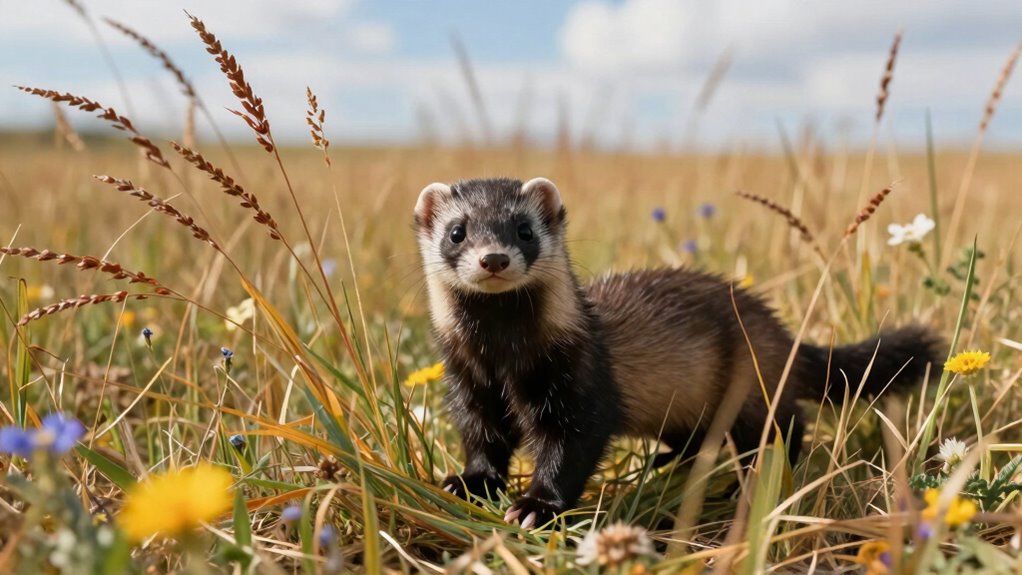
Once on the brink of extinction, the black-footed ferret is now making a remarkable comeback thanks to dedicated conservation efforts. You might not realize it, but these small, slender creatures once faced the threat of disappearing entirely, primarily because their habitat was vanishing. Grasslands, where they thrive, were cleared for agriculture and development, leaving these elusive animals with nowhere to hide, hunt, or reproduce. Conservationists recognized that to save the ferret, they needed to act swiftly. They focused on habitat restoration, working to bring back the grasslands that are crucial for the ferret’s survival. By restoring native prairie ecosystems, they created a safer environment where ferrets could hunt for their primary prey—prairie dogs—and establish new burrows.
But habitat restoration alone wasn’t enough. You should know that the black-footed ferret’s numbers had dwindled so drastically that capturing and breeding them in captivity became essential. The captive breeding program was a critical part of the recovery process. Experts carefully selected healthy ferrets, breeding them in controlled environments to increase their population. This approach helped prevent immediate extinction, allowing scientists to manage genetic diversity and ensure the animals remained healthy. Once the captive populations grew, they could be reintroduced into carefully selected and restored wild habitats. This combination of captive breeding and habitat restoration created a safety net for the species, giving them a fighting chance to recover. Ongoing genetic management has been vital in maintaining the health and diversity of the population.
As you follow their story, you’ll see that these efforts are paying off. The ferrets are gradually re-establishing themselves in the wild, thanks to the collaborative work of conservation groups, government agencies, and local communities. The process isn’t over, but the progress is undeniable. Today, you can find black-footed ferrets in several protected areas, where they thrive in environments that mimic their natural prairie homes. The success of this comeback story shows what can happen when science, dedicated effort, and habitat conservation come together. It also highlights the importance of long-term habitat conservation to ensure their continued survival in restored ecosystems. It’s a reminder that even the most critically endangered species can rebound when we prioritize their needs and implement strategies like habitat restoration and captive breeding. The black-footed ferret’s journey from the brink of extinction to a hopeful future underscores the importance of ongoing conservation work and the resilience of nature when given a chance. Moreover, ongoing habitat conservation efforts are vital to maintaining their recovery in the long term. Recognizing the significance of habitat preservation can help ensure that future generations will continue to see these remarkable creatures thriving in their natural environment.
black-footed ferret habitat restoration kit
As an affiliate, we earn on qualifying purchases.
As an affiliate, we earn on qualifying purchases.
Frequently Asked Questions
How Long Do Black-Footed Ferrets Typically Live in the Wild?
In the wild, black-footed ferrets usually live around 3 to 4 years. You’ll find that their lifespan is closely tied to their ferret diet, primarily consisting of prairie dogs, and their breeding habits, which influence population health. If they find ample food and mate successfully, they can sometimes reach the upper end of their lifespan. However, predators and habitat loss often limit their longevity.
What Unique Adaptations Help Ferrets Survive in Grassland Habitats?
You’ll notice their ferret camouflage helps them blend seamlessly into the grassland, making it harder for predators to spot them. Their agility and keen senses enhance grassland foraging, allowing quick hunting for burrowing rodents. These adaptations, like their slender bodies and sharp claws, enable them to navigate dense grass and dig out prey efficiently, ensuring their survival in the open, grassy habitats where they thrive.
Are Black-Footed Ferrets Affected by Climate Change?
Yes, black-footed ferrets are affected by climate change. Climate impact causes habitat shifts, reducing prairie dog populations, their primary food source. As grasslands dry out or change, ferrets struggle to find shelter and prey, threatening their survival. You should know that these habitat changes make it harder for ferrets to thrive, emphasizing the need for conservation efforts that consider climate-related challenges to protect their future.
How Do Conservationists Monitor Ferret Populations Effectively?
You can monitor ferret populations effectively through remote sensing and genetic tracking. Remote sensing helps you observe habitat changes and locate burrows from afar, reducing disturbance. Meanwhile, genetic tracking allows you to analyze ferret DNA samples, helping identify individual animals and assess genetic diversity. Combining these methods gives you an all-encompassing understanding of population health and distribution, guiding conservation efforts to guarantee ferret survival.
What Role Do Ferrets Play in the Grassland Ecosystem?
Like a tiny gardener, you see ferrets weave threads into the grassland’s ecological tapestry. Their diet, mainly prairie dogs, controls prey populations, preventing overgrazing. Their social behavior, marked by lively interactions, fosters community stability. By hunting and burrowing, ferrets aerate the soil, promote plant diversity, and support predators. You can appreciate how these agile creatures keep the grassland’s delicate balance, ensuring its resilience and robustness for generations to come.
Conclusion
You’ve witnessed the black-footed ferret’s incredible journey from near extinction to hope. While grasslands once echoed with their presence, now their comeback symbolizes resilience. It’s a reminder that even in the harshest environments, life finds a way—and with effort, we can turn the tide. So, as you look out over the open plains, remember: this tiny predator’s survival story proves that nature’s comeback is possible, if we choose to protect it.
Fall Picks
fall essentials
As an affiliate, we earn on qualifying purchases.