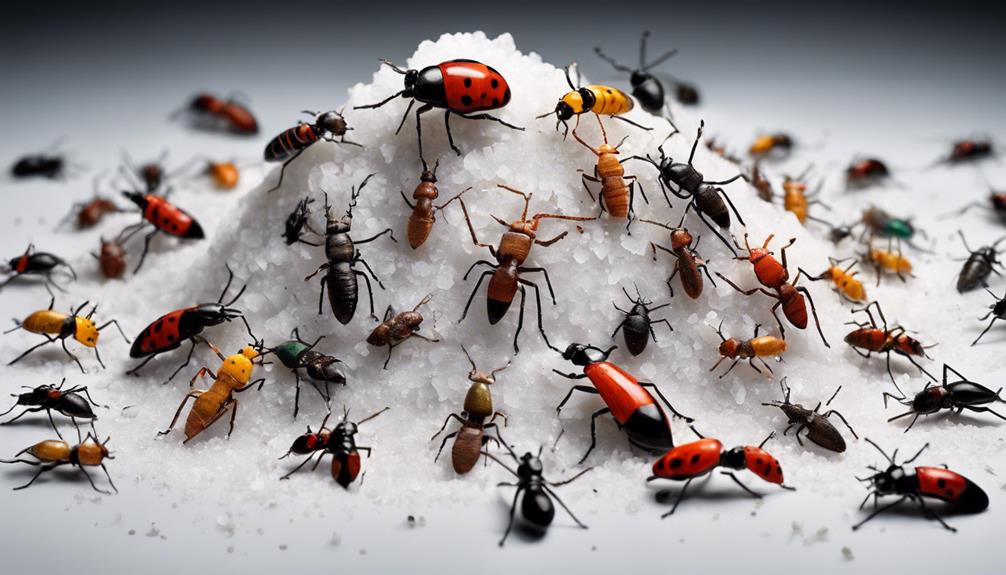
In grassland habitats, salt is a key factor that attracts insects in need of essential sodium. This magnetic attraction is due to insects’ inherent requirement for the nutrient, which greatly influences their behavior and the ecosystem’s dynamics. Grasslands with high salt levels tend to attract more insects, and the lack of sodium in these environments can drive insects to actively search for salt sources. Therefore, understanding the impact of sodium on insect behavior is crucial for managing insect populations and maintaining ecosystem balance, highlighting the necessity of using effective bug control methods.
If you are interested in delving deeper into the mechanisms by which salt attracts insects and the strategies to mitigate this attraction, we invite you to explore the comprehensive guide provided.
Key Takeaways
- Insects seek salt for essential sodium needs in grasslands.
- Sodium plays a critical role in insect cell functions.
- Grasslands with higher salt content attract more bugs.
- Sodium limitation in grasslands drives bugs to seek out salt.
- Simulated cow urine increases bug attraction by 70%.
The Science Behind Salt Attracting Bugs
In our research, we've observed a compelling correlation between the presence of salt in grassland habitats and the active attraction of insects seeking to fulfill their essential nutritional requirements. Insects, driven by their need for sodium, are drawn to grasslands abundant in salt. This attraction is particularly evident in regions like grasslands near the Gulf of Mexico, where plants tend to have higher salt concentrations, influencing insect behavior greatly. Experimental findings further support this notion, with plots treated with simulated cow urine attracting a striking 70% more bugs, showcasing their strong affinity for salt-rich environments.
Interestingly, grasslands with lower salt levels seem to host insects with a heightened craving for salt, indicating a sodium limitation that drives these bugs to actively seek out salt sources. Sodium plays a vital role in animal cell functions, underlining the importance of salt in maintaining the balance and health of insect communities within grassland ecosystems. This intricate relationship between salt availability, insect attraction, and nutritional needs underscores the importance of sodium in shaping bug behavior and population dynamics in grasslands.
Chemical Reactions and Bug Attraction

Studying the interaction between salt and insect attraction reveals a complex network of chemical reactions that drive bugs towards sodium-rich environments in grasslands. Insects have a strong attraction to salt due to their essential need for sodium in their diet. Sodium plays a critical role in animal cell membrane functions, compelling insects to seek out salt sources in their environment.
Grasslands with higher salt content are known to attract more insects, as sodium limitation is a common occurrence in grassland food webs, impacting insect behavior and abundance. Experimental plots that have been enriched with salt or simulated cow urine demonstrate a significant increase in bug attraction, further emphasizing the strong pull insects feel towards sodium-rich environments.
This intricate relationship between insects, sodium, and salt showcases the intricate balance within ecosystems and the ways in which nutrient limitations can influence bug behavior.
Factors Influencing Bug Attraction to Salt
Factors influencing bug attraction to salt can vary based on the sodium content of their habitats and nutritional needs. Insects, driven by their cravings for salt, actively seek out sources to meet their essential sodium requirements for proper animal cell membrane functions. Grasslands with lower salt levels often attract insects with stronger salt cravings, leading them to search more vigorously. The presence of simulated cow urine in plots has shown a significant increase in bug attraction, with a 70% rise in insect abundance suggesting a clear link to salt. Sodium limitation within grassland food webs can impact bug behavior and overall population dynamics, further emphasizing the importance of salt attraction in insect ecology.
| Sodium Content of Habitats | Nutritional Needs | Bug Attraction |
|---|---|---|
| High | High | Intense |
| Low | High | Moderate |
| Variable | Low | Low |
Tips to Prevent Bugs Attracted to Salt

To deter bugs attracted to salt, it's important to implement effective prevention measures that focus on minimizing access to salt sources and disrupting their attraction cues. Here are some tips based on scientific facts to prevent bugs from being drawn to salt:
- Use insect-proof containers: Opt for containers specifically designed to keep insects out when storing salt.
- Clean up spills promptly: By ensuring spills are promptly cleaned, you can avoid creating salt-rich areas that attract bugs.
- Inspect and seal: Regularly check for cracks or openings where insects may gain access to salt sources, and seal them off.
- Consider alternative seasonings: Using alternative seasonings or storing salt in insect-resistant packaging can help reduce the attraction of bugs.
Effective Bug Control Methods for Salt Attraction
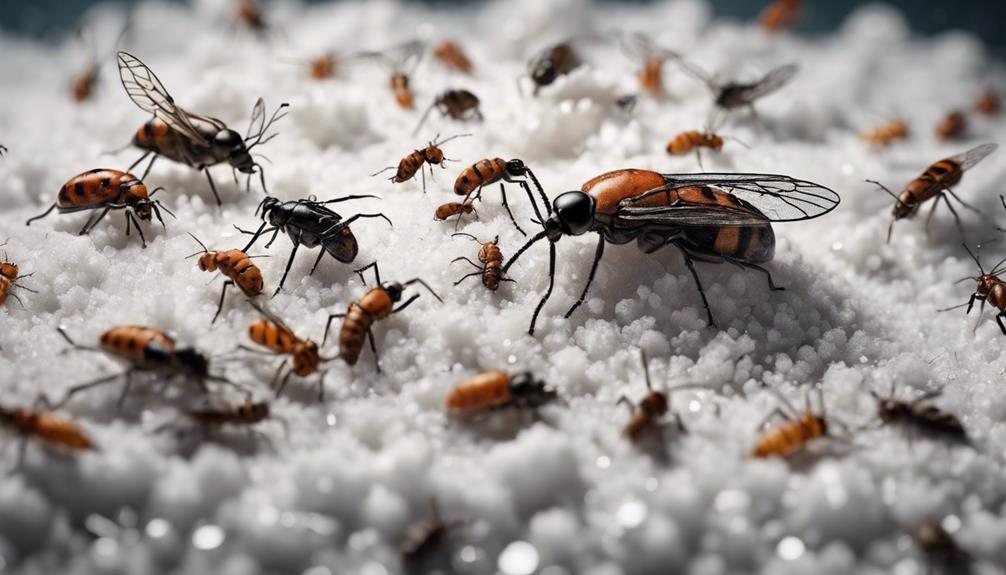
Upon examining the impact of sodium attraction on bug behavior in grasslands, effective bug control methods for mitigating salt attraction can be crucial in maintaining ecosystem balance. Insect cravings for sodium often lead them to areas with higher salt levels, causing imbalances in grassland ecosystems.
To address this, understanding sodium limitation and its influence on insect behavior is important. One effective method involves the use of simulated cow urine, which has been shown to increase bug attraction greatly. By strategically placing simulated cow urine in specific areas, bug cravings for sodium can be directed away from sensitive ecological zones.
This targeted approach helps regulate bug populations and prevents them from overwhelming grasslands with lower salt levels. By implementing such bug control methods, we can better manage sodium attraction in insects, ultimately promoting a healthier and more balanced ecosystem in grassland environments.
Frequently Asked Questions
Does Salt Attract Insects?
Yes, salt attracts insects. In diverse grassland habitats, bugs actively seek out salt. Areas with saltier plants draw more bugs, demonstrating their strong attraction to sodium. Sodium limitation influences insect behavior, impacting community composition.
What Does Table Salt Do to Bugs?
Table salt doesn't kill bugs like bed bugs; they're resilient due to their exoskeleton. Salt doesn't dehydrate them. For effective control, consider professional exterminators or alternatives like diatomaceous earth, which can pierce and dehydrate bed bugs.
What Bugs Get Killed by Salt?
We've observed that common bugs like ants and slugs can be deterred by salt due to its dehydrating properties. However, bed bugs, with their tough exoskeletons, are not easily killed by salt.
Can Insects Live in Salt?
Insects cannot live in pure salt due to its desiccating properties. Salt dehydrates bugs by drawing moisture out of their bodies. However, some insects like ants use salt for nest building and colony maintenance.
What Other Natural Methods Can I Use to Repel Bugs Besides Sage?
In addition to sage bug repellent guide, there are other natural methods to repel bugs. Planting marigolds around your garden can repel mosquitoes and other bugs. Essential oils like lavender, citronella, and peppermint can also be used as effective bug repellents. Additionally, using garlic spray can help deter bugs.
Conclusion
To sum up, salt attracts bugs due to the chemical reactions and factors influencing their attraction.
Did you know that over 90% of insects have specialized receptors that detect salt, leading them to seek out salty substances like sweat and food?
Understanding the science behind this phenomenon can help us effectively prevent and control bug infestations in our homes.