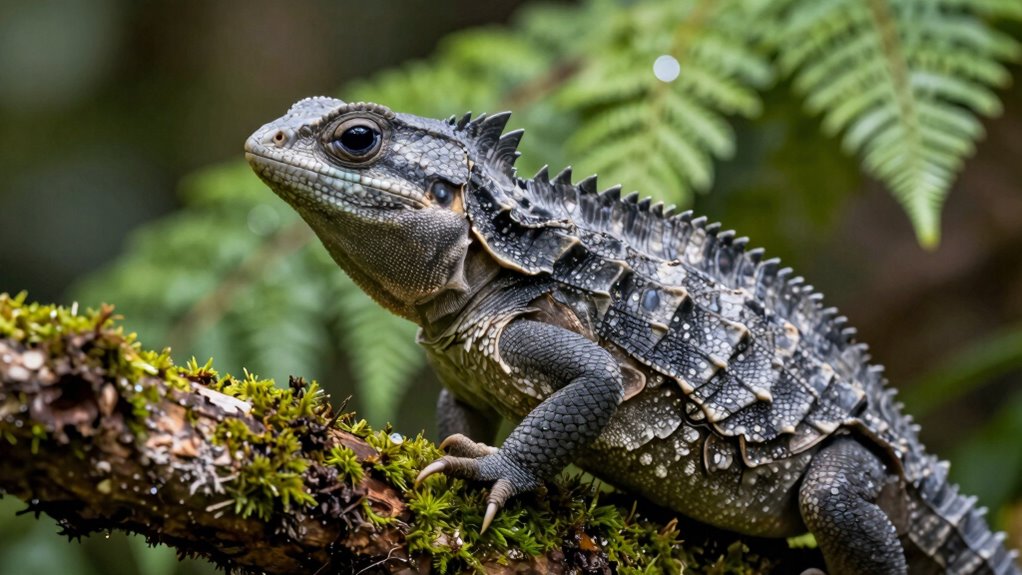

The tuatara is a fascinating reptile that’s been around for over 200 million years, making it a true living relic from another age. It has primitive features like a spiny crest and sharp teeth, which offer clues about early reptile evolution. Its slow genetic change and resilience through extinction events show how it’s survived for so long. Keep exploring to uncover more about this remarkable survivor and what it reveals about Earth’s distant past.

Get pet supplies delivered free with Prime
- Fast, free delivery on millions of items
- Prime Video, Amazon Music and more included
- Member-only deals all year
Key Takeaways
- The tuatara is a living fossil dating back over 200 million years, linking it to Earth’s ancient reptilian ancestors.
- Its primitive features, like a spiny crest and primitive brain, reflect early reptile characteristics.
- Genetic studies show a remarkably slow rate of evolutionary change, indicating long-term stability.
- Surviving multiple extinction events, it exemplifies resilience in isolated environments.
- As a window into prehistoric Earth, it offers insights into early vertebrate evolution and ancient ecosystems.
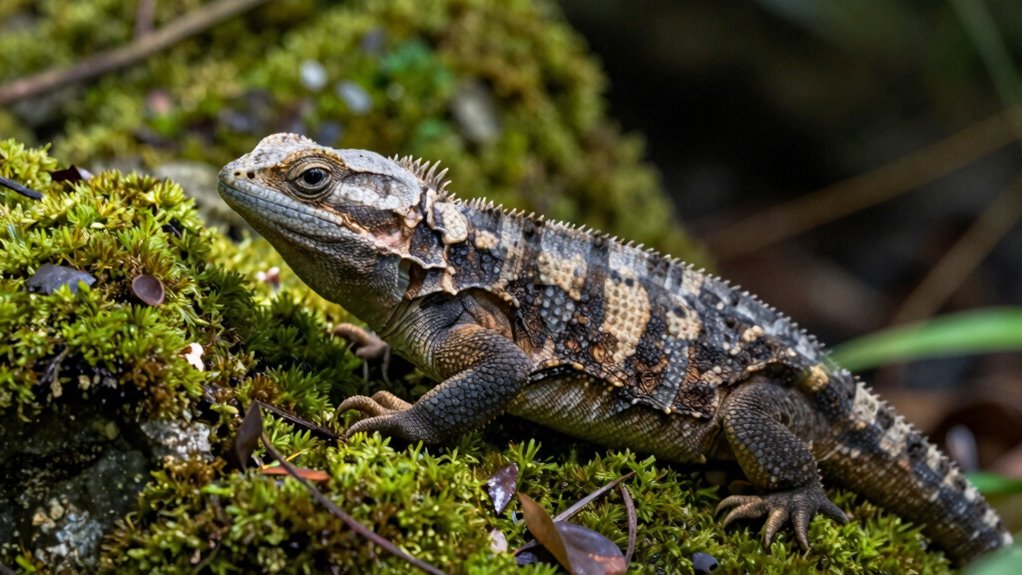
Have you ever heard of the tuatara, the ancient reptile that defies classification? This unique creature has been around for millions of years, and its fossil record offers a fascinating glimpse into a world long gone. Unlike most modern reptiles, the tuatara isn’t a lizard or snake; it belongs to a lineage that’s survived mass extinctions and drastic environmental changes. Its fossils date back to the Triassic period, over 200 million years ago, making it a living link to Earth’s distant past. What makes the tuatara particularly interesting isn’t just its age but its evolutionary significance. It’s often called a “living fossil,” a term that highlights how little it has changed over countless millennia. This creature’s features—such as its spiny crest, sharp teeth, and primitive brain structure—offer clues about what early reptiles looked like and how they might have evolved. By studying its anatomy and genetics, scientists gain essential insights into reptilian evolution and the broader history of vertebrates. Its slow rate of genetic change also makes it a valuable subject for understanding evolutionary processes.
As you learn more about the tuatara, you’ll see that it’s a key piece of the evolutionary puzzle. Its DNA reveals a slow rate of change, suggesting it has maintained many ancestral traits that have disappeared in other reptile lineages. This slow evolution makes it invaluable for understanding how species adapt, survive, or sometimes remain unchanged. The tuatara’s survival through multiple extinction events underscores its resilience and the importance of its ecological niche. Its ability to persist in New Zealand’s isolated environment also helps scientists understand how species adapt to isolated environments, especially in the context of long-term environmental stability. Additionally, its reproductive habits and physiological features provide clues about ancient ecosystems and how early reptiles might have coped with climate shifts and predators. Studying the tuatara’s ecological role can shed light on how species adapt to isolated environments and persist through changing climates. Recognizing its primitive features offers further insight into the early stages of reptile evolution and how these traits have been conserved over millions of years.
In essence, the tuatara is more than just a curiosity—it’s a living record of Earth’s prehistoric past. Its fossil record and evolutionary significance remind us that some life forms can endure for hundreds of millions of years, offering a rare window into ancient worlds. By appreciating the tuatara’s ancient lineage, you gain a deeper understanding of evolution’s slow, intricate process. It’s a testament to resilience and continuity in life’s history, bridging the gap between the distant past and today. So, when you look at a tuatara, you’re witnessing a creature that has outlived many of its counterparts, a true relic from another age.
As an affiliate, we earn on qualifying purchases.
Frequently Asked Questions
How Long Can Tuataras Live in the Wild?
You’ll find that tuataras can live up to 60 years in the wild, making them remarkably long-lived reptiles. Their longevity is a testament to their unique evolutionary history. Conservation efforts are vital for tuataras, as they face threats from habitat loss and introduced predators. Protecting these ancient creatures helps preserve their evolutionary legacy and guarantees future generations can appreciate their fascinating biology and role in New Zealand’s natural heritage.
Are Tuataras Endangered or Threatened Species?
Think of tuataras as ancient guardians, but they’re currently threatened. They’re classified as endangered because habitat conservation efforts are vital, and invasive species like rats and cats prey on their eggs. Without action, their numbers could decline further. Protecting their habitat and controlling invasive species are necessary steps to guarantee these remarkable reptiles survive for future generations. Your support can help preserve this living link to Earth’s distant past.
What Is the Tuatara’s Primary Diet?
You’ll find that the tuatara’s primary diet consists of invertebrates like insects, worms, and spiders. Its diet habits involve active prey selection, where it hunts at night and ambushes its prey. Occasionally, it eats small vertebrates such as lizards and bird eggs. This reptile’s keen eyesight and slow movements help it carefully choose its prey, ensuring it gets the nutrients it needs for survival in its unique habitat.
How Does the Tuatara Reproduce and Care for Its Young?
Some scientists believe tuataras might show minimal parental care, though it’s not well understood. You’ll find that females lay eggs in burrows, with egg incubation taking about 11 to 16 months, depending on conditions. During this time, they don’t guard their eggs or young. Once hatched, the tiny tuataras fend for themselves, making their early survival largely a matter of luck and environmental stability.
Can Tuataras Be Kept as Pets Legally?
You can’t keep tuataras as pets legally in most places because of habitat conservation laws and their protected status. They’re crucial to the ecosystem, and efforts focus on captive breeding programs to guarantee their survival. These reptiles require specialized care and habitat conditions, making them unsuitable for casual pet ownership. Supporting conservation initiatives helps maintain their populations in the wild, which is necessary for their continued existence.
Conclusion
You glimpse the tuatara, a relic from another age, and realize its existence is a reminder of resilience, of survival against odds, and of nature’s timelessness. It stands as a proof to evolution’s slow, steady march, a creature that endures through change and challenge. Embrace its story, cherish its rarity, and remember that in its stillness, the tuatara embodies persistence, patience, and the silent strength to withstand the test of time.
Halloween Picks
halloween
As an affiliate, we earn on qualifying purchases.