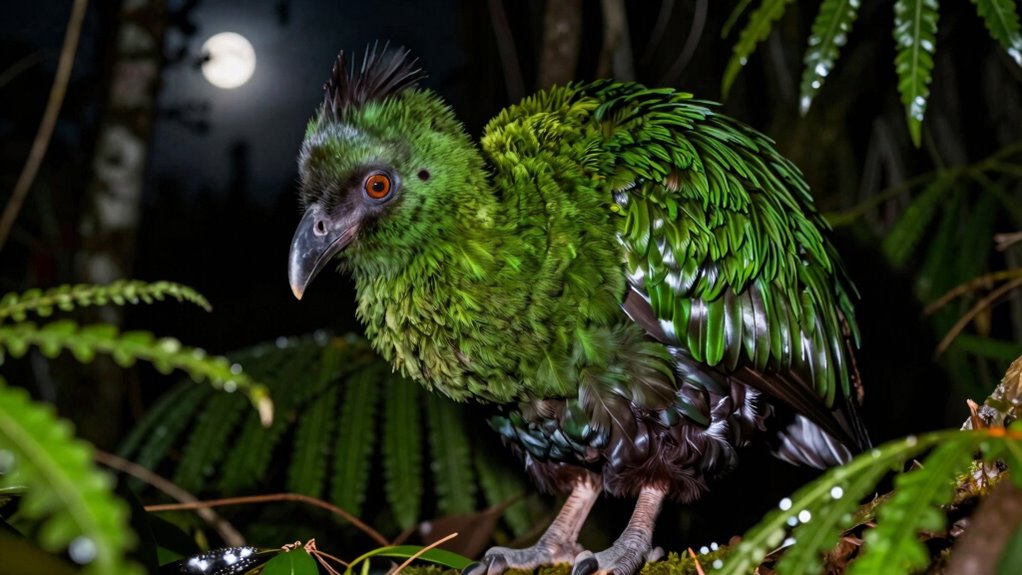

The kakapo is a unique, flightless, nocturnal bird native to New Zealand. It relies on powerful legs for climbing and crawling, using its keen sense of smell to find food in dense forests. Its adaptations developed in a predator-free environment, but introduced predators now threaten its survival. With fewer than 250 left, efforts focus on habitat protection and breeding. If you keep exploring, you’ll discover how conservationists are working to save this extraordinary species.

Get pet supplies delivered free with Prime
- Fast, free delivery on millions of items
- Prime Video, Amazon Music and more included
- Member-only deals all year
Key Takeaways
- The kakapo is a critically endangered, flightless, nocturnal parrot native to New Zealand, known for its strong legs and climbing ability.
- Evolved in predator-free environments, its adaptations make it vulnerable to introduced predators like cats and rats.
- Conservation efforts include relocating kakapos to predator-free sanctuaries and implementing breeding programs.
- Its nocturnal habits and keen sense of smell aid in foraging but increase risks from night predators.
- Protecting habitats and controlling invasive species are vital for the kakapo’s survival and recovery.
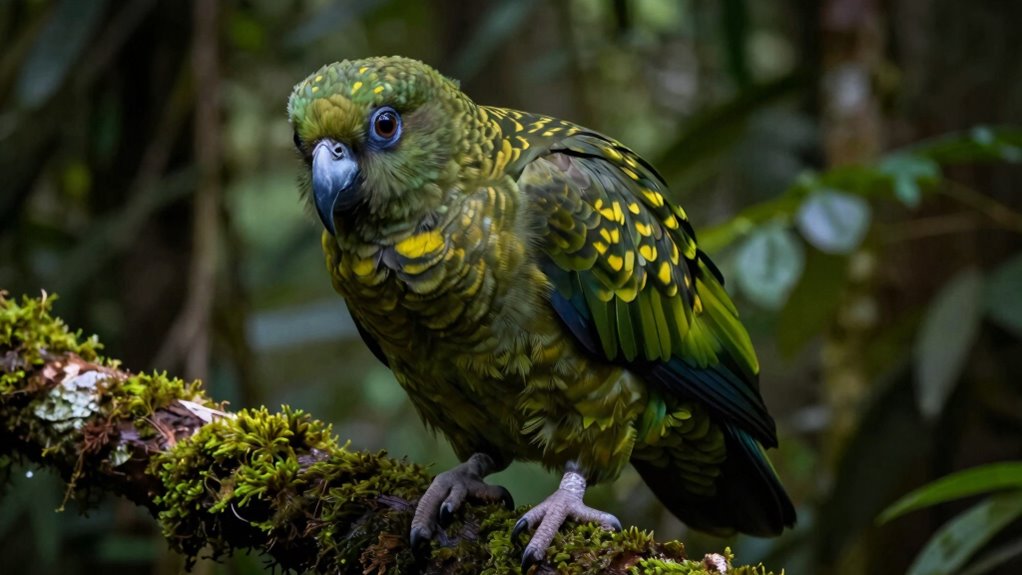
The kakapo, a rare and remarkable bird native to New Zealand, defies expectations with its flightlessness and nocturnal habits. Unlike most parrots, this bird can’t fly, a trait that puzzles many at first glance. Instead, it has evolved unique avian adaptations suited to its environment, such as powerful legs for climbing and crawling, a keen sense of smell, and a silent flightless physique that helps it navigate the dense forest floors at night. These adaptations have allowed the kakapo to survive in a predator-free world, but they also make it highly vulnerable to the threats that now endanger its existence. Its reliance on its sensory adaptations makes it especially susceptible when those environments are disturbed by introduced predators. The kakapo’s slow reproductive rate further complicates conservation efforts, making each individual even more valuable for the species’ survival. Additionally, its evolutionary history reflects how animals can develop highly specialized traits that, while advantageous in certain contexts, can become significant liabilities in changing environments. Understanding evolutionary traits is crucial to grasping how species respond to environmental pressures and human impacts.
The kakapo’s flightlessness and nocturnal habits make it uniquely adapted, yet highly vulnerable to modern predators.
Conservation challenges pose a significant hurdle for the kakapo’s survival. Once, it roamed freely across New Zealand’s forests, but introduced predators like cats, rats, and stoats have devastated its population. Because the kakapo is nocturnal and relies on its smell for foraging, the presence of these predators at night has been especially destructive. Its flightlessness means it cannot escape quickly from danger, and its limited ability to disperse makes recovery efforts difficult. Conservationists have to work tirelessly to protect the remaining birds, often by relocating them to predator-free sanctuaries or breeding programs on offshore islands. Despite these efforts, the kakapo remains critically endangered, with fewer than 250 individuals alive today. The importance of species conservation becomes evident when considering how vulnerable such specialized creatures are to environmental changes.
You might find it fascinating that this bird’s unique adaptations are both a strength and a weakness. Its powerful legs and climbing skills allow it to access food sources other birds can’t reach, and its nocturnal nature helps it avoid daytime predators. However, these same features mean the kakapo depends heavily on a stable, predator-free environment. When predators arrived, it had no evolutionary tools to defend itself, making conservation efforts even more urgent. The kakapo’s story highlights how delicate the balance is between adaptation and vulnerability, especially when human activity introduces new threats. Its evolutionary traits demonstrate the complex ways animals adapt to their environments, but also how those adaptations can become liabilities when conditions change rapidly. Protecting such species underscores the importance of native habitat preservation and controlling invasive species to maintain ecological balance. Understanding this balance is crucial for effective conservation strategies and highlights the importance of protecting native habitats from invasive species.
Products Worth Considering

Fi Series 3+ GPS Dog Collar & Tracker, Membership Required, Gray Large

Dyson Ball Animal 3 Extra Upright Vacuum

Roborock RockNeo Q110H Wire-Free Robot Lawn Mower
As an affiliate, we earn on qualifying purchases.
Frequently Asked Questions
What Is the Kakapo’s Average Lifespan?
You’ll find that the kakapo’s average lifespan is around 40 years, making it one of the longest-living flightless birds. Thanks to kakapo conservation efforts, their numbers are slowly increasing, though their population remains critically small. Their flightless bird behavior and nocturnal habits have challenged conservationists, but dedicated efforts have helped improve their chances. Protecting their habitat and breeding programs are essential for ensuring these unique birds live out their full lifespan.
How Does the Kakapo Find Food at Night?
Imagine a tiny, feathered detective under the moonlight, stealthily searching for food. That’s how a Kakapo finds nourishment at night. During nocturnal feeding, it relies on keen senses to locate fallen fruits, seeds, and leaves. Kakapo foraging involves careful navigation through dense forest, using its strong beak and excellent sense of smell to uncover hidden treats. Its silent, deliberate movements guarantee it efficiently sustains itself in the darkness.
Are Kakapos Capable of Swimming?
You’ll find that kakapos aren’t known for swimming; they primarily rely on their camouflage during nocturnal foraging. Their green and brown feathers help them blend into the forest floor, making it easier to hunt for food at night. While they’re excellent at hiding from predators and orienteering their environment on land, swimming isn’t part of their natural behavior. Instead, they focus on staying concealed and foraging quietly in the darkness.
What Is the Kakapo’s Role in Its Ecosystem?
You should know that the kakapo plays a vital role in its ecosystem by dispersing native plant seeds through its diet, which helps maintain forest health. However, predator threats, like introduced cats and rats, have severely impacted its population, making kakapo conservation essential. Protecting these birds guarantees they continue their ecological functions, supporting biodiversity and forest regeneration in New Zealand. Your efforts in conservation help secure their future.
How Do Kakapos Communicate With Each Other?
You hear that? Kakapos communicate through a variety of vocalizations, especially during their nocturnal foraging. They use booming calls, raspy whistles, and grunts to attract mates, establish territory, or warn others. These vocalizations are loud and carry well through the forest, helping kakapos stay connected even in the dark. Their nighttime communication is essential for their survival, ensuring they find mates and avoid predators while active at night.
Conclusion
Despite being critically endangered, the kakapo has made a remarkable comeback, with fewer than 250 individuals alive today. You might find it fascinating that this flightless bird, weighing around 4 kg, relies heavily on its keen sense of smell and nocturnal habits to survive. Protecting such unique species requires ongoing effort, but each small victory helps secure their future. By learning about the kakapo, you contribute to appreciating and conserving New Zealand’s extraordinary wildlife heritage.