
When it comes to your cat’s nutrition, understanding wet and dry foods is essential. Wet food offers higher moisture, aiding hydration, while dry food is convenient and easy to store. Aim for a blend that meets your cat’s specific needs, focusing on quality ingredients like real meat. Also, consider homemade diets if your cat has allergies. Regular consultations with your vet can help tailor the right balance. There’s more to explore about keeping your feline friend healthy.
Key Takeaways
- Cats are obligate carnivores, requiring a diet primarily made of meat for optimal health and vitality.
- Grain-free diets can benefit cats with poor grain digestion; look for real meat as the primary ingredient.
- Homemade diets allow ingredient control but must be balanced to avoid nutritional deficiencies; seek professional guidance.
- Wet food promotes hydration due to its moisture content, while dry food offers convenience and longer shelf life.
- A balanced mix of wet and dry food tailored to individual needs supports overall health; regular vet consultations are essential.

When it comes to keeping your cat healthy, understanding their nutritional needs is vital. Cats are obligate carnivores, which means they thrive on a diet primarily made up of meat. This doesn’t just mean you can throw some kibble in the bowl and call it a day. You need to consider the quality of the food, whether it’s wet or dry, and if it meets their specific dietary requirements.
One of the options you might explore is grain-free diets. Many cats don’t digest grains well, and a grain-free option can help prevent digestive issues while guaranteeing they get the protein they need. When selecting grain-free foods, pay attention to the source of protein. Look for options that list real meat as the first ingredient, which is a good indicator of quality. However, be cautious. Just because a food is grain-free doesn’t automatically mean it’s better. Always read the labels and consult your vet if you’re unsure.
Another alternative you may want to consider is homemade diets. Preparing food for your cat at home can be rewarding, but it requires a balanced approach. You’ll need to guarantee you include the right ratios of protein, fats, and essential nutrients. This option allows you to control exactly what your cat eats, which can be particularly beneficial if your furry friend has allergies or sensitivities. Plus, you can tailor the meals to include fresh ingredients that are free from preservatives. However, it’s vital to do your homework on nutritional needs and possibly work with a vet or a pet nutritionist to avoid deficiencies.
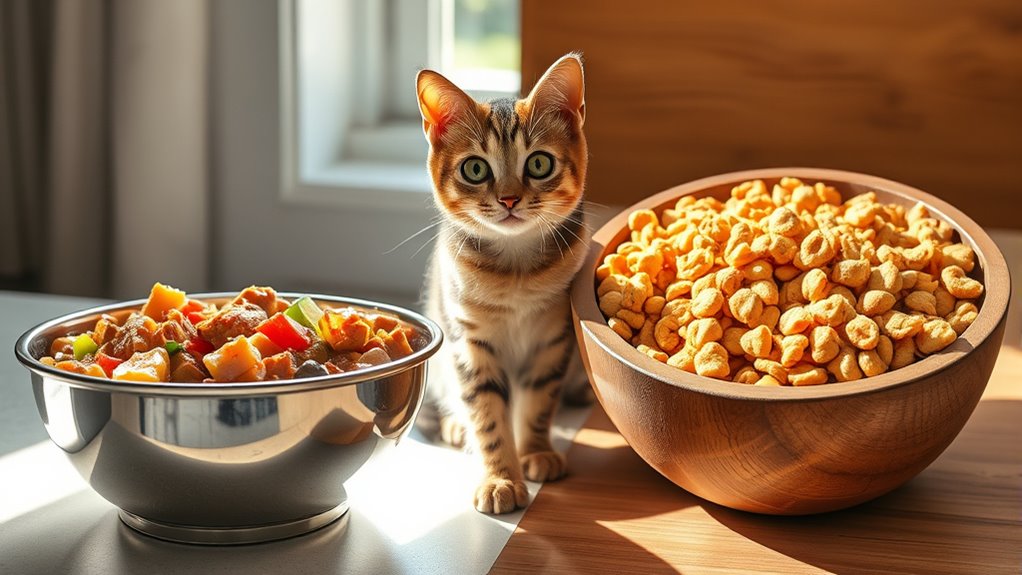
Wet food versus dry food is another essential aspect of cat nutrition. Wet foods tend to have higher moisture content, which can be beneficial for your cat’s hydration. If your cat doesn’t drink enough water, incorporating wet food can help. On the other hand, dry food is convenient and can be left out for longer periods, making it an attractive option for busy pet parents.
Ultimately, you’ll want to find a balance that works for you and your cat. Whether you choose grain-free options, homemade diets, or a mix of wet and dry food, the most important thing is to guarantee your cat’s diet is nutritious, balanced, and tailored to their needs. Always keep an eye on their health and consult your veterinarian regularly to make adjustments as needed.
Frequently Asked Questions
Can I Mix Wet and Dry Cat Food Together?
Yes, you can mix wet and dry cat food together! This approach can enhance your cat’s feeding consistency and provide dietary variety. By combining both types, you can offer different textures and flavors that might appeal to your feline friend. Just make sure you’re adjusting portion sizes to maintain a balanced diet. Keep an eye on their health and preferences, and don’t hesitate to consult your vet for tailored advice.
How Often Should I Feed My Cat?
You should feed your cat twice a day for a consistent feeding schedule. This helps maintain their energy levels and prevents overeating. Use portion control to determine the right amount based on your cat’s age, weight, and activity level. Always consult your vet for specific recommendations tailored to your cat’s needs. By sticking to a routine and managing portions, you’ll keep your feline friend healthy and happy.
Are There Any Harmful Human Foods for Cats?
Picture your cat, eyes wide with curiosity, as it sniffs your dinner plate. But beware—some human food dangers lurk nearby. Foods like chocolate, onions, and garlic are toxic human foods that can harm your feline friend. Even grapes and raisins can lead to kidney issues. Always keep these treats out of reach, ensuring your cat stays safe and healthy. It’s best to stick to cat-friendly options for their well-being.
What Are the Signs of a Food Allergy in Cats?
If you suspect your cat has a food allergy, look for symptoms like itching, gastrointestinal upset, or skin irritations. You might notice excessive scratching, hair loss, or vomiting after meals. To pinpoint the allergen, keep a detailed food diary and try an elimination diet under your vet’s guidance. Identifying the specific allergen can help you choose the right diet for your cat and alleviate those uncomfortable food allergy symptoms.
How Do I Choose the Best Cat Food Brand?
To choose the best cat food brand, start by examining the cat ingredient list. Look for high-quality protein sources like chicken or fish as the first ingredient. Check the brand reputation by reading reviews and seeking recommendations from vets or pet owners. Avoid brands with vague or fillers in their ingredients. Prioritize those that focus on balanced nutrition and transparency about sourcing, ensuring your feline friend gets the best possible diet.
Conclusion
When it comes to your cat’s nutrition, understanding the balance between wet and dry food is essential. Each option has its benefits, but ultimately, it’s about what works best for your feline friend. Are you prioritizing hydration and palatability, or convenience and dental health? By considering your cat’s unique needs and preferences, you can make an informed choice that supports their overall well-being. After all, a happy and healthy cat is worth the effort you put in!