Hiking with your dog can be more enjoyable and less tiring when using a properly fitted dog backpack. This guide walks you through selecting the right backpack, fitting it correctly, and using it safely. Suitable for dog owners new to hiking gear or those wanting to improve their dog’s comfort and safety during outdoor trips. Expect to spend about 30 to 45 minutes completing all steps.

Get pet supplies delivered free with Prime
- Fast, free delivery on millions of items
- Prime Video, Amazon Music and more included
- Member-only deals all year

OneTigris Dog Backpack for Medium & Large Dogs
- ✔ Material: 1000D nylon
- ✔ Weight: 21 oz
- ✔ Capacity: 3L pouch

Mountainsmith K-9 Pack
- ✔ Size: Large, Medium, Small
- ✔ Weight: 1lb 7oz (Large)
- ✔ Pannier Capacity: 9L (Large)

Kurgo G-Train Dog Carrier Backpack
- ✔ Weight Capacity: Up to 25 lbs
- ✔ Material: Rugged, waterproof materials
- ✔ Features: Padded compartments, side pockets, convertible straps
Difficulty: Beginner | Time: 30-45 minutes
What You’ll Need
Tools & Materials:
- measuring tape
- clean cloth or brush
Knowledge:
- basic understanding of your dog’s size and health
- ability to measure your dog’s girth and back length
OneTigris Dog Backpack for Medium & Large Dogs
<p>The <strong>OneTigris Mammoth Dog Pack</strong> stands out for its rugged <strong>1000D nylon construction</strong>, making it highly durable for tough outdoor conditions. Its multiple storage compartments and side pockets provide ample space for gear, water bottles, or snacks, making it ideal for longer hikes. The adjustable straps ensure a secure fit across a range of medium to large dogs. However, its design is less suitable for small dogs, and it lacks reflective features for night visibility, which could be a concern for early morning or late evening outings. Compared to the Mountainsmith K-9 Pack, which is lighter and more breathable, the OneTigris offers superior durability but at the expense of added weight and bulk.</p>
Pros:
- Durable and breathable nylon
- Multiple storage options
- Adjustable straps for a secure fit
- Hidden zipper design prevents hair snagging
Cons:
- Limited to medium and large dogs
- No reflective features for night use
Best for: Dogs that need a rugged, high-capacity pack for multi-day or challenging hikes.
Not ideal for: Small dogs or those requiring high visibility in low light.
Bottom line: This pick is perfect for serious outdoor adventures where durability and storage outweigh weight considerations.
“This pick is perfect for serious outdoor adventures where durability and storage outweigh weight considerations.”
Mountainsmith K-9 Pack
<p>The <strong>Mountainsmith K-9 Pack</strong> is designed for active dogs that benefit from a lightweight, water-resistant saddle bag. Its adjustable harnesses ensure a comfortable, customized fit across a variety of breeds, and its ventilation features promote airflow during strenuous activities. The pack offers sizable panniers—up to 9 liters on the large model—making it suitable for carrying essentials without adding unnecessary weight. However, its bulkiness can be a drawback for small or highly agile dogs, and it’s best suited for dogs within specific weight ranges. Compared to the OneTigris, the K-9 Pack is lighter and more breathable but offers less overall storage capacity and may not be as rugged for extreme conditions.</p>
Pros:
- Adjustable harness for a perfect fit
- Water-resistant interior
- Ventilated for breathability
- Durable construction
Cons:
- Limited to specific dog sizes
- Potentially bulky for small or highly active dogs
Best for: Active, medium to large dogs that need a lightweight, water-resistant pack for day hikes.
Not ideal for: Small breeds or dogs that require maximum storage capacity or rugged durability.
Bottom line: Ideal for energetic dogs needing a lightweight, water-resistant pack that won’t weigh them down on day hikes.
“Ideal for energetic dogs needing a lightweight, water-resistant pack that won’t weigh them down on day hikes.”
Kurgo G-Train Dog Carrier Backpack
<p>The <strong>Kurgo G-Train Dog Carrier Backpack</strong> is perfect for pet owners who want versatility, combining a backpack, carrier, and travel bag in one. Its padded compartments and waterproof bottom offer durability and comfort, while the convertible design allows hand-carry or backpack use. It suits dogs up to 25 lbs, making it a good choice for smaller or medium-sized dogs that need a secure, comfortable way to travel. Compared with the other two options, it’s less rugged and more geared toward urban or casual outdoor use. Its bulkiness and weight limit are drawbacks for serious backcountry hikers or larger dogs, but its multiple storage options make it a versatile pick for daily commutes or short trips.</p>
Pros:
- Versatile with multiple carrying options
- Waterproof bottom for durability
- Padded compartments for comfort
- Convertible design for ease of use
Cons:
- Limited to dogs up to 25 lbs
- Bulky for tight spaces
- Requires adjustment for a proper fit
Best for: Small to medium dogs that require a comfortable, multi-purpose travel bag.
Not ideal for: Larger dogs or those engaged in intense hiking where ruggedness is paramount.
Bottom line: This backpack is best for pet owners seeking a comfortable, multi-use carrier for urban adventures and light outdoor excursions.
“This backpack is best for pet owners seeking a comfortable, multi-use carrier for urban adventures and light outdoor excursions.”
As an Amazon Associate we earn from qualifying purchases.
Before You Start
Ensure your dog is calm and relaxed before fitting the backpack. Measure your dog accurately, and have treats ready for positive reinforcement. Avoid fitting the backpack immediately after feeding or vigorous play.
Step-by-Step Instructions
Step 1: Measure your dog
Use a measuring tape to measure your dog’s girth (around the widest part of the chest just behind the front legs) and back length (from the base of the neck to the base of the tail). Record these measurements.
Tip: Measure your dog while standing calmly; get someone to help if needed for accuracy.
Check: You have accurate measurements that correspond to the size specifications on the backpack.
Step 2: Select a suitable dog backpack
Choose a backpack that matches your dog’s measurements, with adjustable straps for a snug fit. Ensure it has padded straps, secure buckles, and a lightweight design suitable for hiking.
Tip: Check product reviews for durability and comfort; avoid heavy or overly bulky backpacks.
Check: The backpack fits your dog without restricting movement, pinching, or causing discomfort.
Step 3: Introduce the backpack to your dog
Allow your dog to sniff and explore the backpack in a calm environment. Use treats to create a positive association.
Tip: Do this gradually over several minutes, avoiding forcing the dog to wear it immediately.
Check: Your dog is relaxed and curious about the backpack, showing no signs of fear or aggression.
Step 4: Adjust the backpack straps
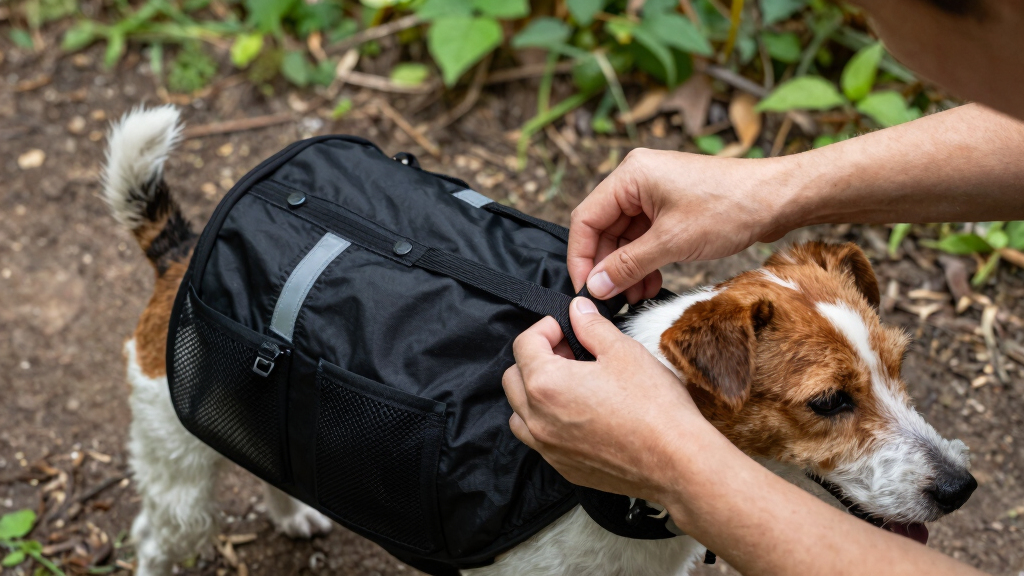
Place the backpack on your dog, centering the weight evenly on both sides. Adjust straps so that the backpack fits snugly but is not tight; you should be able to fit two fingers between the straps and your dog’s body.
Tip: Check that the backpack does not shift excessively when your dog moves or walks.
Check: The backpack stays in place during movement without causing discomfort or chafing.
Step 5: Gradually introduce weight
If the backpack is designed to carry supplies, add light weights initially and increase gradually over multiple short sessions. Observe your dog for signs of discomfort or fatigue.
Tip: Start with a small weight (about 10% of your dog’s body weight) and monitor closely.
Check: Your dog comfortably carries the weight during short walks without signs of distress.
Step 6: Test the setup outdoors
Take your dog for a short walk wearing the backpack on level terrain. Watch for signs of rubbing, chafing, or fatigue.
Tip: Use treats and praise to reinforce positive behavior during the walk.
Check: Your dog walks comfortably without attempting to remove the backpack or showing signs of discomfort.
Common Mistakes to Avoid
- Fitting the backpack too tight, causing chafing or restricting movement. — Adjust straps so you can slide two fingers between the harness and your dog’s body. Recheck fit after walking a few minutes.
- Not gradually introducing weight, leading to fatigue or discomfort. — Start with light weights and increase gradually over several sessions, always monitoring your dog’s response.
- Choosing a backpack that’s too heavy or bulky for your dog’s size. — Select a lightweight, appropriately sized backpack designed for your dog’s breed and activity level.
- Ignoring signs of discomfort or stress during fitting and walking. — Watch for panting, lagging, or trying to remove the backpack; stop and adjust or remove if needed.
Troubleshooting
Problem: Backpack shifts excessively during walks.
Solution: Re-adjust straps for a tighter fit, ensuring even weight distribution and no pinching.
Problem: Your dog shows signs of discomfort or chafing.
Solution: Check for pressure points, add padding if needed, and ensure straps are not too tight. Consider a different size or design.
Problem: Your dog refuses to wear the backpack.
Solution: Remove the backpack, introduce it gradually with treats, and do not force it on your dog. Make the experience positive.
What Success Looks Like
The backpack fits snugly without restricting movement or causing discomfort. Your dog walks calmly with the backpack, and the weight is evenly distributed. The backpack remains in place during activity, and your dog shows no signs of stress or fatigue.
Next Steps
Regularly check the fit before each hike, reintroduce weights gradually, and clean the backpack after each use. Use the backpack on different terrains and longer hikes as your dog becomes more comfortable. Consult your veterinarian if you notice persistent discomfort or health issues.
Frequently Asked Questions
How do I know if the backpack is the right size for my dog?
Ensure the backpack matches your dog’s measurements and fits snugly without restricting movement. It should stay in place during walks without causing chafing.
Can I carry my dog’s supplies in the backpack?
Yes, if the backpack is designed for hiking and your dog is comfortable carrying the weight. Keep the load light—generally no more than 10-15% of your dog’s body weight—and distribute it evenly.
Is it safe for all dog breeds to use a backpack?
Most dogs can use backpacks if they are healthy, properly fitted, and used gradually. Avoid using backpacks on dogs with respiratory, joint, or health issues unless approved by a veterinarian.
How often should I check the fit during a hike?
Check the fit at least once every hour or more frequently on longer hikes. Look for signs of rubbing, shifting, or discomfort.
Halloween Picks
halloween
As an affiliate, we earn on qualifying purchases.