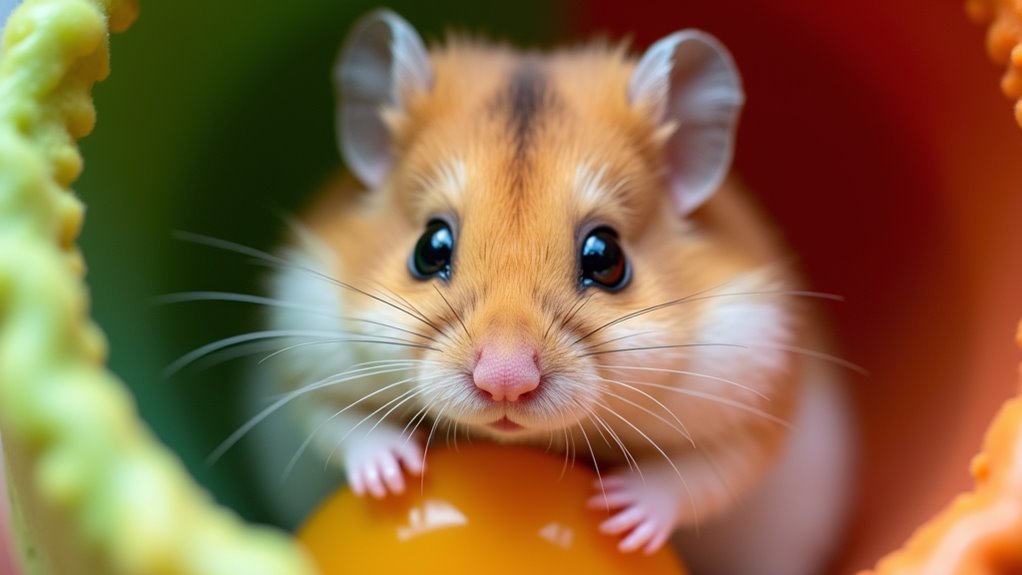

Did you know hamsters are partly nocturnal and become more active at night, but can also enjoy daytime if comfortable? They dig extensive burrows like in the wild, with tunnels and chambers for nesting and hiding, which helps reduce stress. Some hamster species, like dwarfs, can live peacefully in groups, while Syrians prefer solitude. If you’re curious about their surprising habits and natural behaviors, stay tuned—you’ll discover even more fascinating facts ahead.
Key Takeaways
- Hamsters are partly nocturnal, being most active at night but also engaging in daytime activities if comfortable.
- In the wild, they dig burrows that can extend several meters underground for nesting and food storage.
- Syrian hamsters are solitary, territorial animals requiring individual housing, unlike some dwarf species that can live in groups.
- Hamsters can become tame and enjoy gentle handling, building trust with consistent, calm interaction.
- Despite their small size, hamsters have a complex natural behavior, including digging, hoarding, and exploring their environment.
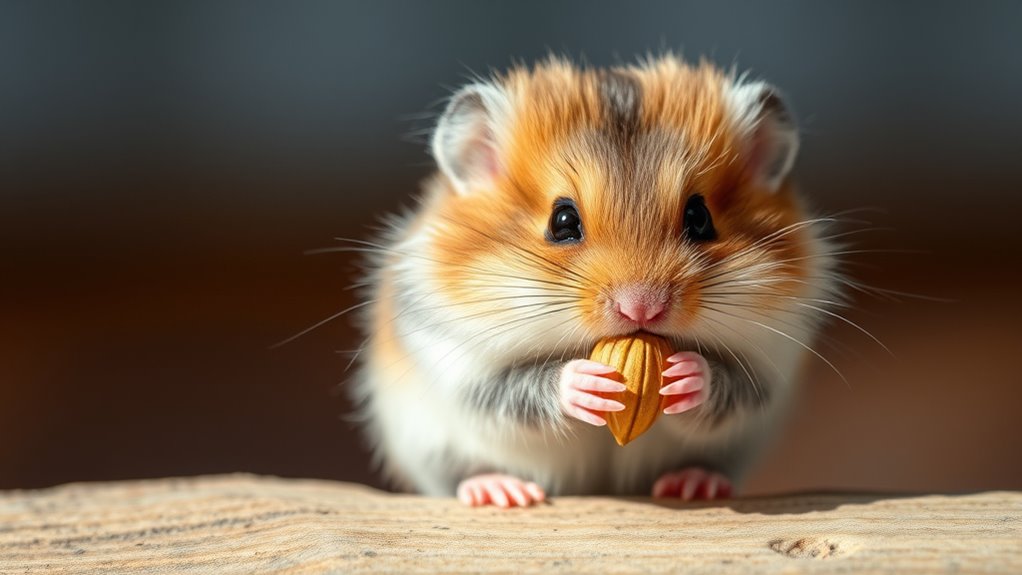
Have you ever wondered what makes hamsters such popular pets? It’s their adorable size, cute whiskers, and the fact that they’re relatively easy to care for. But beyond their charming appearance, there’s a lot to learn about their natural behaviors and environments. When it comes to hamster habitats, you might assume they need large, complex cages, but in the wild, hamsters are surprisingly adaptable. They typically thrive in dry, warm areas like deserts and steppes, where they dig burrows to escape the heat and predators. These burrows can be quite extensive, sometimes spanning several meters underground, with multiple chambers for nesting, storing food, and hiding. In captivity, however, many pet owners overlook the importance of creating a habitat that mimics these natural conditions. A well-designed hamster cage should include tunnels, nesting areas, and plenty of bedding material to encourage digging and burrowing behaviors. This not only keeps your hamster happy but also promotes their physical and mental health. Additionally, providing naturalistic features in their habitat can help reduce stress and encourage more natural activity patterns.
Many common hamster myths persist, and it’s important to separate fact from fiction. For instance, some believe hamsters are nocturnal, which is partly true—they are most active at night, but they can also be active during the day if they feel safe and comfortable. Another myth is that hamsters are solitary creatures who should never be housed together. While many species, like Syrian hamsters, are indeed solitary and territorial, dwarf hamsters can sometimes live peacefully in pairs or small groups if introduced properly and given enough space. It’s vital to research the specific species you have to understand their social needs. Providing a proper environment that caters to their natural behaviors can help prevent stress and health issues. A naturalistic habitat can also encourage more active and engaged behavior, which is beneficial for their overall well-being. People also often think hamsters can’t be handled or are too fragile, but with gentle care, they can become quite tame and enjoy interacting with their owners. Proper handling, patience, and a calm environment help build trust and reduce stress. Moreover, some believe hamsters are low-maintenance pets that don’t need much attention, which isn’t entirely accurate. They require a clean habitat, a balanced diet, mental stimulation, and regular interaction to stay healthy and happy. Understanding the natural behaviors of hamsters can help you create a more enriching environment that caters to their needs and ensures their well-being.
hamster cage with tunnels and bedding
As an affiliate, we earn on qualifying purchases.
As an affiliate, we earn on qualifying purchases.
Frequently Asked Questions
Can Hamsters Recognize Their Owners?
You might wonder if hamsters can recognize their owners. While they don’t communicate like humans, hamsters do recognize their owner through scent and routine, strengthening owner bonding. They respond to your voice and presence, showing recognition with specific behaviors. Regular interaction helps your hamster feel safe and build trust. So, yes, with patience and consistency, your hamster can recognize you and develop a special bond over time.
How Long Do Hamsters Typically Live?
You might think hamsters live forever, but they typically only last 2-3 years. Ironically, in hamster breeding and habitats, their short lifespan keeps things interesting. Despite their tiny size, they pack a lot into such a brief life. So, while you might wish for more time with your furry friend, cherish every moment, because these little creatures remind us that life’s fleeting, even in the smallest packages.
Do Hamsters Get Lonely or Need Companions?
You might wonder if hamsters get lonely or need companions. Generally, hamsters are solitary creatures, and their social behavior varies by species. Dwarf hamsters often enjoy living with others, but Syrian hamsters prefer solitude. If you keep a hamster alone, you must meet its solitary hamster needs, providing plenty of interaction and enrichment. Understanding your hamster’s specific social behavior helps guarantee they stay happy and healthy.
Are Hamsters Good Pets for Children?
Thinking about kids and pets? Hamsters make great companions because they’re small and low-maintenance, yet lively and entertaining. While you might picture them hamster burrowing or running on a hamster wheel for exercise, kids can enjoy caring for their tiny friends. Just remember, hamsters are nocturnal and need quiet during the day. With proper supervision, they’re perfect for teaching responsibility and providing endless fun.
What Should I Feed My Hamster for a Healthy Diet?
To keep your hamster healthy, you should focus on meeting its nutritional requirements with suitable foods. Offer a balanced pellet diet as the main source, supplemented with fresh vegetables like carrots and broccoli, and occasional treats like fruits. Avoid sugary or processed foods, and always provide fresh water. By providing the right mix of suitable foods, you guarantee your hamster stays active and happy.
Conclusion
Now that you know hamsters can store up to 20 grams of food in their cheeks, it’s clear they’re true little hoarders. Imagine carrying enough food to sustain you for days in your cheeks — that’s almost 40% of their body weight! Next time you see a hamster stash away snacks, remember they’re masters of survival and storage. These tiny creatures are more fascinating than you might have guessed!