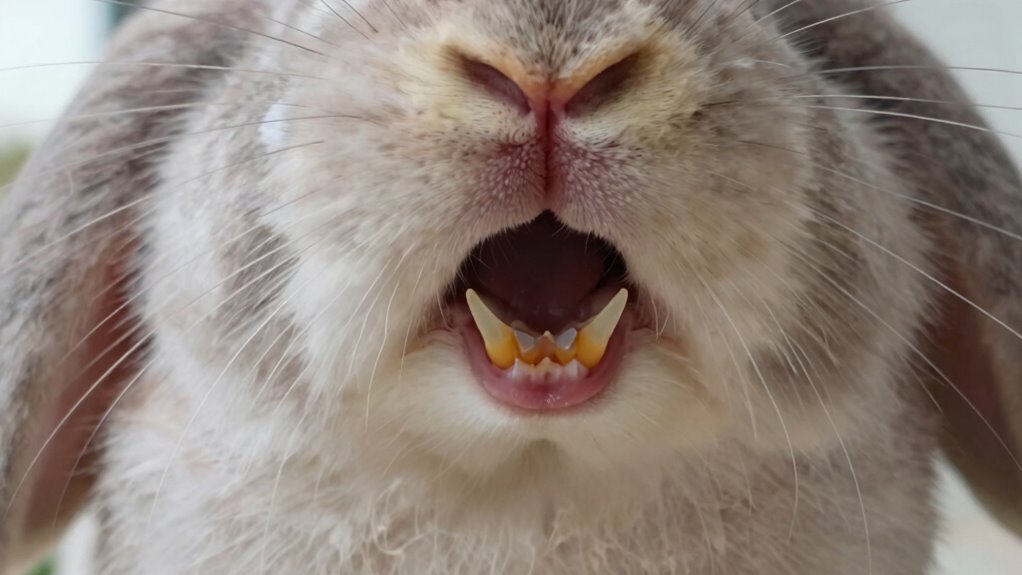

Rabbits’ teeth never stop growing, so it’s crucial to help them wear down naturally through constant chewing. Without regular grinding on hay, wood, or toys, their teeth can become overgrown, misaligned, and cause pain or injuries. Proper diet and routine checks keep their teeth healthy and prevent costly health issues. Staying attentive to their dental needs is essential for their comfort and well-being. Keep going to discover how you can best care for your rabbit’s dental health.

Get pet supplies delivered free with Prime
- Fast, free delivery on millions of items
- Prime Video, Amazon Music and more included
- Member-only deals all year
Key Takeaways
- Rabbit teeth grow continuously to compensate for natural wear from chewing, preventing overgrowth and dental problems.
- Regular chewing on fibrous foods like hay keeps teeth at a healthy length and prevents misalignment.
- Overgrown teeth can cause pain, sores, and infections, highlighting the importance of proper dental maintenance.
- Monitoring and veterinary care ensure early detection of dental issues, maintaining long-term oral health.
- Proper diet and routine checks are essential for managing ongoing tooth growth and ensuring a rabbit’s well-being.
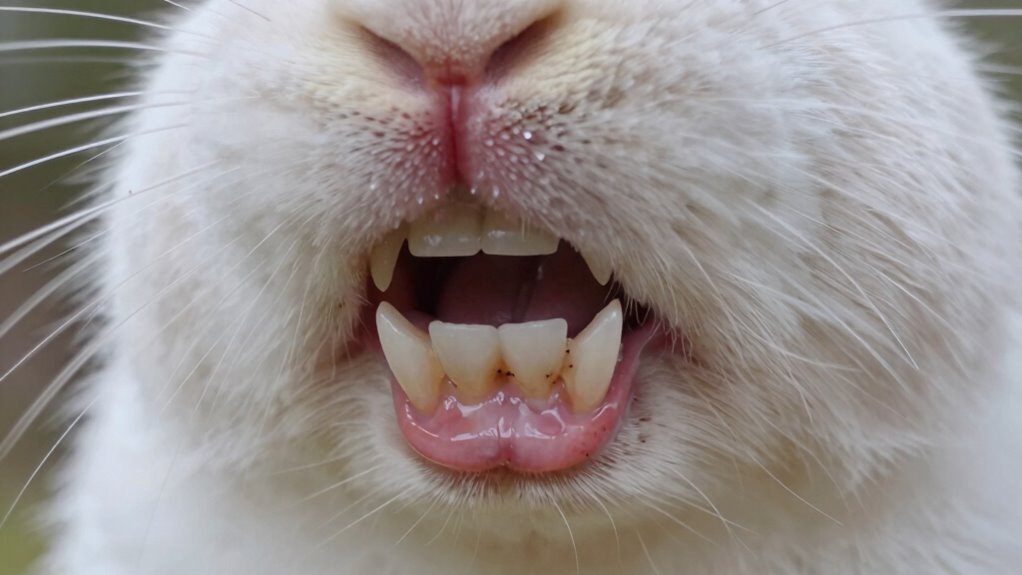
Have you ever wondered why rabbits need to constantly chew? It’s because their teeth never stop growing. Unlike humans, whose teeth stop developing after a certain age, rabbit teeth are designed to grow continuously throughout their lives. This unique trait is crucial for maintaining their dental health and ensuring they can meet their nutritional needs. Without regular wear, their teeth would become overgrown, leading to painful problems and difficulty eating.
Your rabbit’s dental health depends heavily on its ability to chew effectively. When they chew on hay, wood, or safe toys, it naturally wears down their teeth, keeping them at a healthy length. If a rabbit’s teeth become overgrown, it can cause misalignment, sharp edges, and even injuries inside their mouth. This can lead to painful sores and infections that make eating uncomfortable or impossible. That’s why providing a steady supply of fibrous foods is essential—not just for their diet but for their dental well-being.
Understanding your rabbit’s nutritional needs is also key to preventing dental issues. Their diet should be rich in high-fiber foods like hay, which promotes natural chewing action. Fresh vegetables and a limited amount of pellets can supplement their diet, but hay should be the main component. A diet lacking in fiber can lead to insufficient tooth wear, resulting in overgrowth and related health problems. Proper nutrition supports healthy teeth growth and helps prevent costly veterinary visits.
You should regularly inspect your rabbit’s teeth for signs of overgrowth or misalignment. Overgrown teeth may cause drooling, difficulty chewing, or weight loss. If you notice any of these signs, consult a veterinarian who can trim or file the teeth safely. But prevention is always better. By providing a diet that encourages natural chewing and routine checks, you help your rabbit avoid painful dental issues and ensure they can eat comfortably. Recognizing the importance of dental health regulation is essential for long-term care.
Additionally, understanding that tooth growth regulation is vital for preventing overgrowth can help you better care for your rabbit’s dental health. It’s also important to recognize that dental health maintenance involves more than just diet; regular veterinary check-ups are essential to catch problems early. Ensuring your rabbit’s teeth are properly aligned and healthy can significantly reduce the risk of dental complications. Ultimately, your role in your rabbit’s health involves understanding why their teeth grow continuously and how to support their dental health through proper nutrition and enrichment. Their teeth are always in motion, and that requires your attention to keep them healthy. Regularly offering fibrous foods and monitoring their mouth can prevent many problems, allowing your rabbit to thrive. Remember, their ability to chew isn’t just about eating; it’s about staying pain-free, healthy, and happy for years to come.
As an affiliate, we earn on qualifying purchases.
Frequently Asked Questions
Can Rabbit Teeth Grow Too Long and Cause Health Issues?
Yes, rabbit teeth can grow too long, leading to health issues. Poor dental health and inadequate tooth maintenance cause overgrown teeth, which can make eating painful or impossible. Overgrown teeth may also cause abscesses or misalignment. To prevent this, you need to regularly check and trim your rabbit’s teeth or provide plenty of chew toys. Consistent dental care is essential to keep your rabbit healthy and comfortable.
How Often Should I Check My Rabbit’s Teeth?
You should check your rabbit’s teeth at least once a month to maintain proper dental hygiene and prevent problems. Look for signs like overgrown teeth, drooling, or difficulty eating. Regular inspections help you spot issues early, and if needed, schedule timely tooth trimming with your vet. Consistent checks keep your rabbit comfortable and healthy, ensuring their teeth stay in tip-top shape and avoiding painful dental diseases.
Do All Rabbit Breeds Have the Same Tooth Growth Rate?
Not all rabbit breeds have the same tooth growth rate because of differences in dental anatomy and genetic factors. Some breeds, especially smaller ones, may have faster-growing teeth, while larger breeds tend to grow theirs more slowly. You should monitor your rabbit’s teeth regularly to spot issues early. Understanding your rabbit’s specific breed and its dental characteristics helps you provide proper care and prevent dental problems.
Can Diet Influence the Rate of Tooth Growth in Rabbits?
Diet impact definitely influences the rate of tooth growth in rabbits. A balanced, high-fiber diet provides the necessary nutritional influence to promote healthy, steady tooth development. Poor nutrition or a diet lacking in fiber can cause uneven or overgrown teeth, leading to discomfort or health issues. Ensuring your rabbit eats plenty of hay and fresh greens supports proper tooth wear and growth, keeping their teeth healthy and preventing problems.
What Signs Indicate a Rabbit’s Teeth Are Overgrown?
You’ll notice overgrown teeth through signs like difficulty chewing, drooling, and weight loss. You might see your rabbit’s cheek teeth become uneven or misaligned, causing discomfort. Dental care becomes essential to prevent these issues, as overgrown teeth can cause pain or mouth sores. Watch for behavioral changes, like reluctance to eat or pawing at the mouth, which indicate your rabbit’s teeth may need a check-up.
Conclusion
Since rabbit teeth never stop growing, it’s essential to provide them with plenty of chew toys and a balanced diet to prevent overgrowth. Did you know that a rabbit’s teeth can grow as much as 4 inches annually? This constant growth highlights how vital it is to care for their dental health. By understanding this unique trait, you can help your bunny stay comfortable and healthy for years to come.
Halloween Picks
halloween
As an affiliate, we earn on qualifying purchases.