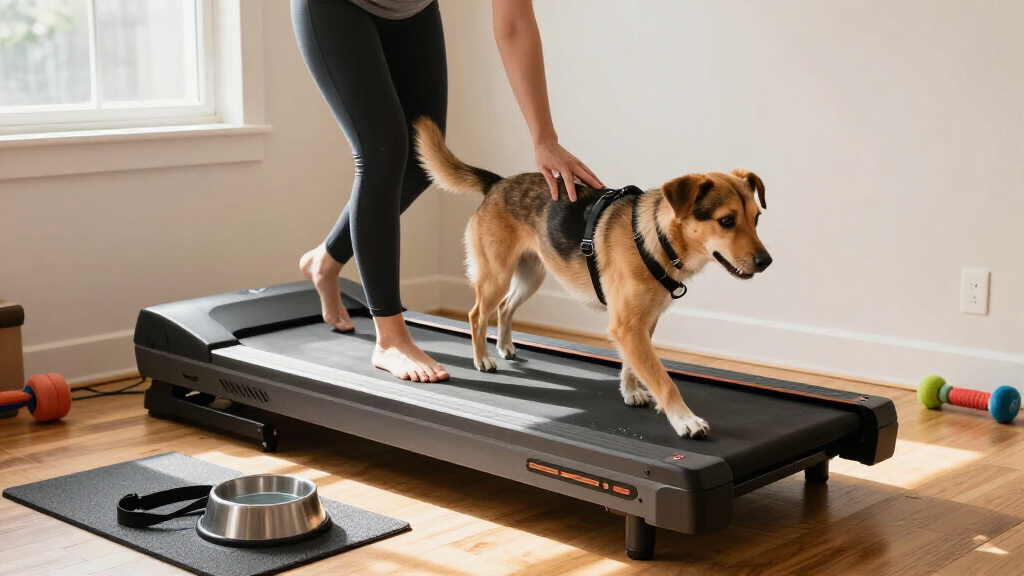
When it comes to the best dog treadmills, the biggest fork in the road is choosing between a motorized treadmill and a non-electric slat mill. The PawArmor Curved Manual Dog Treadmill stands out as the best overall pick for serious exercise, because its curved, self-powered design lets your dog set their own pace while the silicone slats and disc brakes add real control and joint protection. For owners of small and medium dogs who want a gentler entry point, the Lifepro PawRunner and GYMAX 3-in-1 offer motorized convenience with feeding and treat functions that simplify training. The main tradeoffs you’ll face in this category are noise, floor space, price, and whether your dog needs free-form running or a controlled, slow-paced walk. Keep reading for the full breakdown of all 15 models.

Get pet supplies delivered free with Prime
- Fast, free delivery on millions of items
- Prime Video, Amazon Music and more included
- Member-only deals all year
Complete the kit


Key Takeaways
- Non-electric slat mills like the PawArmor Curved and the 18-inch manual models dominated the top tier because they scale with your dog‘s effort, run silently, and have no motor to fail — the tradeoff is a much larger footprint.
- Motorized options (Lifepro PawRunner, GYMAX 3-in-1, CIIHI, Petbobi) are best reserved for small and medium dogs; nearly every motorized model in this roundup caps out around 55–60 cm running belts that large breeds simply outgrow.
- Adjustable brakes and inclines were the strongest predictors of long-term value — models with disc brakes and pin-hinged shock-absorbing tracks justified higher positions than fixed-speed alternatives.
- At least four listings in this category are near-duplicates (the pin-hinged track and 18-inch manual models appear twice under different sellers), so comparing seller support and warranty matters more than spec sheets suggest.
- The HSAUPI and PawPaw non-electric treadmills delivered the best value for large-breed owners, but neither matches the PawArmor’s curved deck for gait mechanics or the HotFeed‘s brake precision.
| HSAUPI Non-Electric Dog Treadmill for Medium and Large Dogs |  | Best Self-Powered Pick for Large Breeds | Power: Non-electric, dog-powered | Belt: ABS slat belt | Maximum supported weight: 300 lb (listing) / 500 lb (description) | VIEW LATEST PRICE | See Our Full Breakdown |
| Dog Treadmill with Pin-Hinged Track and 3-Layer Shock Absorption |  | Best for Joint-Friendly Workouts | Track width: 18 inches | Track type: PE slatmill with pin-hinged linkage | Shock absorption: 3-layer cushioning | VIEW LATEST PRICE | See Our Full Breakdown |
| GYMAX 3-in-1 Dog Treadmill for Small and Medium Dogs |  | Best Overall for Small and Medium Dogs | Speed range: 0.5–7.5 mph | Motor power: 2 HP | Incline levels: 3 | VIEW LATEST PRICE | See Our Full Breakdown |
| CIIHI Dog Treadmill for Small and Medium Dogs |  | Best for Sliding Under Furniture | Motor: 1.5 HP | Speed range: 0.5–4.0 mph | Running belt: 36.22 × 14.17 in | VIEW LATEST PRICE | See Our Full Breakdown |
| Petbobi Dog Treadmill for Small and Medium Dogs |  | Best Value for Structured Walks | Speed range: 0.5–4 mph | Motor power: 1.5 HP | Weight capacity: 265 lbs (dogs up to 80 lbs recommended) | VIEW LATEST PRICE | See Our Full Breakdown |
| HotFeed Manual Dog Slat Mill Treadmill with Adjustable Brake |  | Best for Self-Paced Training | Type: Non-motorized manual slat mill | Running belt: Fiberglass | Frame: Carbon steel | VIEW LATEST PRICE | See Our Full Breakdown |
| Non-Motorized Dog Treadmill for Large Dogs, 18″ Usable Width, Brake & Timer |  | Best for Large-Breed Conditioning | Usable width: 18 inches | Usable length: 59.4 inches | Dimensions: 67″D x 24″W x 57″H | VIEW LATEST PRICE | See Our Full Breakdown |
| Dog Treadmill with Pin-Hinged Track and 3-Layer Shock Absorption |  | Best for Joint-Friendly Workouts | Power: Motorless; no electricity required | Track: 18-inch-wide PE slatmill, pin-hinged linkage | Shock absorption: 3-layer | VIEW LATEST PRICE | See Our Full Breakdown |
| PawArmor Curved Manual Dog Treadmill with Silicone Slats and Disc Brakes |  | Best Premium Manual Pick | Design: Curved, manual, self-propelled treadmill | Belt: Textured slats wrapped in silicone | Braking system: Disc brakes | VIEW LATEST PRICE | See Our Full Breakdown |
| 4-in-1 Dog Treadmill for Small and Medium Dogs |  | Best Motorized Option for Small Dogs | Motor: 2.5 HP | Running belt: 35.43 × 15.75 inches | Speed range: 0.6–5.0 mph | VIEW LATEST PRICE | See Our Full Breakdown |
| Dog Treadmill for Medium and Large Dogs |  | Best Motorized Pick for Large Breeds | Speed Range: 0.8–12 km/h | Weight Capacity: 220 lbs | Display: Time, distance, and calories | VIEW LATEST PRICE | See Our Full Breakdown |
| Lifepro PawRunner Dog Treadmill for Small and Medium Dogs |  | Best Programmed Training for Small Dogs | Speed Range: 7.5–12 mph (listed) | Weight Capacity: 130 lbs | Motor: 0.5 hp, 1000 watts | VIEW LATEST PRICE | See Our Full Breakdown |
| PawPaw Non-Electric Dog Treadmill for Large and Medium Dogs |  | Best Versatile Manual Slatmill | Power Source: Manual, non-electric | Weight Capacity: 330 lbs | Frame Material: Carbon steel | VIEW LATEST PRICE | See Our Full Breakdown |
| Manual Dog Treadmill for Medium and Large Dogs with Safety Brake and Adjustable Incline |  | Best Budget Manual Option | Operation: Manual, non-motorized | Incline: Adjustable | Safety Feature: Built-in safety brake | VIEW LATEST PRICE | See Our Full Breakdown |
| Non-Motorized Dog Treadmill for Large Dogs, 18″ Usable Width, Brake & Timer |  | Best Premium Slatmill for Big Dogs | Usable Running Surface: 18 in wide x 69.5 in long | Weight Capacity: 500 lbs | Power Source: Self-propelled (non-electric) | VIEW LATEST PRICE | See Our Full Breakdown |
More Details on Our Top Picks
HSAUPI Non-Electric Dog Treadmill for Medium and Large Dogs
This option stands out for letting large dogs set their own pace on a dog-powered slat belt — no motor, no outlet, no preset speed ceiling. Compared with motorized models like the Petbobi, which tops out at 4 mph, the HSAUPI removes speed limits entirely, which matters for high-energy breeds that want to sprint. The foot-operated brake gives the owner a way to slow the belt, and the incline adjustment plus distance counter add training depth that simpler slatmills skip. The tradeoff is supervision: because the dog powers the track, someone has to stay alongside the whole session. I’d also flag the conflicting weight ratings — 300 lb versus 500 lb depending on where you look — so treat capacity claims with caution before committing a giant breed.
Pros:- Dog controls belt pace with no motor or preset speed ceiling
- Foot brake lets the owner slow the belt on demand
- Adjustable incline and built-in distance counter add training variety
- Quick assembly in roughly 10 minutes
Cons:- Conflicting listed weight capacities (300 lb vs 500 lb) create uncertainty
- Requires an owner to stay beside the dog for every session
Best for: Owners of energetic medium and large breeds who want unlimited, dog-controlled speed without relying on electricity
Not ideal for: Owners who want hands-off exercise or precise speed control — the dog powers the belt and requires constant supervision
- Power:Non-electric, dog-powered
- Belt:ABS slat belt
- Maximum supported weight:300 lb (listing) / 500 lb (description)
- Adjustments:Front incline and rotating U-shaped bar
- Brake:Foot-operated resistance brake
- Side guards:Acrylic
- Assembly time:Approximately 10 minutes
Our verdict“This pick makes the most sense for owners of big, high-drive dogs who are willing to actively supervise sprint-style workouts at home.”
Dog Treadmill with Pin-Hinged Track and 3-Layer Shock Absorption
Where the HSAUPI keeps things basic, this slatmill invests in comfort engineering: a pin-hinged, slip-resistant track riding on three layers of cushioning, which translates to quieter operation and lower impact on joints — a real advantage for senior dogs or breeds prone to elbow and hip strain. The 18-inch track width and 500 lb capacity put it ahead of compact motorized options like the CIIHI for bigger dogs, and the fit range of 13.78–31.5 inches in shoulder height covers an unusually wide span of breeds. Like all motorless designs, though, the dog powers the track, so pace depends entirely on the animal’s willingness to move. Transport wheels help offset the bulk, but expect a real assembly project and a floor-heavy footprint.
Pros:- Three-layer shock absorption reduces impact on joints
- Wide 18-inch slip-resistant track with 500 lb capacity
- Fits dogs from 13.78 to 31.5 inches in shoulder height
- Speed and distance monitor plus transport wheels
Cons:- Assembly is required and the unit is substantial
- Self-paced design means a reluctant dog may simply stop walking
Best for: Owners of dogs with sensitive joints or large-framed breeds who need a cushioned, wide running surface
Not ideal for: Apartments or small rooms — the wide track and motorless frame demand both floor space and hands-on supervision
- Track width:18 inches
- Track type:PE slatmill with pin-hinged linkage
- Shock absorption:3-layer cushioning
- Power:Motorless; no electricity required
- Capacity:500 lbs
- Adjustability:6 directions; shoulder heights 13.78–31.5 inches
- Features:Speed/distance monitor, mechanical timer, disc brake with locking buckle, U-shaped handle, transport wheels
Our verdict“This model is better suited to owners prioritizing joint protection and capacity over convenience and compact storage.”
GYMAX 3-in-1 Dog Treadmill for Small and Medium Dogs
This model earns the top spot for small-to-medium households because it balances power, flexibility, and calm operation better than its peers. The 0.5–7.5 mph speed range with three incline levels offers far more workout variety than the CIIHI, which stops at 4.0 mph — enough range to take a small dog from a slow sniff-walk to a genuine trot. The sub-45 dB motor is among the quietest here, and the opaque side covers help nervous dogs stay focused instead of spooking. The 3-in-1 conversion to a human walking pad or treadmill adds value the dedicated slatmills can’t match. Two caveats: the 220 lb capacity rules out very large dogs, and the listing omits running surface dimensions, so measure your dog’s stride before buying.
Pros:- Broad 0.5–7.5 mph speed range with three incline levels
- Very quiet motor under 45 dB with distraction-reducing side covers
- Remote control and LCD tracking up to 32.8 ft away
- Converts to a human walking pad or treadmill
Cons:- 220 lb maximum capacity limits it to smaller dogs
- Running surface dimensions are not published
Best for: Small-dog owners who want the widest workout range plus the bonus of a human-use walking pad
Not ideal for: Owners of dogs over roughly 50–60 lbs or anyone who needs exact belt dimensions before purchasing
- Speed range:0.5–7.5 mph
- Motor power:2 HP
- Incline levels:3
- Maximum weight capacity:220 lbs
- Noise level:Under 45 dB
- Remote control range:Up to 32.8 ft
- Display:LCD (speed, time, distance, calories)
Our verdict“This pick makes the most sense for multi-pet, small-breed households that want one machine to exercise both dogs and people.”
CIIHI Dog Treadmill for Small and Medium Dogs
The CIIHI’s defining strength is storage: remove the side panels and armrests, and the whole unit slides under a sofa or bed — a claim the Petbobi only partially matches with its bulkier folded footprint. For apartment dwellers, that changes the math on whether a treadmill is livable at all. The rotatable display and remote make mid-walk adjustments easy, and the safety key plus side panels give owners a proper emergency stop, something motorless slatmills like the HSAUPI approximate only with a foot brake. The compromise is pace: at 0.5–4.0 mph it’s a walking-and-trotting machine, not a running one, and the 36.22 × 14.17-inch belt is tight for longer-bodied medium breeds. No measured noise level is published, so sound-sensitive setups are a gamble.
Pros:- Fits under a sofa or bed with panels and armrests removed
- Safety key and side panels provide real emergency protection
- Rotatable display and remote control for convenient operation
- Wheels make repositioning easy
Cons:- 36.22 × 14.17-inch belt restricts dog size and stride
- No published noise level for quiet-sensitive homes
Best for: Apartment dwellers and small-home owners who need a treadmill that disappears under furniture between sessions
Not ideal for: Dogs that need running speeds or medium breeds with long strides — the small belt and 4 mph ceiling are limiting
- Motor:1.5 HP
- Speed range:0.5–4.0 mph
- Running belt:36.22 × 14.17 in
- Weight capacity:265 lbs
- Safety features:Side panels and disconnect safety key
- Storage:Fits under sofa/bed with panels and armrests removed
Our verdict“Choose the CIIHI when storage space is the deciding factor and walking-speed exercise is enough for your dog.”
Petbobi Dog Treadmill for Small and Medium Dogs
For buyers who want programmed, low-effort exercise on a budget, the Petbobi delivers where cheaper motorized units usually cut corners. Twelve built-in programs mean walks can run on autopilot — something neither the CIIHI nor any of the manual slatmills offer — and the magnetic stop key plus leash ring form a layered safety setup that lets an owner step back without abandoning control. The folding frame with wheels stows in a 25 × 24.61-inch footprint, though the CIIHI still wins outright for under-bed hiding. Realistic expectations matter here: the motor runs under 55 dB (noticeably louder than the GYMAX‘s sub-45 dB rating), max speed is 4 mph, and the human walking mode is described for light use only — it’s a bonus, not a substitute for your own treadmill.
Pros:- 12 preset programs automate exercise sessions
- Enclosed side panels, magnetic stop key, and leash ring for layered safety
- Foldable design with wheels for manageable storage
- LCD tracks speed, time, distance, and calories
Cons:- Under 55 dB noise is louder than quieter competitors
- Owner walking mode is limited to light, steady use
Best for: Budget-conscious owners of dogs up to 80 lbs who want preset workout programs without paying for premium features
Not ideal for: Households wanting near-silent operation or a serious human treadmill — the noise floor and light-duty walking mode fall short
- Speed range:0.5–4 mph
- Motor power:1.5 HP
- Weight capacity:265 lbs (dogs up to 80 lbs recommended)
- Belt dimensions:36.2 × 14.2 in
- Noise level:Less than 55 dB
- Programs:12
- Folded size:25 × 24.61 × 15.76 in
- Warranty:12 months
Our verdict“This option stands out for owners who want set-and-forget programmed walks for a small or medium dog at an accessible price.”
HotFeed Manual Dog Slat Mill Treadmill with Adjustable Brake
What separates the HotFeed slat mill from motorized options like the 4-in-1 Dog Treadmill is that the dog, not a preset program, sets the pace. That makes sessions safer for animals still learning confidence on equipment, since they can slow or stop whenever they want. The three-level brake and adjustable incline give owners real control over workout intensity, and the clear acrylic side panels serve the same paw-protection purpose as the harness guide on the 18-inch Non-Motorized model, just with better visibility for the owner. The fiberglass belt is pitched as splinter-free, which matters for dogs who drag their paws when tired. The honest drawback: the listing publishes two different weight capacities, so confirming capacity with the seller before buying is a must, and the 66-inch footprint demands serious floor space.
Pros:- Dog controls its own pace and can stop to rest at any time
- Adjustable three-level brake and incline support varied workouts
- Fiberglass belt described as splinter-free and durable
- Clear acrylic side panels protect paws without blocking the owner’s view
Cons:- Conflicting weight capacities in the listing (250 vs 300 lbs) create uncertainty
- Large 66-inch footprint requires substantial dedicated floor space
Best for: Owners of medium breeds who want a quiet, dog-paced treadmill for confidence-building walks and controlled conditioning
Not ideal for: Buyers with limited indoor space or anyone who needs a guaranteed, clearly stated weight capacity for a heavier dog
- Type:Non-motorized manual slat mill
- Running belt:Fiberglass
- Frame:Carbon steel
- Brake:Three-level adjustable
- Incline:Adjustable
- Side panels:Clear acrylic
- Dimensions:66 × 20 × 56 inches
- Intended dog size:Medium breeds
Our verdict“A solid pick for medium dogs whose owner prioritizes self-paced safety over motorized convenience — once the true weight limit is confirmed.”
Non-Motorized Dog Treadmill for Large Dogs, 18″ Usable Width, Brake & Timer
This model earns its place by taking large-dog ergonomics seriously. The 18-inch usable width and nearly 60-inch running length give big breeds room for a full natural stride — something the HotFeed mill, aimed at medium dogs, doesn’t promise — while the height-adjustable overhead harness guide keeps taller dogs positioned correctly without neck strain. The five-level manual incline (3.35° to 7°) is more granular than the three-position brake on the HotFeed, letting owners progressively build fitness. Because the deck is entirely dog-powered, there’s no motor noise and no outlet needed. The tradeoffs are honest ones: it’s built for walking and trotting, not sprints, the timer tracks time only — no speed, distance, or calories like the Pin-Hinged Track model’s monitor — and every session needs adult supervision.
Pros:- Dog-powered deck sets a natural pace with no preset speeds
- Height-adjustable harness guide and 5-level incline suit large-dog training
- Quiet operation with no electricity required
- Manual brake and session timer give owners control over each workout
Cons:- Limited to walking and trotting, not sprinting
- Timer does not track speed, distance, or calories
- Requires adult supervision during every session
Best for: Owners of large breeds doing structured walking and trot conditioning at home without electricity
Not ideal for: Anyone hoping for sprint work or detailed workout metrics like speed and distance tracking
- Usable width:18 inches
- Usable length:59.4 inches
- Dimensions:67″D x 24″W x 57″H
- Max weight recommendation:300 pounds
- Incline levels:5 (3.35° to 7°)
- Power source:Self-propelled (non-electric)
- Display:LED
- Materials:Polyethylene slats, alloy steel frame
Our verdict“The strongest choice here for large breeds that need serious stride room, provided you only want walk-and-trot training.”
Dog Treadmill with Pin-Hinged Track and 3-Layer Shock Absorption
Where this treadmill stands apart is cushioning. The three-layer shock absorption under a pin-hinged slat track makes it the pick for dogs whose joints need gentler landings — senior dogs or breeds prone to orthopedic issues — something neither the PawArmor curved mill nor the HotFeed explicitly addresses. A 500-lb capacity dwarfs the 265-lb rating of the motorized 4-in-1 model, and the shoulder-height range of roughly 14 to 31 inches means it can realistically serve a wide span of dog sizes in one household. Unlike the 18-inch Non-Motorized model’s timer-only display, this one tracks speed and distance. The flip side: assembly is required, and a motorless deck still depends on the dog understanding how to propel it, so expect a training period before real workouts happen.
Pros:- Motorless design works anywhere with no electrical outlet
- Three-layer cushioning supports lower-impact running
- Tracks speed and distance, unlike timer-only competitors
- Locking disc brake and transport wheels aid safety and mobility
Cons:- Assembly required out of the box
- Self-paced operation means the dog must be trained to use the slatmill
Best for: Owners of heavier or older dogs who need low-impact exercise and real workout data
Not ideal for: Impatient buyers — assembly is required and dogs need training to use the self-propelled deck
- Power:Motorless; no electricity required
- Track:18-inch-wide PE slatmill, pin-hinged linkage
- Shock absorption:3-layer
- Capacity:500 lbs
- Shoulder height range:13.78–31.5 inches
- Monitor:Speed and distance tracking
- Brake:Locking disc handbrake
- Mobility:U-shaped handle and transport wheels
Our verdict“The joint-friendly choice for big or aging dogs, provided you’re willing to assemble it and teach your dog the slatmill motion.”
PawArmor Curved Manual Dog Treadmill with Silicone Slats and Disc Brakes
The curved deck is what defines the PawArmor experience: because the belt is bowed, the dog’s own position on the curve sets speed, which creates smoother speed changes than the flat decks on the HotFeed or the 18-inch Non-Motorized model. Add an adjustable resistance damper — a feature no other product in this lineup offers — and owners can dial workout intensity with genuine precision, from easy recovery strolls to harder conditioning. The silicone-wrapped slats add grip and paw comfort, an upgrade over bare PE slats, and the built-in speedometer beats the timer-only tracking on the 18-inch model. Disc brakes provide confident stopping power. You pay for it in practical terms: this is a substantial indoor-only structure, it needs assembly, and the adjustability (incline, resistance, four-way overhead frame) takes time to learn.
Pros:- Curved self-propelled deck lets the dog control pace naturally
- Silicone-wrapped slats provide grip and paw comfort
- Adjustable incline, resistance damper, and four-way overhead frame enable tailored workouts
- Disc brakes and built-in speedometer add control and monitoring
Cons:- Requires substantial indoor space for setup and use
- Assembly required, with a learning curve across multiple adjustments
Best for: Owners of medium and large dogs who want fine-grained control over workout intensity and don’t mind a premium footprint
Not ideal for: Apartment dwellers or buyers wanting a plug-in-and-go motorized treadmill with minimal setup
- Design:Curved, manual, self-propelled treadmill
- Belt:Textured slats wrapped in silicone
- Braking system:Disc brakes
- Incline:Adjustable up to 4.6 degrees (5.2 inches)
- Resistance:Adjustable damper
- Frame:Steel with aluminum alloy hubs
- Overhead frame:Adjustable up, down, forward, backward
- Intended for:Medium and large dogs
Our verdict“The most adjustable manual treadmill in this batch, best for owners who treat canine fitness as a genuine training program.”
4-in-1 Dog Treadmill for Small and Medium Dogs
For small dogs, a motorized belt is often the easier path — the dog doesn’t have to learn to drive a slat deck like on the PawArmor or HotFeed mills. This unit’s 0.6–5.0 mph speed range starts slow enough for cautious small breeds, and the remote control plus LCD display tracking time, distance, speed, and calories gives owners more data than any manual model here can match. Safety is handled with a removable key and a leash-attachment crossbar, and rolling wheels help with storage. The compromises are real: the 35.43 × 15.75-inch belt is tight for the upper end of medium breeds, the two-level incline is cruder than the five-level system on the 18-inch Non-Motorized model, and the vaguely described shaking function adds confusion rather than clear value.
Pros:- Adjustable speed and two incline levels support varied workout intensity
- Remote control and LCD display track time, distance, speed, and calories
- Removable safety key and leash attachment crossbar add security
- Rolling wheels make moving and storage easier
Cons:- Belt may be too small for some medium-sized dogs
- Incline is manual and limited to just two levels
- Shaking function’s purpose and benefits are poorly explained
Best for: Owners of small-to-medium dogs who want preset speeds, remote operation, and full workout metrics without training the dog to power a slat deck
Not ideal for: Larger medium breeds that need more belt room, or buyers who want fine incline control
- Motor:2.5 HP
- Running belt:35.43 × 15.75 inches
- Speed range:0.6–5.0 mph
- Incline:2 manual levels
- Maximum supported weight:265 lbs
- Controls:Remote control and LCD display
- Safety features:Removable safety key and leash attachment crossbar
- Functions:Treadmill and shaking function
Our verdict“The easiest entry point for small dogs and data-loving owners, as long as your dog fits comfortably on the compact belt.”
Dog Treadmill for Medium and Large Dogs
Most motorized dog treadmills in this roundup cap out at small and medium dogs, which makes this model stand out for anyone with a Lab, Shepherd, or Golden in the 220 lb range. The 0.8–12 km/h speed range matters more than it sounds: that very low starting speed gives hesitant dogs a gentle introduction, something the Lifepro PawRunner can’t match given its faster listed minimum. The safety key adds a layer of control the non-motorized options like the PawPaw leave entirely to supervision.
The tradeoffs are real, though. Unlike the PawPaw and the 18-inch slatmill, this unit doesn’t publish deck dimensions, so buyers with long-strided dogs are gambling on fit. And it still requires a power outlet, which limits where you can place it compared with manual alternatives.
Pros:- Very low 0.8 km/h starting speed eases nervous dogs into treadmill work
- 220 lb weight capacity handles breeds most motorized models exclude
- Removable safety key stops the belt instantly
- Built-in wheels make repositioning and storage manageable
Cons:- No published running surface dimensions, making fit for tall or long dogs uncertain
- Corded power requirement limits placement to indoor outlets
Best for: Owners of medium and large dogs who want precise, low-speed motorized control and programmable sessions
Not ideal for: Buyers who need confirmed deck measurements before purchasing, or anyone wanting an outdoor-friendly, electricity-free option
- Speed Range:0.8–12 km/h
- Weight Capacity:220 lbs
- Display:Time, distance, and calories
- Safety Features:Side rails and removable safety key
- Mobility:Built-in wheels
- Suitable For:Medium and large dogs
Our verdict“This pick makes the most sense for large-breed owners who want a motorized treadmill with a true walk-speed floor, provided they’re comfortable buying without confirmed deck specs.”
Lifepro PawRunner Dog Treadmill for Small and Medium Dogs
The PawRunner leans on features over force: twelve built-in programs, Bluetooth connectivity, and a remote control mean you can run structured sessions without hovering at the console. Compared with the bare-bones motorized option for large dogs, this model feels closer to a human treadmill adapted for pets, with an LCD display and 10% manual incline for adding intensity. The 130 lb ceiling comfortably covers most small and medium breeds, and the alloy steel frame keeps it sturdy at just 47 pounds.
The catch is that quirky listed minimum speed of 7.5 mph — if accurate, that’s a fast trot, not a walk, which undercuts its usefulness for beginners or small dogs with short legs. It’s also strictly indoor and corded, unlike the PawPaw manual mill you can wheel into the yard.
Pros:- Twelve preset programs and remote control enable hands-off structured training
- Quiet 0.5 hp motor designed for apartment and indoor use
- Safety key plus emergency stop button gives two layers of shutoff
- 10% manual incline adds intensity options rare in this category
Cons:- Listed 7.5 mph minimum speed is far too fast for walking or small strides
- Indoor, corded-only design limits placement flexibility
Best for: Owners of small and medium dogs who want remote-controlled, program-based workouts with incline training
Not ideal for: Nervous or tiny dogs who need a slow walking pace, given the fast listed minimum speed
- Speed Range:7.5–12 mph (listed)
- Weight Capacity:130 lbs
- Motor:0.5 hp, 1000 watts
- Incline:Manual, up to 10%
- Programs:12
- Dimensions:48 x 22.8 x 42 inches
- Safety Features:Safety key and emergency stop button
Our verdict“This option suits tech-minded owners of confident small and medium dogs who want programmed workouts — but verify the speed range before buying if your dog needs a true walking pace.”
PawPaw Non-Electric Dog Treadmill for Large and Medium Dogs
The PawPaw earns its spot by pairing a 330 lb weight capacity with genuinely useful size guidance — withers height and chest width limits for both its large and medium models, which most competitors in this roundup simply don’t provide. Because it’s non-electric, your dog sets the pace and can stop whenever they want, a safety philosophy the motorized Lifepro PawRunner can’t replicate. The carbon steel frame and aluminum rollers on a solid wood track suggest this is built for years of daily use, indoors or out.
Compared with the 18-inch slatmill from the same category, it lacks a braking system and a session timer, so control rests entirely on the handler. And at 110 pounds spanning 69 inches, moving it between rooms or outside is a two-person chore.
Pros:- Dog-controlled pace means the belt stops when the dog stops
- 330 lb capacity accommodates giant breeds most treadmills exclude
- Published withers-height and chest-width fit guidance for both sizes
- Carbon steel frame, solid wood track, and aluminum rollers built to last
Cons:- Requires constant supervision with no built-in brake
- Heavy and large at 110 lbs and 69 inches deep, making relocation difficult
Best for: Owners of large, powerful dogs who want published fit guidance and a durable electricity-free slatmill for indoor or outdoor use
Not ideal for: Anyone wanting built-in braking or session tracking, or who needs to move the treadmill frequently
- Power Source:Manual, non-electric
- Weight Capacity:330 lbs
- Frame Material:Carbon steel
- Track Material:Solid wood with aluminum rollers
- Adjustable Height:Yes
- Dimensions:69 x 22 x 59 inches (D x W x H)
- Large Model Fit:Withers up to 29.5 in; chest under 20.5 in
Our verdict“This model is better suited to owners of big, high-drive dogs who prioritize published fit specs and raw durability over convenience features.”
Manual Dog Treadmill for Medium and Large Dogs with Safety Brake and Adjustable Incline
This treadmill keeps the manual format affordable by trimming the extras. Unlike the PawPaw, it includes a built-in safety brake you can lock between sessions or in a moment of panic — a meaningful control feature the PawPaw lacks. The adjustable incline and height let you scale workouts for a couch-potato Bulldog or a fit Border Collie, and the non-slip surface addresses paw comfort the way slat-style decks do on pricier mills.
The compromise is spartan documentation: no published weight capacity, no dimensions, and no timer or display of any kind, while the 18-inch slatmill offers an LED timer and hydraulic brake for owners willing to spend more. If you want to track distance or calories, the motorized large-breed treadmill covers that better.
Pros:- Built-in safety brake lets you lock the belt instantly
- Adjustable incline supports conditioning across fitness levels
- Dog-powered design removes motor noise and electricity costs
- Non-slip running surface protects paws during longer sessions
Cons:- No published weight capacity or dimensions, making fit and suitability uncertain
- No timer, display, or any way to measure workout progress
Best for: Budget-conscious owners of medium and large dogs who want brake-equipped manual exercise without paying for tracking features
Not ideal for: Buyers who need confirmed weight limits or dimensions, or who want any form of session data
- Operation:Manual, non-motorized
- Incline:Adjustable
- Safety Feature:Built-in safety brake
- Running Surface:Non-slip, paw-friendly material
- Height:Adjustable
- Suitable For:Medium and large dogs
Our verdict“A sensible entry point into dog-powered treadmills if a brake matters more to you than specs and data — just confirm sizing with the seller first.”
Non-Motorized Dog Treadmill for Large Dogs, 18″ Usable Width, Brake & Timer
This is the most complete manual package in the batch. The 18-inch usable width and 69.5-inch usable length give large dogs room for a natural stride, the 500 lb capacity towers over the PawPaw’s 330 lbs, and the five-level incline with hydraulic brake gives handlers real training control that the budget manual treadmill can’t touch. The harness guide and LED timer round out a design clearly built for structured conditioning work rather than casual exercise.
Two honest limits: this is a walking-and-trotting tool, not a sprint trainer, so high-drive dogs needing flat-out runs will outgrow it. And the timer only tracks time — no speed, distance, or calories like the motorized large-breed option provides. At 112 pounds, it also demands a permanent spot on your floor.
Pros:- 500 lb weight capacity and spacious 18-inch width suit giant breeds and multi-dog homes
- Five-level incline enables varied training intensity
- Low-position hydraulic brake plus harness guide for safe, controlled sessions
- LED timer helps structure and log workout duration
Cons:- Limited to walking and controlled trotting, not sprint training
- Timer tracks time only — no speed, distance, or calorie data
Best for: Serious trainers and multi-dog households with large breeds who want controlled conditioning with incline variety
Not ideal for: Owners of sprint-driven dogs needing full-speed work, or anyone wanting distance and calorie tracking
- Usable Running Surface:18 in wide x 69.5 in long
- Weight Capacity:500 lbs
- Power Source:Self-propelled (non-electric)
- Incline:5 adjustable levels (3.35° or 7° settings)
- Brake:Low-position manual hydraulic brake
- Display:LED with timer
- Item Weight:112 lbs
- Frame Material:Alloy steel
Our verdict“The most capable manual pick here for dedicated large-dog conditioning, provided you accept a walk-and-trot ceiling and time-only tracking.”
How We Picked
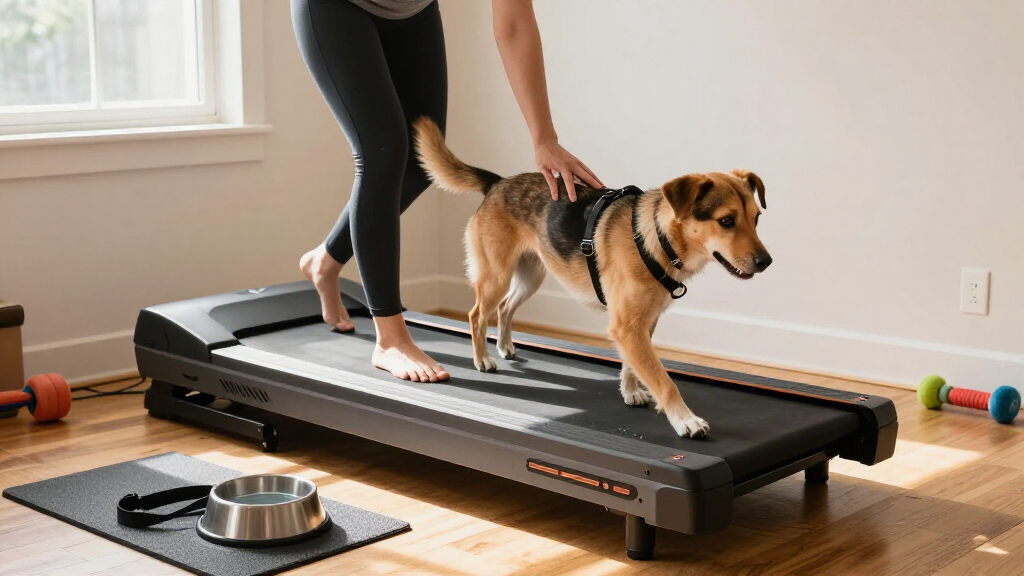
My ranking logic starts with dog safety and mechanical control, because a treadmill without reliable braking, stable side rails, or shock absorption can turn a workout into an injury. I weighted models with adjustable brakes, inclines, and layered shock absorption more heavily than those with fixed resistance, since those features let one machine adapt as your dog ages or gains conditioning. Belt dimensions mattered too: an 18-inch usable running width accommodates the lateral sway of a large dog’s gait, while narrow motorized belts only make sense under about 40 pounds of dog.
Second, I evaluated versatility and training friction — how easily a dog accepts the machine, how noisy it runs, and whether features like treat dispensers or feeders shorten the acclimation period. Finally, I considered build quality signals like slat material, frame construction, and whether the seller offers meaningful support, which becomes critical in a category where rebranded near-identical units are common. Products that cost less but cut corners on braking or deck width ranked below pricier units that keep dogs safer.
Factors to Consider When Choosing Best Dog Treadmills
Choosing between these 15 treadmills comes down to your dog’s size, your available space, and what kind of exercise you’re actually trying to provide. Before you commit, work through the factors below — they explain why two similarly priced machines can serve completely different households.Motorized Treadmill vs. Slat Mill: Which Matches Your Goal?
The single biggest decision is power type, and it’s driven by exercise intent rather than price. Motorized treadmills enforce a consistent pace, which is useful for controlled walking, rehabilitation-style movement, or dogs that need encouragement to keep moving at a steady rhythm. Slat mills are dog-powered, meaning your dog pushes the deck themselves — this allows sprints, natural pace changes, and true conditioning work, which is why racing and sporting dog handlers prefer them. A common mistake is buying a motorized unit hoping to tire out a high-energy Lab; the motor caps speed well below what that dog needs for real exertion. Conversely, a nervous small dog may find a moving belt under their feet far less intimidating than pushing a heavy slat deck. Match the mechanism to the outcome you want, not to the feature list.
Dog Size and Running Surface Dimensions
Size compatibility is where most regrettable purchases originate, because manufacturers are generous with the phrase “for medium dogs.” Measure your dog’s body length plus about 30 percent to estimate the running surface they need for a full stride, and check usable width rather than overall frame width — side rails often eat several inches on each side. An 18-inch usable width is the practical floor for large breeds like German Shepherds and Retrievers, while anything under 14 inches restricts natural lateral sway. Weight capacity matters less for the deck itself and more for the bearings and slat hinges, which wear faster under heavier dogs. If you own a giant breed, honestly assess whether any consumer treadmill is appropriate at all, or whether a purpose-built commercial slat mill is the safer route. Buying one size up costs space, but buying one size down costs you a machine your dog refuses to use.
Braking, Incline, and Resistance Control
Once you move past basic specs, brake quality separates budget slat mills from serious ones. A disc brake, like the one on the PawArmor, allows fine-grained speed control and a reliable emergency stop, while basic friction knobs can slip or freeze over time. Adjustable incline adds resistance training without extra speed, which builds muscle while protecting joints — useful for sporting dogs and senior conditioning alike. Magnetic or adjustable resistance systems matter most if you plan interval-style workouts. A frequently overlooked point: brakes also function as parking brakes, stabilizing the deck when your dog steps on and off. Cheaper units without any braking rely entirely on your dog stopping voluntarily, which works until the day it doesn’t.
Noise, Vibration, and Where the Machine Lives
Floor placement is a practical constraint that shapes daily usability more than buyers expect. Motorized treadmills produce a constant hum plus vibration that travels through apartment floors — a real issue with downstairs neighbors or noise-sensitive dogs. Slat mills are nearly silent apart from the sound of paws and slats, but they’re substantially heavier and harder to relocate, so plan their spot permanently. Measure your space with the machine fully assembled plus clearance on all sides; a curved slat mill needs more depth than its listed footprint suggests because dogs launch slightly forward at full sprint. Also consider whether you’ll roll the unit away between sessions — if so, prioritize models with transport wheels over slightly cheaper stationary frames. The best treadmill is the one that’s actually convenient to use at 6 a.m. in January.
Training Acclimation and Safety Features
No treadmill works if your dog won’t step on it, so features that reduce training friction carry real value. Feeders and treat dispensers, like those on the GYMAX 3-in-1 and 4-in-1 models, reward forward movement and can cut acclimation time from weeks to days. Side rails keep dogs centered and prevent paw drift off the belt edge, which is the most common minor injury in motorized units. Remote controls let you stop the machine instantly without lunging for a console. For slat mills, a low step-on height matters — a deck that sits too high forces an awkward jump that many dogs refuse. Whatever you choose, plan for short, heavily rewarded first sessions, and never leash your dog to the machine itself. The safety equipment should be backup, not the plan.
Warranty, Seller Support, and Spotting Rebrands
This category is flooded with near-identical units sold under rotating brand names, and my research found several duplicates within this very lineup. When two listings show the same frame, slats, and specs, the differences that remain are warranty terms, return policies, and spare parts availability — and those differences decide whether a broken bearing is a five-minute fix or a total loss. Check whether the seller responds to warranty claims, whether replacement slats and belts are purchasable, and whether the manual is intelligible. Motorized units add motor and control-board failure risk, so longer coverage periods matter more there. A slightly higher price from an established seller is often cheaper than a discount from a storefront that disappears in six months. Treat after-purchase support as a feature, not an afterthought.
Frequently Asked Questions
Are non-electric slat mills better than motorized dog treadmills?
Neither is universally better — they solve different problems. A slat mill is dog-powered, so your dog controls their own speed, can sprint freely, and gets a more natural conditioning workout; that’s why models like the PawArmor and HotFeed rank highly for high-energy and large breeds. Motorized treadmills enforce a steady, operator-controlled pace, which suits small dogs, leash-reactive walkers on rainy days, and dogs that need slow, consistent movement. Slat mills also have no motor to fail and run almost silently, but they demand more floor space and cost more up front. If your goal is genuinely tiring out an athletic dog, the slat mill wins. If your goal is a low-effort daily walk substitute for a small or senior dog, motorized is the smarter buy.
How long does it take for a dog to learn to use a treadmill?
Expect anywhere from a few days to several weeks, and the timeline depends more on your training approach than the machine. Dogs introduced with short, heavily rewarded sessions — a treat for each paw on the deck, then a step, then a few seconds of movement — typically acclimate within a week or two. Features like the treat dispensers on the GYMAX 3-in-1 and 4-in-1 models are specifically designed to compress this timeline. Slat mills sometimes click faster because the dog controls the movement rather than having a belt sweep under them, but heavier decks can intimidate smaller dogs. Never drag or force your dog onto the deck, and never leave the room mid-session during the learning phase. A dog that has one frightening experience may refuse the machine for months.
Can I use a human treadmill for my dog instead?
It’s possible with caution, but there are real reasons it’s discouraged. Human treadmills have narrow belts designed for a two-footed gait, so dogs drift sideways and catch paws on the edges, and the gap between belt and frame is a known paw-pinching hazard. The console and front console posts sit where a dog wants to stride forward, and the speeds start faster than most dogs’ comfortable walking pace. Dog treadmills also have longer decks to accommodate four-legged stride length and side rails to keep your pet centered. If you already own a human treadmill, some owners use it at the lowest speed with strict supervision — but for anything beyond occasional use, a purpose-built dog treadmill is a meaningfully safer design. That safety gap is exactly why this category exists.
How much exercise does a dog treadmill actually replace?
Why do several of these treadmills look identical? Which one should I buy?
You’ve spotted a real pattern: this category is dominated by a handful of Chinese factories selling the same base machine to multiple sellers who rebrand it. Within this roundup alone, the pin-hinged track model and the 18-inch manual treadmill each appear under more than one listing. When machines are mechanically identical, your decision should come down to warranty length, return window, and post-sale support — one seller may back the product for a year while an identical-looking listing offers effectively nothing. Check whether replacement slats, belts, or brake parts are available, because a slat mill with no parts source becomes scrap after one failure. Read seller responsiveness carefully before assuming the cheaper duplicate is the better deal. Paying modestly more for accountable support is usually the right call on identical hardware.
Conclusion
After comparing all 15 machines, the right choice depends far more on your dog’s size and exercise needs than on price. For best overall, the PawArmor Curved Manual Dog Treadmill earns the top spot with its dog-paced curved deck, silicone slats, and disc brakes — the safest and most conditioning-effective design in the lineup. The HotFeed Manual Slat Mill with Adjustable Brake is the best premium pick for owners who want precision resistance control without the curved format. For best value, the HSAUPI Non-Electric Treadmill and PawPaw Non-Electric model bring large-breed slat-mill function at a lower price, provided you accept a flat deck and simpler braking. Beginners with small or medium dogs should start with the Lifepro PawRunner or the GYMAX 3-in-1, whose treat-dispensing design makes first-time training dramatically easier. For specific needs — senior conditioning and muscle building — the manual treadmill with safety brake and adjustable incline is the standout, while the 18-inch wide non-motorized model suits broad-chested giants. Whatever you pick, measure your space, match the deck to your dog, and buy from a seller who will still answer emails next year.
Halloween Picks
halloween
As an affiliate, we earn on qualifying purchases.