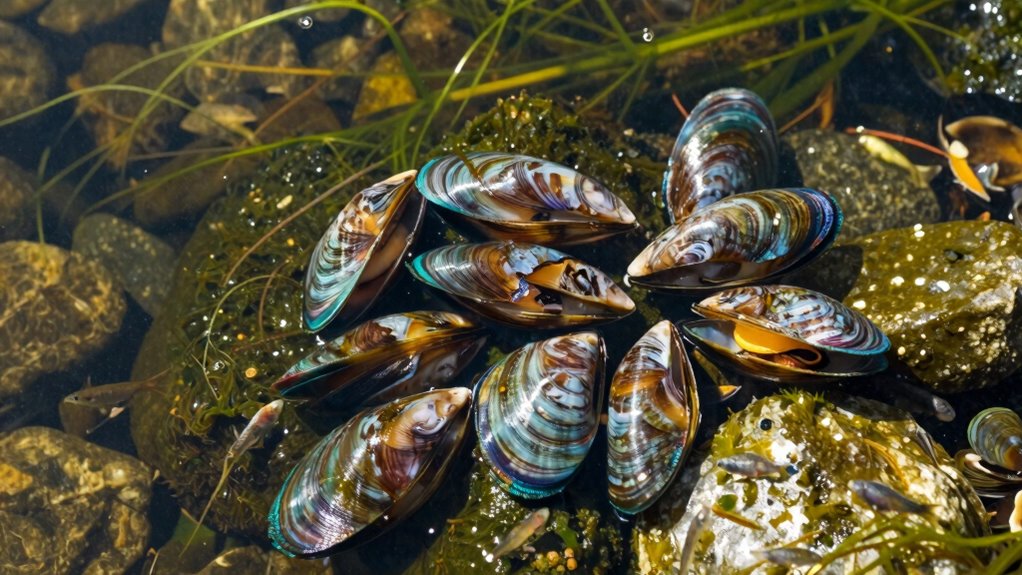

Freshwater mussels are essential for keeping rivers healthy. They actively filter water, removing pollutants and excess nutrients, which leads to clearer, cleaner water for everyone. Their burrowing and feeding help stabilize sediments and prevent erosion, supporting aquatic plants and animals. Mussels are also key links in the food chain, indicating ecosystem health and boosting biodiversity. By protecting these impressive creatures, you help sustain vibrant, resilient rivers — discover more about their important role.

Get pet supplies delivered free with Prime
- Fast, free delivery on millions of items
- Prime Video, Amazon Music and more included
- Member-only deals all year
Key Takeaways
- Freshwater mussels filter particles and pollutants, improving water clarity and quality.
- They support biodiversity by serving as vital prey and indicators of healthy ecosystems.
- Mussel burrowing stabilizes river substrates, preventing erosion and promoting aquatic plant growth.
- Their presence enhances habitat complexity, benefiting various aquatic species.
- Protecting mussels sustains ecosystem services like water purification and habitat stability.
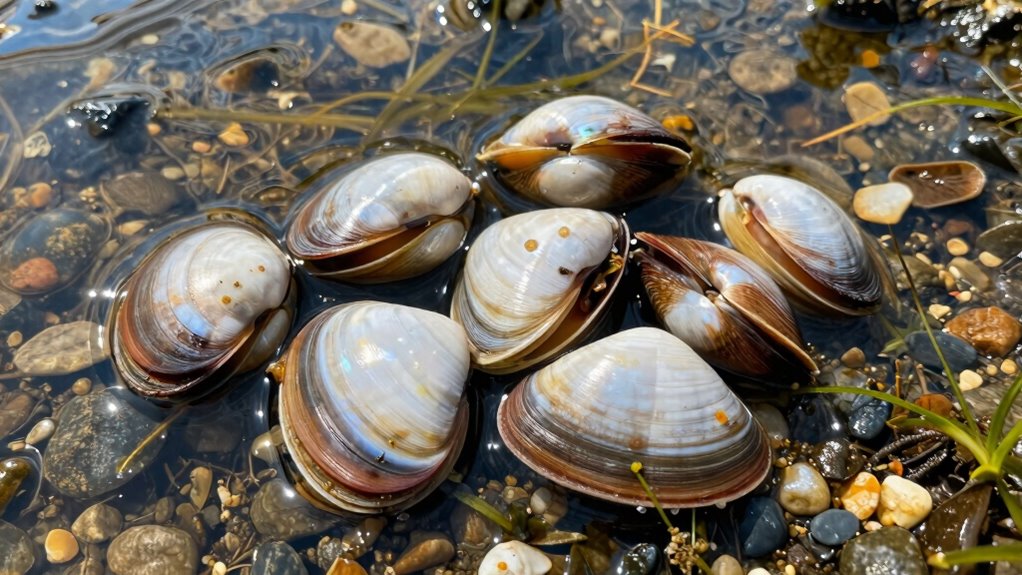
Freshwater mussels play an indispensable role in maintaining healthy river ecosystems, yet many people overlook their importance. These quiet creatures do more than just sit in the riverbed; they actively shape the environment around them. One of their key contributions is sediment filtration. As water flows over and through their bodies, mussels filter out particles, pollutants, and excess nutrients. This natural filtration keeps the water clearer and healthier, reducing sediment buildup that can smother aquatic plants and harm fish. When mussels thrive, they help maintain a balanced sediment load, which benefits the entire aquatic community. Additionally, their presence supports the biodiversity of the ecosystem, helping to sustain a wide variety of species that depend on clean water and healthy habitats.
Freshwater mussels filter water, reducing sediment and pollutants to support healthy, vibrant river ecosystems.
Beyond their filtering abilities, freshwater mussels are indispensable for biodiversity enhancement. They serve as a key link in the food chain, providing food for fish, birds, and other wildlife. Their presence indicates a healthy, functioning ecosystem, and their decline often signals environmental stress. By supporting a variety of other species, mussels contribute to biodiversity, which makes the river more resilient to changes and disturbances. When mussel populations decrease, it can lead to a cascade of negative effects, including reduced food sources and degraded water quality. Their burrowing activity also helps stabilize the substrate**, preventing erosion and sediment resuspension during high flows. This activity is crucial for maintaining the integrity of the riverbed and supporting aquatic plant growth. Moreover, their burrowing can improve water aeration**, which is vital for the health of many aquatic organisms.
You might not realize it, but when you protect or restore mussel populations, you’re also safeguarding the broader health of the river system. These organisms help stabilize the substrate, preventing erosion and sediment resuspension during high flows. Their burrowing activity aerates the riverbed, aiding in nutrient cycling and encouraging the growth of aquatic plants. This activity creates a more diverse habitat, attracting different species of fish, invertebrates, and plants. Their role in sediment filtration improves water quality, which benefits recreational activities like swimming and fishing, and supports native species that depend on clean water.
Taking action to conserve freshwater mussels isn’t just about saving a single species; it’s about maintaining the delicate balance of the entire river ecosystem. Their role in sediment filtration and biodiversity enhancement makes them essential for healthy rivers. When you understand their importance, it becomes clear that protecting these often-overlooked creatures can lead to cleaner water, richer habitats, and more resilient ecosystems. Supporting policies and practices that protect mussel habitats guarantees that future generations can enjoy vibrant, healthy rivers. Their quiet work beneath the surface is fundamental, and recognizing that work underscores how crucial they truly are to river health. Understanding ecosystem services provided by mussels can inspire more effective conservation efforts.
freshwater mussel water filtration kit
As an affiliate, we earn on qualifying purchases.
As an affiliate, we earn on qualifying purchases.
Frequently Asked Questions
How Long Do Freshwater Mussels Typically Live?
Freshwater mussels typically live between 10 and 20 years, but some species can reach up to 100 years. Your mussel lifespan depends on factors like water quality, predation, and habitat stability. If you’re observing mussels in a river, keep in mind that clean, well-oxygenated water supports longer lifespans. Protecting their environment helps guarantee these essential creatures thrive and continue to contribute to healthy river ecosystems.
Are Freshwater Mussels Safe for Human Consumption?
Like a modern-day Pandora’s box, freshwater mussels aren’t always safe to eat. They can carry contamination risks from pollutants in the water, making their culinary safety questionable. Consuming wild mussels without proper testing might expose you to harmful bacteria or toxins. If you’re considering eating them, make certain they’re harvested from clean, monitored waters and prepared correctly, or you risk health issues rather than enjoying a tasty treat.
Can Freshwater Mussels Be Kept as Pets?
Yes, you can keep freshwater mussels as pets, but aquarium compatibility is a concern. They need specific water conditions and plenty of substrate to thrive. Pet care considerations include maintaining clean water, providing proper filtration, and avoiding predators that might harm them. Mussels are sensitive to water quality, so regular monitoring is essential. If you’re prepared for their unique needs, freshwater mussels can be fascinating and eco-friendly additions to your aquarium.
What Are the Main Threats to Freshwater Mussel Populations?
They say “a chain is only as strong as its weakest link,” and freshwater mussels face major threats like pollution impact and habitat loss. Pollution from agricultural runoff and wastewater contaminates their environment, while habitat loss from development destroys their homes. These threats weaken their populations, disrupting river ecosystems. Protecting their habitats and reducing pollution are vital steps to guarantee mussels thrive, maintaining the health and balance of our rivers.
How Do Freshwater Mussels Reproduce and Grow?
You might be surprised to learn that freshwater mussels reproduce through a unique process involving mussel larval dispersal. Females release larvae called glochidia, which attach to fish hosts for development. During this time, mussel shell development occurs inside the fish. When the larvae mature, they detach and settle into the riverbed, growing into new adults. This intricate process helps guarantee their survival and maintains healthy river ecosystems.
Conclusion
Think of freshwater mussels as the quiet guardians of your river, like unseen anchors holding the entire ecosystem steady. Without them, the river’s balance shifts, water quality declines, and the vibrant life it supports falters. By protecting these humble creatures, you’re ensuring the river remains a thriving, healthy world beneath the surface. Remember, just as a single stone can ripple through a pond, each mussel plays a crucial role in maintaining river harmony.
Halloween Picks
halloween
As an affiliate, we earn on qualifying purchases.