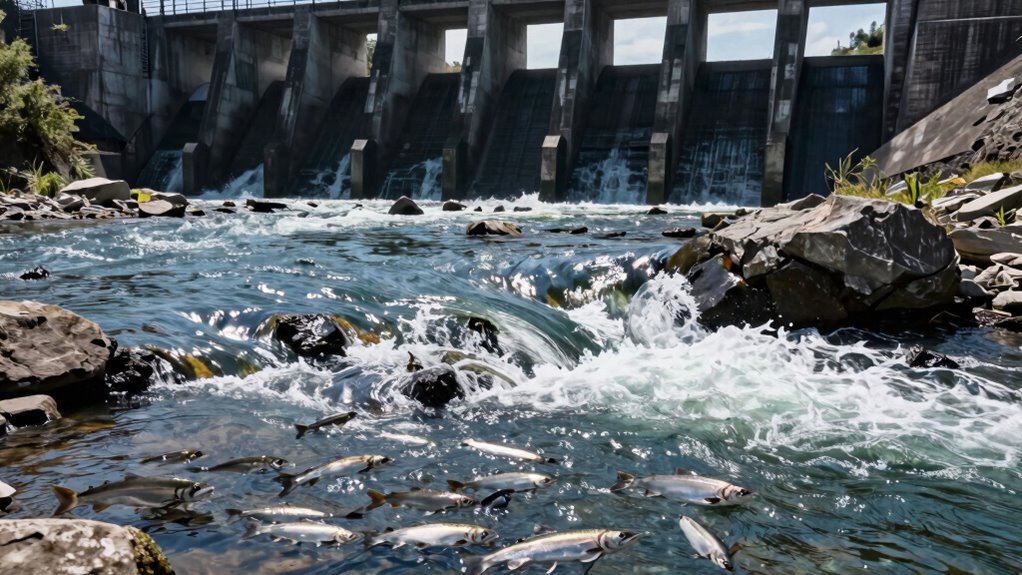

Dams act as barriers that block fish from reaching their natural spawning routes, disrupting their life cycle. They can cause fish to become disoriented or exhausted, reducing their chances of successful reproduction. Fish bypass systems like ladders help, but they’re not always effective. Sediment buildup upstream and erosion downstream further alter habitats and flow patterns, making migration harder. To understand how these issues impact ecosystems and what can be done, keep exploring.

Get pet supplies delivered free with Prime
- Fast, free delivery on millions of items
- Prime Video, Amazon Music and more included
- Member-only deals all year
Key Takeaways
- Dams block natural fish migration paths, forcing fish to seek alternative routes or cease migration.
- Fish bypass systems like fish ladders are designed to aid migration but vary in effectiveness.
- Sediment buildup upstream alters habitats and disrupts spawning grounds for migrating fish.
- Dams trap sediment, causing erosion downstream and degrading habitats critical for fish development.
- Disrupted migration and habitat changes threaten fish populations and overall ecosystem health.
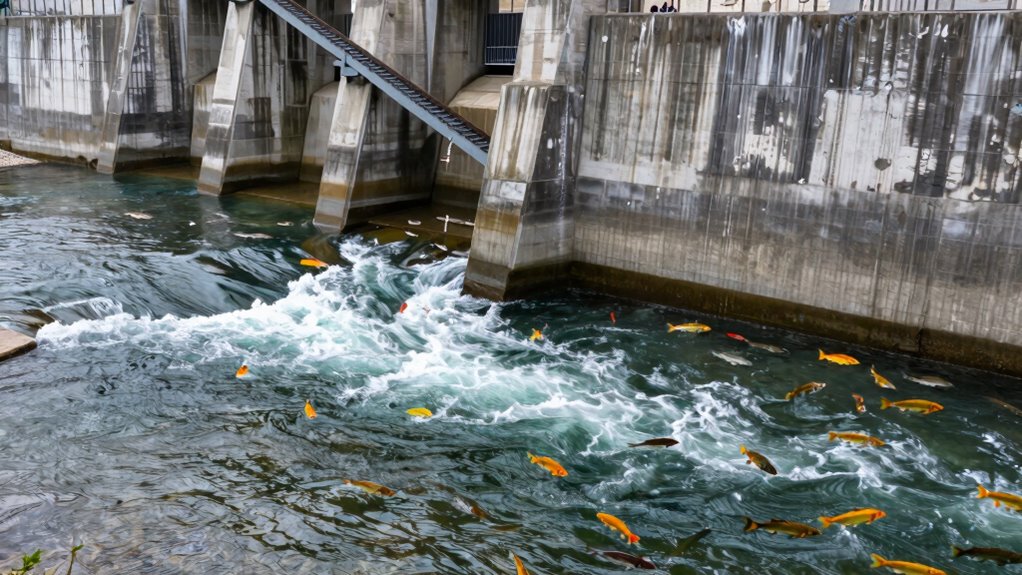
Have you ever wondered how dams impact fish migration? Dams act as formidable barriers in rivers, blocking the natural paths that fish rely on to reach spawning grounds. When a dam is built, it often disrupts the entire migratory cycle, forcing fish to find alternative routes or cease their journey altogether. To mitigate this, many dams are equipped with fish bypass systems—structures designed to allow fish to circumvent the dam safely. These bypasses are often constructed as fish ladders, which provide a series of ascending pools that mimic natural river conditions. However, not all fish bypass systems are equally effective, and some species still struggle to navigate them. As a result, some fish may become disoriented or exhausted, reducing their chances of reaching spawning sites upstream. Additionally, sediment buildup caused by dams can significantly alter the river’s natural flow, further impacting fish migration. Beyond the physical barrier, dams also influence sediment buildup in rivers. Sediment—tiny particles of soil, sand, and organic matter—normally travels downstream, replenishing habitats and maintaining the river’s ecological balance. When a dam is in place, it traps much of this sediment behind it, causing sediment buildup upstream. This accumulation can raise water levels and alter the riverbed, making it difficult or even impossible for certain fish species to find suitable spawning grounds. Conversely, downstream areas may suffer from sediment deficits, leading to erosion and habitat degradation. The imbalance caused by sediment retention can disrupt the natural flow and shape of the river, further complicating fish migration patterns. An understanding of river ecology is crucial for developing effective management strategies that minimize these impacts. Restoring natural sediment flow is also essential for maintaining healthy aquatic habitats, which are vital for supporting diverse fish populations. Recognizing the importance of sediment transport helps in designing solutions that restore river health and support fish migration. The combined effects of fish bypass limitations and sediment buildup notably impact fish populations. Fish that cannot navigate the bypass may be forced to abandon their migration entirely, which can reduce spawning success and threaten local fish stocks. Meanwhile, changes in sediment distribution can impair habitat quality, making it less suitable for spawning and juvenile development. These disruptions not only threaten individual species but can also have cascading effects on entire aquatic ecosystems. Efforts to address these issues include designing more effective fish passage solutions and restoring natural sediment flows, but challenges remain. Ultimately, understanding how dams influence fish migration highlights the importance of integrating ecological considerations into dam management and river restoration initiatives. Additionally, implementing sediment management techniques can help mitigate some of these impacts and promote healthier river systems.
As an affiliate, we earn on qualifying purchases.
Frequently Asked Questions
How Do Fish Navigate Around Dams During Migration?
You might wonder how fish navigate around dams during migration. Fish sensory systems, like their lateral lines and smell, help detect water flow and migration cues. They often use these signals to find fish ladders or bypass routes designed as migration barriers. Some fish adapt by leaping over spillways or following scent trails, but many struggle with dams, making these sensory tools essential for their successful migration past such obstacles.
Are There Natural Alternatives to Dams for Fish Passage?
Natural alternatives to dams include fishways and fish ladders, which help fish navigate around obstacles during migration. You’ll find that natural fishways, like river channels or submerged woody debris, offer effective routes for fish, often more environmentally friendly than artificial structures. Fish ladder effectiveness varies, but when well-designed, they markedly improve fish passage, helping maintain healthy fish populations and preserve ecological balance without the need for full dams.
How Do Dams Impact Fish Populations Downstream?
Dams act as giant barriers, blocking fish from their natural journeys and causing chaos downstream. You see, they disrupt fish bypass routes and trap sediment flow, which are essential for healthy ecosystems. Without these natural processes, fish populations dwindle, struggling to find food and spawning grounds. The blockage hampers their survival, turning thriving waterways into stagnant pools, and ultimately, threatening the delicate balance of aquatic life.
What Are the Long-Term Ecological Effects of Dams on Fish?
You’ll find that dams disrupt fish behavior and disturb the ecological balance over time. Fish struggle to access spawning grounds, leading to declining populations and genetic diversity. This imbalance affects predator-prey relationships and overall ecosystem health. Long-term, dams can cause habitat loss and reduce biodiversity, making ecosystems less resilient. Recognizing these impacts helps you understand the importance of designing fish-friendly solutions to maintain ecological equilibrium.
Can Dam Removal Restore Historical Fish Migration Routes?
Removing dams can indeed restore historical fish migration routes, boosting fish populations by up to 90%. You’ll see the benefits of dam removal, including the return of natural river flows and improved ecosystems. Fish ladder solutions help, but dam removal benefits often surpass them, creating unobstructed paths for migrating fish. Your actions can help revive essential habitats, ensuring healthier rivers and thriving fish populations for generations to come.
Conclusion
Just like a sudden dam in a river can block the path of a migrating fish, your actions can either create barriers or open pathways. By understanding how dams impact fish migration, you can help protect these essential routes, ensuring fish continue their journey like a well-choreographed dance. Remember, small changes in your actions can ripple out, making a big difference—like a stone creating waves in a still pond. Be part of the solution.
Halloween Picks
halloween
As an affiliate, we earn on qualifying purchases.