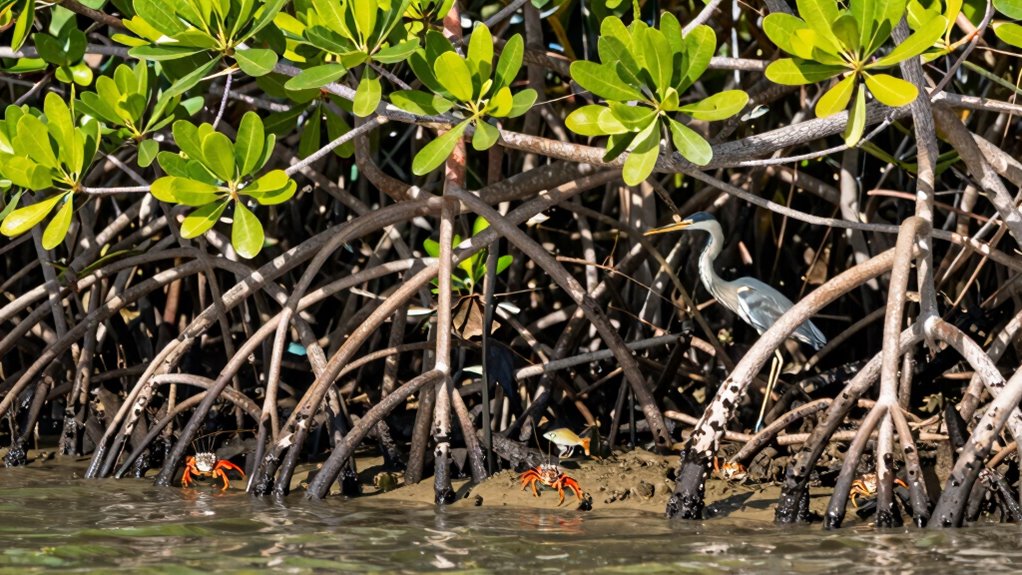

Mangroves are vital for coastal wildlife because they support diverse species like fish, birds, and reptiles by providing shelter, feeding grounds, and nursery habitats. Their complex root systems trap sediments, reduce erosion, and filter pollutants, helping to maintain water quality. As natural buffers, they protect inland communities from storms and climate impacts while acting as carbon sinks. Understanding the essential role of mangroves reveals how they sustain ecological balance—keep exploring to discover more about their importance.

Get pet supplies delivered free with Prime
- Fast, free delivery on millions of items
- Prime Video, Amazon Music and more included
- Member-only deals all year
Key Takeaways
- Provide critical nursery habitats that protect juvenile fish and marine species from predators and strong currents.
- Support biodiversity by offering shelter and feeding grounds for diverse coastal wildlife.
- Trap sediments and filter pollutants, maintaining water quality and protecting fragile marine ecosystems.
- Act as natural buffers, reducing coastal erosion and shielding inland communities from storms.
- Serve as carbon sinks, aiding climate resilience and helping mitigate climate change impacts.
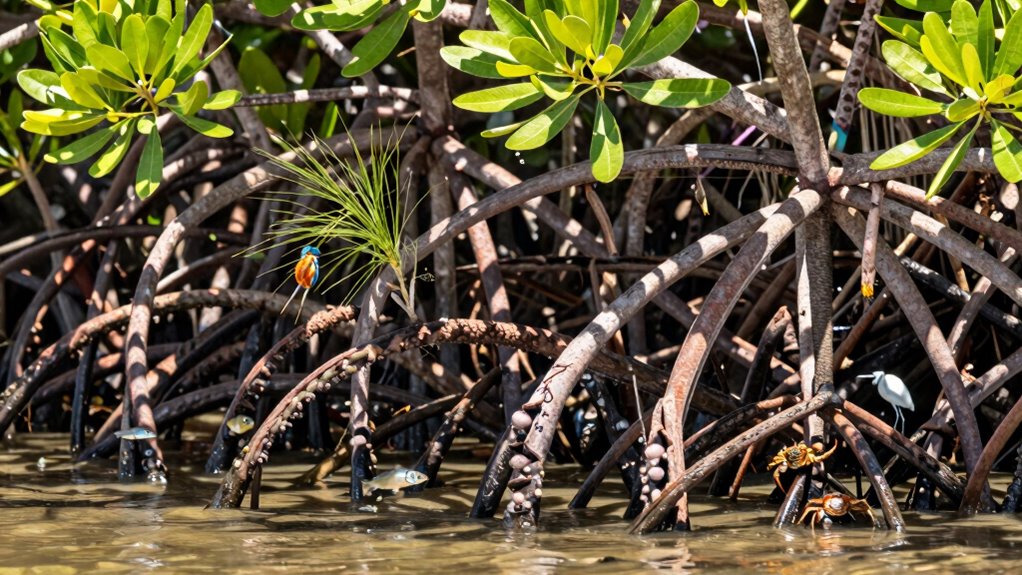
Mangroves are essential coastal ecosystems that support a rich diversity of wildlife. These unique environments are often found at the intersection of land and sea, where salt-tolerant trees thrive in the warm, tropical ecosystems. As a critical part of the coastal landscape, mangroves provide vital habitats that sustain a wide array of species, from fish and crustaceans to birds and reptiles. Their complex root systems create a tangled maze of shelter and feeding grounds that many creatures depend on for survival. You might not realize it, but without mangroves, the health and stability of entire coastal regions would be at risk.
One of the most important roles mangroves play is serving as nursery habitats. When juvenile fish, shrimp, and other marine species hatch, they often find refuge among the dense roots of these trees. The sheltered environment offers protection from predators and strong ocean currents, giving young wildlife a chance to grow and develop before venturing into open waters. This nursery function is especially essential in tropical ecosystems, where warm water temperatures support rapid growth and high biodiversity. Because of this, mangroves are often considered the foundation of productive coastal fisheries, directly supporting local communities that rely on fishing for their livelihoods.
Beyond serving as nurseries, mangroves also contribute to the overall health of coastal ecosystems. Their roots trap sediments, which helps reduce erosion and maintain water quality. This filtering effect keeps pollutants from reaching fragile coral reefs and other marine habitats, ultimately protecting a diverse range of marine life. As you observe the lush canopy above and the tangled roots below, you’re witnessing a natural system that sustains not just individual species but entire ecological networks. The intricate relationships within these environments foster biodiversity and resilience, enabling the ecosystem to recover from disturbances like storms or human activity. Additionally, gadget innovations are increasingly being developed to monitor and protect these vital habitats. Understanding the ecological significance of biodiversity highlights the importance of conserving these ecosystems for future generations. Recognizing the importance of natural buffers like mangroves underscores their role in protecting inland communities from extreme weather events. Furthermore, the preservation of mangroves is crucial for maintaining the ecological balance of coastal regions, ensuring that wildlife populations remain sustainable. Protecting these habitats is also vital for maintaining climate resilience, as mangroves act as carbon sinks and help mitigate climate change impacts.
Mangrove nursery habitat products
As an affiliate, we earn on qualifying purchases.
As an affiliate, we earn on qualifying purchases.
Frequently Asked Questions
How Do Mangroves Adapt to Saltwater Environments?
You might notice how mangroves adapt to saltwater through specialized root adaptations and salt filtration. Their roots, like pneumatophores, stick out of the soil, helping oxygen intake and stabilizing the plant. They also filter salt through their roots, excreting excess salt via special glands or storing it in older leaves, which then fall off. These adaptations allow mangroves to thrive in salty environments, supporting diverse coastal wildlife.
What Specific Species Rely Solely on Mangroves for Habitat?
You might think only a few species rely solely on mangroves, but many do, especially for bird nesting and as a fish nursery. For instance, herons and egrets depend entirely on mangrove trees to nest and raise their young, while juvenile fish find shelter and food in these roots. This crucial habitat supports biodiversity, proving that mangroves aren’t just trees—they’re essential lifelines for numerous species.
How Do Mangroves Influence Local Climate Patterns?
You might not realize it, but mangroves influence local climate patterns through climate regulation and carbon sequestration. They absorb excess carbon dioxide, helping reduce greenhouse gases and mitigate climate change. Additionally, mangroves moderate coastal temperatures by providing shade and cooling effects. Their dense root systems also protect shorelines from erosion, creating a more stable environment. Overall, mangroves play an essential role in maintaining balanced local climates and supporting healthy ecosystems.
Can Mangrove Restoration Effectively Rebuild Lost Ecosystems?
Restoring mangroves is like planting hope in a dying garden; it can effectively rebuild lost ecosystems. By nurturing mangrove biodiversity, you help stabilize coastlines and combat coastal erosion. Restoration efforts restore essential habitats for countless species, fostering resilience and biodiversity. While challenges exist, proactive restoration can transform degraded areas into thriving ecosystems, proving that with effort, you can turn back the tide of destruction and revive these crucial coastal sanctuaries.
What Threats Are Most Critical to Mangrove Survival Today?
You should know that climate change, coastal development, and pollution are the most critical threats to mangrove survival today. These factors damage mangroves, reducing their ability for carbon sequestration and diminishing their role in coastal erosion prevention. When these threats increase, mangroves struggle to thrive, which impacts coastal ecosystems. Protecting mangroves guarantees they continue to sequester carbon effectively and prevent coastal erosion, safeguarding both wildlife and human communities.
Conclusion
You now see how essential mangroves are for coastal wildlife, acting as nurseries and shelters. Imagine a young juvenile fish finding safety in a mangrove root, growing stronger before venturing into the open sea. Protecting these ecosystems isn’t just about saving trees; it’s about securing a future for countless species and maintaining the health of our coastlines. Your support can help preserve these critical habitats for generations to come.
Fall Picks
fall essentials
As an affiliate, we earn on qualifying purchases.