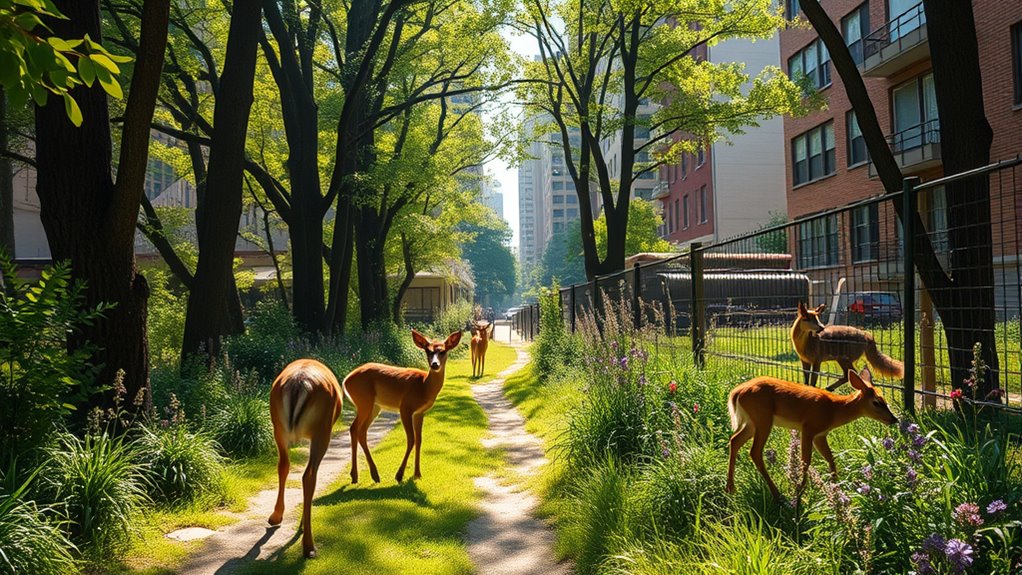

Wildlife corridors are crucial for helping animals cross human-dominated landscapes safely. These designated pathways reconnect fragmented habitats, allowing species to move freely in search of food, mates, and migration routes. By providing safe passage, they reduce the risks of traffic-related fatalities and support genetic diversity among populations. This integration of wildlife needs into urban planning not only enhances ecosystem health but also enriches community life. Discover more about the benefits and design of these essential corridors.
Key Takeaways
- Wildlife corridors provide designated pathways that allow animals to safely cross human-dominated landscapes like roads and urban areas.
- These corridors include features such as underpasses and overpasses, reducing traffic-related fatalities for wildlife.
- By reconnecting fragmented habitats, corridors facilitate animal movement for food, mates, and migration routes essential for survival.
- Corridors enhance genetic diversity by allowing gene flow between animal populations, leading to stronger and more adaptable species.
- Integrating wildlife corridors into urban planning fosters coexistence between human activities and wildlife, promoting ecosystem health and community engagement.
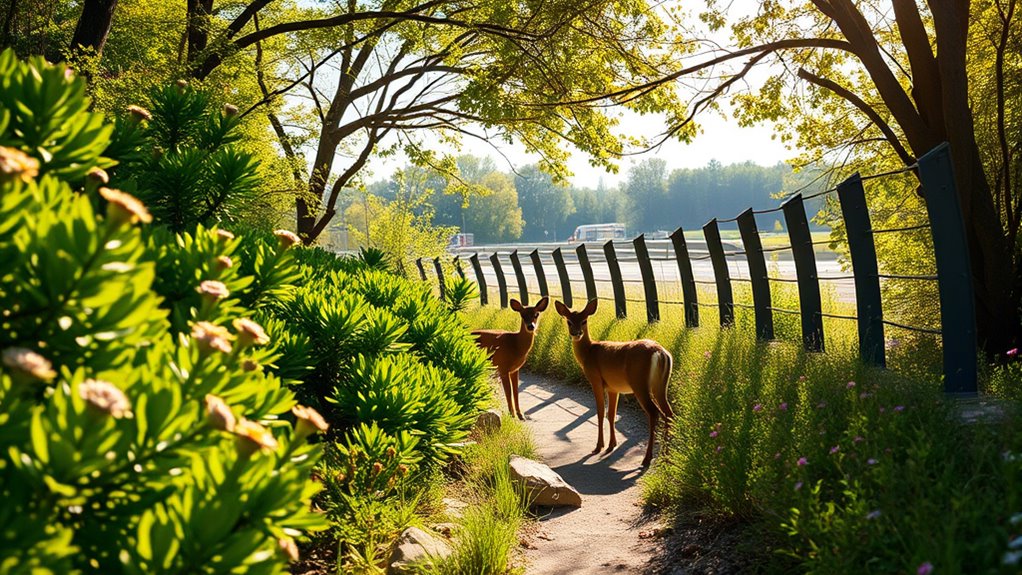
Wildlife Corridors
As urban development continues to encroach on natural habitats, wildlife corridors have become essential for maintaining biodiversity. You might not realize it, but these corridors play a crucial role in allowing animals to traverse human-dominated landscapes. By reconnecting fragmented habitats, wildlife corridors promote habitat connectivity, enabling animals to find food, mates, and safe migration routes. With urban planning becoming increasingly focused on sustainability, incorporating wildlife corridors into development projects isn’t just beneficial; it’s necessary.
Wildlife corridors are vital for maintaining biodiversity, allowing animals to safely navigate urban landscapes and reconnect fragmented habitats.
Imagine you’re a deer trying to cross a busy highway. Without a corridor, you’re faced with the daunting challenge of navigating through traffic, risking your life just to reach the other side. However, if there’s a designated wildlife corridor, you can safely travel beneath the road, ensuring your survival and the continuation of your species. This scenario illustrates the importance of planning urban areas with wildlife in mind. By integrating these corridors into urban designs, you can help create a more harmonious coexistence between humans and wildlife.
Urban planning that prioritizes wildlife corridors can also lead to enhanced ecosystem health. When animals can move freely between habitats, they contribute to genetic diversity, which is vital for long-term species survival. You’ll notice that a diverse gene pool can lead to stronger populations better equipped to adapt to changing environments. Consequently, by supporting habitat connectivity through thoughtful urban development, you’re not only aiding individual species but also fostering a resilient ecosystem.
Moreover, wildlife corridors can enhance your quality of life, too. When urban areas integrate green spaces and natural habitats, you gain access to beautiful landscapes, recreational opportunities, and the chance to observe wildlife in your community. These corridors can serve as educational tools, raising awareness about local flora and fauna. You may find that living near a wildlife corridor can foster a sense of pride and responsibility towards preserving nature. Additionally, the implementation of robust fraud detection measures in urban planning can ensure that wildlife corridors are protected against potential threats.
Frequently Asked Questions
How Do Wildlife Corridors Impact Local Economies?
Wildlife corridors impact local economies by providing economic benefits through ecotourism and enhanced property values. When you promote community engagement in conservation efforts, it fosters local pride and attracts visitors interested in wildlife. This influx can support local businesses, from hotels to restaurants. Additionally, healthier ecosystems contribute to agriculture and fishing, boosting income for those in related industries. Ultimately, investing in wildlife corridors can strengthen both nature and your community’s economy.
Are There Any Successful Examples of Wildlife Corridors?
Yes, there are many successful examples of wildlife corridors. For instance, the Banff National Park in Canada features overpasses and underpasses that enhance corridor connectivity for species like bears and elk. These structures often include native plantings to attract and support wildlife, making routes safer and more appealing. Similarly, the Florida Wildlife Corridor Initiative focuses on restoring habitat and ensuring animals can move freely across the landscape, showcasing effective wildlife management.
What Species Benefit the Most From Wildlife Corridors?
Species that benefit the most from wildlife corridors include large mammals like bears, deer, and mountain lions. These corridors enhance habitat connectivity, allowing them to migrate safely between fragmented environments. You’ll also find smaller animals like amphibians and reptiles thrive when they can access diverse habitats. By facilitating species migration, wildlife corridors help maintain genetic diversity and support healthier ecosystems, ensuring these animals can thrive despite human encroachment on their environments.
How Are Wildlife Corridors Monitored and Maintained?
Think of wildlife corridors as lifelines for animals, weaving through the fabric of our landscapes. You monitor these essential pathways by using camera traps, GPS collars, and tracking devices to observe animal movements. Regular maintenance involves evaluating corridor design, ensuring habitat connectivity remains intact. You also collaborate with local communities and conservationists to address any barriers, like roads or fences, to keep these corridors thriving and accessible for wildlife.
Can Urban Areas Implement Wildlife Corridors Effectively?
Yes, urban areas can implement wildlife corridors effectively. By integrating ecological connectivity into urban planning, you can create pathways that allow animals to navigate through cities safely. This involves designing green spaces, bridges, and tunnels that link habitats while reducing human-wildlife conflict. Collaborating with local communities and stakeholders ensures these corridors are maintained and monitored, promoting biodiversity and enhancing the urban environment for both wildlife and residents.
Conclusion
In the tapestry of life, wildlife corridors weave a crucial thread, allowing creatures to dance between fragmented habitats. Just as the rivers carve their paths through mountains, these corridors guide animals safely across our bustling streets and sprawling developments. By preserving and creating these pathways, we’re not just protecting wildlife; we’re ensuring the heartbeat of nature continues to echo in our landscapes. So, let’s champion these essential routes, allowing the wild to flourish alongside our human world.