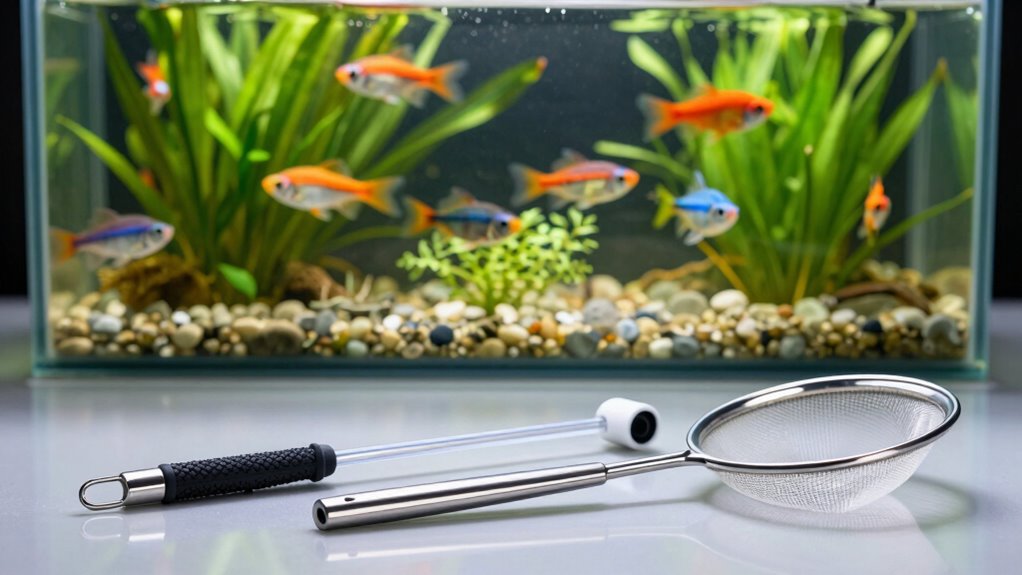
Using the right fish tank cleaning tools helps you maintain a healthy environment while reducing stress on your fish. Equip yourself with essentials like gravel vacuums, algae scrapers, and siphon hoses to clean effectively without scratching surfaces or disrupting tank balance. Choose tools designed for aquarium safety and durability. And remember, regular, gentle maintenance prevents issues before they start. Keep your tank pristine and healthy—continue to explore how to clean smarter and safer.

Get pet supplies delivered free with Prime
- Fast, free delivery on millions of items
- Prime Video, Amazon Music and more included
- Member-only deals all year
Key Takeaways
- Use gentle, aquarium-safe tools like soft brushes and silicone scrapers to prevent scratching and reduce fish stress.
- Schedule regular, partial water changes and cleanings to maintain water quality without sudden disturbances.
- Employ automated devices such as water changers and cleaning robots for efficient maintenance with minimal fish disturbance.
- Inspect and replace worn tools promptly to ensure effective cleaning and prevent accidental damage to the tank or fish.
- Follow a consistent cleaning routine to prevent algae buildup and maintain a healthy, stress-free environment for your fish.
As an affiliate, we earn on qualifying purchases.
Why Using the Right Fish Tank Cleaning Tools Is Crucial for Fish Health
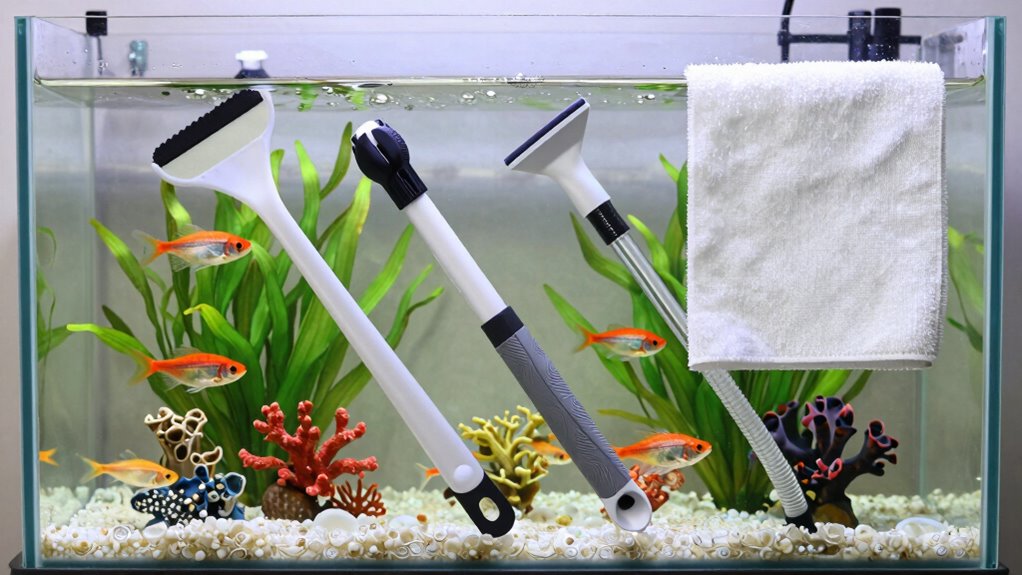
Using the right fish tank cleaning tools is essential because improper cleaning can harm your fish’s health. When you select effective tools, you help prevent fish diseases caused by bacteria buildup and poor water quality. Proper tools also improve aquarium algae control, keeping your tank clear and healthy. Algae can quickly overgrow if not managed with the right scrapers and brushes, blocking light and affecting water conditions. Additionally, using specialized tools designed for your tank, such as filtration systems, minimizes stress on your fish during cleaning, reducing the risk of injury or illness. Clean tools ensure thorough removal of waste, algae, and debris, supporting a stable environment. Furthermore, regular maintenance routines with appropriate equipment can significantly extend the lifespan of your aquarium components. Proper aquarium maintenance techniques, including the use of suitable tools, are vital for maintaining water quality and fish well-being. Selecting proper cleaning tools also reduces the likelihood of equipment damage, which can lead to costly repairs and added stress for your aquatic inhabitants. Ultimately, investing in quality equipment helps you maintain a clean, safe habitat that promotes your fish’s well-being.
Must-Have Tools for Easy and Stress-Free Aquarium Cleaning
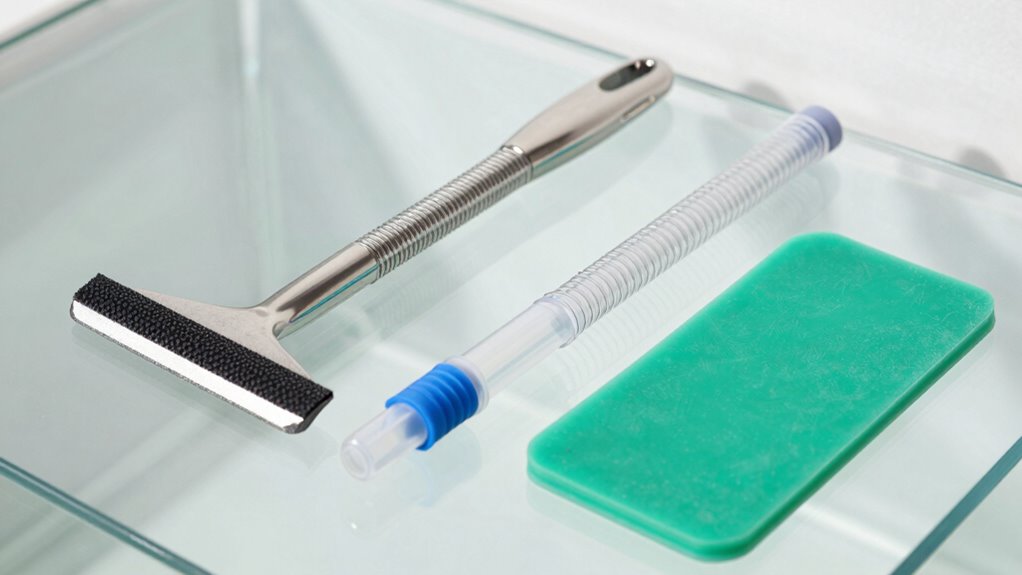
To make aquarium cleaning easier and less stressful for both you and your fish, having the right tools on hand is essential. Essential tools include a gravel vacuum for substrate maintenance, algae scraper for aquarium decor, and a siphon hose for water changes. A soft brush helps gently clean delicate surfaces without scratching. Keep a fish net nearby to safely catch and transfer fish if needed. These tools streamline tasks like removing debris, cleaning decorations, and performing water changes, reducing stress on your fish during maintenance. Proper tools also make fish feeding and tank upkeep more efficient, ensuring a healthier environment. Regular maintenance with the right tools supports healthy fish, balanced ecosystem, and can help prevent disease outbreaks, which is crucial for sustainable aquaculture practices. Using appropriate cleaning techniques can further minimize disruptions to your aquatic life and promote long-term tank health. Additionally, choosing tools with ergonomic handles can reduce fatigue during routine cleaning sessions, making the process even more manageable.
How to Choose the Best Scrapers, Brushes, and Cleaners for Your Tank
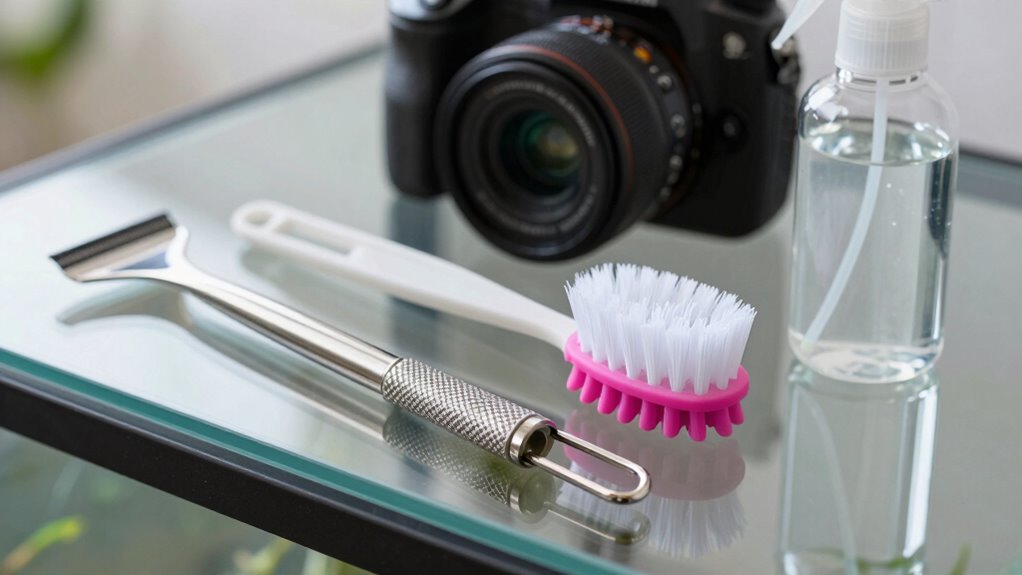
When selecting scrapers, brushes, and cleaners, it’s important to take into account material compatibility to avoid damaging your tank or equipment. Using effective cleaning techniques can make maintenance faster and easier, saving you time and effort. You should also explore budget-friendly options that don’t compromise on quality to keep your tank spotless without overspending.
Material Compatibility Tips
Choosing the right scrapers, brushes, and cleaners for your fish tank depends on understanding the materials they’re made from and how they interact with your tank’s surfaces. Material safety is vital to prevent damage or chemical leaching that could harm your aquatic life. For example, avoid metal tools that might scratch or corrode acrylic or glass tanks. Instead, opt for plastic or silicone tools designed for aquarium use. Always check if the cleaning tools are compatible with your tank material to prevent scratches, cracks, or other damage. Using tools made from incompatible materials can compromise your tank’s integrity and water quality. Additionally, selecting tools that meet industry safety standards ensures they are safe and suitable for aquarium maintenance. By selecting equipment that’s safe for your specific tank material, you guarantee a thorough clean without risking harm to your fish or the tank’s structure. Considering material compatibility can also help you avoid potential hazards caused by improper cleaning practices, which is essential in maintaining a healthy aquatic environment. Paying attention to material durability can help extend the lifespan of your cleaning tools and prevent accidental damage during maintenance. Furthermore, understanding the compatibility between cleaning tools and tank materials can help you select options that minimize abrasion risks and ensure the longevity of your aquatic setup. Additionally, choosing tools with corrosion resistance can significantly reduce the need for frequent replacements and maintain a safe environment for your fish.
Effective Cleaning Techniques
Selecting the right scrapers, brushes, and cleaners is essential for maintaining a healthy and spotless fish tank. Use gentle tools that won’t scratch or damage your aquarium décor or harm your fish. For algae buildup on glass or plastic, a silicone or magnetic scraper works best. Soft-bristled brushes help clean hard-to-reach spots without disturbing delicate decorations or disturbing your fish’s environment. When choosing cleaners, opt for non-toxic, aquarium-safe products that won’t leach chemicals into the water, supporting ideal fish nutrition. Regular cleaning with the right tools prevents algae overgrowth and keeps the water quality high. Remember, effective techniques involve gentle, consistent maintenance to avoid stressing your fish while keeping your tank pristine and your aquatic life thriving.
Budget-Friendly Options
Keeping your tank clean doesn’t have to break the bank. You can find affordable tools that work just as well as pricier options. Look for DIY hacks like using credit cards or plastic spatulas as scrapers to remove algae without scratching the glass. Choose simple brushes with replaceable heads for flexible cleaning, and opt for natural, non-toxic cleaners to protect fish health.
Here are some budget-friendly options:
- Repurposed household items like old credit cards or spatulas
- Inexpensive soft-bristle brushes for gentle cleaning
- Natural vinegar solutions for safe, effective tank maintenance
These options save money and help maintain a healthy environment, ensuring your fish stay happy and stress-free without sacrificing quality.
Using Gravel Vacuums and Water Change Tools Effectively
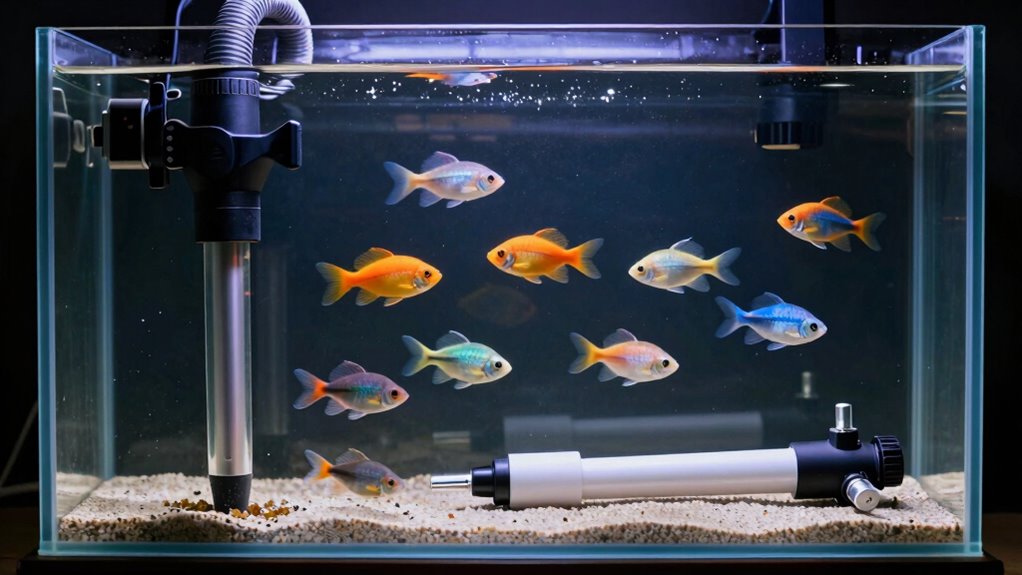
To maintain a healthy fish tank, you need to use gravel vacuums and water change tools effectively. Start by gently moving the gravel vacuum around the substrate to remove debris without disturbing your aquarium plants or decorative elements. Focus on siphoning out waste buildup and excess food that settle at the bottom. When draining water, remove about 25-30% and replace it with dechlorinated water at the same temperature, ensuring a stable environment. Use the vacuum to target hard-to-reach spots around plants and decorations, preventing algae and sludge buildup. Keep the process steady to avoid stressing your fish. Regular, careful water changes and gravel cleaning help maintain water quality, benefiting your aquatic life and keeping your tank looking vibrant. Additionally, understanding thermal behavior of your tank setup can help optimize temperature stability during water changes, preventing unnecessary temperature fluctuations that can stress your fish. Incorporating proper filtration techniques can further enhance water clarity and reduce maintenance frequency, contributing to a healthier aquatic environment. Moreover, being aware of the biological processes within your tank can help you better manage nitrification and other essential cycles, supporting overall tank health.
Maintaining and Replacing Your Fish Tank Cleaning Equipment

Regularly inspecting your cleaning tools guarantees they work effectively and last longer. When equipment shows signs of wear, replace it promptly using proper techniques to avoid harming your fish or tank. Staying attentive to these maintenance steps keeps your tank clean and your fish healthy. Incorporating glycolic acid products into your skincare routine can also promote healthier skin around your tank area, reducing the risk of bacteria buildup. Additionally, choosing top dog beds for golden retrievers can ensure your pet’s comfort while you maintain your tank, making the process more enjoyable for both of you. For optimal results, consider using outdoor-kitchen essentials like specialized tools and accessories that make cleaning easier and more efficient. Regularly checking the performance of your cleaning tools ensures they continue to operate effectively and safely, and staying informed about modern cleaning techniques can help you keep your tank in top condition with less effort.
Regular Equipment Inspection
Since equipment can wear out or become less effective over time, inspecting your fish tank cleaning tools regularly is essential to guarantee they work properly. Regular checks help prevent aquarium algae buildup and reduce the risk of fish disease. Look for signs of deterioration, such as cracks, bent parts, or rust, which can hinder cleaning efficiency. Keep an eye on:
- Scrapers and sponges for tears or residue buildup
- Pumps and filters for clogs or leaks
- Tubes and hoses for cracks or blockages
Replacing faulty equipment promptly ensures your tank stays clean and healthy. Proper inspection not only maintains cleaning effectiveness but also safeguards your fish from potential illness caused by dirty or poorly maintained tools. Consistent checks are key to stress-free, efficient aquarium maintenance, especially considering pool hydraulics principles that influence water flow and filtration efficiency.
Proper Replacement Techniques
Maintaining your fish tank cleaning tools involves more than just regular inspections; knowing when and how to substitute equipment ensures your tank stays healthy. Worn-out tools can harm fish behavior and diminish fish tank aesthetics. Replace scrub brushes and siphons when they show signs of wear or decay to prevent scratches or ineffective cleaning. Use the table below as a guide:
| Equipment | Replacement Indicator |
|---|---|
| Sponge Cleaners | Frayed or torn, loses abrasiveness |
| Gravel Vacuums | Cracks, leaks, or reduced suction |
| Algae Scrapers | Rusted or warped blades |
| Water Test Kits | Expired or inconsistent results |
Proper replacement keeps your tank clear, safe, and visually appealing, supporting healthy fish behavior.
Common Cleaning Mistakes and How to Avoid Them
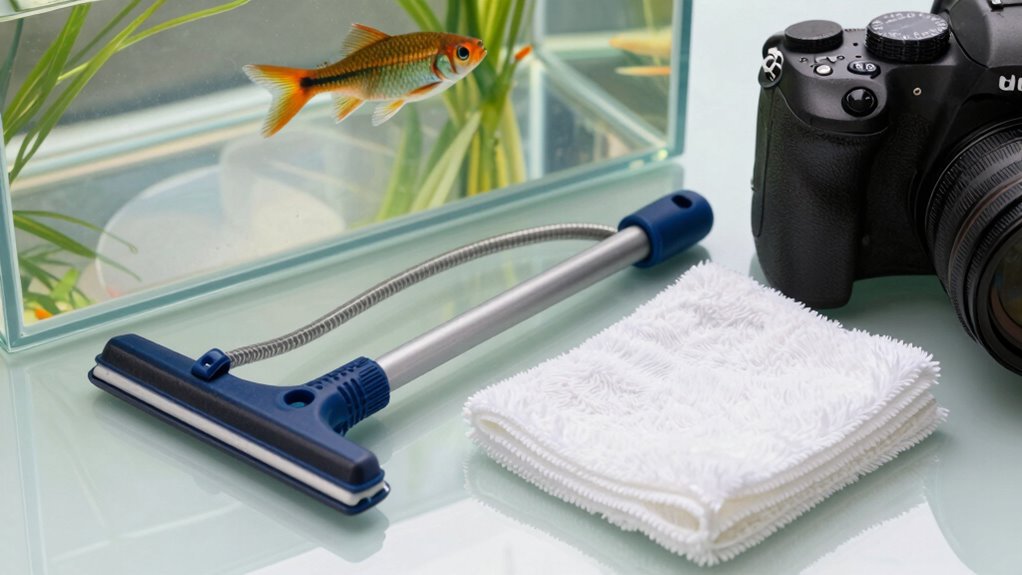
One common mistake people make when cleaning their fish tanks is rushing through the process without preparing properly. This can lead to increased algae growth and unnecessary fish stress. To avoid this, don’t forget to:
- Use appropriate tools to gently scrub algae without disturbing your fish.
- Avoid over-cleaning, which can remove beneficial bacteria and upset the tank’s balance.
- Skip sudden, drastic changes in water or cleaning routines that stress your fish and harm algae control efforts.
Taking your time ensures you remove buildup effectively while minimizing stress. Proper preparation helps you target problem areas without disrupting your aquatic environment. Remember, patience during cleaning keeps your fish healthy and your tank sparkling.
Modern Automated Tools to Simplify Aquarium Maintenance
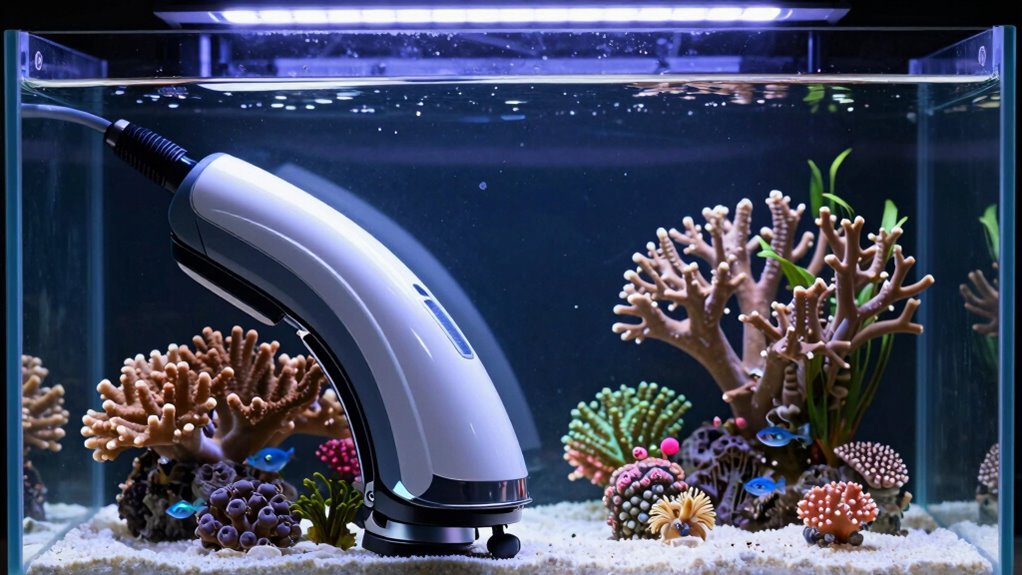
Modern automated tools have revolutionized aquarium maintenance by making it easier and more efficient to keep tanks clean and healthy. These devices automate tasks like water changes, debris removal, and monitoring water quality, saving you time and stress. Whether you’re setting up new aquarium decorating themes or ensuring fish species compatibility, automation helps maintain ideal conditions.
| Tool Type | Functionality | Benefits |
|---|---|---|
| Automatic Water Changers | Quick water changes with minimal effort | Reduces manual work |
| Automated Test Kits | Regular water parameter checks | Ensures fish health |
| Cleaning Robots | Clean tank surfaces effortlessly | Keeps tanks spotless |
| Feeding Devices | Consistent feeding schedules | Prevents overfeeding |
| Monitoring Systems | Real-time tank condition alerts | Maintains stable environment |
Creating a Regular Fish Tank Cleaning Schedule for a Healthy Aquarium
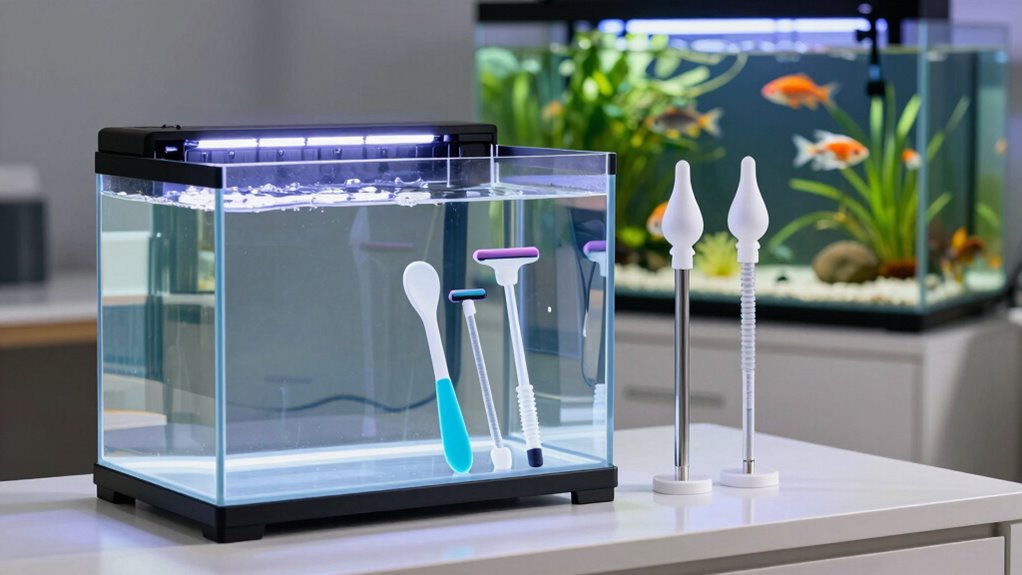
Establishing a consistent fish tank cleaning schedule is essential for keeping your aquarium healthy and your fish thriving. Regular cleaning prevents excess aquarium algae buildup, which can harm fish health and disrupt the ecosystem. To stay on top of maintenance, consider these key steps:
Maintaining a regular cleaning schedule ensures a healthy, thriving aquarium environment.
- Schedule partial water changes weekly to reduce toxins and algae growth.
- Clean filters and remove debris to ensure proper water flow and clarity.
- Monitor fish behavior for signs of stress or illness, adjusting your routine as needed.
Frequently Asked Questions
How Often Should I Replace My Fish Tank Cleaning Tools?
You should replace your fish tank cleaning tools every 6 to 12 months to guarantee tool durability and effective cleaning. Over time, tools can wear out or become less effective, risking harm to your fish. Regular replacement helps maintain hygiene and prevents contamination. Keep an eye on the condition of your tools, and if they show signs of damage or wear, replace them sooner to keep your tank clean and your fish healthy.
Are There Eco-Friendly Cleaning Options for Fish Tanks?
Yes, you can choose eco-friendly options for cleaning your fish tank. Opt for biodegradable scrubbers that break down naturally, reducing waste. Additionally, plant-based cleaners are a safe, chemical-free choice that won’t harm your fish or the environment. These options help you maintain a clean tank effectively while minimizing your ecological footprint, making your fishkeeping routine more sustainable and stress-free for your aquatic friends.
Can DIY Cleaning Solutions Harm My Aquarium’s Ecosystem?
You might think DIY cleaning solutions are a quick fix, but they can harm your aquarium’s ecosystem safety if not used carefully. Harsh chemicals or incorrect ingredients can upset the delicate balance, doing more harm than good. Always research thoroughly, stick to safe, aquarium-approved ingredients, and avoid mixing household cleaners. When in doubt, it’s better to be safe than sorry, preserving your fish’s healthy environment.
What Signs Indicate My Cleaning Tools Need Replacement?
You’ll notice signs of wear and tool deterioration when your cleaning tools become scratched, bent, or lose their effectiveness. If your scraper or brush struggles to remove algae or debris, it’s time to replace them. Discoloration, rust, or cracks also indicate deterioration. Regularly inspecting your tools guarantees they perform well, reducing stress on your fish and keeping your tank clean and healthy. Don’t wait until they break—replace them promptly for peak results.
How Do I Store Cleaning Tools to Prevent Contamination?
Imagine your cleaning tools as your fish’s trusted allies—treat them with care. Store your tools in a clean, dry container to prevent contamination, ideally separate from other supplies. Use airtight storage tips to keep bacteria out, and rinse tools thoroughly after each use. Regularly disinfect them, and keep them in a designated area to avoid cross-contamination, ensuring your fish stay healthy and your tank stays pristine.
Conclusion
Regularly using the right cleaning tools can reduce your tank’s nitrate levels by up to 50%, promoting healthier fish. By choosing quality equipment and maintaining a consistent schedule, you’ll create a stress-free environment for your aquatic friends. Remember, proper cleaning not only keeps your tank sparkling but also extends the lifespan of your equipment. Stay diligent, and your fish will thrive in a cleaner, healthier home—making your aquarium the envy of every hobbyist.
Columbus Day / Indigenous Peoples' Day Picks
long weekend sales
As an affiliate, we earn on qualifying purchases.