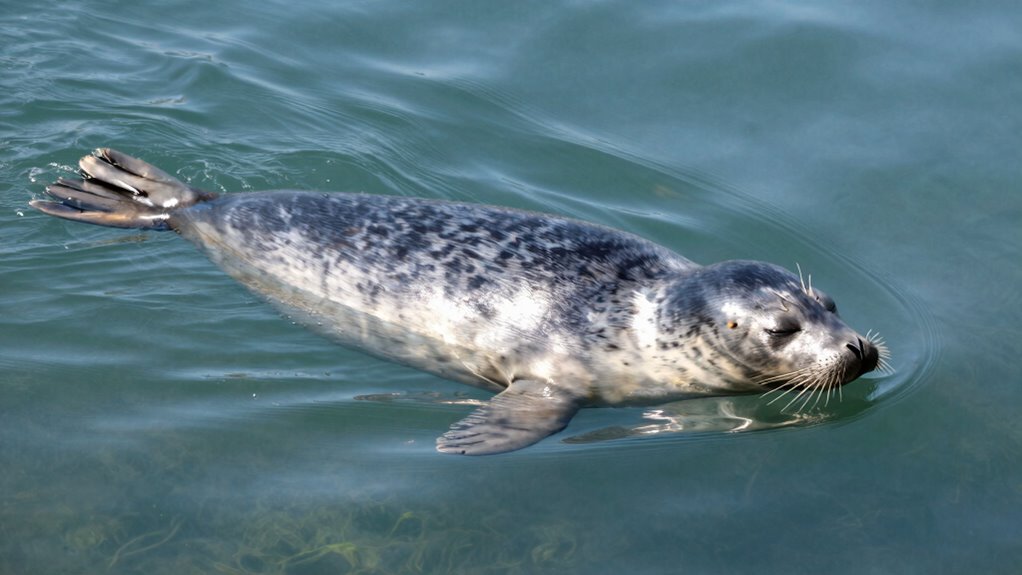

Seals sleep safely in water thanks to special adaptations. They perform unihemispheric sleep, meaning one half of their brain stays alert while the other rests, helping them breathe and watch for predators. Their bodies are built with thick blubber for insulation, and their lungs and blood are highly efficient for oxygen storage. Their breathing centers remain active during sleep, so they can surface naturally. If you’d like to discover more about how they manage this impressive feat, keep exploring.
Key Takeaways
- Seals perform unihemispheric sleep, resting one brain half at a time to stay alert and breathe safely.
- They keep their nostrils above water or on the surface to ensure continuous breathing during rest.
- Their active breathing centers enable quick surfacing and oxygen replenishment after dives.
- Thick blubber and blood flow regulation help maintain body temperature and conserve oxygen during sleep.
- Collapsible lungs prevent nitrogen absorption, reducing the risk of decompression sickness while sleeping underwater.
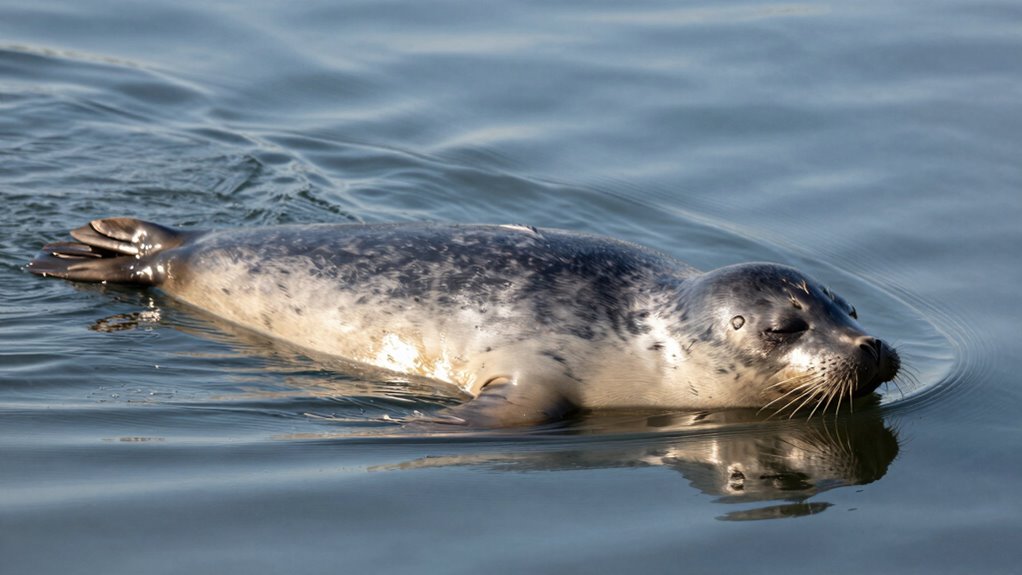
Have you ever wondered how seals manage to sleep while floating effortlessly in water? It’s a fascinating skill that relies on their unique marine mammal adaptations and specialized underwater breathing techniques. Seals are exceptional swimmers, and their bodies are built for a life both on land and in the water. When it’s time to rest, they don’t need to surface constantly like humans do. Instead, they can snooze in the ocean for extended periods without drowning, thanks to their remarkable physiological features.
One of the key marine mammal adaptations that allow seals to sleep underwater is their ability to hold their breath for long stretches. While humans might gasp for air after a minute or two, seals can stay submerged for several minutes—sometimes up to 30 or more—without breathing. During these dives, they efficiently conserve oxygen by slowing their heart rate and directing blood flow to essential organs. This process, known as bradycardia, considerably reduces oxygen consumption and allows them to stay underwater longer. It’s a crucial underwater breathing technique that supports their ability to rest without surfacing frequently.
Seals also possess highly efficient lungs and blood that carry oxygen more effectively than terrestrial animals. Their lungs are collapsible, which means they can deflate their lungs to avoid nitrogen absorption at depth, preventing decompression sickness. When they surface, they quickly replenish their oxygen supply, preparing for the next dive or sleep session. Interestingly, seals can also perform unihemispheric sleep, meaning one half of their brain remains alert while the other half rests. This adaptation allows them to remain vigilant for predators and maintain basic bodily functions, even while drifting in a semi-sleep state underwater. Additionally, their ability to manage oxygen levels efficiently during sleep is vital for their survival in the aquatic environment. Their diving adaptations are closely linked to their sleep patterns, allowing them to remain submerged for extended durations.
While floating in water, seals often rest in a semi-vertical or horizontal position, sometimes floating with just their nose above the surface or resting on the seabed. Their thick blubber provides insulation, helping them conserve heat during long sleep periods. This insulation, combined with their ability to regulate blood flow and breathing, creates an environment where they can sleep peacefully without risking drowning. Their body’s natural design ensures that their breathing centers are always active enough to respond to the need for air, even during sleep. Moreover, their ability to control heart rate and blood flow plays a critical role in their sleep safety, allowing them to adapt to the demands of their environment. Furthermore, their adaptations for diving are closely linked to their sleep patterns, allowing them to remain submerged for extended durations. It’s also worth noting that their sleep cycles are adapted to fit their diving routines, optimizing both rest and survival.
In essence, seals sleep in water thanks to a combination of their specialized adaptations and intelligent breathing techniques. They’ve evolved to maximize oxygen use, control their heart rate, and sleep safely in their aquatic environment. Oxygen conservation is a vital aspect of their ability to rest underwater, ensuring they can remain submerged for extended durations without harm. So, the next time you see a seal floating peacefully in the water, remember that it’s not just laziness—it’s a finely tuned survival skill that allows them to rest, conserve energy, and thrive beneath the waves.
As an affiliate, we earn on qualifying purchases.
Frequently Asked Questions
How Do Seals Remember Their Underwater Sleeping Locations?
You might wonder how seals remember their underwater sleeping locations. Seals rely on their exceptional navigation skills and underwater memory to find safe spots. They use a combination of echolocation, environmental cues, and learned routes to navigate efficiently. Their keen senses and strong spatial memory help them recall specific locations, ensuring they can rest safely without drowning, even in the dark depths of the ocean.
Do Seals Sleep Differently During Different Seasons?
You’re on the right track—seals do change their sleep habits with the seasons. During colder months, they tend to rest more frequently and for shorter periods, adapting to harsher conditions. In warmer seasons, their sleep patterns may become more regular and extended. These variations in sleep patterns help seals conserve energy and stay safe, showing how their behaviors shift with seasonal changes to meet environmental demands.
How Long Can Seals Hold Their Breath While Sleeping?
Seals can hold their breath for up to 20 minutes while sleeping, allowing them to rest without surfacing constantly. During seal migration, they often dive deep and stay submerged longer to avoid marine predators. You might notice that seals adapt their breathing patterns to stay safe, conserving oxygen efficiently. This ability helps them remain alert to threats while getting the rest they need, especially during long journeys across oceans.
Are There Any Dangers Seals Face While Sleeping in Water?
While seals sleep in water, they face dangers like marine predators and disruptions during migration. You need to be aware that predators such as sharks can pose a threat, especially when seals rest on the surface. During migration, seals might encounter strong currents or unfavorable conditions that can increase risks. Despite their adaptations, these dangers highlight the importance of their careful resting and migration strategies to stay safe.
How Do Seal Pups Learn to Sleep Underwater Safely?
Did you know that seal pups start learning to sleep underwater within their first few weeks? They do this by practicing brief, shallow dives, gradually building their confidence. During this time, they rely on their instinct and mature seal communication skills to stay safe. As they grow, marine conservation efforts help protect their habitats, ensuring pups continue to develop these essential survival skills in a safe environment.
Conclusion
You might find it fascinating that seals can sleep underwater for up to two hours without drowning. Their unique ability to hold their breath and slow their heart rate allows them to rest safely beneath the surface. So, next time you see a seal peacefully snoozing in the water, remember, they’re expertly balancing sleep and survival—showing us just how adaptable nature truly is. It’s a remarkable feat of evolution that keeps them safe and rested underwater.