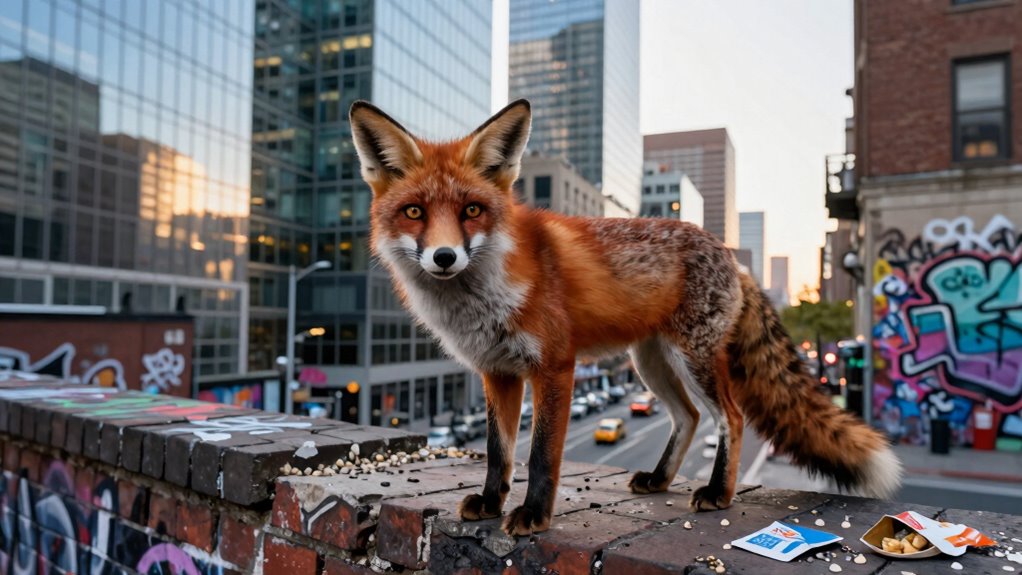

You’ll notice that urban foxes quickly adapt by exploiting city resources like leftovers and abandoned structures for shelter. They use keen senses to navigate busy streets, avoiding cars and crowds. Their diet becomes flexible, relying on scavenged food from waste or pet food. These foxes develop clever problem-solving skills to handle city challenges, changing their behaviors for safety. Keep exploring to discover how these resourceful animals continue thriving amid urban chaos.

Get pet supplies delivered free with Prime
- Fast, free delivery on millions of items
- Prime Video, Amazon Music and more included
- Member-only deals all year
Key Takeaways
- Urban foxes quickly adapt to city environments by utilizing structures for shelter and exploiting human waste for food.
- They exhibit dietary flexibility, scavenging from leftovers, compost, and pet food, reducing reliance on natural prey.
- Foxes navigate busy streets and noise by using keen senses and choosing quieter areas like parks and alleyways.
- They develop problem-solving skills to access resources, avoid dangers, and respond to human interactions.
- Despite threats like traffic and disease, urban foxes demonstrate resilience through adaptive behaviors and resourcefulness.

Urban foxes have become an increasingly common sight in cities around the world, adapting quickly to life among concrete and crowds. You might see them darting across alleyways, lounging on park benches, or rummaging through bins, and it’s clear they’ve developed a knack for surviving in this new environment. Unlike their rural counterparts, urban foxes face unique challenges, but they’ve evolved clever strategies to thrive amid human activity. They’re masters at exploiting the city’s resources, often scavenging leftovers or finding shelter in abandoned buildings and under bridges.
Urban foxes thrive amid city life, cleverly scavenging and finding shelter in unexpected places.
You’ll notice that urban foxes are highly adaptable in their diet. They don’t rely solely on hunting small animals like mice or birds; instead, they’ve learned to scavenge food from human waste, compost heaps, and even pet food left outside. This dietary flexibility helps them survive in a landscape where natural prey might be scarce or unpredictable. You might also see them during the day, which is unusual for rural foxes that are typically nocturnal. The constant presence and activity of humans make it safer for foxes to be active during daylight hours, and they’ve become more daring in their movements.
City environments offer both opportunities and risks for foxes. They navigate through busy streets, avoiding cars and pedestrians, using their keen senses of smell and hearing to stay alert. You might think the noise and chaos would scare them away, but they’ve learned to adapt their behavior accordingly. For instance, they often stick to quieter areas like parks or alleyways, where they can hunt and rest undisturbed. They also take advantage of urban structures for shelter—abandoned buildings, under decks, or among dense bushes—offering them places to rest safely from potential threats. Additionally, their ability to adapt to changing environments plays a crucial role in their survival strategy. Moreover, urban foxes also develop specific behavioral adaptations that help them navigate the complexities of city life. These adaptations are often reinforced by their remarkable problem-solving skills, which enable them to find innovative solutions to challenges they encounter in urban settings. The presence of human interaction has also influenced their behavior, making them more cautious yet resourceful.
Despite their adaptability, urban foxes face ongoing threats, such as traffic accidents, disease, and conflicts with humans. Yet, their ability to adjust their behavior—like changing foraging times and choosing safer routes—demonstrates their resilience. If you observe them closely, you’ll see how resourceful they are, making the most of the city’s offerings while avoiding dangers. Their survival in urban settings shows how well these animals can adapt to environments that are vastly different from their natural habitats, thriving amidst human activity and altering their behaviors to fit their new urban reality.
As an affiliate, we earn on qualifying purchases.
Frequently Asked Questions
How Do Urban Foxes Communicate With Each Other in Cities?
You’ll notice urban foxes communicate through nighttime vocalizations that serve as calls to others or warnings. They also use scent marking by rubbing scent glands on objects to establish territory and convey messages. These methods help them maintain social bonds, find mates, and avoid conflicts in busy city environments. Their vocalizations and scent marks are essential for steering city life and staying connected with their fox community.
What Are Urban Foxes’ Favorite Human Food Sources?
Urban foxes love scavenging human food sources, especially leftovers from picnics, trash bins, and outdoor dining areas. Their dietary preferences include processed foods, meats, and snack items like chips or bread. You might notice them rummaging through garbage or sneaking into gardens for scraps. Their adaptability and opportunistic nature make human food scavenging a vital part of their survival in city environments.
How Do Foxes Avoid Traffic and Urban Hazards?
You’ll notice urban foxes avoid traffic and hazards through urban foraging habits and nocturnal activity. They hunt at night when streets are quieter, reducing risks from vehicles. Foxes stay alert, using their keen senses to navigate safely around hazards. They also often stick to green spaces or less busy areas, which helps them avoid busy roads and urban dangers, ensuring they can thrive in the city environment.
Are Urban Foxes More Aggressive Than Rural Ones?
Urban foxes aren’t necessarily more aggressive than rural ones. Instead, they often use territory marking and nocturnal behavior to navigate city life. By marking their territory, they establish boundaries and reduce conflicts. Their nocturnal habits help them avoid human interactions and dangerous situations. This adaptive behavior fosters a balance, so you might see them less aggressive, but more resourceful and cautious, as they thrive in busy urban environments.
How Long Do City-Dwelling Foxes Typically Live?
City-dwelling foxes usually live around 3 to 4 years, though some can reach up to 5 or 6 years. Their denning habits help protect them from predators, while flexible breeding patterns allow them to reproduce year-round, adapting to urban environments. You’ll notice that their ability to find food and suitable shelter in cities contributes to their relatively longer lifespan compared to rural foxes.
Conclusion
Imagine yourself in a bustling city, where every streetlamp is a guiding star and every alleyway a secret passage. Like the clever fox steering through this maze, you learn to adapt, finding food in unexpected places and blending into the vibrant cityscape. Urban foxes remind us that change is part of life’s journey, and with a little ingenuity, you can thrive amidst the chaos. Embrace the city’s rhythm, and you’ll find your own way through the maze.
Fall Picks
fall essentials
As an affiliate, we earn on qualifying purchases.