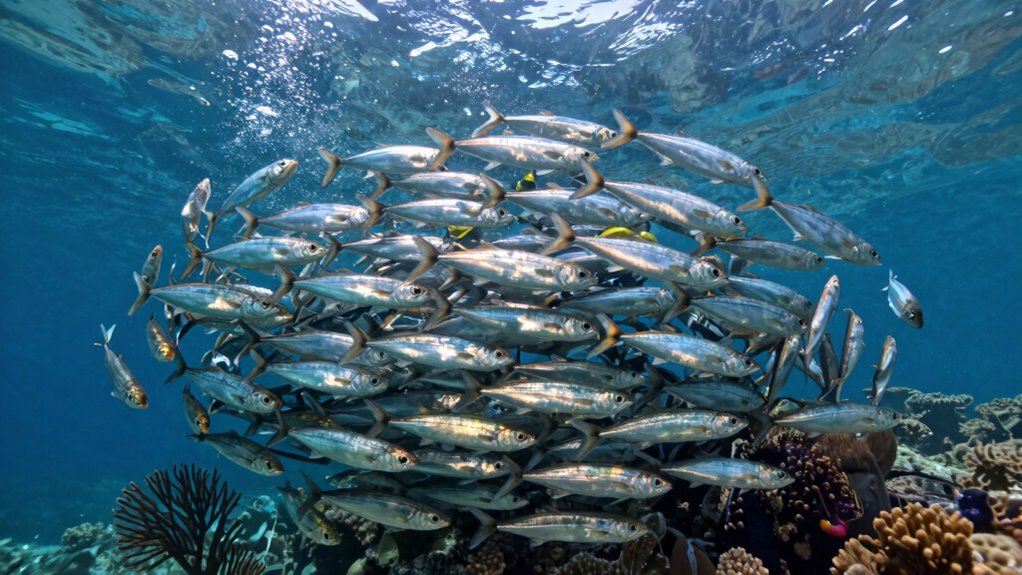

Inside the life of a shoal-loving sardine, you see a highly social fish that moves together in synchronized groups to avoid predators. As you follow their movements, you notice how the massive, shimmering shoals confuse enemies and make targeting difficult. They migrate in response to environmental cues, seeking food and safe breeding spots, showing remarkable adaptability. If you want to discover more about their fascinating survival strategies and how they thrive in the ocean, there’s much more to uncover.

Get pet supplies delivered free — and shop member deals
- Fast, free delivery on millions of items
- Access to Prime Big Deal Days deals on October 6–7
- Prime Video, Amazon Music and more included
Key Takeaways
- Sardines form large, synchronized shoals to deter predators and enhance survival chances.
- Their coordinated movements create mesmerizing displays that serve as effective defense mechanisms.
- Sardines follow seasonal environmental cues and ocean currents during migration to access food and breeding sites.
- Shoaling and migration behaviors help manage resources and prevent overpopulation in specific areas.
- These social and adaptable strategies enable sardines to thrive in dynamic and unpredictable ocean environments.
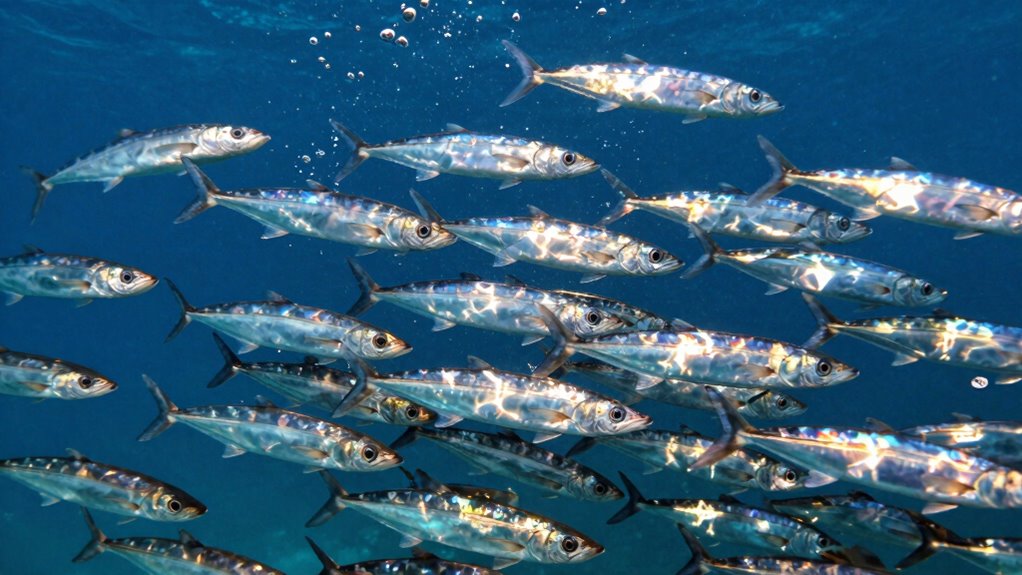
Have you ever wondered why sardines form massive, shimmering shoals? It’s a fascinating behavior driven by survival instincts, primarily predator avoidance. When sardines gather in large groups, they create a confusing, moving mass that predators find difficult to target. The sheer size and rapid movement of a shoal make it harder for a predator to single out an individual, reducing the chance of a successful attack. This collective behavior acts as a shield, protecting each sardine within the group. You might notice the way their bodies ripple in unison, creating a mesmerizing display that’s as much a defense mechanism as it is a spectacle. The shoal’s coordinated movements are instinctive, honed over generations to maximize safety in numbers. Additionally, their ability to migrate strategically helps them access optimal resources and avoid overpopulation in specific areas. Understanding these migratory cues reveals the importance of environmental signals in their survival strategies.
Beyond predator avoidance, sardines exhibit complex migratory patterns that are crucial to their survival. These tiny fish travel vast distances, following seasonal cues and ocean currents to find optimal feeding grounds and breeding sites. You could think of their migratory routes as a finely tuned GPS system rooted in environmental signals like temperature, salinity, and food availability. As they migrate, sardines often form tighter shoals, especially in areas rich in plankton, their primary food source. These movements aren’t random; they’re strategic, ensuring they access the most abundant food while minimizing risks. During migrations, sardines often stick close to each other, further enhancing their collective defense against predators. Their ability to respond to environmental changes illustrates their remarkable adaptability to shifting ocean conditions. Recognizing the environmental cues that influence their behavior can help us better understand their resilience and the health of marine ecosystems. A better understanding of marine ecosystem dynamics can provide insights into how such species adapt and thrive amid changing environments.
You might also observe that these migratory journeys are not only about feeding and breeding but also about avoiding overpopulation in one area, which could lead to resource depletion. The shoal’s size and movement patterns help manage this balance, distributing sardines across different regions to maintain healthy populations. Their ability to adapt to changing ocean conditions plays a vital role in their migratory success. As ocean temperatures shift and food sources fluctuate, sardines modify their routes to track the most favorable environments. Their migratory patterns are a testament to their resilience and social coordination, reflecting a deep instinct to survive in a dynamic world.
In essence, the life of a sardine revolves around these two core behaviors: forming shoals for predator avoidance and following migratory patterns to find food and suitable breeding grounds. Together, these strategies ensure their survival in the unpredictable ocean landscape. You can see that, despite their small size, sardines are highly social and adaptable creatures, constantly working in harmony with their environment and each other to thrive.
As an affiliate, we earn on qualifying purchases.
Frequently Asked Questions
How Do Sardines Communicate Within Their Shoals?
You observe sardines communicating through sardine schooling by using acoustic signaling, which involves emitting sounds that help them stay synchronized. These tiny vocal cues enable the sardines to coordinate movements and maintain their tight formation. When danger approaches, their acoustic signaling becomes more intense, alerting the entire shoal quickly. This efficient communication method guarantees their safety and cohesion, making sardines remarkable in their ability to stay united in the vast ocean.
What Are the Main Predators of Sardines?
Imagine a relentless predator lurking like a shadow in the deep. Your main threats are larger fish, seabirds, and marine mammals that hunt in swift, coordinated strikes. During sardine migration patterns, they form tight, swirling schools, a clever defense born from schooling behavior. These groups confuse predators, making it harder to target individual fish, yet the danger remains constant as they navigate their perilous journey through predator-filled waters.
How Do Sardines Find Food in Large Shoals?
You find food in large shoals by relying on sardine migration patterns and their nutritional habits. As they migrate, sardines stay alert to plankton blooms, their primary food source, and swim through nutrient-rich waters. Their synchronized movements help them efficiently locate food patches, while their nutritional habits drive them to consume plankton continuously. This teamwork ensures they maximize feeding opportunities while avoiding predators in their vast shoals.
Do Sardines Have Any Unique Reproductive Behaviors?
Sardines showcase spectacular spawning strategies. During sardine spawning, thousands of eggs are released simultaneously, increasing survival chances. This reproductive rhythm involves synchronized spawning, which reduces predation and boosts fertilization rates. Their unique reproductive behaviors include forming dense spawning schools where males and females coordinate efforts. This clever reproductive strategy guarantees their persistence in vast, vibrant shoals, maximizing their chances of passing on their tiny, essential genes.
How Do Environmental Changes Affect Sardine Populations?
Environmental changes like climate fluctuations and ocean acidification profoundly impact sardine populations. You’ll notice that rising temperatures can disrupt their breeding cycles and reduce food availability, causing population declines. Ocean acidification weakens their shells and affects their sensory systems, making survival harder. These changes can lead to shifts in sardine distribution and reduce their numbers, ultimately threatening their role in the marine ecosystem and the fishing industries that depend on them.
Conclusion
As you delve into the world of sardines, you realize they’re like a shimmering, living river, flowing and shifting with purpose. Their tight shoals aren’t just a defense—they’re a dance of survival, a proof to nature’s intricate choreography. Just as they move as one, so too can you find strength in unity and adaptability. Remember, in the vast ocean of life, sometimes it’s the smallest currents that create the biggest waves.
Fall Picks
fall essentials
As an affiliate, we earn on qualifying purchases.